
Key Takeaways
- A clinical evaluation with your primary care clinician comes before any test, and a symptom checklist or smartwatch alone cannot confirm sleep apnea; an objective sleep test is required.
- Home sleep apnea tests suit otherwise healthy adults with symptoms pointing to moderate-to-severe obstructive sleep apnea, while in-lab polysomnography is preferred for heart or lung disease, long-term opioid use, stroke, or suspected central apnea.
- A negative or unclear home test does not rule out sleep apnea if symptoms persist; ask your clinician about a follow-up in-lab polysomnography study.
- Polysomnography records brain activity, airflow, breathing effort, oxygen levels, heart rhythm, and movement, so it can distinguish obstructive from central sleep apnea and detect other sleep disorders.
- Clinicians determine both the type (obstructive, central, or mixed) and severity (mild, moderate, or severe) from how often breathing pauses occur per hour and how far oxygen levels drop.
- Before your visit, ask a bed partner what they've noticed about snoring or breathing, note symptom duration, and bring your medication list and any family history of sleep apnea or heart disease.
You wake up tired after a full night in bed. Your partner says you snore loudly or stop breathing at times. You may nod off during meetings or while driving. These are common signs of sleep apnea, a condition that affects breathing during sleep and can strain your heart, mood, and daily energy. Many busy adults put off getting answers because they think the process is long or complicated. It is not. So how is sleep apnea diagnosed? In short, the process combines a careful clinical visit with an objective sleep test. A symptom checklist or a smartwatch alone cannot confirm it.
In 2026, getting a diagnosis is easier than most people expect. Your primary care team can review your symptoms, check your risk factors, and arrange the right test, often from your own bedroom. This guide walks you through each step. You will learn what happens at the first visit, how home and lab tests differ, what to do if results are unclear, and how results shape your care plan.
Why a Proper Diagnosis Matters
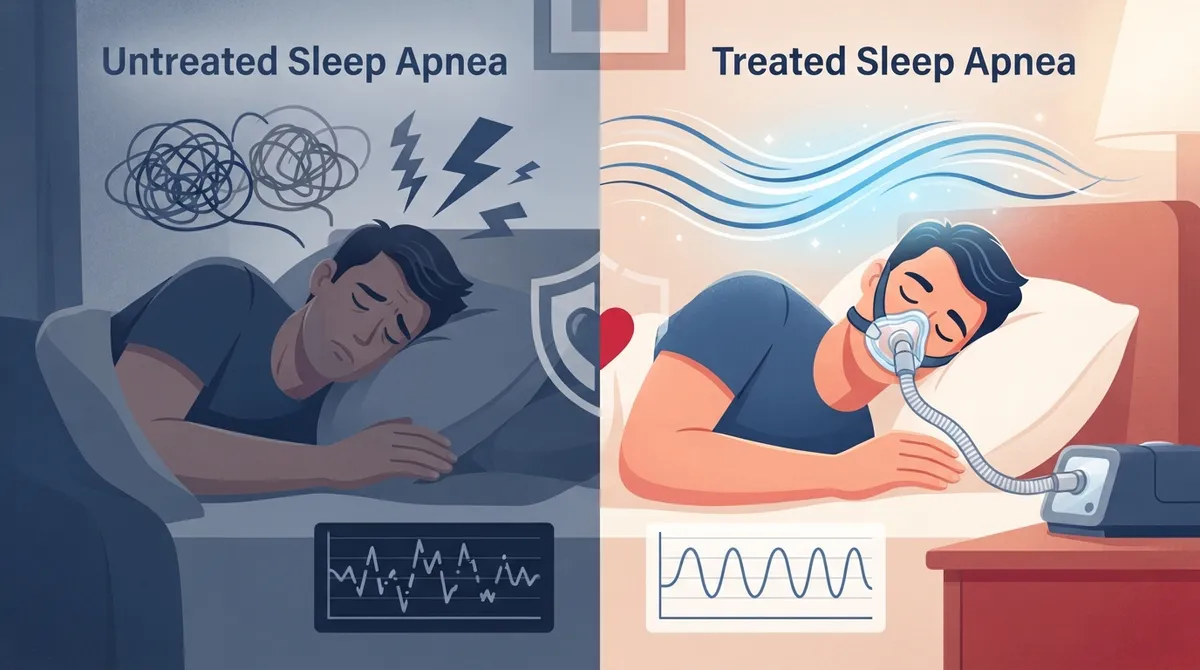
Sleep apnea happens when breathing repeatedly slows or stops during sleep. The most common form is obstructive sleep apnea (OSA). In OSA, the airway narrows or closes while you sleep. Each pause can wake the brain briefly, even if you never remember it. Over time, this broken sleep takes a toll.
Untreated sleep apnea is linked to daytime fatigue, poor focus, and mood changes. It is also associated with high blood pressure and other heart and metabolic concerns. That is why guessing is not enough. A correct diagnosis tells you whether you have apnea, what type it is, and how severe it is. Those facts guide the best treatment.
Anyone can develop sleep apnea. Still, certain factors raise the risk:
- Excess body weight or a larger neck size
- Older age
- Family history of sleep apnea
- Enlarged tonsils or a narrow airway
- Use of certain medications, including opioids
- Existing heart, lung, or metabolic conditions
If several of these apply to you, it is worth asking about testing. Knowing how sleep apnea is diagnosed helps you take that first step with confidence.

Step 1: The Clinical Evaluation in Primary Care
Diagnosis starts with a conversation, not a machine. Your primary care clinician will ask detailed questions about your sleep and overall health. This visit sets the direction for everything that follows.
A good evaluation usually covers these areas:
- Sleep symptoms. Loud, habitual snoring, gasping or choking at night, and pauses in breathing that someone else has seen.
- Daytime effects. Sleepiness, morning headaches, trouble concentrating, and low energy.
- Medical history. Conditions such as high blood pressure, diabetes, heart disease, or lung disease.
- Medications. Some drugs, especially opioids, can affect breathing during sleep.
- Physical exam. The clinician may measure neck size and check the throat for enlarged tonsils or a narrow airway.
Many clinics also use a short screening questionnaire at this stage. These tools can flag people who need further testing. However, they cannot diagnose sleep apnea on their own. A questionnaire only tells your clinician who should take the next step.
At InCare's primary care practice, this first visit is thorough and personal. Your clinician looks at your whole health picture, not just one symptom. That matters because sleep problems often connect to weight, blood pressure, blood sugar, and stress.
Step 2: Choosing the Right Sleep Test
After the evaluation, your clinician decides which test fits you best. There are two main options: a home sleep apnea test and an overnight sleep study in a lab. The choice depends on your symptoms and your other health conditions.
Attended Polysomnography (In-Lab Sleep Study)
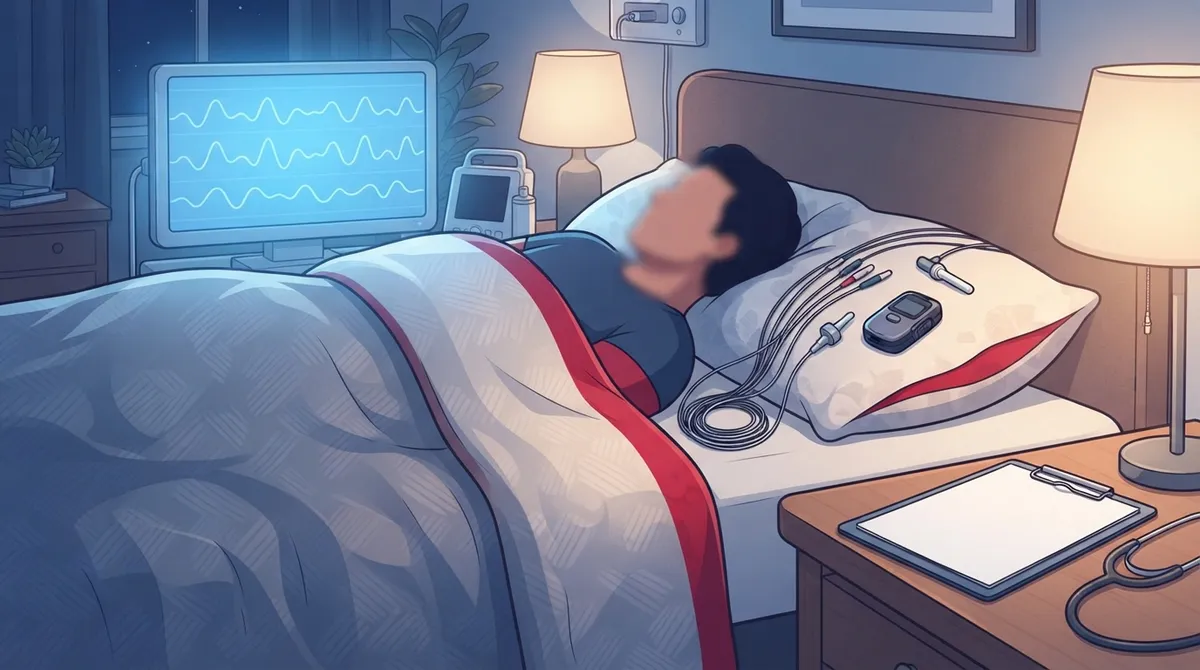
Attended overnight polysomnography (PSG) is the standard diagnostic test. You sleep at a sleep center while a technologist monitors you. Sensors record several body signals at once, including:
- Brain activity, to track sleep stages
- Airflow through the nose and mouth
- Breathing effort of the chest and belly
- Blood oxygen levels
- Heart rhythm
- Body and leg movements
Because PSG records so much data, it can also find other sleep disorders. It can separate obstructive apnea from central sleep apnea, a less common type where the brain does not send proper breathing signals.
Home Sleep Apnea Testing (HSAT)
A physician may order a home sleep apnea test for an otherwise healthy adult whose symptoms point to a higher risk of moderate-to-severe OSA. You wear a small set of sensors in your own bed. The device uses fewer sensors than a lab study. It usually tracks airflow, breathing effort, and oxygen levels.
Home testing is convenient and comfortable. It fits well for busy parents and working professionals who cannot easily spend a night away. It is not a general screening tool for people without symptoms. It works best when a clinician has first confirmed a real concern.
Home Test vs. Lab Study at a Glance
|
Feature |
Home Sleep Apnea Test |
In-Lab Polysomnography |
|---|---|---|
|
Location |
Your own bedroom |
Sleep center |
|
Sensors used |
Fewer (airflow, effort, oxygen) |
Many (brain, heart, breathing, movement) |
|
Staff present |
No |
Yes, a technologist monitors |
|
Best for |
Uncomplicated adults with symptoms of likely moderate-to-severe OSA |
Complex cases or other suspected sleep disorders |
|
Can detect other sleep disorders |
No |
Yes |
|
Convenience |
High |
Lower |
Who Needs an In-Lab Study Instead of a Home Test?
Home testing is not right for everyone. A lab study is usually preferred when your health history adds complexity. Your clinician may recommend PSG if you have any of the following:
- Significant heart or lung disease
- Possible weakness of the breathing muscles
- Suspected hypoventilation, meaning shallow breathing
- Long-term opioid use
- A prior stroke
- Severe insomnia
- Concern for another sleep disorder
PSG is also needed to evaluate non-obstructive breathing problems such as central sleep apnea. In these cases, a simple home device may miss important details. Choosing the right test the first time saves you from repeat studies and delays.
What Happens During an Overnight Sleep Study?
Many people feel nervous before their first sleep study. The experience is usually calmer than expected. Here is what typically happens:
- Arrival. You check in at the sleep center in the evening. The room often looks like a simple hotel room.
- Sensor placement. A technologist places small sensors on your scalp, face, chest, and legs. A soft band goes around your chest and belly, and a clip goes on your finger.
- Normal bedtime. You go to bed at your usual time. The sensors are painless, and you can move and roll over.
- Monitoring. The technologist watches your data from another room all night.
- Morning. The sensors come off, and you go home. A qualified clinician then reviews the full recording.
With a home test, the steps are simpler. You get the device and instructions, apply the sensors yourself at bedtime, and return the unit the next day. Your clinician reviews the data afterward.
What If a Home Test Is Negative but You Still Have Symptoms?
This is a common concern. A negative result, an unclear result, or a test with poor data quality does not always rule out sleep apnea. Home devices use fewer sensors, so they can miss milder or more complex cases.
If suspicion stays high, guidance from the American Academy of Sleep Medicine recommends follow-up with an in-lab polysomnography study. In some cases, a lab study may also be repeated or reconsidered when an earlier lab test was negative but symptoms persist. Do not stop at one inconclusive result if you still feel unwell. Tell your clinician your symptoms have not gone away, and ask about the next step.
Can a Questionnaire or Smartwatch Diagnose Sleep Apnea?
Short answer: no. Screening questionnaires and clinical prediction scores help spot people who may need testing. Wearable devices can offer interesting sleep data and may even prompt you to seek care. But none of these tools can confirm obstructive sleep apnea by themselves. A true diagnosis requires an appropriate sleep test that is read by a qualified clinician.
Think of consumer devices as a reason to start the conversation, not as the final answer. If your watch or app suggests restless or interrupted sleep, share that with your primary care provider. It can help guide the evaluation.
How Doctors Determine Type and Severity
Once your test is complete, a qualified clinician interprets the results. The study shows how often your breathing slows or stops each hour, how low your oxygen drops, and whether the pauses come from a blocked airway or from a signal problem in the brain.
These findings help establish two key facts:
- Type. Obstructive, central, or a mix of both.
- Severity. Mild, moderate, or severe, based on how often events occur and how much oxygen levels fall.
Your clinician then combines the test results with your symptoms and health history. This full picture shapes your treatment plan. Options may include lifestyle changes, weight management, positive airway pressure therapy, oral devices, or referral to a specialist for other approaches.
The Role of Primary Care and Whole-Body Health
Your primary care team is often the best place to begin. Clinicians in this setting commonly coordinate testing through a sleep specialist or sleep center. They then review your results and arrange follow-up so nothing falls through the cracks.
Sleep apnea rarely stands alone. It connects with weight, blood pressure, blood sugar, and heart health. A primary care approach looks at all of these together. For example, many patients with sleep apnea also benefit from a structured medical weight loss program, since weight is one of the most common modifiable risk factors. Regular preventive care also helps catch related concerns early.
For readers in the Tampa Bay area, you can learn more about local options in our guide to the best sleep apnea doctor in Tampa and Riverview. If you are ready to start, meet our providers and see how our team approaches whole-body care. Many patients tell us the process felt clear and unhurried, and you can read InCare reviews on Google through Visit us on Google — InCare.
Warning Signs You Should Not Ignore
Not sure whether to bring this up at your next visit? Watch for these warning signs of sleep apnea:
- Loud snoring that happens most nights
- Pauses in breathing that a partner has noticed
- Gasping or choking sounds during sleep
- Waking with a dry mouth or headache
- Strong daytime sleepiness, even after a full night in bed
- Trouble focusing or irritability
If you notice two or more of these, schedule a visit. Early evaluation is simple and can protect your long-term health. You can also follow InCare for wellness tips on Instagram, Facebook, and TikTok.
Preparing for Your Visit
A little preparation makes your appointment more useful. Before you go, try these steps:
- Ask a bed partner or family member what they have noticed about your snoring or breathing.
- Write down your symptoms and how long you have had them.
- Bring a list of all medications and supplements.
- Note any family history of sleep apnea or heart disease.
- Prepare questions about home testing versus a lab study.
This information helps your clinician choose the safest, most accurate path from the start.
Take the First Step Toward Better Sleep
Understanding how sleep apnea is diagnosed removes much of the mystery. The path is clear: a thorough clinical evaluation, the right sleep test for your situation, and careful review by a qualified clinician. If a first result is unclear, further testing can close the gap. You do not have to live with exhaustion or guess at the cause.
InCare combines expert medical care with modern technology to give you real answers. Our team in Tampa and Riverview will review your symptoms, guide you to the right test, and help you build a plan that supports your whole health. Book Your Appointment Now to get started, or contact our team with any questions. Better sleep, and better health, can begin with one visit.
FAQs
Q: Can a primary care doctor diagnose sleep apnea?
A: Yes. A primary care clinician starts the process by reviewing your symptoms, risk factors, and physical exam findings. They then arrange the right sleep test, often coordinating with a sleep specialist or sleep center, and review your results with you.
Q: Is a home sleep apnea test as accurate as a sleep lab test?
A: A home test works well for otherwise healthy adults whose symptoms suggest moderate-to-severe obstructive sleep apnea. It uses fewer sensors than a lab study, so it can miss milder or more complex cases. If results are negative or unclear while symptoms continue, a lab study is recommended.
Q: What should I do if my home sleep apnea test is negative but I still have symptoms?
A: A negative or inconclusive home test does not rule out sleep apnea when concern remains. Talk with your clinician about follow-up in-lab polysomnography, which records more body signals and gives a fuller picture.
Q: Can a smartwatch or questionnaire diagnose sleep apnea?
A: No. Questionnaires and wearable devices can show that you may need evaluation, but they cannot confirm sleep apnea. A diagnosis requires an appropriate sleep test interpreted by a qualified clinician.
Q: How do doctors determine the type and severity of sleep apnea?
A: Doctors review your sleep study results, including how often breathing pauses occur per hour and how far oxygen levels drop. They combine this with your symptoms and health history to identify the type, such as obstructive or central, and to rate severity as mild, moderate, or severe.


