
Key Takeaways
- Same day urgent care is for new, non-life-threatening problems like fever, sprains, ear pain, or minor cuts that cannot wait for a routine appointment but do not need the ER.
- Call 911 or go to the ER for severe chest pain, trouble breathing, stroke signs such as facial drooping or slurred speech, uncontrolled bleeding, major trauma, or loss of consciousness.
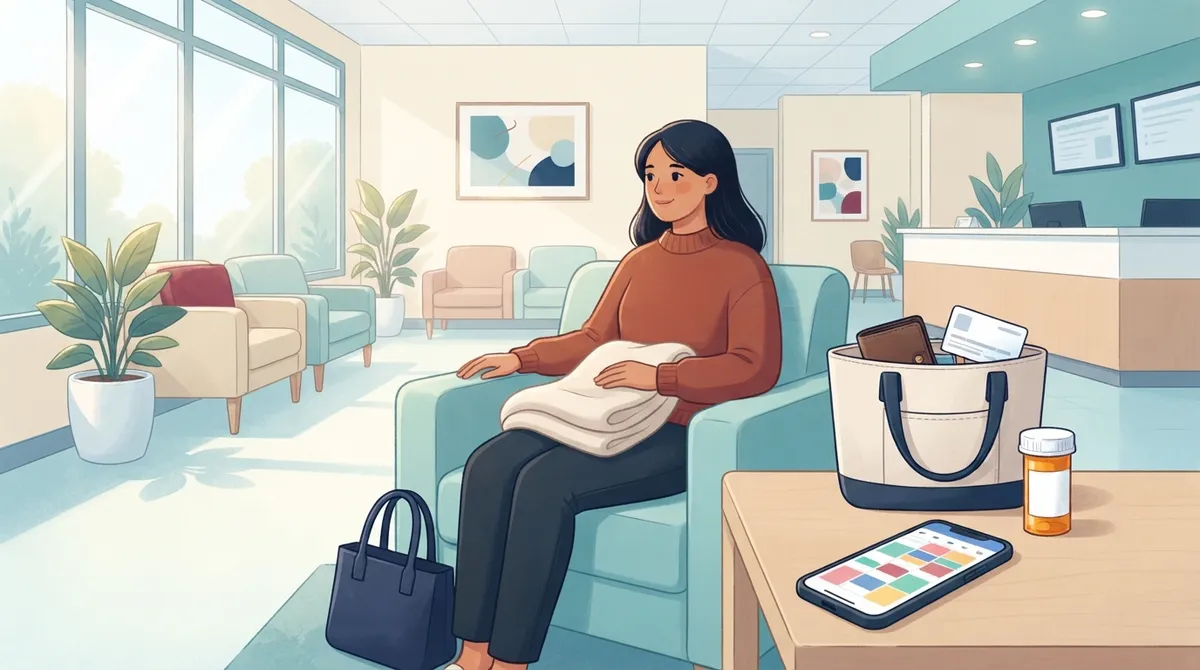
- Bring photo ID, insurance card, a list of medications and doses, known allergies, and recent records, and note when symptoms started and what makes them better or worse.
- Before going, ask whether the clinic accepts your insurance, the self-pay price, and whether tests like X-rays, lab work, or stitches are billed separately.
- Choose walk-in for immediate care, online same-day booking to reserve a time, or virtual visits for issues assessed remotely; virtual care cannot handle exams, swabs, or X-rays.
- Share your urgent care visit summary and test results with your primary care doctor afterward, since a 2025 Trilliant Health analysis links urgent care use with higher primary care use.
It is 3 p.m. on a Tuesday. Your child wakes up from a nap with a fever, or your ankle swells after a quick jog. Your regular doctor cannot see you for a week. You do not need an emergency room, but you cannot wait either. This is the moment same day urgent care is built for.
Same day urgent care gives you fast evaluation and treatment for new, non-life-threatening problems. It fills the gap between a routine checkup and a true emergency. For busy professionals, young families, and anyone who values their time, it is a practical way to get answers quickly.
This guide explains what same day urgent care treats, how a visit works, what it costs, and when to go elsewhere. You will also learn how urgent care fits with long-term primary care, so a quick visit does not become a disconnected one. At InCare, we combine both under one roof in Tampa and Riverview, Florida.
What Is Same Day Urgent Care?
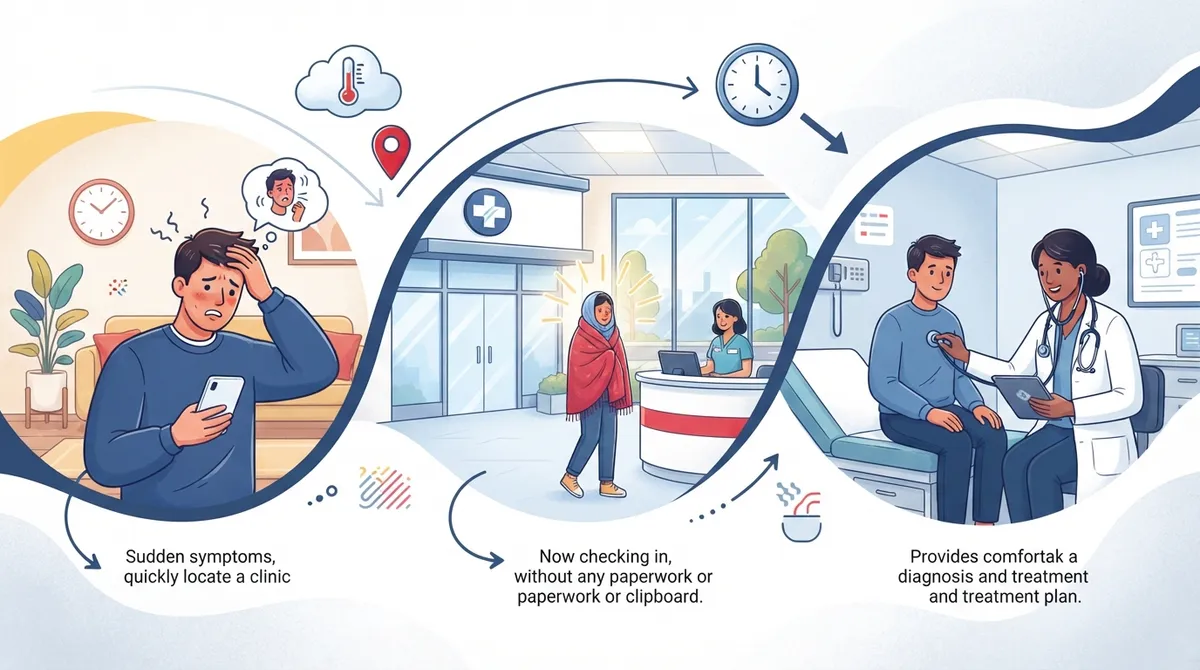
Same day urgent care means you can be seen for a new health concern on the day it happens. Some clinics accept walk-ins. Others let you book a same-day slot online. Many also offer virtual visits for problems that can be assessed by video.
It is meant for issues that need prompt attention but are not emergencies. Hours, tests, and services vary by clinic, so it is smart to confirm details before you go.
Same day urgent care is also not meant to replace your primary care doctor. Primary care manages prevention, chronic conditions, medication follow-up, and your long-term health. Urgent care handles the sudden problem in front of you. The best results come when both work together.
How Common Is Urgent Care Use?
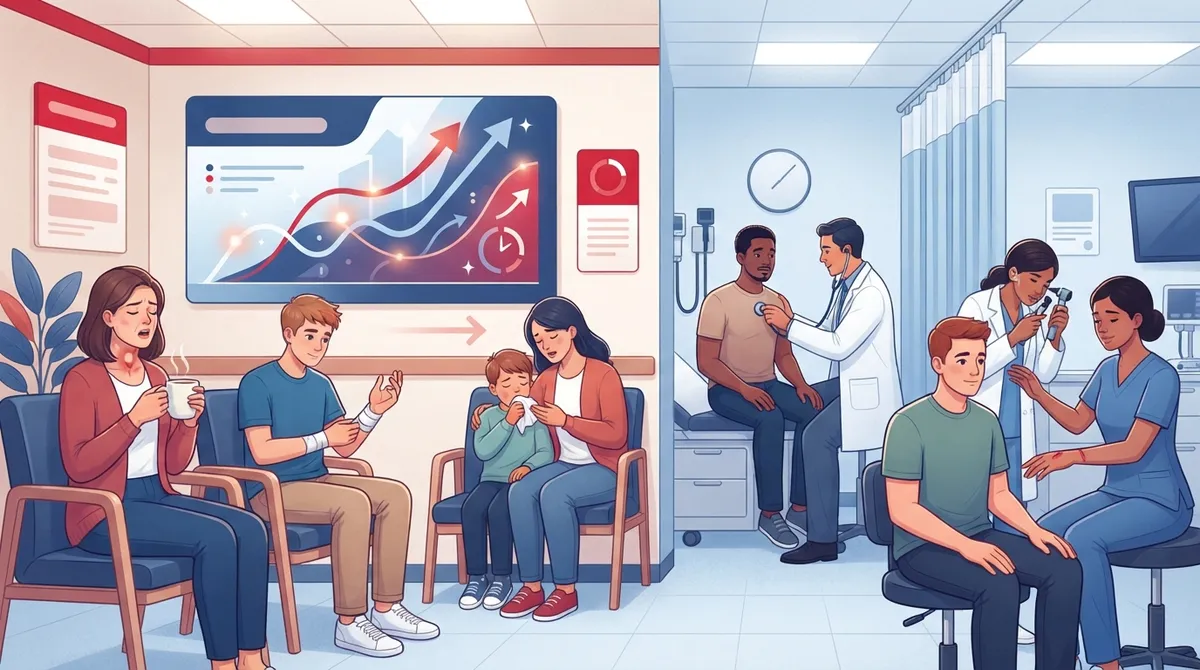
Urgent care is now a routine part of how Americans get care. According to CDC National Health Interview Survey data for 2024, 27.6% of people reported at least one urgent care center visit in the prior 12 months. Use was similar across age groups:
- 28.5% of children ages 0 to 17
- 28.9% of adults ages 18 to 64
- 21.9% of adults age 65 and older
Among adults ages 18 to 64, use was highest in large-fringe metropolitan areas (31.5%) and lowest in nonmetropolitan areas (26.1%). The Urgent Care Association also reports more than 15,000 U.S. urgent care centers serving over 185 million patients each year. That figure is an industry estimate, not a CDC survey result.
What Conditions Can Same Day Urgent Care Treat?
Most urgent care visits involve common, short-term problems. Capabilities differ by location, so call ahead if you are unsure. You can also read our breakdown of what urgent care services can actually treat.
Typical reasons people visit include:
- Fever, sore throat, cough, and other cold or flu symptoms
- Ear pain and sinus pressure
- Minor sprains, strains, and small fractures
- Cuts that may need cleaning or stitches
- Urinary symptoms, such as burning or urgency
- Rashes, insect bites, and some skin infections
- Mild dehydration and stomach illness
Many clinics can run quick tests on site. Strep throat is a common example, and prompt testing makes a real difference. If you suspect it, see our guide on how to get effective strep throat treatment fast.
Urgent Care vs. Primary Care vs. the Emergency Room
Knowing where to go saves time and money. Each setting has a different job. The table below gives a simple comparison.
|
Care Setting |
Best For |
Typical Access |
Examples |
|---|---|---|---|
|
Primary care |
Prevention, chronic conditions, ongoing health |
Scheduled visits; some same-day slots |
Annual physical, diabetes follow-up, screenings |
|
Same day urgent care |
New, non-life-threatening problems that cannot wait |
Walk-in, online booking, or virtual |
Fever, sprain, ear pain, minor cut |
|
Emergency room |
Life-threatening or severe emergencies |
Open 24 hours; sickest patients seen first |
Chest pain, stroke signs, major trauma |
Think of urgent care as the middle step. It handles what is too pressing for a routine appointment but not dangerous enough for the ER. Our article on why urgent care at InCare can beat the ER goes deeper on this choice.
When to Go to the Emergency Room Instead
Some symptoms are never safe to treat as routine. Call 911 or go to the nearest emergency room right away if you or someone near you has:
- Severe chest pain or pressure
- Trouble breathing or shortness of breath at rest
- Signs of stroke, such as facial drooping, arm weakness, or slurred speech
- Uncontrolled bleeding
- Major trauma, such as a serious fall or car accident
- Loss of consciousness or sudden confusion
If you are unsure, err on the side of caution. A clinic can also tell you quickly if your symptoms need a higher level of care. Avoiding common errors helps, too. Read about urgent care mistakes that could cost you your health before your next visit.
What Happens During a Same Day Urgent Care Visit?
A visit is usually simple and fast. Here is what most patients can expect:
- Check-in. You share your ID, insurance details, and reason for the visit.
- Triage. A nurse or medical assistant records your vital signs and asks about symptoms.
- Exam. A clinician examines you and may order tests, such as a rapid strep or flu swab.
- Treatment. You may receive a prescription, a splint, stitches, or care instructions.
- Follow-up plan. You learn what to watch for, when to return, and who should see your results.
The whole process can be quick when you come prepared. A little planning goes a long way.
How to Prepare for Your Visit
Bring the items that help your clinician act fast. A short list keeps you organized, even when you feel unwell:
- Photo ID and insurance card
- A list of current medications and doses
- Known allergies
- Any recent records, test results, or imaging
- Notes on when symptoms began and what makes them better or worse
Call ahead about wait times, age limits, available tests, and cost. If you are new to a practice, our guide to a new patient appointment explains what to bring and expect.
Walk-In, Online Booking, or Virtual: Which Is Best?
Access models vary, and each suits a different situation.
- Walk-in: Best when you need care right now and have no time to plan.
- Online same-day booking: Best if you want a reserved time and less waiting.
- Virtual urgent care: Best for problems that can be assessed remotely, such as mild cold symptoms or a simple rash.
Virtual care has limits. If you need a physical exam, a swab, or an X-ray, you will need an in-person visit. Tech-savvy patients often start with a virtual check and then come in only if needed. Learn more about same-day appointments and fast primary care at our clinic.
How Much Does Same Day Urgent Care Cost?
Costs depend on your insurance, the services you receive, and the clinic. A basic visit usually costs less than an emergency room visit for the same minor problem. Tests, imaging, and procedures add to the total.
To avoid surprises, ask these questions before you go:
- Do you accept my insurance plan?
- What is the visit fee if I pay without insurance?
- Are tests like X-rays or lab work billed separately?
- Will there be a separate charge for a procedure, such as stitches?
Clear answers up front help you plan. Families managing tight budgets often find this step valuable.
Why Continuity Matters After an Urgent Visit
An urgent care visit solves today's problem. But your long-term health depends on follow-through. This is where connected care makes a difference.
Data supports the link between the two. A 2025 Trilliant Health analysis found that 63.6% of urgent care patients also used primary care, compared with 56.0% of non-users. That suggests urgent care and primary care often go hand in hand.
After any visit, share your summary and test results with your regular clinician. This matters most if symptoms linger, your treatment changes, or follow-up is advised. A fragmented approach can leave gaps. Learn why in our comparison of fragmented care vs. coordinated care.
Why Choose InCare for Same Day Urgent Care?
InCare is a personalized healthcare clinic that blends advanced technology with medical expertise. We offer urgent care alongside primary care, so your quick visit connects to your bigger health picture. Here is what sets us apart:
- Care under one roof. Urgent care, primary care, cancer screenings, and wellness services work together.
- Convenient locations. Visit us in Tampa or Riverview, or use telemedicine when it fits.
- A prevention mindset. We look beyond today's symptom to support whole-body health.
- Trusted by patients. InCare holds a 4.8 out of 5 rating on Google across 359 reviews, with patients praising our friendly staff and quality of care.
You can see what patients say when you visit us on Google — InCare. If you live near Riverview, read more about urgent care in Riverview. Tampa residents can explore urgent care in Tampa without the long wait.
Staying connected with us online also helps you stay informed. Follow InCare on Instagram, Facebook, and TikTok for health tips and clinic updates.
Who Benefits Most from Same Day Urgent Care?
Many people find same day urgent care helpful, especially when schedules are tight:
- Busy young families who cannot wait days for a sick child to be seen
- Working professionals who need quick answers and an efficient visit
- Young adults and women without an established doctor who want a trusted first point of care
- Wellness-focused patients who want urgent needs handled within a clinic that also supports prevention
If you do not have a regular doctor yet, an urgent visit can be a smart first step. It can lead to a lasting relationship. Our guide on finding the best primary care near you can help you take that next step.
Conclusion: Get Care Today, Build Health for Life
Same day urgent care gives you fast, practical help when illness or injury strikes unexpectedly. It works best as a partner to primary care, not a substitute. Know when to use it, when to head to the ER, and how to share your results afterward.
When you need care now, do not wait and worry. Book your same-day visit at InCare today, or contact our team with any questions. We are here in Tampa and Riverview to help you feel better, faster, and stay well long after the visit ends.
FAQs
Q: Can I walk into same day urgent care without an appointment?
A: Many urgent care clinics accept walk-ins, and some also offer online same-day booking to reduce waiting. Policies vary by location, so it is wise to call ahead or check the clinic's website. Booking ahead can help you secure a time slot.
Q: Should I go to urgent care or wait for my primary care doctor?
A: If your problem is new, non-life-threatening, and needs attention within a day, urgent care is often the better choice. For ongoing concerns, prevention, or chronic conditions, your primary care doctor is the right fit. Share any urgent visit results with your regular clinician afterward.
Q: Can urgent care prescribe medication or order tests and X-rays?
A: Many urgent care clinics can prescribe medications and run common tests, such as rapid strep or flu swabs. Some also offer imaging like X-rays. Services differ by clinic, so confirm what is available before you visit.
Q: Can I use telehealth for a same day urgent care visit?
A: Yes, virtual urgent care can work well for problems that can be assessed remotely, such as mild cold symptoms or a simple rash. It is not suitable when you need a physical exam, lab testing, or imaging. In those cases, an in-person visit or emergency evaluation may be needed.
Q: How much does a same day urgent care visit cost?
A: Cost depends on your insurance, the clinic, and any tests or procedures you receive. A basic urgent care visit often costs less than an emergency room visit for a minor problem. Ask about self-pay rates and separate charges before your appointment.


