

Key Takeaways
- Retatrutide is only accessible through clinical trials and not FDA-approved; avoid unregulated online sellers offering unapproved versions, as they pose serious contamination and dosing risks.
- Use ClinicalTrials.gov to find trials, but always confirm the recruitment status of your specific site location by directly calling the study team, as outdated information circulates online.
- Most obesity trials require a BMI of at least 30 or 27 with weight-related conditions; common exclusions include type 1 diabetes, recent heart events, pancreatitis history, or thyroid cancer.
- The enrollment process takes several weeks and involves screening calls, bloodwork, physical exams, informed consent, and potential randomization to placebo groups with regular follow-up visits required.
- If you don't qualify for retatrutide trials, FDA-approved alternatives like semaglutide and tirzepatide are immediately available through primary care providers with established safety data.
- Prepare your health records before screening (BMI history, blood pressure, cholesterol, diabetes status, medications) to speed up the enrollment process and improve qualification chances.
Retatrutide has become one of the most talked-about weight loss drugs still under study. Many patients ask their doctor about it after reading online reviews or watching social media videos. But retatrutide is not yet an approved medicine. The only way to access it right now is through a clinical trial. Understanding how retatrutide clinical trial enrollment actually works can help you make a safe, informed choice about your health.
At InCare, our weight loss and primary care teams in Tampa and Riverview often meet patients curious about new obesity treatments. While we do not run retatrutide trials ourselves, we can help you understand your health history, review your eligibility factors, and point you toward trustworthy resources. This guide explains what retatrutide is, how trial enrollment works, and what questions to ask before you sign up.

What Is Retatrutide and Why Is It Still in Trials
Retatrutide (also called LY3437943) is an experimental once-weekly injection made by Eli Lilly. It works differently than older weight loss drugs. Instead of activating one hormone pathway, it activates three: GIP, GLP-1, and glucagon receptors. This triple-action approach is why researchers believe it may produce stronger results than earlier medications.
Because retatrutide is still investigational, it has not received approval from the FDA. It is not available at pharmacies. It cannot be prescribed by any doctor outside of an approved research study. You should never buy retatrutide from online peptide sellers. These products are unregulated, unsafe, and not the same as trial-grade medication given under medical supervision.
People considering retatrutide should also avoid stopping any current prescribed treatment in hopes of qualifying for a study. Your primary care provider can help you weigh options safely, including approved injection therapies that are already available today.
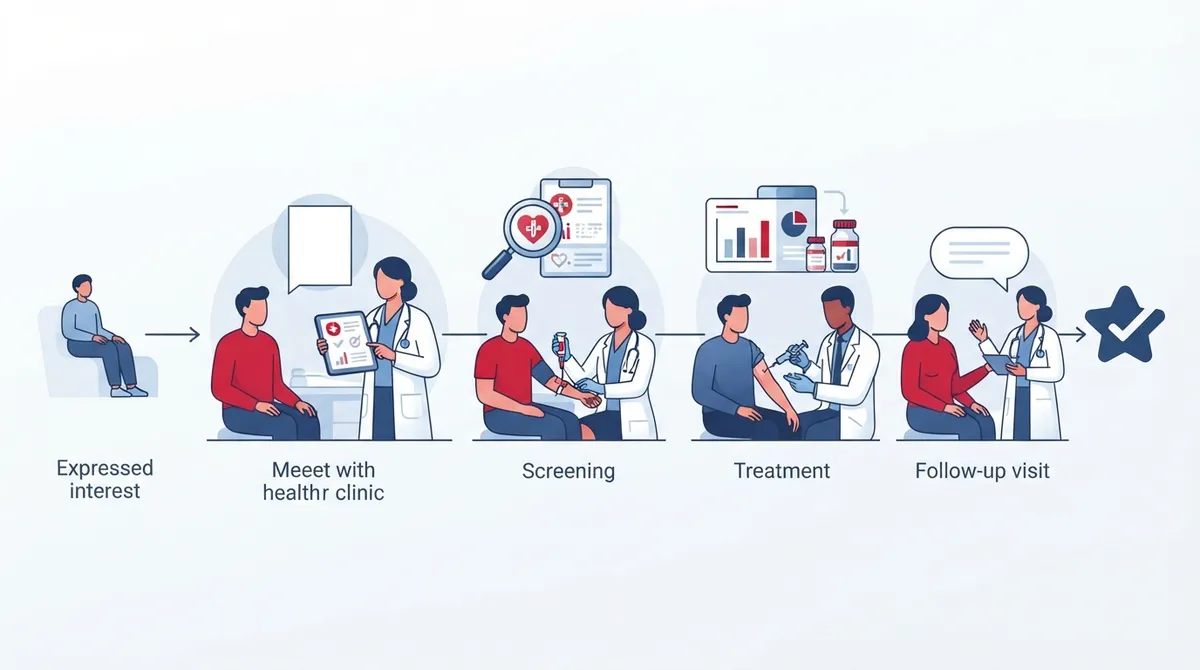
How Retatrutide Clinical Trial Enrollment Actually Works
Enrollment is not automatic. It follows a structured process designed to protect participants and gather reliable data. Here is a general step-by-step overview of what to expect.
- Find a listed study. The main source for current retatrutide research is ClinicalTrials.gov. This is a free government database that lists every registered study, including retatrutide trials sponsored by Eli Lilly.
- Check the site status. A trial may show as "Recruiting" overall, but some individual locations could be full or paused. You must confirm the status of the specific site nearest you.
- Contact the study team. Reach out using the phone number or email listed on the registry page. Do not rely on third-party directories, which may show outdated details.
- Complete a screening call. A coordinator will ask about your health history, current medications, and weight-related conditions to see if you may qualify.
- Attend an in-person screening visit. This typically includes bloodwork, a physical exam, and a review of your medical records.
- Give informed consent. You will receive detailed information about risks, benefits, and your right to leave the study at any time.
- Begin randomization. Many trials assign participants to either the active drug or a placebo group. You may not know which group you are in.
- Attend follow-up visits. Trials require regular check-ins to track your progress and watch for side effects.
This process can take several weeks from first contact to your first dose. Patience and accurate documentation help move things along faster.
Who Typically Qualifies for Retatrutide Studies
Eligibility rules differ by trial, but most obesity-focused studies share similar baseline requirements. Common criteria include:
- A body mass index (BMI) of at least 30, or at least 27 with a weight-related health condition
- Conditions such as high blood pressure, abnormal cholesterol, or obstructive sleep apnea
- A history of unsuccessful attempts at diet-based weight loss
- Stable use of current medications for a set period, often 90 days
- Willingness to attend all required visits and follow study rules
Some studies also focus on people with type 2 diabetes. For example, one completed retatrutide trial required participants to have type 2 diabetes, a BMI of at least 27, and stable diabetes treatment for at least three months before joining.
Common Reasons People Are Excluded
Not everyone who wants to join a retatrutide trial will qualify. Studies often exclude people with certain health risks to keep participants safe. Common exclusion factors include:
- Type 1 diabetes
- Recent heart attack, stroke, or severe heart failure
- A history of pancreatitis
- Prior or planned weight loss surgery
- Personal or family history of medullary thyroid cancer or multiple endocrine neoplasia type 2
If you have any of these conditions, a study coordinator will explain why you may not be eligible and may suggest other trials that fit your health profile better.
Retatrutide Trial Data: What the Numbers Show
Several major retatrutide studies have posted enrollment figures on ClinicalTrials.gov. Reviewing these numbers can help you understand the size and scope of ongoing research.
|
Trial Name |
NCT Number |
Focus |
Enrollment |
Status |
|---|---|---|---|---|
|
TRIUMPH-1 |
NCT05929066 |
Obesity or overweight |
2,335 (actual) |
Completed |
|
TRIUMPH-2 |
NCT05929079 |
Type 2 diabetes with obesity |
1,152 (actual) |
Completed |
|
TRIUMPH-7 |
NCT07035093 |
Obesity with chronic low back pain |
586 (goal) |
Varies by site |
|
TRIUMPH-9 |
NCT07357415 |
Dose-escalation study |
600 (estimated) |
Active, not recruiting |
These figures change often. Some trials that were once recruiting are now closed, while newer ones may open in their place. Always check the live registry page before assuming a study is accepting new participants.
How to Search ClinicalTrials.gov the Right Way
Searching for retatrutide research can feel overwhelming if you are not familiar with the registry format. Follow these steps to search efficiently:
- Go to the official ClinicalTrials.gov search page and type "retatrutide" into the condition or intervention field.
- Filter results by recruitment status, such as "Recruiting" or "Not yet recruiting."
- Narrow results by location to find sites near Tampa, Riverview, or elsewhere in Florida.
- Open the full study record to review eligibility criteria in detail.
- Note the contact information listed under "Contacts and Locations."
- Call or email the site directly to confirm current openings.
This process protects you from outdated blog posts or unofficial trial trackers that may list incorrect information.
Questions to Ask Before You Enroll
Before agreeing to join any retatrutide study, ask the research team these important questions:
- What is the chance I will receive a placebo instead of the study drug?
- How many visits will I need to attend, and how long does each one take?
- What side effects have been reported so far?
- Will I be compensated for travel or time?
- Can I withdraw at any point without penalty?
- Who do I contact if I feel unwell during the study?
A legitimate research site will always answer these questions clearly. If a program pressures you to sign up quickly or avoids answering basic safety questions, treat that as a warning sign.
How Primary Care Can Support Your Decision
Your regular doctor plays an important role even if they are not running the trial. A primary care visit can help you gather documentation that speeds up the screening process, such as:
- Recent BMI and weight history
- Blood pressure and cholesterol readings
- Diabetes status and A1C levels
- A list of current medications and past weight loss attempts
- Relevant family health history
At InCare, our providers, including Dr. Naveen Paddu, Dr. Pramjeet Ahluwalia, and Dr. Teshy John, regularly help patients organize their health records before pursuing outside research programs. We also offer body composition analysis and DNA gene testing that can add useful context to your overall health picture, even outside of a formal trial setting.
We never promise trial eligibility, since that decision belongs to the study sponsor. But we can help you prepare accurate information and understand your options, including current GLP-1 medication choices already approved for use today.
What Happens If You Do Not Qualify
Many people who apply for retatrutide trials are not accepted. This does not mean your health goals are out of reach. Approved treatments already exist that use similar hormone pathways. Options like semaglutide and tirzepatide are FDA-approved and available through supervised medical weight loss programs. These treatments have years of safety data behind them and can be started immediately with a doctor's guidance.
If you are curious about how these current options compare, our team can walk you through the differences during a consultation. You can also read more about semaglutide versus tirzepatide to understand which approach might fit your goals better while retatrutide research continues.
Staying Safe While Researching Retatrutide
The excitement around retatrutide has led to a rise in unsafe practices. Some online sellers offer "research chemical" versions of retatrutide with no quality control. These products carry serious risks, including contamination, incorrect dosing, and no medical oversight. A real clinical trial will never ask you to buy the drug yourself. All study medication is provided directly by the trial site at no cost to you in most cases.
If you want to follow InCare's ongoing wellness content and updates on new treatments, you can follow us on Facebook and Instagram, or check out our latest tips on TikTok. You can also see what our Tampa and Riverview patients say about their experience by visiting our InCare location on Google.
Conclusion
Retatrutide clinical trial enrollment can feel confusing, but the process becomes much clearer once you understand the steps involved. Start with the official ClinicalTrials.gov registry, confirm site-level status, and prepare your health records ahead of time. While you explore your options, InCare's primary care and weight loss teams in Tampa and Riverview are ready to help you review your current health status and discuss approved treatments available right now. Reach out to our team to schedule a consultation, or book your appointment today to start building a safe, personalized plan for your weight and wellness goals.
FAQs
Q: Are any retatrutide clinical trials currently recruiting near me?
A: Recruitment status changes often and varies by location. The only reliable way to check is by visiting ClinicalTrials.gov and searching for retatrutide studies, then confirming the status of the specific site nearest you by phone or email.
Q: Who is eligible to enroll in a retatrutide obesity clinical trial?
A: Most obesity trials require a BMI of at least 30, or at least 27 with a weight-related condition like high blood pressure or sleep apnea. Exact eligibility rules vary by protocol, so you must review each study's specific requirements.
Q: Can people with type 2 diabetes enroll in a retatrutide trial?
A: Yes, some retatrutide studies, such as the TRIUMPH-2 trial, specifically include people with type 2 diabetes and obesity. These studies often require stable diabetes treatment for at least 90 days before enrollment.
Q: Is retatrutide FDA approved or available by prescription?
A: No, retatrutide is not FDA approved and cannot be prescribed outside of a clinical trial. It should never be purchased from online vendors, as unregulated versions carry serious safety risks.
Q: What tests and screening appointments are required before enrollment?
A: Most trials require a screening visit that includes bloodwork, a physical exam, and a review of your medical history and current medications. This helps the research team confirm you meet all eligibility criteria before randomization.