Key Takeaways
- Confirm low testosterone with two morning fasting blood tests and matching symptoms before starting treatment; a single low result or age alone is not a diagnosis.
- Testosterone therapy is not safe for everyone: it is generally avoided with untreated severe sleep apnea, recent heart attack or stroke, elevated hematocrit, or near-term plans to have children.
- Monitor treatment with testosterone and hematocrit checks about 3 to 6 months after starting, then at 12 months and yearly, plus periodic blood pressure checks.
- For men with obesity-linked low testosterone and no other cause, weight loss is typically the first-line approach, alongside better sleep and diabetes control.
Many men in Tampa notice changes as they age: lower drive, slower recovery, less muscle, and a drop in energy. Some wonder if hormones are the cause. For most men, hormone replacement for men in Tampa means one thing: an evaluation for testosterone deficiency, also called male hypogonadism, and prescription testosterone therapy when it is clinically justified.
Testosterone therapy is a medical treatment. It is not a general fix for aging, tiredness, or weight gain. Leading guidance, including the Endocrine Society's guidelines, stresses that treatment should follow symptoms, repeat blood tests, a search for the cause, and a careful look at risks and benefits.
This guide explains how the process works, who may qualify, what treatment options exist, and what follow-up care looks like. It also shows why a primary care setting such as InCare is a strong place to start your evaluation.

What Hormone Replacement for Men Really Means
Hormone replacement for men usually refers to testosterone replacement therapy, often called TRT. It is meant for men with confirmed low testosterone and matching symptoms. It is not meant for men with normal levels who simply want to feel younger.
Testosterone helps regulate sex drive, muscle mass, bone density, red blood cell production, and mood. When levels fall too low because of a testicular, pituitary, or hypothalamic problem, symptoms can follow. If you want a deeper look at how the treatment works, read what testosterone replacement therapy involves at InCare.
Hormone Replacement Is Not Anti-Aging Medicine
Testosterone levels do decline gradually with age. But a lower number alone is not a disease. Guidelines do not support treating men based on age or one lab result. The goal is to treat a diagnosed medical condition, not to chase a number.
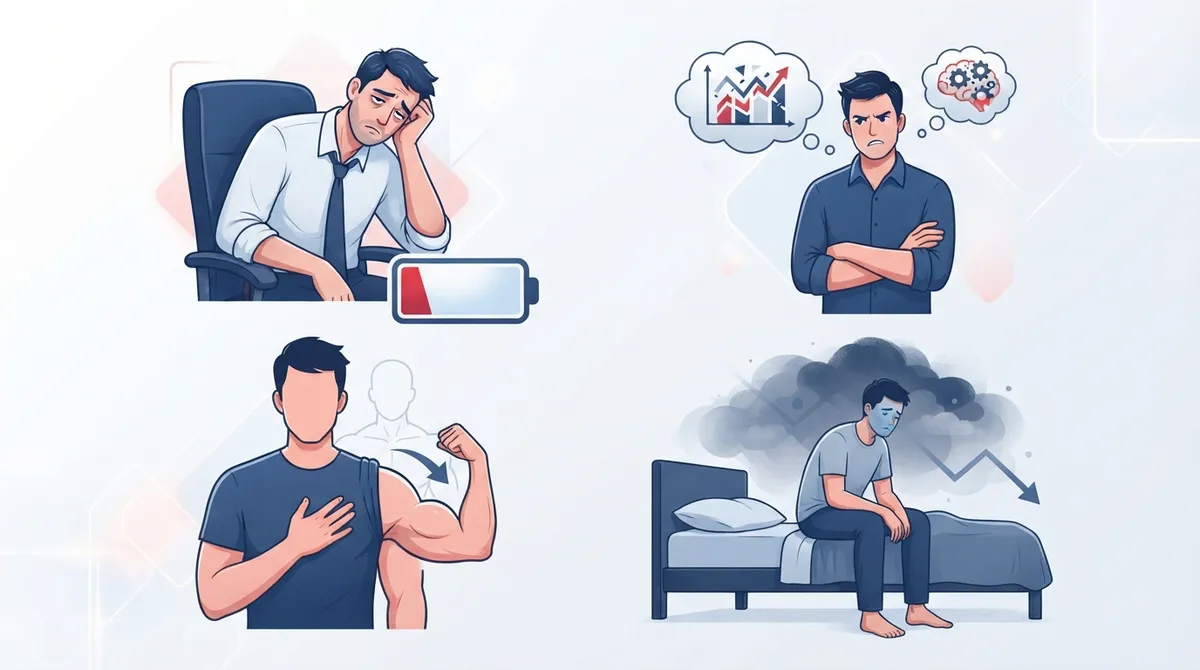
Symptoms That May Point to Low Testosterone
Some symptoms are more specific to low testosterone than others. Knowing the difference helps you and your doctor decide whether testing makes sense.
More Specific Symptoms
- Reduced sex drive (low libido)
- Fewer spontaneous erections, especially in the morning
- Infertility or low sperm count
- Loss of muscle mass and strength
- Low bone density
- Anemia that has no other explanation
- Unexplained loss of body hair
Less Specific Symptoms
Fatigue, low mood, poor focus, and weight gain can occur with low testosterone. But they also occur with poor sleep, stress, thyroid disease, depression, diabetes, and many other conditions. This is why a lab test alone cannot confirm hypogonadism. A full medical review is essential.
Sleep problems are especially worth checking. Untreated sleep apnea can lower testosterone and also makes testosterone therapy unsafe in severe cases. You can learn more about sleep apnea care in Tampa and Riverview.
How Low Testosterone Is Diagnosed
A proper diagnosis follows a clear sequence. Skipping steps can lead to the wrong treatment.
- Symptom and history review. Your clinician asks about sexual function, energy, sleep, mood, medications, weight changes, and fertility plans.
- Physical exam. This checks for signs such as reduced muscle, changes in body hair, and testicular findings.
- Morning blood test. Total testosterone is best measured in the morning, ideally fasting, when levels are highest.
- Repeat testing. Endocrine Society guidance recommends confirming a low result with a second morning test.
- Extra labs when needed. Free testosterone may help when total testosterone is borderline or when sex hormone-binding globulin may skew results.
- Cause investigation. LH and FSH help show whether the problem is in the testicles or in the pituitary or hypothalamus.
A commonly used threshold sits near 300 ng/dL. However, the exact cutoff depends on the lab's assay and reference range. A single number should never be treated as a diagnosis by itself.
Why the Cause Matters
Finding the reason for low testosterone can change the treatment plan. Obesity, certain medications, sleep apnea, diabetes, and pituitary conditions can all play a role. In some cases, treating the underlying issue improves hormone levels without any prescription testosterone.
Treatment Options for Men With Confirmed Deficiency
When therapy is appropriate, several prescription forms exist. The best choice depends on your health, preferences, cost, and the risks of each formulation.
|
Form |
How It Is Used |
Common Considerations |
|---|---|---|
|
Topical gel |
Applied daily to the skin |
Steady levels; skin transfer risk to others; can raise blood pressure |
|
Injections |
Given on a set schedule by injection |
Cost-effective; levels may rise and fall between doses |
|
Other prescription options |
Varies by product |
Each has its own monitoring needs and risks |
Your clinician should explain the pros and cons of each option before you decide. To see how a primary care clinic approaches this, review physician-supervised testosterone injections for low T.
Who Should Not Take Testosterone
Testosterone therapy is not safe for every man. Guidance advises against it, or calls for great caution, in several situations.
- Certain prostate or breast cancer concerns
- Elevated hematocrit (too many red blood cells)
- Untreated severe obstructive sleep apnea
- Uncontrolled heart failure
- Recent heart attack or stroke (guidance advises against starting within six months)
- Thrombophilia or clotting disorders
- Plans to have children in the near term
Fertility deserves special attention. Testosterone therapy can suppress sperm production and impair fertility. Men who want to father children soon should talk with their clinician about other options first.
Monitoring and Follow-Up Are Part of Treatment
Starting therapy is only the beginning. Safe treatment depends on regular check-ins. A good monitoring plan typically includes the following.
|
What Is Checked |
Typical Timing |
Why It Matters |
|---|---|---|
|
Testosterone level |
About 3 to 6 months after starting, then at 12 months and yearly |
Confirms the dose is working |
|
Hematocrit |
Same schedule as above |
Testosterone can raise red blood cell count |
|
Blood pressure |
Periodically |
FDA labeling notes testosterone products can raise blood pressure |
|
Prostate assessment |
As clinically appropriate |
PSA changes or prostate findings may need a urology referral |
|
Symptoms and side effects |
Every visit |
Shows whether treatment is helping |
Exact timing can vary by formulation and by your health history. As one product-specific example, FDA labeling for a testosterone gel reported an average blood pressure rise of 3.1 mm Hg systolic and 1.2 mm Hg diastolic after 16 weeks. That is not a prediction for every patient, but it shows why blood pressure checks matter. You can also read about blood pressure management strategies to support heart health during treatment.
Lifestyle and Weight: Often the First Step
For men whose low testosterone is linked to overweight or obesity, with no other cause found, the Endocrine Society notes that weight loss is typically a first-line approach. Losing weight can raise testosterone naturally in some men.
Better sleep, regular strength training, stress control, and treating diabetes also support healthy hormone levels. InCare offers medical support in this area through its weight loss programs and body composition analysis, which tracks muscle and fat so you can see real progress.
Why Start With a Primary Care Clinic
A primary care clinic can look at the whole picture. Fatigue, low libido, and mood changes often have more than one cause. A broad evaluation helps rule out thyroid problems, diabetes, anemia, depression, and sleep disorders before any hormone treatment begins.
InCare is a personalized healthcare clinic with locations in Tampa and Riverview. The practice combines modern technology with hands-on medical expertise. For men, that means a clear diagnostic process, tailored treatment plans, and ongoing monitoring under one roof. InCare also offers related services that support men's health, including cancer screening, DNA gene testing, and prostate exam guidance.
Patients can also meet the clinical team on the providers page, or explore the Tampa and Riverview locations. To see what others say about the practice, read InCare reviews on Google, where the clinic holds a 4.8 out of 5 rating. You can also follow InCare on Instagram, Facebook, and TikTok for health tips and updates.
What to Expect at Your First Visit
Knowing the steps can make the visit less stressful. Here is a simple outline of what usually happens.
- You share your symptoms, health history, medications, and goals.
- Your clinician performs a physical exam and orders morning labs.
- You return for a repeat test if the first result is low.
- Your clinician explains the likely cause and reviews all options, including lifestyle changes.
- If therapy is appropriate, you choose a treatment form and agree on a monitoring schedule.
Come prepared with a list of your medications and supplements. Mention any plans to have children, and any history of heart, prostate, or sleep problems. Honest, complete information leads to safer decisions. For a helpful preview of the process, see what to expect at a new patient appointment.
Take the Next Step Toward Safe, Evidence-Based Care
Hormone replacement for men in Tampa works best when it starts with a thorough evaluation, not a quick prescription. Confirm the diagnosis with repeat testing, look for the cause, weigh the risks, and commit to regular follow-up. That approach protects your health and gives therapy the best chance to help.
If you are noticing low drive, lost muscle, or ongoing fatigue, a conversation with a trusted clinician is the right place to begin. Book your visit with InCare to start a personalized evaluation, or contact our team with any questions before you schedule.
FAQs
Q: What are the symptoms of low testosterone in men?
A: More specific symptoms include low libido, fewer spontaneous erections, infertility, loss of muscle mass, low bone density, anemia, and unexplained loss of body hair. Fatigue and mood changes can also occur but have many other causes, so testing and a full medical review are needed to confirm low testosterone.
Q: How is low testosterone diagnosed, and do I need two blood tests?
A: Diagnosis requires compatible symptoms plus consistently low testosterone on accurate testing. Endocrine Society guidance recommends confirming a low morning, fasting total testosterone result with a second morning test before treatment is considered.
Q: Can testosterone therapy affect fertility or sperm count?
A: Yes. Testosterone therapy can suppress sperm production and impair fertility. It is generally not appropriate for men planning to have children in the near term, so discuss your family plans with your clinician before starting.
Q: What follow-up is needed while taking testosterone?
A: Guidance recommends checking testosterone and hematocrit about 3 to 6 months after starting, then at 12 months and yearly. Blood pressure should also be monitored periodically, and prostate assessment should be discussed when appropriate.
Q: Can weight loss improve low testosterone?
A: For men whose low testosterone is linked to overweight or obesity with no other cause found, the Endocrine Society notes weight loss is typically a first-line approach. Improving sleep and treating conditions such as diabetes can also support healthier hormone levels.