

Key Takeaways
- HMO POS plans combine HMO structure with limited out-of-network coverage through a point-of-service benefit, requiring a primary care provider for coordination while offering some flexibility at higher costs.
- Always verify your preferred doctors and facilities are in-network by calling the plan and provider directly, as outdated directories can lead to surprise bills and unexpected out-of-pocket costs.
- Your primary care provider is central to HMO POS plans—building a strong relationship enables early detection of health issues, avoids duplicate tests, and streamlines specialist referrals.
- HMO POS plans work best for young families, busy professionals, and wellness-focused individuals seeking coordinated care with lower in-network costs compared to PPO alternatives.
Choosing a health plan can feel confusing. Many people see the letters HMO and POS and wonder what they mean for their daily care. The short answer: an HMO POS plan is a health plan that works like an HMO but adds some out-of-network coverage through a point-of-service benefit. It blends coordinated care with a bit more flexibility.
For busy professionals, young families, and wellness-minded adults, this choice matters. It affects which doctor you see first, how you reach specialists, and what you pay. Your primary care provider often sits at the center of it all.
This guide explains how HMO POS plans work in plain terms. You will learn how they differ from HMO and PPO plans, what to compare before you enroll, and how to get the most from your primary care relationship. Rules vary by plan, so always confirm details with your insurer.

What Does HMO POS Mean?
HMO stands for Health Maintenance Organization. POS stands for Point of Service. Together, an HMO POS plan combines two ideas:
- HMO structure: You choose a primary care provider (PCP) and use a defined network of doctors and facilities.
- POS flexibility: The plan may cover some out-of-network services, usually at a higher cost to you.
According to HealthCare.gov's guide to plan and network types, a POS plan typically costs less when you stay in network and often requires a PCP referral to see a specialist. It may cover some out-of-network care, but the exact rules depend on your policy.
In Medicare Advantage, the term HMO-POS has a specific meaning. It is an HMO that offers out-of-network coverage for certain defined services. The plan must describe those services, the maximum cost-sharing, and any annual limits in writing.
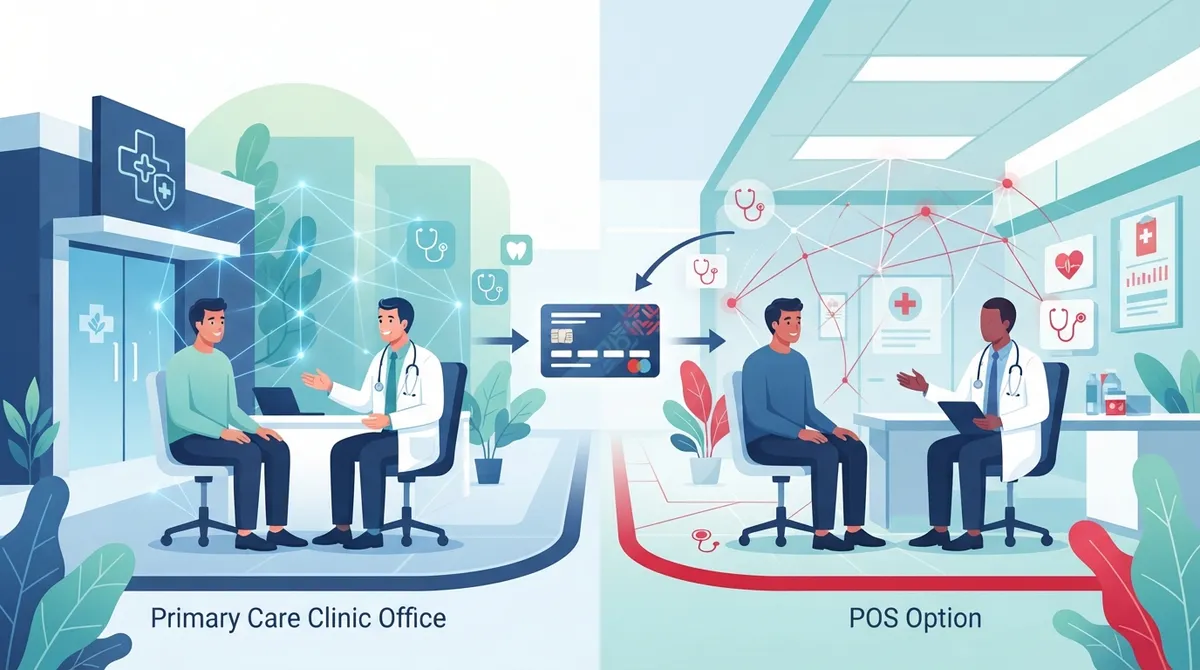
How HMO POS Plans Work in Everyday Care
Think of your PCP as the home base for your health. In most HMO and POS designs, your PCP coordinates your care, orders screenings, and provides referrals when you need a specialist.
Here is how a typical care journey may look:
- Pick a PCP in your network. You choose a primary care provider who participates in your plan.
- Start with preventive care. Annual exams, vaccines, and screenings are usually managed through your PCP.
- Get a referral if needed. If you need a cardiologist or dermatologist, your PCP often refers you to an in-network specialist.
- Use out-of-network benefits carefully. If your plan offers a POS benefit for a specific service, confirm coverage and cost before you go.
- Review your costs. Check your premium, deductible, copays, and out-of-pocket maximum each year.
This structure rewards people who build a steady relationship with one trusted doctor. A good PCP knows your history, spots patterns early, and keeps your care organized. You can learn more about that role in our guide on what a primary care physician does for your health.
HMO vs. HMO POS vs. PPO: Key Differences
Many people compare these three plan types. The table below shows the general differences. Details vary by insurer and policy, so treat this as a starting point.
|
Feature |
HMO |
HMO POS / POS |
PPO |
|---|---|---|---|
|
Primary care provider required |
Usually yes |
Usually yes |
Usually no |
|
Specialist referral needed |
Often yes |
Often yes |
Usually no |
|
Out-of-network coverage |
Emergencies only, in most cases |
May cover some services at higher cost |
Generally covered at higher cost |
|
Typical cost for in-network care |
Lower |
Lower |
Moderate to higher |
|
Care coordination |
Strong |
Strong |
Self-directed |
The main trade-off is simple. HMO and POS plans lean toward coordination and lower in-network costs. PPO plans lean toward freedom of choice and often come with higher costs.
How Common Are These Plans?
Plan type varies by market. In its 2025 Employer Health Benefits Survey, KFF reported that covered U.S. workers were enrolled in PPOs (46%), HDHPs with a savings option (33%), HMOs (12%), and POS plans (9%). Fewer than 1% had conventional indemnity coverage. The survey drew on responses from 1,862 randomly selected non-federal public and private employers with 10 or more workers.
Regional patterns can look quite different. In KFF's 2025 California Health Benefits Survey, covered workers were enrolled in HMOs (34%), PPOs (33%), HDHPs with a savings option (23%), and POS plans (9%). This shows why local options matter when you compare plans.
Who Benefits Most From an HMO POS Plan?
This plan style can suit several groups well. Consider where you fit:
- Tech-savvy millennials: If you like clear digital tools and virtual visits, a plan with a strong PCP network can simplify scheduling and follow-ups.
- Busy young families: One PCP who knows your household can streamline checkups, vaccines, and sick visits. Our overview of family primary care explains why this matters.
- Women building a first care relationship: If you have only seen an OB/GYN, a PCP can add whole-body wellness visits and screenings.
- Gen Z adults: If you have not yet picked a doctor, an in-network PCP is an easy and affordable starting point for prevention.
- Wellness-focused professionals: You may want advanced services alongside insurance-covered care. Always confirm which services your plan covers and which are self-pay.
What to Compare Before You Enroll
Do not choose a plan by premium alone. A low monthly cost can hide high costs elsewhere. Use this checklist:
- Provider directory: Confirm your preferred PCP, specialists, and facilities are in network.
- Service area: Make sure the plan covers where you live and work.
- PCP and referral rules: Learn when a referral or prior authorization is required.
- Out-of-network benefits: Ask which services qualify, what you pay, and whether limits apply.
- Costs: Compare premiums, deductibles, copayments, and the out-of-pocket maximum.
- Prescription coverage: Check the drug list for medicines you take.
Call the plan directly to verify network status. Directories can be out of date, so a quick call protects you from surprise bills. If you are still searching for a doctor, read how to find doctors accepting new patients near you.
HMO POS in Medicare Advantage
Many older adults meet this term when they shop for Medicare Advantage. An HMO-POS plan in Medicare is an HMO with a defined point-of-service benefit. You still use a network and a PCP for most care. The plan may also cover certain out-of-network services you choose in advance.
The Centers for Medicare & Medicaid Services requires the plan to put these details in writing. Look for:
- The list of covered out-of-network services
- The maximum cost you may pay for those services
- Any annual limits on out-of-network coverage
Because rules differ by plan, review the Evidence of Coverage before you enroll. Our guide on the traits of the best Medicare provider for primary care can help you ask better questions.
Why Primary Care Matters Most Under These Plans
In an HMO or POS design, your PCP often controls the doorway to the rest of your care. That makes your choice of doctor one of the most important decisions you will make.
A strong primary care relationship can help you:
- Catch health issues early through regular screenings
- Avoid duplicate tests and conflicting treatments
- Manage chronic conditions like blood pressure and diabetes
- Move smoothly to specialists when needed
Fragmented care costs time and money. Coordinated care tends to work better. Learn more in Fragmented Care vs. Coordinated Care: Which Wins?
How InCare Supports Patients Under Network-Based Plans
InCare is a personalized primary care and wellness clinic serving Tampa and Riverview, Florida. Our team combines modern technology with hands-on medical expertise. We offer primary care, urgent care, cancer screening, and preventive wellness services designed to look at the whole person.
Patients value this approach. InCare holds a 4.8 out of 5 rating on Google across 359 reviews, with praise for our friendly staff and quality of care. You can read InCare reviews on Google to see what our patients say.
Because insurance networks change, we encourage every patient to confirm coverage with their plan before a visit. Our team is happy to help you understand your options. Also follow us on Instagram for wellness tips and clinic updates.
Common Mistakes to Avoid
Many people run into trouble with HMO and POS plans for the same few reasons:
- Skipping the network check. Never assume a doctor is covered. Always verify.
- Ignoring referral rules. Seeing a specialist without a needed referral may leave you with the bill.
- Assuming all out-of-network care is covered. POS benefits are limited and plan-specific.
- Focusing only on premiums. Look at the full cost picture, including deductibles and copays.
- Waiting to pick a PCP. Establish care early so you have support when you need it.
If you want help choosing wisely, our article on mistakes to avoid when choosing a primary care doctor is a useful next step.
Conclusion: Make Your Plan Work for Your Health
An HMO POS plan offers a middle path. You get the coordination and lower in-network costs of an HMO, plus limited out-of-network coverage for certain services. The key is to understand your plan rules, verify your network, and build a strong relationship with a primary care provider you trust.
Start with preventive care and a clear plan for your health goals. Whether you are a young family, a busy professional, or a woman seeking whole-body wellness, a dedicated PCP makes every plan work better.
Ready to take the next step? Book your appointment with InCare today, or contact our team with questions about care in Tampa and Riverview. You can also stay connected with us on Facebook and TikTok.
FAQs
Q: What does HMO POS mean in health insurance?
A: HMO POS stands for Health Maintenance Organization with a Point of Service option. It works like an HMO, with a network and a primary care provider, but may also cover some out-of-network services at a higher cost. Exact rules depend on your specific plan.
Q: Do HMO POS plans require a primary care doctor or specialist referrals?
A: Most HMO and POS plans ask you to choose a primary care provider and may require a referral to see a specialist. Requirements vary by plan, so check your policy documents or call your insurer to confirm.
Q: Can I see an out-of-network doctor with an HMO POS plan?
A: Sometimes, but only for services your plan lists as covered, and usually at a higher cost. Coverage is not automatic for every service, so confirm eligibility, cost-sharing, limits, and any prior authorization rules before your visit.
Q: Is an HMO-POS plan a type of Medicare Advantage plan?
A: Yes, HMO-POS is a Medicare Advantage plan type. It is an HMO that offers out-of-network coverage for certain specified services. The plan must describe covered services, maximum member costs, and any annual limits in writing.
Q: How do I check whether my primary care doctor is in an HMO POS network?
A: Search your plan's provider directory, then call the plan and your doctor's office to confirm. Directories can be outdated, so a direct phone call is the safest way to verify network status before you enroll or schedule care.


