

Key Takeaways
- A clinic-based VO2 test offers medical context for your results, while a performance fitness lab mainly provides training zones; for anyone with risk factors or symptoms, a clinic is the safer starting point.
- Ask whether a VO2 test is a fitness assessment or a medically supervised CPET, since this determines who reviews your results and what follow-up you receive.
- Talk to a clinician before testing if you have chest pain, dizziness, known heart or lung disease, poorly controlled high blood pressure, or unusual shortness of breath.
- Low cardiorespiratory fitness is associated with higher mortality risk, and the AHA has called for it to be treated as a clinical vital sign, though these are population associations, not individual predictions.
- Interpret your VO2 score using age- and sex-based reference ranges, and keep test type and conditions consistent when retesting so changes reflect real progress.
- Tampa options include Human Powered Health's Tampa Performance Lab at Clay Health (listed at $200) and DexaFit Tampa, but confirm current pricing and protocols before booking.
Your heart and lungs say a lot about your long-term health. One of the best ways to measure them is a VO2 max test. If you are searching for cardio fitness VO2 testing in Tampa, you will find several options. Some are fitness labs. Others are medical clinics. They are not the same thing.
This guide compares the two main paths. You will learn what the test measures, what it costs, how to prepare, and who should choose a clinic-based approach. In 2026, more people want data-driven health tools. Cardiorespiratory fitness is now seen as a key sign of overall health. The goal here is simple: help you pick the right test for your needs and your safety.
Along the way, we will explain why a primary care setting like InCare can be a smart place to start.
What Is VO2 Max and Why Does It Matter?
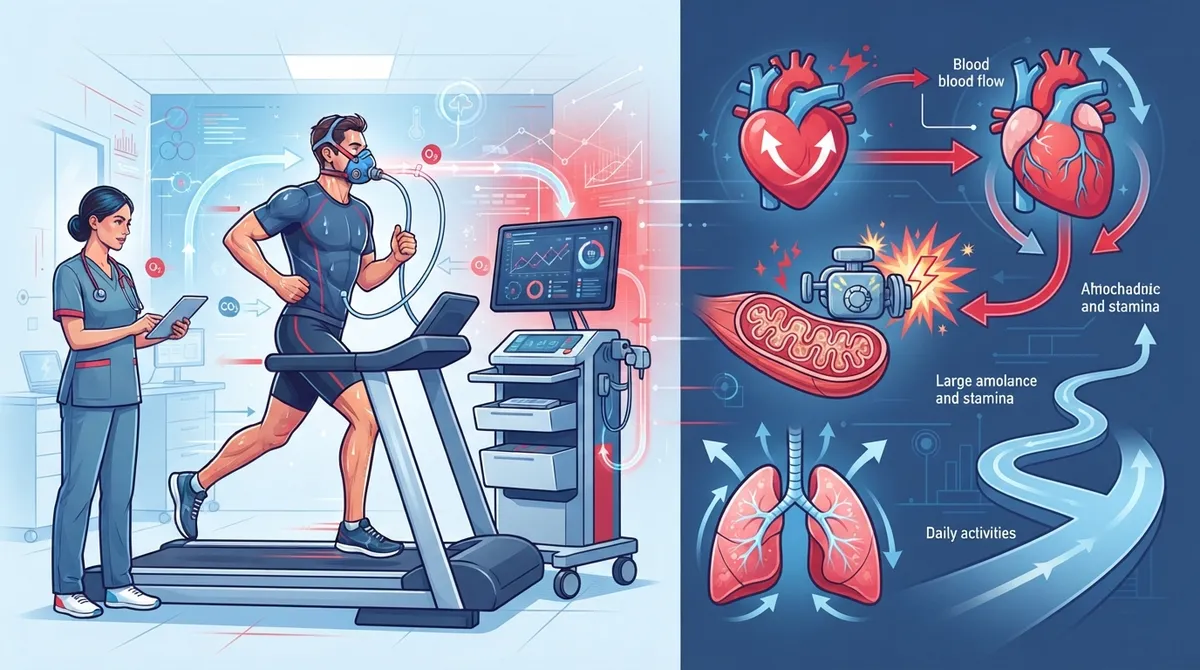
VO2 max is the highest rate at which your body can use oxygen during hard exercise. It is often written as VO2peak. Results are shown in milliliters of oxygen per kilogram of body weight per minute (mL/kg/min). It is one of the best measures of cardiorespiratory fitness (CRF).
Why does this number matter? Research gives us a clear answer. The American Heart Association has called for CRF to be treated as a clinical vital sign. Its 2016 scientific statement linked low fitness to higher risk of heart disease and early death. In the cited analyses, low CRF was tied to about 70% higher all-cause mortality risk and 56% higher cardiovascular mortality risk compared with the most-fit group. The least-fit groups had more than four times the all-cause mortality risk of the most-fit groups in some studies.
These numbers come from research on large groups. They are associations, not predictions for any one person. Still, they show why knowing your fitness level can help guide your health plan.
What Your Result Can and Cannot Tell You
- It can help you: set exercise targets, track progress, and spot a low fitness level early.
- It cannot: diagnose heart or lung disease on its own.
- It depends on: age, sex, body size, test type, effort, and the protocol used.
A single number is not a full picture of health. It works best when a clinician reads it alongside your history, symptoms, and risk factors.
How a VO2 Max Test Works
A direct VO2 test uses a treadmill or stationary bike. You wear a snug mask connected to gas-analysis equipment. The device measures the oxygen you use and the carbon dioxide you breathe out. The test starts easy and gets harder step by step until you reach near-maximal effort.
The exercise part usually lasts about 7 to 15 minutes. The full appointment takes longer because of setup, safety checks, and a review of results.
Here is the typical flow:
- You complete a check-in and health questionnaire.
- Staff fit the mask and explain the signals to use if you need to stop.
- You warm up at an easy pace.
- The workload rises every minute or two.
- You continue until you cannot go further or the test ends for safety.
- You cool down, then review your results.
Fitness Lab vs. Clinic: The Core Difference
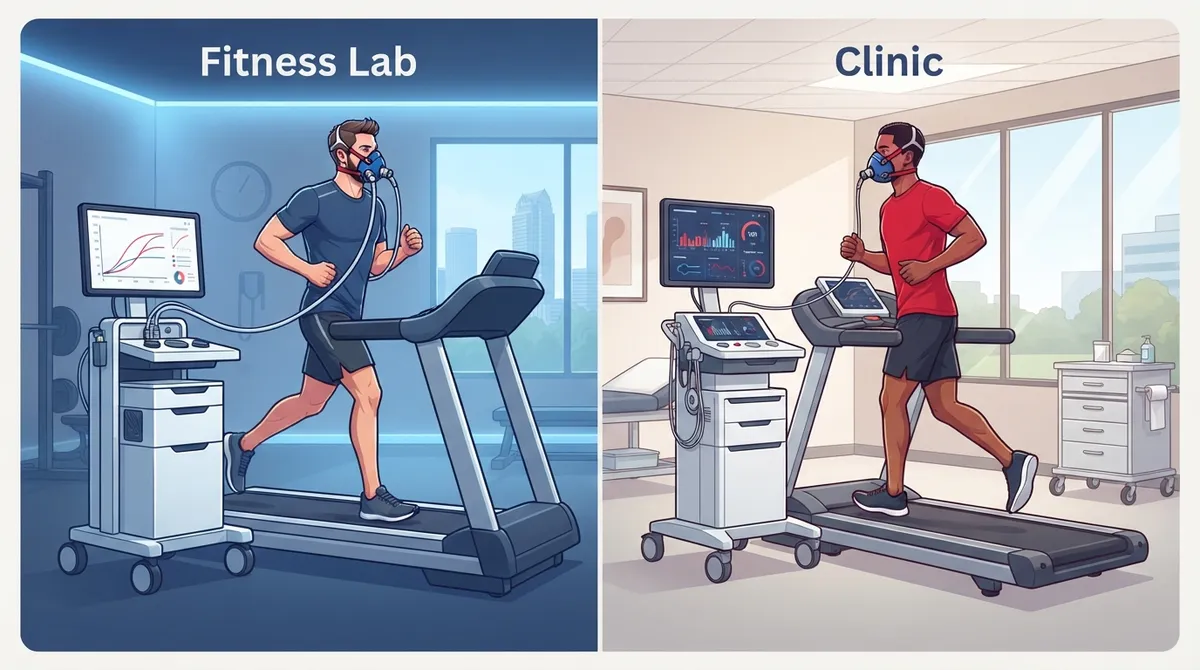
This is where many people get confused. A consumer fitness assessment is not the same as a medically supervised diagnostic cardiopulmonary exercise test, often called a CPET. Both may use the same kind of equipment. But the purpose, staff, and safety setup can differ a lot.
A fitness lab focuses on performance. It helps athletes and active people set training zones. A medical setting focuses on health. It places your results in the context of your symptoms, conditions, and medicines.
|
Feature |
Fitness Performance Lab |
Primary Care Clinic Approach |
|---|---|---|
|
Main goal |
Training zones and performance data |
Whole-health review and risk awareness |
|
Who reads results |
Exercise or performance staff |
Licensed medical providers |
|
Health history review |
Often a basic form |
Full medical history and risk factors |
|
Follow-up care |
Training advice |
Labs, screenings, and treatment plans |
|
Best for |
Healthy, active adults and athletes |
Anyone with risk factors, symptoms, or health goals |
VO2 Testing Options in Tampa
Tampa has a few publicly listed choices. Human Powered Health's Tampa Performance Lab, located at Clay Health, lists VO2 max testing for $200. DexaFit Tampa also offers a cardio fitness and VO2 assessment using a graded treadmill or bike test. DexaFit describes the exercise portion as about 10 to 15 minutes.
Prices, equipment, staff training, and protocols can change. Always confirm current details before you book. Ask whether the service is a fitness test or a medically supervised CPET. That one question tells you a lot about what you are getting.
Questions to Ask Before You Book
- Is the test a fitness assessment or a medical diagnostic test?
- Who supervises the test, and what are their qualifications?
- What happens if I feel unwell during the test?
- Do I need medical clearance first?
- Will someone explain my results and next steps?
The Clinic Advantage for Cardio Fitness Testing
A primary care and wellness clinic looks at the full picture. InCare combines modern technology with medical expertise. That means your fitness data can sit next to your blood pressure, lab work, screenings, and family history. You get one team, one plan, and clear next steps.
InCare serves patients in Tampa and Riverview. The clinic holds a 4.8 out of 5 rating on Google from 359 reviews. Patients often praise the friendly staff and the quality of care from Dr. Ahluwalia. You can read InCare reviews on Google to see what patients say.
InCare also offers tools that pair well with fitness testing. These include metabolic breath analysis and body composition analysis. If you want a deeper look at how breath-based testing works, read about PNOE metabolic testing. You can also explore InCare's guide to VO2 max testing in Tampa and Riverview.
Why Context Changes Everything
Imagine two people with the same VO2 score. One is a healthy 28-year-old runner. The other is a 52-year-old with high blood pressure and a family history of heart disease. The same number means very different things for each of them. A clinician can explain what the score means for you and what to do next.
This matters for every group of readers:
- Busy professionals: get a fast, data-rich snapshot without guessing.
- Young families: build healthy habits together and track progress over time.
- Preventive-minded women: add fitness data to a full wellness visit.
- Young adults: set a healthy baseline early, before problems start.
Safety First: Who Should See a Clinician Before Testing?
A VO2 test pushes you to near-maximal effort. That is safe for many healthy people. But it is not right for everyone without a check first. Talk to a clinician before testing if any of these apply to you:
- Chest pain, dizziness, or fainting with activity
- Known heart or lung disease
- High blood pressure that is not well controlled
- Unusual shortness of breath
- Diabetes or other long-term conditions
- Concerns about exercising to full effort
Your primary care provider can decide whether a fitness test is fine or whether medical supervision is the better path. This step protects you and makes your results more useful. A routine physical exam is a good place to start that conversation.
How to Prepare for Your Test
Good prep gives you accurate results. Tampa providers share similar tips, though each one has its own rules. Follow the instructions from the facility you choose.
- Skip hard workouts before the test so your legs and lungs are fresh.
- Sleep well the night before.
- Avoid caffeine and stimulants on test day.
- Wear exercise clothes and supportive shoes.
- Ask about medicines. Do not stop any prescription on your own. Ask your provider first.
- Eat lightly if the provider advises it.
How to Read Your Results
Your VO2 number is only useful when compared to the right group. Ranges vary by age and sex. A score that is strong for a 60-year-old may be low for a 25-year-old. Ask your provider for age- and sex-based reference ranges.
The AHA statement also noted that adults below 5 METs of fitness face high mortality risk. Levels above about 8 to 10 METs are linked to better survival. METs and VO2 are related but not the same. Do not swap one for the other without a proper conversion and context.
For repeat tests, keep conditions the same. Use the same type of test, such as treadmill or bike. Keep your prep, time of day, and effort level as close as you can. That way, changes in your score reflect real change.
How to Improve Your VO2 Max
The good news: cardio fitness can improve at almost any age. A few simple habits make a real difference.
- Move often. Aim for regular aerobic activity such as brisk walking, cycling, or swimming.
- Add intervals. Short bursts of harder effort followed by rest can raise fitness over time.
- Build strength. Muscle supports better movement and metabolism.
- Manage weight and sleep. Both affect how well your body uses oxygen.
- Retest wisely. Many people retest every few months after a steady training block.
If weight is part of your goal, a clinic can help with a plan. InCare offers a weight loss program backed by advanced technology. For deeper insight into how your body reads fitness over time, see how PNOE testing enhances VO2 max performance.
Cost and Value: What to Weigh
A standalone VO2 test can be a good value for athletes who want training zones. One Tampa provider lists the test at $200. For people with health goals or risk factors, the real value comes from what happens after the test. A clinic can order labs, review screenings, and build a long-term plan.
Think about the whole cost of care. A test with no follow-up may leave you with a number and no clear plan. A clinic visit that includes review and guidance turns data into action. InCare also shares tips on making preventive care work for you.
Final Verdict: Which Path Wins?
Both options have a place. A fitness lab suits healthy athletes who want performance data. A clinic-based approach suits almost everyone else, especially people with risk factors, symptoms, or whole-health goals.
If you want cardio fitness testing that connects to real medical care, start with a clinic. You will get safer screening, clearer answers, and a plan you can follow. InCare brings together primary care, wellness technology, and personal attention under one roof in Tampa and Riverview. Follow InCare on Instagram, Facebook, and TikTok for health tips and updates.
Ready to learn your numbers and what they mean for you? Book your appointment with InCare today, or contact our team with any questions.
FAQs
Q: Where can I get a VO2 max test in Tampa, Florida?
A: Tampa options include Human Powered Health's Tampa Performance Lab at Clay Health and DexaFit Tampa. Clinics like InCare can also guide you on testing and review results in a medical context. Always confirm current availability, pricing, and whether the test is a fitness assessment or a medically supervised CPET.
Q: How much does VO2 max testing cost in Tampa?
A: One publicly listed Tampa provider shows a VO2 max test price of $200. Prices vary by provider and can change, so verify the current cost before you book. Ask what the fee includes, such as a results review or follow-up.
Q: What happens during a VO2 max test, and how long does it take?
A: You wear a mask connected to gas-analysis equipment while exercising on a treadmill or bike. The workload rises step by step until you reach near-maximal effort. The exercise portion usually lasts about 7 to 15 minutes, and the full appointment takes longer.
Q: Is VO2 max testing safe if I have a heart condition?
A: Testing to near-maximal effort may not be safe for everyone. If you have chest pain, known heart or lung disease, or other concerns, talk with a clinician first. They can decide whether a fitness test or a medically supervised test is the better choice.
Q: What is the difference between a VO2 max fitness test and a medical CPET?
A: A fitness VO2 test focuses on performance and training zones. A medical CPET is supervised by clinicians and used to assess symptoms or health concerns. A consumer fitness test is not automatically equal to a diagnostic CPET.


