

Key Takeaways
- KPV has only been tested in cell cultures and animal models, not in humans—no verified peer-reviewed human clinical trial exists proving it treats Crohn's disease, making animal study success unreliable for predicting human outcomes.
- KPV is not FDA-approved for any condition and is sold online as 'research peptide' with no established safe dose, route of administration, or long-term safety data; using unregulated peptides risks dangerous interactions with prescribed Crohn's medications.
- Proven Crohn's disease treatments include FDA-approved biologic medications, immunomodulators, and nutritional therapy coordinated through primary care and gastroenterology specialists—evidence-based approaches should replace unproven peptide trends.
- Seek immediate medical evaluation for new/worsening diarrhea, severe abdominal pain, rectal bleeding, fever, dehydration signs, vomiting, or weight loss rather than self-treating with unregulated peptides like KPV.
If you have Crohn's disease, you have likely searched online for anything that might ease your symptoms. One name that keeps popping up in wellness forums and peptide marketing sites is KPV. Claims about this small peptide sound exciting, but the science tells a more careful story. Understanding what KPV actually is—and what it is not—can help you make safer choices about your gut health.
This article breaks down the real research behind KPV and Crohn's disease, separates lab findings from human treatment, and explains why working with a primary care team matters more than chasing unproven peptide trends. At InCare, our providers in Tampa and Riverview focus on evidence-based care for chronic conditions like Crohn's disease, not unverified online claims.
What Is KPV and Why Do People Talk About It for Crohn's Disease?
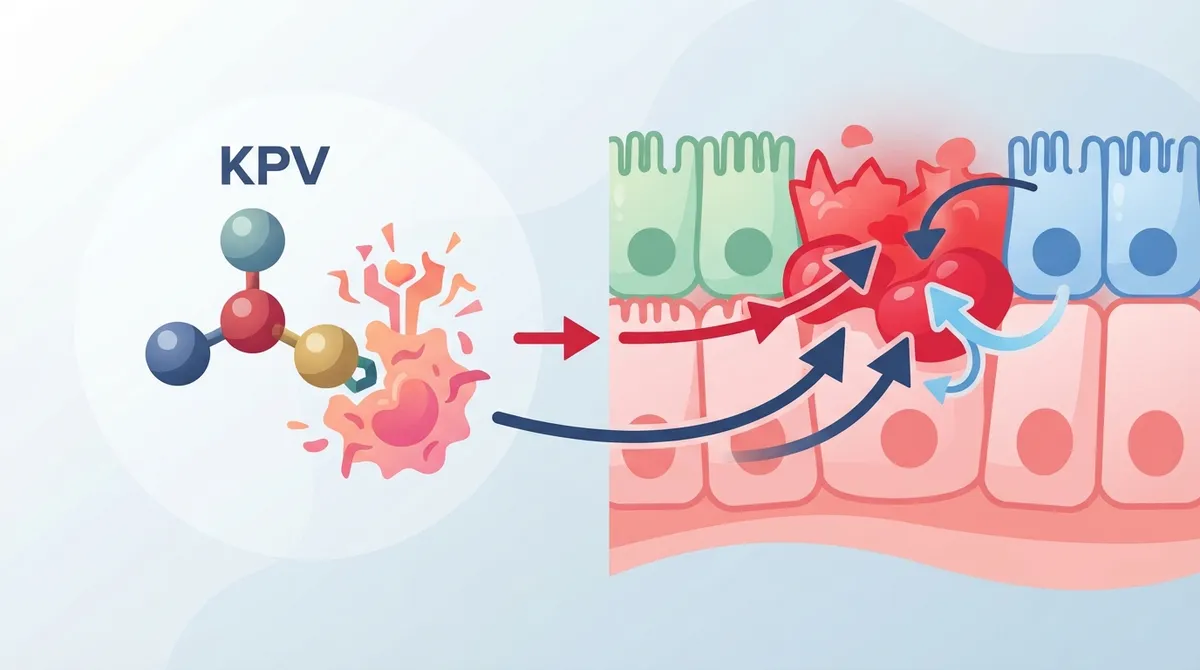
KPV stands for lysine-proline-valine. It is a tiny tripeptide, meaning it is made of just three amino acids linked together. KPV comes from a larger molecule called alpha-melanocyte-stimulating hormone, or α-MSH, which plays a role in inflammation and skin pigmentation.
Researchers became interested in KPV because early lab studies showed it might calm certain inflammation pathways. Since Crohn's disease involves chronic gut inflammation, some peptide sellers have jumped on this connection. But being interesting in a lab dish is very different from being proven safe and effective in real patients.
How KPV Is Thought to Work
In cell studies, KPV appears to block two major inflammation signals: NF-κB and MAP kinase pathways. These are like switches that turn on inflammation in your body. When researchers blocked these switches with KPV, cells produced less of the inflammatory chemicals TNF-α, IL-1β, and IL-6.
Scientists also found that KPV enters cells through a transporter called PepT1. This matters because PepT1 levels rise during gut inflammation, which is exactly what happens in Crohn's disease. This gives researchers a biological reason to keep studying KPV, even though it does not prove the peptide works as a treatment.

What Does the Actual Research Show?
The strongest evidence for KPV comes from animal and lab studies, not human clinical trials. Here is what researchers have actually found so far.
|
Study Type |
What Was Tested |
Key Finding |
|---|---|---|
|
Cell culture studies |
Nanomolar KPV doses on inflammatory cells |
Reduced NF-κB and MAP kinase activation |
|
DSS-induced colitis (mice) |
Oral KPV in mice with chemically induced colitis |
Less weight loss, lower inflammation markers |
|
TNBS-induced colitis (mice) |
Oral KPV in a second colitis model |
Improved colon injury scores, lower cytokine levels |
|
Human Crohn's trials |
No verified, peer-reviewed human trial found |
No established dose, safety data, or efficacy rate |
A 2008 peer-reviewed study first reported these anti-inflammatory effects in lab and rodent models. A companion review from the same year noted that KPV's exact method of action was still not fully understood, even as evidence built up for its lab-based anti-inflammatory activity.
Why Animal Studies Don't Equal Human Proof
Mouse colitis models are useful tools for scientists. They help researchers understand inflammation at a cellular level. But mice are not people, and DSS or TNBS colitis is not the same disease as human Crohn's disease.
Here is why this distinction matters so much:
- Mouse studies measure things like colon length and myeloperoxidase activity, not human symptoms
- There is no validated human dosing schedule based on these animal results
- Human Crohn's disease involves genetic, immune, and microbiome factors that mouse models cannot fully copy
- Success in a 10-day mouse study does not predict long-term safety in people
- No adequately powered randomized controlled trial in humans has confirmed KPV works for Crohn's disease
Some online sources have claimed that a Phase II human trial for KPV in biologic-refractory Crohn's disease was completed. These claims should be treated with real skepticism unless you can find the actual trial registration, published results, and named researchers. A few marketing sites also appear to mix up KPV with a related peptide called K(D)PT. Evidence for one peptide cannot be used to prove claims about a different one.
Is KPV Approved or Regulated for Crohn's Disease?
No. KPV is not approved by the FDA for Crohn's disease or any other condition. It is often sold online as a "research peptide," which is a red flag rather than a reassurance.
Here are the key facts you should know before considering any peptide product:
- There is no established human dose for KPV in Crohn's disease treatment
- No approved route of administration (injection, oral, or otherwise) has been validated in people
- No long-term human safety data currently exists
- Products labeled "for research purposes only" are not meant for human consumption
- Purity and dosing accuracy of unregulated peptide products cannot be guaranteed
- Using unapproved peptides may create dangerous interactions with your current Crohn's medications
If you are managing Crohn's disease, your safest path is through primary care and gastroenterology, not unregulated online suppliers. Learn more about staying informed on emerging options through our guide on KPV vs. traditional anti-inflammatories.
What Proven Treatments Exist for Crohn's Disease?
While KPV remains experimental, doctors have many well-studied tools for managing Crohn's disease. Working with a primary care physician who coordinates your care can make a real difference in your quality of life.
Standard Treatment Options
- Biologic medications that target specific immune pathways
- Small-molecule therapies for moderate to severe disease
- Immunomodulators to reduce immune system overactivity
- Short-term corticosteroids during flare-ups
- Nutritional therapy tailored to reduce gut irritation
- Regular monitoring through bloodwork and imaging
None of these proven treatments should be replaced with KPV or any other unregulated peptide. If you are curious about legitimate peptide therapy options in Tampa, always discuss them with a licensed provider first.
Warning Signs That Need Immediate Medical Care
Crohn's disease can flare unexpectedly. Knowing when to seek care quickly can prevent serious complications. Do not try to manage these symptoms with KPV or any self-treatment approach.
Seek prompt medical evaluation if you experience:
- New or worsening diarrhea that does not improve
- Severe abdominal pain or cramping
- Rectal bleeding, even if it seems minor
- Fever combined with gut symptoms
- Signs of dehydration, such as dizziness or dark urine
- Persistent vomiting
- Unexplained weight loss
- Symptoms suggesting a bowel obstruction, like severe bloating and inability to pass gas
Our urgent care team can evaluate sudden flares, while your primary care provider manages ongoing treatment and referrals to specialists when needed.
How Primary Care Supports Crohn's Disease Management
Managing a chronic condition like Crohn's disease works best as a team effort. A knowledgeable primary care provider does more than write prescriptions.
|
Primary Care Role |
Why It Matters |
|---|---|
|
Medication reconciliation |
Prevents dangerous interactions between prescribed drugs and supplements |
|
Risk communication |
Explains real evidence versus marketing claims for treatments like KPV |
|
Referral coordination |
Connects you with gastroenterology specialists when needed |
|
Preventive screening |
Monitors for nutrition deficiencies and related complications |
|
Ongoing monitoring |
Tracks disease activity and treatment response over time |
Physicians like Dr. Pramjeet Ahluwalia and Dr. Naveen Paddu emphasize this coordinated approach at our Tampa and Riverview locations. Rather than guessing with unproven peptides, patients get a clear plan built on evidence.
How to Evaluate Any New Peptide Claim
Whether it is KPV or another trending compound, use this simple checklist before trusting online health claims.
- Search PubMed for the actual peer-reviewed study, not just a summary blog post
- Check if the study was done in humans, animals, or cell cultures
- Look for a registered clinical trial number if human testing is claimed
- Identify the actual researchers and institutions involved
- Ask your doctor to review the claim before you consider trying anything
- Be suspicious of any product claiming to cure or treat a disease without FDA approval
This same careful approach applies across the wellness world, from gut health peptides to weight loss injections. For more general health screening guidance, see our related post on getting the most out of your health screening.
Why Choose InCare for Crohn's Disease Support in Tampa and Riverview
InCare combines modern diagnostic tools with real medical expertise. Our team does not chase unproven trends. Instead, we build personalized care plans grounded in current medical evidence.
Patients across Tampa and Riverview trust our approach, reflected in patient testimonials and a strong reputation in the community. You can also visit us on Google — InCare to read reviews from real patients managing chronic conditions with our support.
We also stay active on social platforms where we share health education. Follow along on Facebook, Instagram, or TikTok for more evidence-based wellness content.
Take the Next Step Toward Better Gut Health
KPV remains an interesting research subject, but it is not a proven Crohn's disease treatment. If you are dealing with ongoing gut symptoms, do not rely on unregulated peptides sold online. Instead, talk with a primary care team that can guide you toward treatments backed by real clinical evidence.
Ready to get answers about your digestive health? Book your appointment with InCare today and take a science-backed approach to managing Crohn's disease.
FAQs
Q: Does KPV help treat Crohn's disease in humans?
A: There is no verified, peer-reviewed human clinical trial proving KPV treats Crohn's disease. The strongest evidence comes from cell and mouse studies, which do not establish safety or effectiveness in people.
Q: Is KPV FDA-approved for Crohn's disease or inflammatory bowel disease?
A: No. KPV has no FDA approval for Crohn's disease or any other condition. Products marketed as KPV are often labeled for research purposes only, which means they are not intended for human use.
Q: What are the risks of using KPV for Crohn's disease?
A: Since there is no established human dose or safety data, risks include unknown side effects, product contamination, and dangerous interactions with existing Crohn's medications. Unregulated products also lack quality control standards.
Q: Can KPV be taken with biologics or other Crohn's medications?
A: This has not been studied in humans, so combining KPV with biologics or other prescribed treatments could carry unknown risks. Always speak with your gastroenterologist or primary care provider before adding any new substance to your treatment plan.
Q: What proven treatments exist instead of KPV for Crohn's disease?
A: Approved options include biologic medications, small-molecule therapies, immunomodulators, short-term corticosteroids for flares, and nutritional therapy. A primary care team can help coordinate these treatments alongside gastroenterology specialists.