

Key Takeaways
- People taking warfarin or blood thinners must not start, stop, or change vitamin K2 supplements without consulting their anticoagulation clinician, as vitamin K affects how these drugs work.
- Current scientific evidence does not prove that D3 with K2 together prevents fractures, osteoporosis, or heart disease better than vitamin D alone, despite the popular marketing claims.
- The safe upper limit for vitamin D is 4,000 IU daily from all sources combined; exceeding this can cause hypercalcemia, kidney stones, and calcium buildup in soft tissues.
- Adults aged 19-70 need only 600 IU of vitamin D daily, and over 70 need 800 IU; many supplement combinations make it easy to accidentally exceed safe limits.
- People with kidney disease, parathyroid disorders, or those taking multiple medications should consult a doctor before using D3-K2 supplements due to interaction and safety risks.
- Food sources like fatty fish, leafy greens, and fermented foods can provide these nutrients without supplement risks; weight-bearing exercise is more effective for bone health than any single pill.
Walk into any supplement aisle in 2026, and you will see bottles that pair vitamin D3 with vitamin K2. The labels promise stronger bones, healthier arteries, and better calcium use. It sounds like a smart combination. But does the science back up the claims?
The short answer is mixed. Both nutrients play real roles in the body. Vitamin D3 helps you absorb calcium. Vitamin K2 helps activate proteins tied to bone and blood clotting. Yet current research does not prove that taking them together protects against fractures or heart disease better than vitamin D alone.
This guide explains how D3 with vitamin K2 works, what the evidence shows, how much is safe, and who should be careful. It also covers an important warning for people who take blood thinners. If you are weighing this supplement, a clear and honest look at the facts will help you decide with confidence.
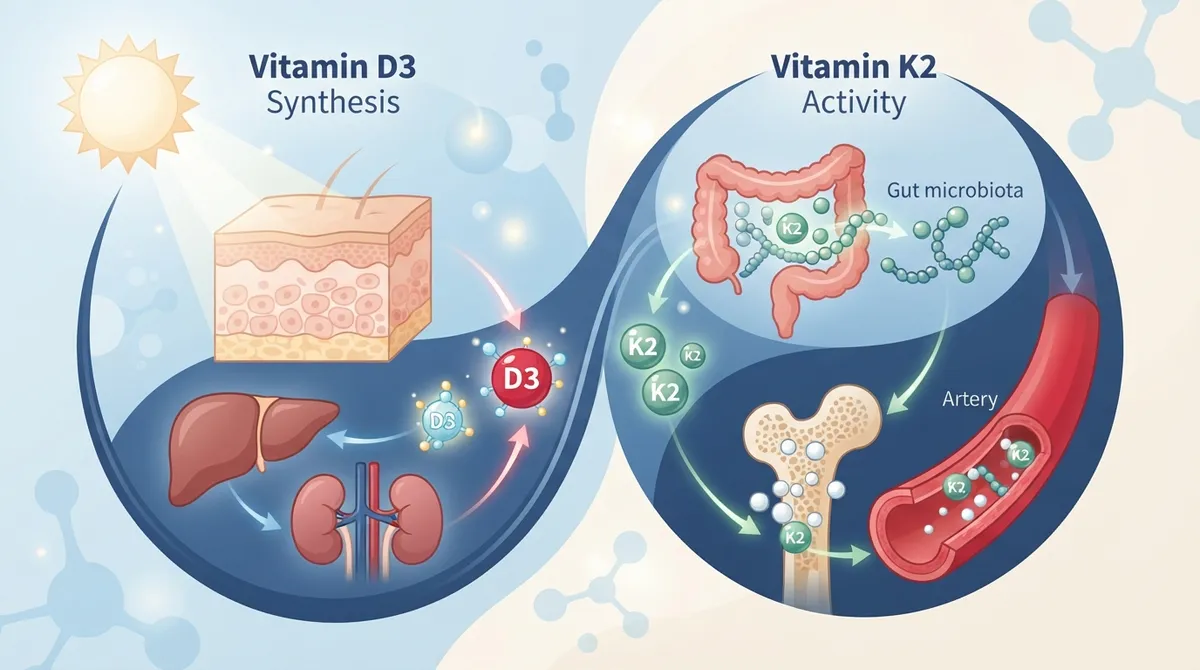
What Are Vitamin D3 and Vitamin K2?
Vitamin D3, also called cholecalciferol, is the form of vitamin D your skin makes from sunlight. You can also get it from fatty fish, fortified foods, and supplements. Its main job is to help your body absorb calcium and support bone mineralization.
Vitamin K is a family of fat-soluble vitamins. The two main forms are K1 (phylloquinone) and K2 (menaquinone). K1 comes mostly from leafy greens. K2 comes from fermented foods, some animal products, and gut bacteria. Both forms help activate proteins involved in blood clotting and bone metabolism.
On supplement labels, K2 usually appears as MK-4 or MK-7. These forms differ in structure and how long they stay active in the body. Amounts also vary widely between brands, so reading labels closely matters.
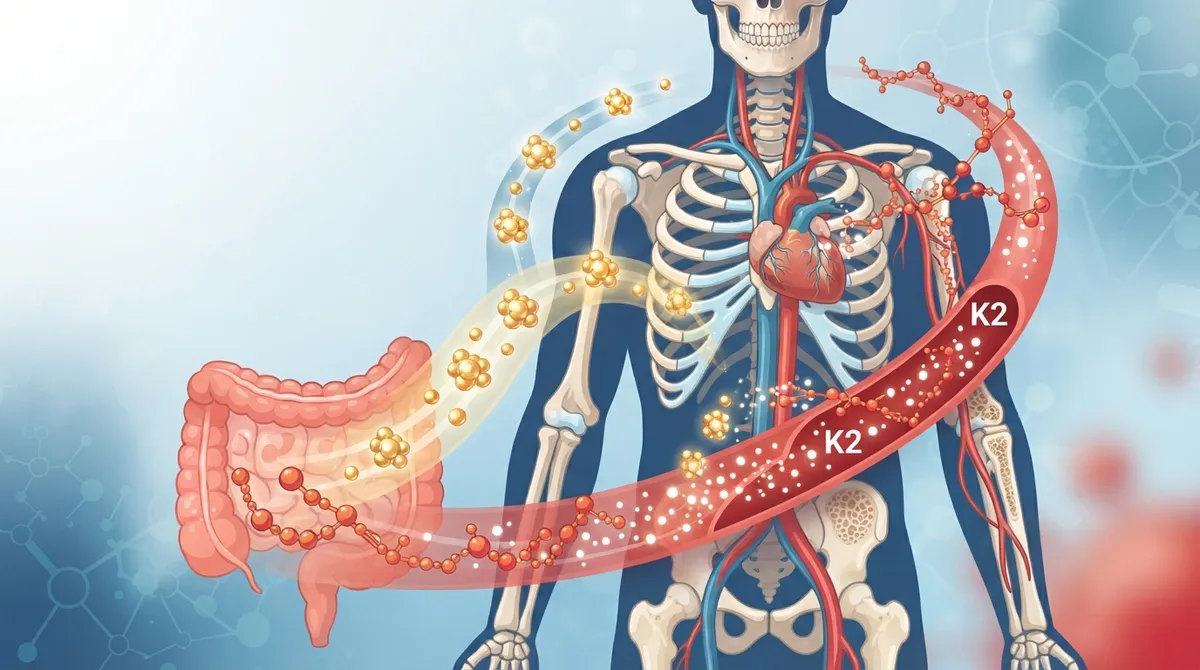
Why Are D3 and K2 Sold Together?
The pairing rests on biology. Vitamin D3 raises calcium absorption from your gut. Vitamin K helps switch on proteins that handle calcium in bone and other tissues. Because the two nutrients work in related pathways, many makers combine them in one product.
This is a reasonable idea, but it is a theory. A sound rationale does not prove a clinical benefit. Proof requires well-designed human studies showing better health outcomes. So far, those studies fall short of supporting broad claims.
What Does the Evidence Actually Show?
Many people hear that D3 with vitamin K2 sends calcium into bones and keeps it out of arteries. That claim is popular online. However, current evidence is not strong enough to say this is true for the general public.
|
Common Claim |
What the Evidence Shows |
|---|---|
|
Prevents fractures |
Not proven to work better than vitamin D alone |
|
Prevents osteoporosis |
Evidence is insufficient for a broad preventive claim |
|
Stops arterial calcification |
Not established in people |
|
Lowers heart disease risk |
Not established in people |
|
Directs calcium into bone |
Plausible in theory; not proven as a supplement benefit |
This does not mean the nutrients are useless. Vitamin D is essential for bone health, and vitamin K is essential for normal clotting. The gap is in proof that the combination offers extra protection beyond what each nutrient does on its own.
A supplement should not be sold as a proven way to steer calcium into bones or keep it out of your arteries. If a product makes that promise, treat it with caution.
How Much Vitamin D3 Do You Need?
The National Institutes of Health sets clear guidance. The recommended dietary allowance for vitamin D is:
- 600 IU (15 mcg) per day for adults ages 19 to 70
- 800 IU (20 mcg) per day for adults over 70
The tolerable upper intake level for adults is 4,000 IU (100 mcg) per day from all sources. That includes food, multivitamins, and every supplement you take. A clinician may prescribe a higher short-term dose to treat a confirmed deficiency, but that should happen under medical guidance.
Understanding Vitamin D Blood Levels
Doctors measure vitamin D status with a blood test for serum 25-hydroxyvitamin D. According to the NIH Office of Dietary Supplements, the general ranges look like this:
|
25(OH)D Level |
What It Means |
|---|---|
|
Below 12 ng/mL (30 nmol/L) |
Risk of deficiency |
|
20 ng/mL (50 nmol/L) or higher |
Sufficient for most people |
|
Above 50 ng/mL (125 nmol/L) |
May be linked to adverse effects |
National professional groups do not recommend routine vitamin D screening for healthy people. Testing makes more sense when you have symptoms, risk factors, or a medical condition that affects absorption. A primary care visit is the best place to decide whether a test is right for you.
What About Vitamin K2 Dosing?
The NIH reports no established tolerable upper intake level for vitamin K. Studies have not found clear harm from high intake in healthy people. That sounds reassuring, but it does not mean K2 is risk-free for everyone. The warfarin interaction, covered below, is serious.
Because K2 products vary in dose and form, there is no single standard amount that fits every person. Your clinician can help you choose a reasonable approach based on your diet, health history, and medicines.
The Warfarin Warning You Should Not Ignore
This is the most important safety point in the entire topic. Vitamin K affects blood clotting. Warfarin and similar blood thinners work by blocking vitamin K's clotting action. Changing your vitamin K intake can change how well these drugs work.
The NIH advises that people on warfarin should not start, stop, or change any vitamin K-containing supplement without talking to their anticoagulation clinician first. Keeping vitamin K intake steady from day to day is the safest approach.
If you take a blood thinner, bring every supplement bottle to your next visit. A simple review can prevent a dangerous mix-up. Our guide on prescription management tips shows how to keep your medicines and supplements organized.
Risks of Taking Too Much Vitamin D
More is not better with vitamin D. Excess intake can cause high blood calcium, called hypercalcemia, and high calcium in the urine. Over time, this may lead to:
- Kidney stones or kidney injury
- Calcium buildup in soft tissues
- Heart rhythm problems in severe cases
- Nausea, weakness, and frequent urination
Taking several products at once is a common way people go over the limit. A multivitamin, a calcium pill, and a D3-K2 capsule can each add vitamin D. Add up the total from all sources and stay under 4,000 IU daily unless a clinician tells you otherwise.
Who Should Talk to a Doctor First?
Many healthy adults can use these nutrients safely at standard doses. Still, certain groups should get medical advice before starting a D3 with vitamin K2 product:
- People on warfarin or other anticoagulants. Vitamin K can alter drug action.
- People with kidney disease or kidney stones. Extra vitamin D and calcium can raise risk.
- People with conditions that affect calcium. Examples include parathyroid disorders and sarcoidosis.
- People taking many medicines. Interactions are easier to miss when your list is long.
- Pregnant or nursing women. Needs and safe doses can differ.
Smart Ways to Get These Nutrients
Supplements are one option, but food and lifestyle matter too. For vitamin D, sensible sun exposure, fatty fish, egg yolks, and fortified milk help. For vitamin K, leafy greens supply K1, while fermented foods and some animal products supply K2.
If you do choose a supplement, use this simple checklist:
- Check the D3 dose in IU and the K2 amount and form (MK-4 or MK-7).
- Add up total vitamin D from all pills and foods.
- Pick products from brands that use third-party testing.
- Share the product with your clinician or pharmacist.
Bone health also depends on exercise, protein, calcium, and not smoking. Weight-bearing activity such as walking and strength training does more for bones than any single pill. A routine annual wellness visit is a good time to review all of these habits together.
How Primary Care Can Help
Supplement choices should fit your whole health picture. A primary care team can review your diet, medicines, lab results, and family history. They can order the right tests and tell you if a D3 with vitamin K2 product makes sense for you.
InCare is a personalized primary care and wellness clinic serving Tampa and Riverview, Florida. The team combines medical expertise with modern tools to focus on prevention and whole-body health. You can explore InCare's services or meet the providers who guide each care plan. Patients also share their experiences, and you can read InCare reviews on Google to see what they say.
If you want to go deeper on nutrition and metabolism, InCare also offers DNA gene testing for personalized insights and IV hydration and vitamin drips for tailored wellness support. These services can help you build a plan based on your own body rather than guesswork.
Staying active in your community of care matters too. You can follow InCare updates on Facebook, Instagram, and TikTok for health tips and clinic news.
Home Comfort and Healthy Habits
Good health also depends on your living space. Clean indoor air and a comfortable home support sleep, breathing, and overall well-being. If your heating or cooling system needs attention, a local service such as Marks Air can help keep your home environment comfortable and healthy.
Putting It All Together
D3 with vitamin K2 is a popular supplement built on sound biology. Vitamin D3 helps you absorb calcium. Vitamin K2 supports proteins tied to bone and clotting. Yet the current evidence does not show that the pair beats vitamin D alone for preventing fractures, osteoporosis, or heart disease.
The safest path is simple. Meet your daily vitamin D needs, stay under the 4,000 IU upper limit, and keep your vitamin K intake steady if you take warfarin. Review every supplement with a clinician who knows your full health history.
Ready to build a smart, personalized plan for your bones and overall health? Book your InCare appointment today, or contact our team with any questions. InCare is the best choice for evidence-based primary care and wellness in Tampa and Riverview.
FAQs
Q: What are the benefits of taking vitamin D3 with vitamin K2?
A: Vitamin D3 helps your body absorb calcium, and vitamin K2 helps activate proteins involved in bone metabolism and clotting. Together they make biological sense, but research does not yet prove the combination prevents fractures or heart disease better than vitamin D alone.
Q: Can I take vitamin D3 with K2 if I use warfarin?
A: Do not start, stop, or change any vitamin K supplement without talking to your anticoagulation clinician first. Vitamin K can change how warfarin works, so keeping your intake consistent and getting medical guidance is essential.
Q: How much vitamin D3 is safe to take each day?
A: The U.S. recommended amount is 600 IU for adults through age 70 and 800 IU for adults over 70. The upper limit is 4,000 IU daily from all sources, and higher doses should only be used under a clinician's direction.
Q: Should I test my vitamin D level before taking a supplement?
A: Routine screening is not recommended for healthy people, but testing may help if you have symptoms, risk factors, or a related health condition. A blood level of at least 20 ng/mL is considered sufficient for most people, so your primary care provider can advise you on whether testing is useful.
Q: What happens if I take too much vitamin D3?
A: Too much vitamin D can raise blood and urine calcium, which may lead to kidney stones, kidney injury, soft-tissue calcification, and heart rhythm problems in severe cases. Always count vitamin D from every supplement and multivitamin you take.


