

Key Takeaways
- Vitamin D3 has strong evidence for treating deficiency and bone health, but vitamin K2's clinical benefits remain limited despite popular marketing of the combination.
- Do not start vitamin K2 if you take warfarin or blood thinners, as it can weaken the medication's effect and increase clot risk; keep vitamin K intake consistent.
- Get a blood test before supplementing; NIH recommends 600 IU daily for adults 19-70 and 4,000 IU as the safe upper limit to avoid kidney stones and calcium buildup.
- Excess vitamin D can cause high blood calcium, kidney stones, and heart rhythm problems; the risk comes mainly from high-dose supplements, not sun exposure.
- Prioritize food sources first: fatty fish, egg yolks, and fermented cheeses provide both vitamins D3 and K2 before considering supplements.
- Combine D3 and K2 together only with clinician approval; K2 does not protect against high vitamin D doses, and the pairing lacks proven benefits for heart disease prevention.
Walk through any supplement aisle in 2026, and you will see bottles labeled "D3 & K2 vitamin" almost everywhere. The pairing is popular, and the marketing makes it sound essential. But is it? Many people want to optimize their health, and they ask a simple question: should I take vitamin D3, vitamin K2, or both?
The honest answer depends on your health, your medicines, and your blood work. Vitamin D3 has strong evidence for treating deficiency and supporting bone health. Vitamin K2 plays a role in how the body handles calcium, but proof that adding it improves outcomes is still limited. For some people, the combination is a reasonable choice. For others, such as those on blood thinners, it can be risky.
This guide compares D3 and K2 side by side. You will learn what each one does, what the research really shows, how much is safe, and when to talk with a clinician. If you want personalized guidance, the team at InCare primary care can help you decide what fits your body.
What Is Vitamin D3?
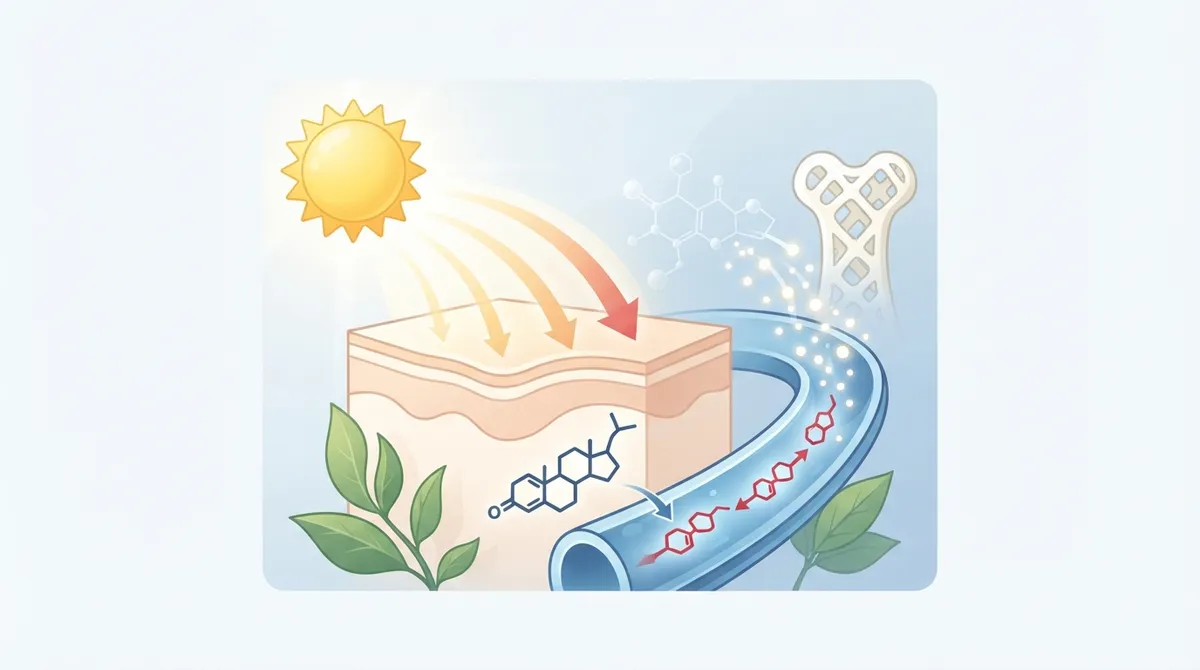
Vitamin D3, also called cholecalciferol, helps your body absorb calcium from food. It supports bone strength and mineralization. Your skin makes it when exposed to sunlight, and you also get small amounts from fatty fish, egg yolks, and fortified foods.
Many adults do not get enough from sun and food alone. Limited time outdoors, sunscreen use, darker skin tones, and age can all lower vitamin D levels. A blood test for 25-hydroxyvitamin D shows where you stand.
Vitamin D Blood Level Ranges
The U.S. National Academies and the NIH Office of Dietary Supplements describe these general ranges:
|
25(OH)D Level |
What It Generally Means |
|---|---|
|
Below 12 ng/mL (30 nmol/L) |
Risk of deficiency |
|
12–20 ng/mL (30–50 nmol/L) |
May be inadequate for some people |
|
20 ng/mL (50 nmol/L) or higher |
Sufficient for most people |
|
Above 50 ng/mL (125 nmol/L) |
Possible adverse effects; avoid going higher |
What Is Vitamin K2?
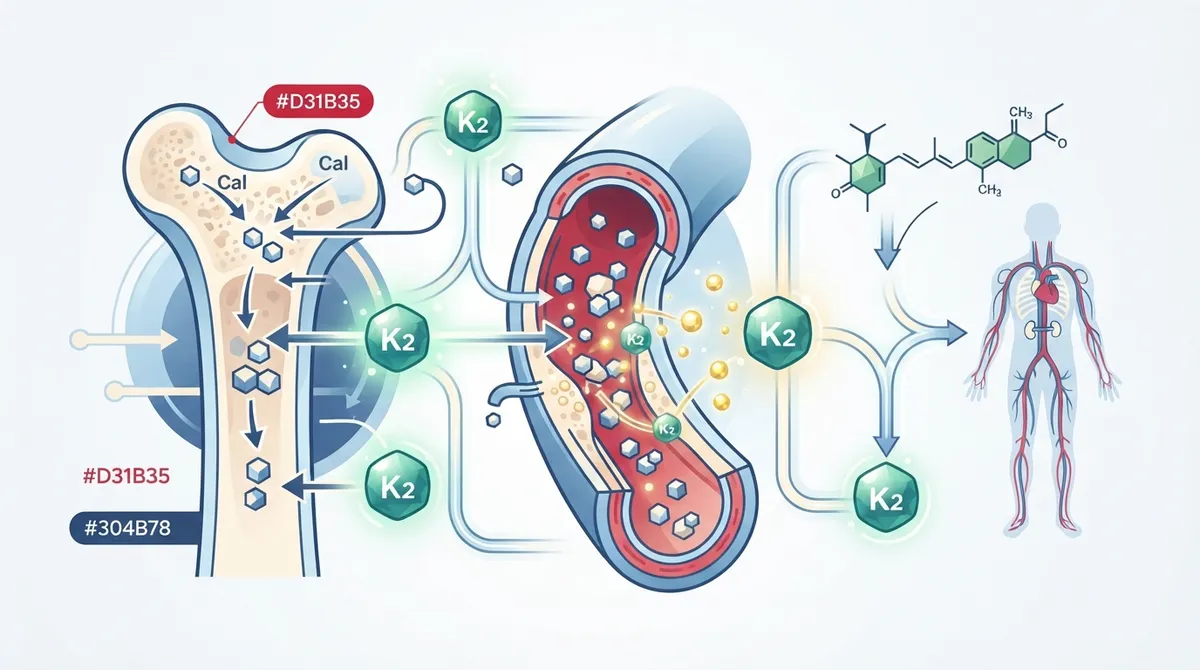
Vitamin K is a group of fat-soluble vitamins. K2 is one form of vitamin K. It is found in fermented foods, certain cheeses, egg yolks, and some animal products. In supplements, K2 usually appears as menaquinones such as MK-4 or MK-7.
Vitamin K helps activate proteins that are involved in blood clotting and bone metabolism. The adequate intake for vitamin K is 90 mcg per day for adult women and 120 mcg per day for adult men, according to the NIH Office of Dietary Supplements.
One important point: K2 is not a proven antidote to too much vitamin D. Some marketing suggests it "protects" you from high D3 doses. Science has not established that.
D3 vs. K2: Side-by-Side Comparison
|
Feature |
Vitamin D3 |
Vitamin K2 |
|---|---|---|
|
Main role |
Helps absorb calcium; supports bone mineralization |
Activates proteins used in clotting and bone metabolism |
|
Common sources |
Sunlight, fatty fish, egg yolks, fortified foods |
Fermented foods, certain cheeses, egg yolks |
|
Strongest evidence |
Preventing and treating deficiency; bone health |
Lowers a marker of inactive matrix Gla protein |
|
Evidence gaps |
No broad benefit proven in people without deficiency |
Heart and calcification benefits not established |
|
Upper limit (adults) |
4,000 IU (100 mcg) per day from all sources |
No upper limit set |
|
Key safety concern |
High calcium levels, kidney stones with excess |
Serious interaction with warfarin |
Why Are D3 and K2 Sold Together?
The idea is simple. Vitamin D3 helps you absorb more calcium. Vitamin K-dependent proteins take part in how that calcium is handled in the body. So some manufacturers reason that the two should work as a team.
This biological logic makes sense on paper. But it does not prove that taking them together prevents hardened arteries, heart disease, or fractures. That is an important difference between a good theory and a proven benefit.
What the Research Actually Shows
Here is where the evidence stands today:
- A 2023 systematic review looked at 14 randomized trials of vitamin K2. It found steady reductions in a marker of inactive matrix Gla protein. However, clinical proof that K2 prevents heart events or calcification remains limited.
- The VITAL trial enrolled more than 25,000 people and tested 2,000 IU of vitamin D3 daily. It found no significant effect on blood pressure or the rate of high blood pressure.
- The VITAL trial did not test D3 plus K2. It does, however, caution against assuming broad heart benefits from vitamin D alone.
- Evidence for vitamin D is strongest when treating deficiency and supporting bone health in the right patients.
In short, a lab marker can improve without a real-world health result. That is why clinicians look at the full picture, not just a supplement label.
How Much Vitamin D3 Is Safe?
The NIH Office of Dietary Supplements gives these daily targets for vitamin D:
- Adults ages 19 to 70: 600 IU (15 mcg) per day
- Adults over 70: 800 IU (20 mcg) per day
- Tolerable upper limit for adults: 4,000 IU (100 mcg) per day from all sources
A clinician may prescribe a different short-term dose to treat a diagnosed deficiency. Do not copy those doses on your own. Too much vitamin D can raise calcium levels in the blood and urine. In serious cases, it can lead to kidney stones, kidney injury, and heart rhythm problems. This risk comes mainly from high-dose supplements, not from normal sun exposure.
The Biggest Safety Warning: K2 and Blood Thinners
Vitamin K can strongly interfere with warfarin and similar vitamin K-antagonist medicines. These drugs work by blocking vitamin K's role in clotting. Adding a K2 supplement can weaken the effect of the medicine and raise the risk of clots.
If you take warfarin, follow these rules:
- Do not start a K2 supplement without talking to your prescriber.
- Do not stop a K2 supplement suddenly if you already take one.
- Keep your daily vitamin K intake steady from food and supplements.
- Tell every provider about every supplement you use.
This is one of the best reasons to review your supplements with a primary care provider. Many people never mention vitamins at office visits, yet those products can change how prescriptions work. Our guide on prescription management tips for better health in 2026 explains how to keep your medicine list accurate.
Who Should Be Careful Before Taking D3 and K2?
Talk with a clinician first if any of these apply to you:
- You take warfarin or another vitamin K-antagonist blood thinner.
- You have kidney disease.
- You have a condition that affects calcium metabolism.
- You are pregnant or planning pregnancy.
- You take other medicines that may interact with these vitamins.
Supplement quality also varies. Labels may list MK-4 or MK-7, and doses differ widely. Results from one form or dose cannot be assumed for another. A clinician can help you read the label and pick a sensible option.
Should You Get a Vitamin D Test First?
National professional groups do not recommend routine vitamin D screening for all healthy people. But testing makes sense when you have risk factors or symptoms. These may include limited sun exposure, bone concerns, certain digestive conditions, or a history of low levels.
A simple blood test removes the guesswork. Instead of guessing a dose, you start with a number. That helps you avoid both too little and too much. At InCare, testing can be part of a broader preventive plan. Learn more about what to expect in an annual physical exam and how health screenings can guide your choices.
Which Option Fits You? A Simple Decision Guide
When D3 Alone May Be Enough
If your blood test shows low vitamin D and you have no reason to add K2, a clinician may suggest D3 by itself. This is a clear, evidence-backed use of the vitamin.
When D3 and K2 Together May Be Reasonable
Some people choose a combination product for convenience, and some clinicians are comfortable with it for patients who are not on blood thinners. If you go this route, treat it as a supportive choice, not a guaranteed fix for heart or bone problems.
When to Avoid K2 Without Medical Advice
If you use warfarin or a similar medicine, do not add K2 unless your prescriber approves. The same caution applies when you have complex health conditions.
Food First: A Practical Approach
Before reaching for a pill, look at your plate. You can build intake with these steps:
- Eat fatty fish such as salmon or sardines a few times a week for vitamin D.
- Include egg yolks and fortified foods in your regular meals.
- Add fermented foods and certain cheeses for vitamin K2.
- Spend sensible time outdoors, while still protecting your skin.
- Ask for a blood test to see if food and sun are enough.
What This Means for Busy Professionals, Families, and Wellness Seekers
If you are a tech-savvy millennial who tracks health data, you may enjoy pairing lab results with your supplement plan. If you are a busy parent, you may want a simple answer for the whole family. If you invest in advanced wellness, you may want a plan that connects vitamins to your broader goals.
In each case, personalization beats a one-size-fits-all bottle. InCare combines modern technology with medical expertise. Services such as DNA gene testing, IV hydration and vitamin drips, and body composition analysis help build a fuller picture of your health. You can also read about what a wellness clinic does to see how prevention fits together.
Women without a regular doctor and young adults exploring prevention can start with a wellness visit. It is an easy way to build a baseline before taking any supplement. Our overview of what happens during an annual wellness visit shows what to expect.
Why Choose a Clinic Over a Supplement Aisle?
A store shelf cannot check your lab results, review your medicines, or notice a risk. A clinician can. At InCare, patients get personalized guidance, in-person visits in Tampa and Riverview, and virtual care options. Our patients rate us 4.8 out of 5 on Google across 359 reviews, and you can see what InCare patients say on Google.
You can also follow our updates on Instagram, Facebook, and TikTok for practical wellness tips from our team.
To learn more about the people behind your care, visit our providers page or explore our clinic locations.
Conclusion: A Smart Choice Starts With Your Own Data
The D3 and K2 combination is popular, but popularity is not proof. Vitamin D3 has solid evidence for treating deficiency and supporting bones. Vitamin K2 has a plausible role in calcium handling, yet proof of broad benefits is still limited. The pairing is not harmful for everyone, but it is risky for people on warfarin and needs care for those with kidney or calcium issues.
The best next step is simple: check your levels, review your medicines, and choose a dose that fits you. That is the kind of personalized care InCare provides every day.
Ready to build a supplement plan around your real health needs? Book your InCare appointment today, or contact our team with questions. We are here to help you feel your best, safely.
FAQs
Q: Do you need to take vitamin K2 with vitamin D3?
A: Not necessarily. Vitamin D3 has strong evidence for treating deficiency and supporting bone health on its own. The idea that K2 improves outcomes when added is based on biological reasoning, and clinical proof remains limited. A clinician can help you decide based on your labs and medicines.
Q: Can I take vitamin K2 if I use warfarin or another blood thinner?
A: You should not start, stop, or change a K2 supplement without your prescriber's approval. Vitamin K can strongly interfere with warfarin and similar medicines. Keeping your vitamin K intake consistent is the safest approach.
Q: What is the recommended daily dose of vitamin D3 for adults?
A: Most adults ages 19 to 70 need 600 IU (15 mcg) daily, and adults over 70 need 800 IU (20 mcg). The upper limit is 4,000 IU (100 mcg) per day from all sources. A clinician may prescribe a different short-term dose to treat a deficiency.
Q: Can D3 and K2 supplements prevent heart disease or arterial calcification?
A: This has not been proven. Studies show K2 can improve a lab marker linked to calcium handling, but clinical evidence for preventing heart events or calcification is limited. Large trials of vitamin D3 alone, such as VITAL, did not show broad heart benefits.
Q: What happens if you take too much vitamin D3?
A: Excess vitamin D can cause high calcium in the blood and urine, kidney stones, kidney injury, and in severe cases, heart rhythm problems. The risk comes mostly from high-dose supplements, not normal sun exposure. A blood test helps you avoid taking too much.


