Key Takeaways
- Comprehensive primary care coordinates all your health needs through one trusted team that handles prevention, acute illness, and chronic disease management, preventing fragmented care where patients bounce between unconnected providers.
- Choose a provider that offers first-contact access, continuity of care, and smooth specialist referrals—not one that claims one doctor does everything, but rather a team that recognizes when specialists are needed and tracks results.
- Most comprehensive primary care services including annual wellness visits, chronic disease management, and preventive screenings are covered by insurance and Medicare, while reducing overall healthcare costs by catching problems early.
- Look for providers offering flexible access options like telehealth and same-day appointments, plus advanced wellness services such as genetic testing and body composition analysis that adapt to your specific life stage.
Choosing a healthcare provider is one of the most important decisions you make for your health. Yet many people still juggle multiple doctors, skip checkups, or wait until a small problem becomes a big one. Comprehensive primary care services solve this problem by giving you one trusted team that handles most of your health needs, year after year.
Whether you are a busy parent managing a family's checkups, a young professional who wants same-day care without an ER bill, or someone exploring advanced wellness testing, comprehensive primary care gives you a single starting point. It combines prevention, treatment, and coordination in one place. This guide breaks down what comprehensive primary care really means, what services it includes, and how to choose the right provider for your life stage and goals.
What Does Comprehensive Primary Care Actually Mean?
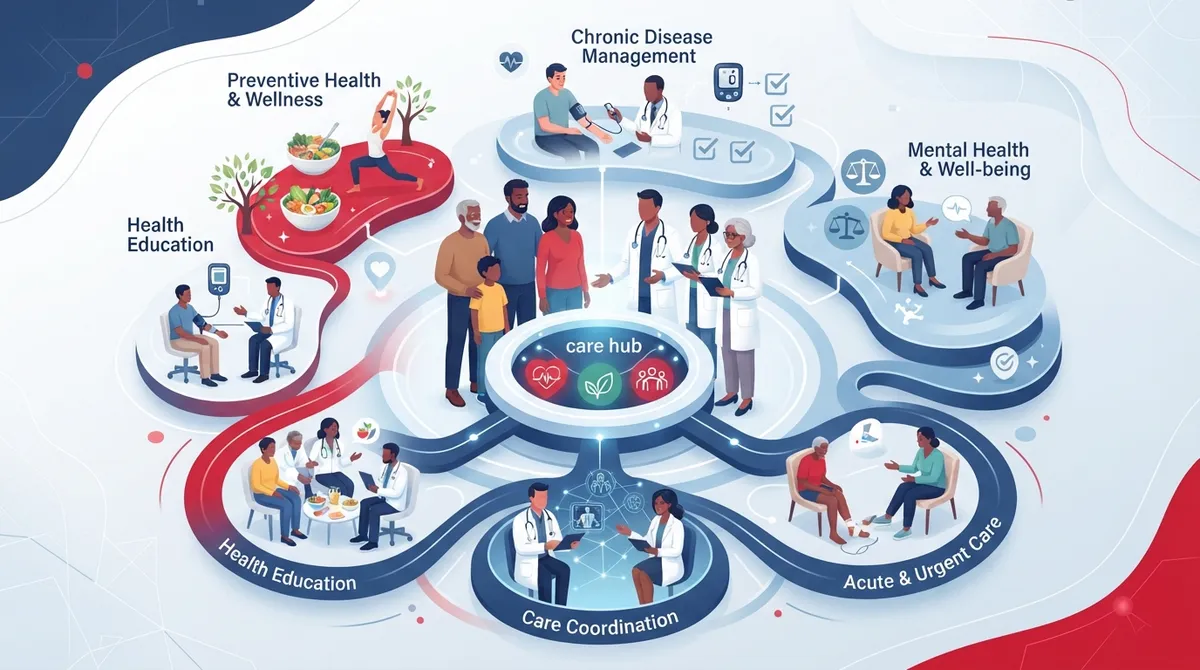
Comprehensive primary care is more than a yearly physical. According to the National Academies of Sciences, Engineering, and Medicine, high-quality primary care is whole-person, integrated care delivered by teams who build lasting relationships with patients (National Academies, 2021). It means your care team handles most of your health needs, not just one condition or body part.
A 2023 scoping review on comprehensiveness in primary care breaks this concept into three connected parts: whole-person care, a wide range of services, and smooth referrals to specialists when needed. This matches how InCare's primary care team approaches every patient visit in Tampa and Riverview.
The Four Core Attributes of Primary Care
Healthcare researchers agree that strong primary care rests on four pillars. Understanding these helps you know what to look for in a provider.
- First-contact access. You can reach your provider quickly when a health issue comes up, without waiting weeks for an appointment.
- Continuity. You see familiar faces who know your health history over time, not a different doctor every visit.
- Comprehensiveness. Your team addresses most of your physical and mental health needs under one roof.
- Coordination. When you need a specialist, your primary care team manages the referral and keeps track of your results.
Core Services Included in Comprehensive Primary Care
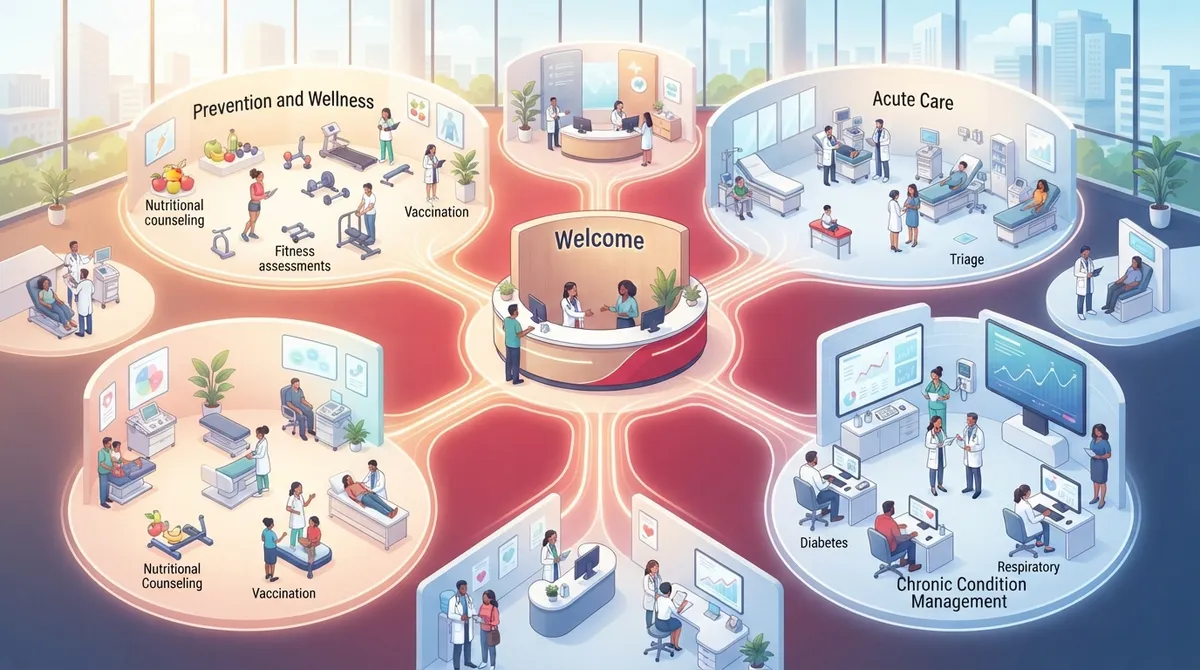
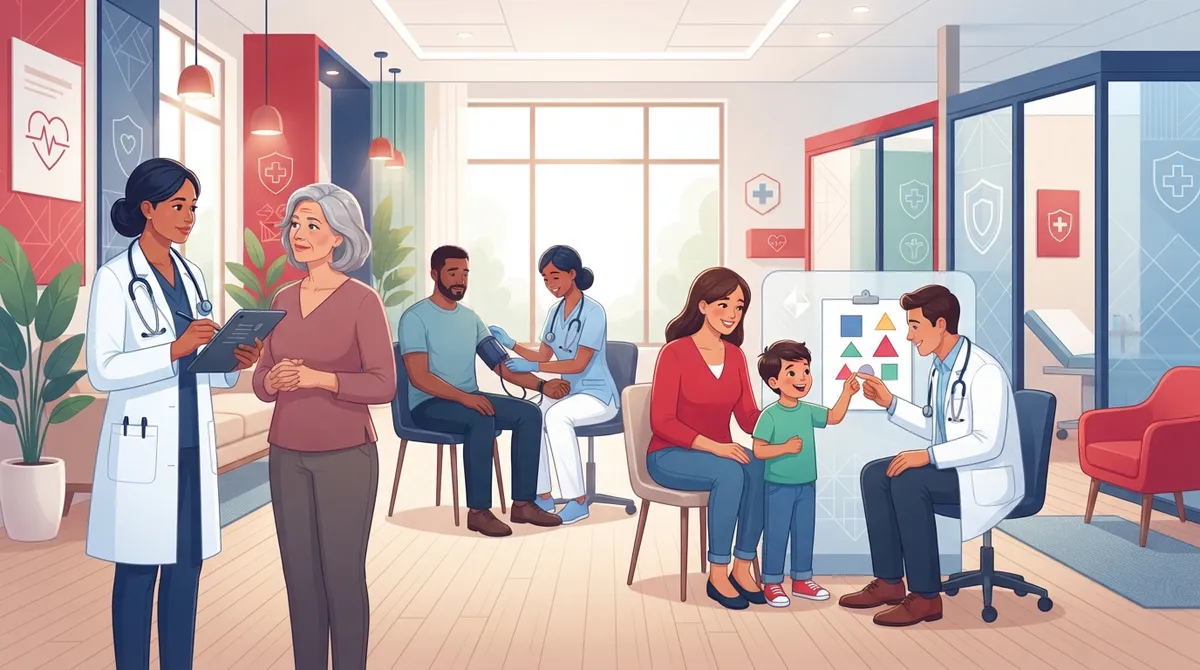
Comprehensive care covers a wide span of health needs across every stage of life. Below is a look at what patients can typically expect from a full-service primary care practice.
|
Service Category |
What It Covers |
Example at InCare |
|---|---|---|
|
Preventive Care |
Annual physicals, immunizations, and screenings |
Cancer screening programs |
|
Acute Illness Treatment |
Flu, infections, minor injuries |
Urgent care visits |
|
Chronic Disease Management |
Diabetes, hypertension, COPD, and more |
Ongoing primary care follow-ups |
|
Weight and Metabolic Health |
Medical weight loss, body composition testing | |
|
Advanced Wellness Testing |
Genetic risk insights, metabolic analysis | |
|
Mental Health Support |
Screening, counseling referrals, behavior support |
Integrated behavioral health check-ins |
This structure reflects what a 2015 review on measuring comprehensiveness described: primary care should meet the majority of a patient's physical and common mental health needs, spanning prevention, acute issues, and chronic conditions together (Measuring Comprehensiveness of Primary Care, 2015).
Preventive Screenings and Wellness Counseling
Prevention sits at the heart of comprehensive care. Regular screenings catch problems early, when they are easiest to treat. Learn more about what happens during an annual wellness visit and how it sets the foundation for long-term health.
Acute and Chronic Condition Management
Comprehensive primary care does not stop at prevention. It also treats sudden illnesses and manages long-term conditions like diabetes or high blood pressure. If you are curious how ongoing support works, read about how primary doctors help manage chronic illnesses over time.
Whole-Body Wellness and Optimization
Many patients now want more than basic checkups. They want data-driven insights into their own biology. Services like body composition analysis and IV hydration and vitamin drips let patients take a proactive role in their own wellness journey, going beyond just treating sickness.
Why Comprehensiveness Does Not Mean One Doctor Does Everything
A common myth is that comprehensive care means your primary doctor personally handles every issue. That is not accurate. The 2023 scoping review makes clear that comprehensiveness includes referral and integration with specialists when a need goes beyond the team's scope.
Your primary care team's real job is to:
- Recognize when a specialist is needed
- Make the referral process smooth and fast
- Track test results and specialist notes
- Keep your full health picture organized in one place
This coordination role prevents the common problem of fragmented care, where patients bounce between providers with no one managing the big picture. To understand this better, see fragmented care versus coordinated care and why coordination wins for most patients.
How Comprehensive Primary Care Adapts to Different Life Stages
Your health needs change as you age, and comprehensive care should change with you. Here is how it typically breaks down:
- Young adults (18-25): Preventive screenings, mental health check-ins, and wellness optimization such as gene testing.
- Millennials and young families (26-40): Family checkups, weight management, and convenient virtual visits.
- Midlife adults (40-60): Chronic disease screening, hormone health, and cancer screenings become more important.
- Older adults (60+): Medicare-covered wellness visits, coordinated specialist care, and close chronic disease monitoring.
Families juggling school schedules and work often benefit most from a single clinic that treats every family member. Learn how family primary care simplifies healthcare for busy households.
Telehealth and Same-Day Access
Modern comprehensive care also includes flexible access options. Many patients now expect virtual visits alongside in-person care. If you need care fast, same-day scheduling matters. Check out how same-day appointments keep small problems from becoming bigger ones.
How to Choose the Right Comprehensive Primary Care Provider
Not every clinic offers true comprehensive care. Use this checklist when evaluating a provider in Tampa, Riverview, or your local area:
- Do they offer both preventive and urgent care under one roof?
- Can they manage chronic conditions long-term, not just single visits?
- Do they offer wellness services like body composition or gene testing?
- Is there a clear system for specialist referrals and follow-up?
- Do they offer telehealth or same-day appointments?
- Are new patients accepted quickly, without long wait times?
For a deeper look at avoiding common pitfalls, read 7 mistakes to avoid when choosing a primary care doctor near you.
Why InCare Delivers True Comprehensive Care
At InCare, patients in Tampa and Riverview get access to primary care, urgent care, and advanced wellness services in one connected system. This includes everything from routine checkups to hair restoration and metabolic breath analysis. Our team of providers works together so nothing falls through the cracks.
Patients consistently share positive experiences about the coordinated, personal approach at InCare. You can see what real patients say by visiting our Visit us on Google — InCare profile, where InCare holds a strong rating built on hundreds of reviews.
The Role of Technology in Modern Comprehensive Care
Today's primary care goes beyond the stethoscope and clipboard. Advanced diagnostics now let providers catch problems earlier and personalize treatment plans. This is especially valuable for patients interested in proactive health optimization rather than reactive treatment.
Tools like 3D body scanning, AI-powered health assessments, and genetic testing are becoming standard parts of comprehensive care. If you want to understand how technology fits into modern checkups, explore AI-powered health assessments and how they may shape future checkups.
Connecting With Your Care Team Beyond the Clinic
Comprehensive care providers often stay connected with patients through digital channels too. Following a clinic's social presence can help you stay informed about health tips and clinic updates. You can follow InCare updates on Facebook, see wellness content on Instagram, or catch quick health tips on Tik Tok.
Is Comprehensive Primary Care Covered by Insurance?
Most comprehensive primary care services, including annual wellness visits, chronic disease management, and many preventive screenings, are covered by most insurance plans, including Medicare. Coverage varies by plan and by specific service, so it helps to confirm details before certain elective wellness treatments like IV therapy or gene testing, which may carry different coverage rules than standard visits.
According to the Agency for Healthcare Research and Quality (AHRQ), well-designed primary care systems reduce overall healthcare costs by catching problems early and reducing unnecessary emergency visits. This makes comprehensive care a smart financial choice, not just a health one.
Take the Next Step Toward Whole-Person Care
Comprehensive primary care services give you one trusted place for prevention, treatment, and coordination across your entire health journey. Instead of piecing together care from multiple sources, you get a team that knows your history and looks out for your whole well-being. Whether you need a routine checkup, chronic condition management, or advanced wellness testing, having the right primary care partner makes all the difference.
Ready to experience coordinated, whole-person care in Tampa or Riverview? Book your appointment with InCare today and take the first step toward simpler, more connected healthcare.
FAQs
Q: What services are included in comprehensive primary care?
A: Comprehensive primary care includes preventive screenings, immunizations, acute illness treatment, chronic disease management, and wellness counseling. Many practices, like InCare, also offer advanced services such as weight loss programs, body composition analysis, and genetic testing to support whole-body health.
Q: What is the difference between primary care and comprehensive primary care?
A: Standard primary care often focuses on treating specific complaints during scheduled visits. Comprehensive primary care goes further by addressing most of a patient's physical and mental health needs over time, while also coordinating referrals and specialist care when necessary.
Q: Does comprehensive primary care include preventive care and wellness visits?
A: Yes, preventive care and wellness visits are core parts of comprehensive primary care. These visits include screenings, vaccinations, and risk assessments designed to catch health issues early and support long-term wellness.
Q: Can a primary care provider manage chronic conditions and mental health concerns?
A: Yes, comprehensive primary care providers routinely manage chronic conditions like diabetes and hypertension. They also screen for common mental health concerns and coordinate additional support or referrals when deeper mental health care is needed.
Q: Is comprehensive primary care covered by health insurance?
A: Most comprehensive primary care services, including annual visits, chronic disease management, and standard preventive screenings, are covered by most insurance plans and Medicare. Coverage for advanced wellness services may vary, so it is best to confirm details with your provider.