

Key Takeaways
- CJC-1295 is not FDA-approved, and FDA 2024 briefing materials proposed excluding evaluated CJC-1295 substances from the 503A bulk list citing limited evidence and safety concerns.
- Claims about muscle gain, fat loss, sleep, and recovery are not established; human studies measured only short-term growth hormone and IGF-1 changes in small groups of healthy adults.
- Reported risks include increased heart rate, systemic vasodilatory reactions, and immune responses tied to peptide impurities, and long-term human safety data do not exist.
- Terms like 'medical grade' or 'pharmaceutical grade' do not prove that a product is approved, safe, or effective, so verify the source, testing, and regulatory status yourself.
- Before considering any peptide, start with a primary care visit covering your goals, history, medications, and targeted labs, and see an endocrinologist if a hormone disorder is suspected.
- Proven steps such as sleep care, nutrition, exercise, and evaluation for underlying causes address fatigue, poor sleep, and weak recovery more reliably than unproven injections.
Search for a CJC-1295 peptide in Tampa and you will find plenty of clinic pages promising better recovery, leaner bodies, deeper sleep, and more energy. The language is polished and confident. The science behind it is much thinner. This article compares two paths: the promotional claims you may see online and the evidence-based care a primary care clinician can offer.
CJC-1295 is a synthetic analogue of growth-hormone-releasing hormone (GHRH). It is not an FDA-approved drug. Early human studies mainly measured short-term hormone changes in healthy adults. They did not prove lasting benefits for muscle, fat loss, sleep, or longevity.
If you are a busy professional, a young adult exploring wellness options, or a parent trying to stay healthy for your family, this guide is for you. We will explain what CJC-1295 is, what the research shows, where the risks sit, and how to talk with a qualified doctor before you decide.
What Is CJC-1295, and How Is It Supposed to Work?
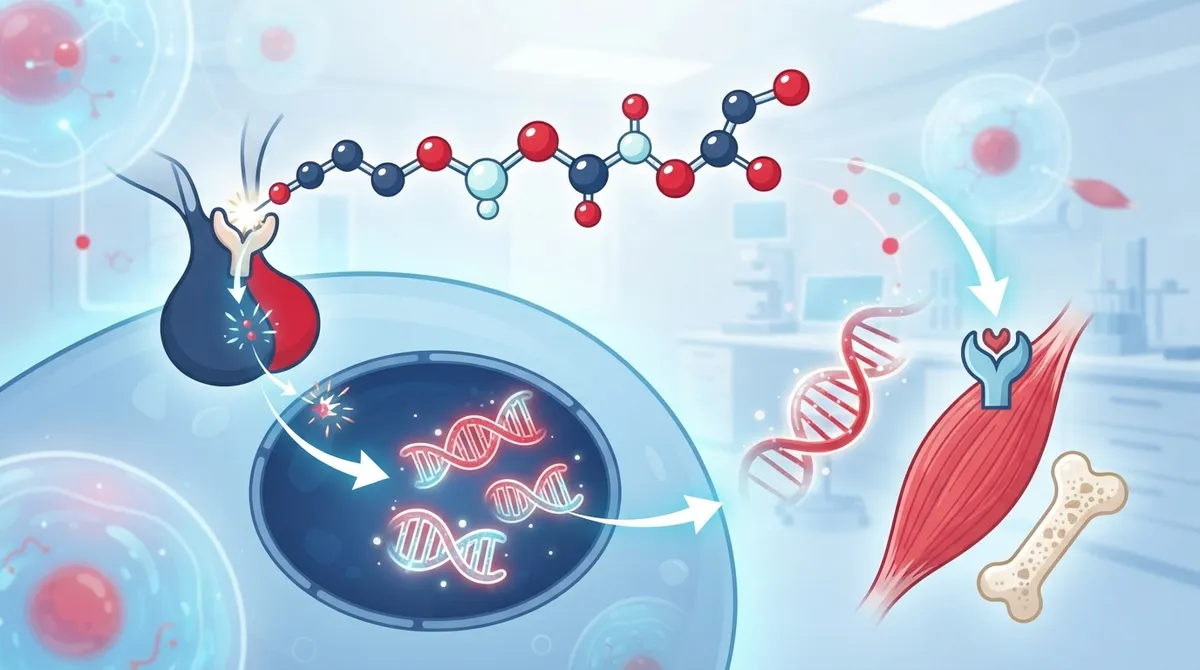
CJC-1295 is a lab-made peptide designed to mimic GHRH. Your brain naturally releases GHRH, which signals the pituitary gland to release growth hormone. Growth hormone then prompts the liver to make IGF-1, a hormone tied to growth and metabolism.
The idea behind CJC-1295 is simple. If it nudges the pituitary to release more growth hormone, the body might repair tissue faster or burn fat more easily. That is the marketing story. It is a theory, not a proven result.
There are two forms people talk about. One uses a drug affinity complex (DAC), which helps the peptide stay in the body longer. The other, often called "no DAC," is shorter-acting. For a closer look at the second form, see What Is CJC-1295 Without DAC and Is It Safe?. For a plain-language overview, read What Is CJC-1295 and Is It Safe to Try?.

Marketing Claims vs. Clinical Evidence
Clinic websites in the Tampa Bay area often group CJC-1295 with other peptides and list a long set of benefits. The table below sets common promotional claims next to what the research actually supports.
|
Common Claim |
What the Evidence Shows |
|---|---|
|
Builds muscle |
Not established. Human studies measured hormone levels, not muscle gain. |
|
Speeds fat loss |
Not established in clinical trials of CJC-1295. |
|
Improves sleep |
No reliable human data confirming this benefit. |
|
Boosts recovery |
Unproven. Hormone changes do not equal better recovery. |
|
Treats growth hormone deficiency |
Not shown. Diagnosis and treatment need endocrine testing. |
|
Raises growth hormone and IGF-1 |
Seen in two small, short studies of healthy adults. |
Only the last row has real support, and even that finding is narrow. A rise in a lab value is not the same as a better life or a healthier body.
What the Human Studies Actually Found
The best-known human data come from two randomized, placebo-controlled studies from 2006, as summarized in FDA materials. They enrolled healthy adults ages 21 to 61. A single CJC-1295 DAC injection raised mean growth hormone levels about 2 to 10 times for six or more days. IGF-1 levels rose about 1.5 to 3 times for 9 to 11 days.
These are real findings. But look at the limits:
- The studies lasted only 28 and 49 days.
- The groups were small and made up of healthy people.
- Researchers measured hormone levels, not strength, body fat, sleep, or injury recovery.
- Nobody can draw conclusions about long-term safety from them.
For a deeper breakdown, see What Do CJC-1295 Human Studies Actually Show? and How to Read CJC-1295 Research Before You Decide.
Regulatory Status: What "Not FDA-Approved" Means
CJC-1295 is not an FDA-approved drug, and no form of it is part of an FDA-approved medicine. FDA briefing materials from 2024 evaluated five CJC-1295-related substances for possible use in compounded injectable products. The agency proposed not adding them to the 503A bulk substances list. It cited limited clinical information and safety concerns.
FDA materials point to several issues:
- Limited clinical data. There is little human research beyond short hormone studies.
- Immune reactions. Peptide impurities or clumping may trigger immune responses.
- Heart rate and blood vessel effects. Reports include faster heart rate and systemic vasodilatory reactions.
Compounded drugs are not FDA-approved. Compounding is meant for a specific patient when an approved drug cannot meet a medical need. A clinic that uses words like "medical grade" or "pharmaceutical grade" has not proven that a product is approved or effective. To learn how to judge product quality, read 6 Ways to Verify CJC-1295 Quality Before You Try It. You can also compare approaches in FDA-Approved vs. Compounded Peptides: Which Wins?.
Known and Possible Risks
Because the research is limited, the full risk picture is unclear. That alone is a reason for caution. Here are the concerns raised so far, along with common questions clinicians hear.
- Heart rate and circulation. Faster heart rate and flushing have been reported.
- Immune reactions. Impurities or aggregated peptide can provoke a response.
- Hormone effects. Raising growth hormone and IGF-1 may not suit everyone, especially people with certain medical histories.
- Product quality. Purity, dose accuracy, and sterility vary by source.
- Unknown long-term effects. No long-term human safety data exist.
Certain health conditions and medications raise the stakes further. A detailed review is available in 15 CJC-1295 Contraindications You Must Know in 2026.
Marketing-Led Peptide Shop vs. Primary Care Pathway
The real comparison is not one peptide against another. It is two ways of making a health decision. One starts with a product. The other starts with you.
|
Factor |
Product-First Peptide Offer |
Primary Care Pathway |
|---|---|---|
|
Starting point |
The peptide |
Your symptoms, goals, and history |
|
Testing |
Often limited or optional |
Labs and exams tied to your concern |
|
Evidence standard |
Marketing claims |
Established clinical guidelines |
|
Regulatory status |
Often unapproved or compounded |
FDA-approved options where they exist |
|
Follow-up |
Varies widely |
Ongoing monitoring and coordination |
|
Referral |
Rare |
Endocrinology, sleep medicine, or others when needed |
A primary care clinician asks why you want treatment in the first place. Maybe you feel tired. Maybe your workouts feel flat or your sleep is poor. Each of those has many possible causes, and most are treatable with proven steps.
What a Smart Primary Care Visit Looks Like
If you are curious about CJC-1295, a good first step is a conversation, not a purchase. A thorough visit can follow a clear path:
- Share your goal. Explain what you hope to change, such as energy, body composition, sleep, or recovery.
- Review your history. Your clinician looks at medical conditions, family history, and current medications.
- Check the basics. Blood pressure, weight, and symptom review often reveal the real cause.
- Order targeted tests. Labs can look at thyroid function, blood sugar, vitamin levels, and hormones when the symptoms point there.
- Build an evidence-based plan. This may include nutrition, exercise, sleep care, or approved medications.
- Refer when needed. If a hormone disorder is suspected, an endocrinologist can confirm or rule it out.
This is how real growth hormone concerns get handled. A true deficiency is diagnosed with specialized testing and treated with approved therapy under specialist care. For more on safe oversight, see What Monitoring Is Needed With Growth Hormone Peptides?.
Evidence-Based Options for Common Goals
Many people look at peptides because they want results fast. The good news is that proven options exist for the goals people mention most.
Weight and Body Composition
Medical weight management combines nutrition, activity, lab review, and, when appropriate, approved medications. Body composition and metabolic testing can show where you stand today. Learn more in 11 Reasons Medical Weight Loss Clinics Work Better in 2026.
Sleep
Poor sleep has many causes, from stress to sleep apnea. Treating the cause beats guessing. See How to Know When to See a Doctor for Poor Sleep.
Recovery and Performance
Smart training, protein intake, sleep, and injury evaluation do more for recovery than any unproven injection. For a balanced view, read Does CJC-1295 Actually Speed Up Recovery in 2026? and Peptides for Athletes: Hype vs. Medical Reality?.
Hormone Health
If low testosterone or another hormone issue is suspected, testing comes first. Treatment follows a diagnosis, not the other way around. Related reading: Who Provides Medically Supervised TRT in Tampa Bay?.
How to Evaluate a Tampa Clinic Offering CJC-1295
No reliable public count shows how many Tampa clinics offer CJC-1295. A clinic listing or a polished web page is not evidence of safety, effectiveness, or approval. If you still want to explore, ask pointed questions first.
- Is this product FDA-approved? If not, what is its exact regulatory status?
- Who prepares it, and can you verify the source and testing?
- What medical evaluation happens before treatment?
- What labs do you order, and how often do you repeat them?
- What are the known risks, and how will you monitor me?
- What happens if I have a reaction?
- Will you refer me to a specialist if tests suggest a hormone disorder?
Vague answers are a warning sign. A trustworthy provider welcomes these questions. For a longer checklist, use 15 Questions to Ask a Peptide Therapy Clinic in Tampa and 10 Questions to Ask a CJC-1295 Peptide Clinic in Riverview.
Why Primary Care Is the Smarter Starting Point
A primary care relationship gives you something no product page can: a clinician who knows your full health picture. That context matters when you are weighing an unproven therapy. It helps catch drug interactions, spot underlying conditions, and keep your care coordinated.
InCare is a personalized healthcare clinic with locations in Tampa and Riverview, Florida. The practice blends medical expertise with modern tools such as metabolic breath analysis, body composition analysis, and DNA gene testing. The focus is prevention and whole-body optimization. Patients can discuss their goals, review their risks, and get evidence-based guidance rather than a sales pitch. You can also see what other patients say when you visit us on Google — InCare.
If you are new to the area or new to care, start with a simple plan. These resources can help: Best Primary Care Doctor in Tampa: How to Choose in 2026 and How to Evaluate Peptide Therapy for Wellness Safely. You can also follow clinic updates on Instagram and Facebook, or watch short health explainers on TikTok.
The Bottom Line
The CJC-1295 peptide in Tampa market is built on promise. The research is built on small, short studies of hormone levels. Those two things do not match. CJC-1295 is not FDA-approved, FDA materials flag safety and evidence gaps, and the benefits sold by many providers are not established.
That does not mean your goals are wrong. Wanting better energy, sleep, strength, or recovery is reasonable. The best route is to find the real cause, use proven tools first, and bring in specialists when a hormone problem is suspected. If you want a clear, honest conversation about your goals and your risks, book an appointment with InCare or contact our team to get started.
FAQs
Q: Is CJC-1295 FDA-approved?
A: No. CJC-1295 is not an FDA-approved drug, and no form of it is part of an FDA-approved medicine. FDA briefing materials from 2024 also proposed not adding evaluated CJC-1295 substances to the 503A bulk substances list, citing limited evidence and safety concerns.
Q: Does CJC-1295 help with weight loss, muscle gain, sleep, or recovery?
A: These benefits are not established. Human studies of CJC-1295 mainly measured short-term growth hormone and IGF-1 changes in healthy adults, not muscle, fat loss, sleep, or recovery outcomes. Marketing claims should not be treated as proof.
Q: What are the known risks of CJC-1295?
A: FDA materials cite limited clinical information, possible immune reactions linked to peptide impurities or aggregation, and reports of increased heart rate and systemic vasodilatory reactions. Long-term safety in humans has not been established.
Q: How can I evaluate a Tampa clinic offering CJC-1295 peptide therapy?
A: Ask about the product's regulatory status, its source and testing, the medical evaluation and labs required, how risks are monitored, and whether the clinic refers patients to specialists. A clinic's use of terms like "medical grade" does not prove approval or effectiveness.
Q: What should I do if I suspect a growth hormone problem?
A: Start with a primary care clinician who can review your symptoms, history, and medications. If a hormone disorder is suspected, evidence-based testing and referral to an endocrinologist are the appropriate next steps rather than relying on promotional peptide claims.


