Key Takeaways
- Chronic disease management is ongoing care, not a single visit: it combines regular follow-up, monitoring, medication review, and plan changes, with one primary clinician tracking your progress over time.
- A strong chronic care plan includes measurable goals (such as blood pressure ranges or A1C levels), a monitoring schedule for labs and home readings, a medication review, and care coordination with specialists.
- Medicare's Chronic Care Management benefit applies to patients with two or more chronic conditions lasting at least 12 months, requires at least 20 minutes of clinical staff time per month, and involves consent and documentation rules.
- Bring a full medication list, home monitoring logs, recent lab results, and a short list of questions to each visit, and when choosing a Riverview clinic, confirm follow-up care, specialist coordination, and insurance acceptance.
Living with a long-term health condition can feel like a full-time job. There are medications to track, numbers to monitor, and appointments to schedule. For many adults in Riverview, Florida, the real challenge is not just treatment. It is finding steady, coordinated support that keeps everything on track between visits.
That is where chronic disease management primary care Riverview services make a real difference. A primary care team can follow your health over time, adjust your plan as your needs change, and connect you with specialists when needed. This guide explains what chronic disease management looks like, which conditions it covers, how Medicare supports it, and how to choose the right clinic. It also shows how primary care at InCare approaches long-term health with personalized, technology-supported care.

What Is Chronic Disease Management in Primary Care?
Chronic disease management is ongoing care for health conditions that last a long time. It is not a single visit. It combines regular follow-up, monitoring, medication review, and plan changes as your health evolves.
A primary care clinician acts as the central point of your care. This clinician knows your history, tracks your progress, and helps you set goals you can measure. This continuity is the biggest advantage of managing chronic conditions through primary care.
To learn more about this role, read how primary doctors help manage chronic illnesses.
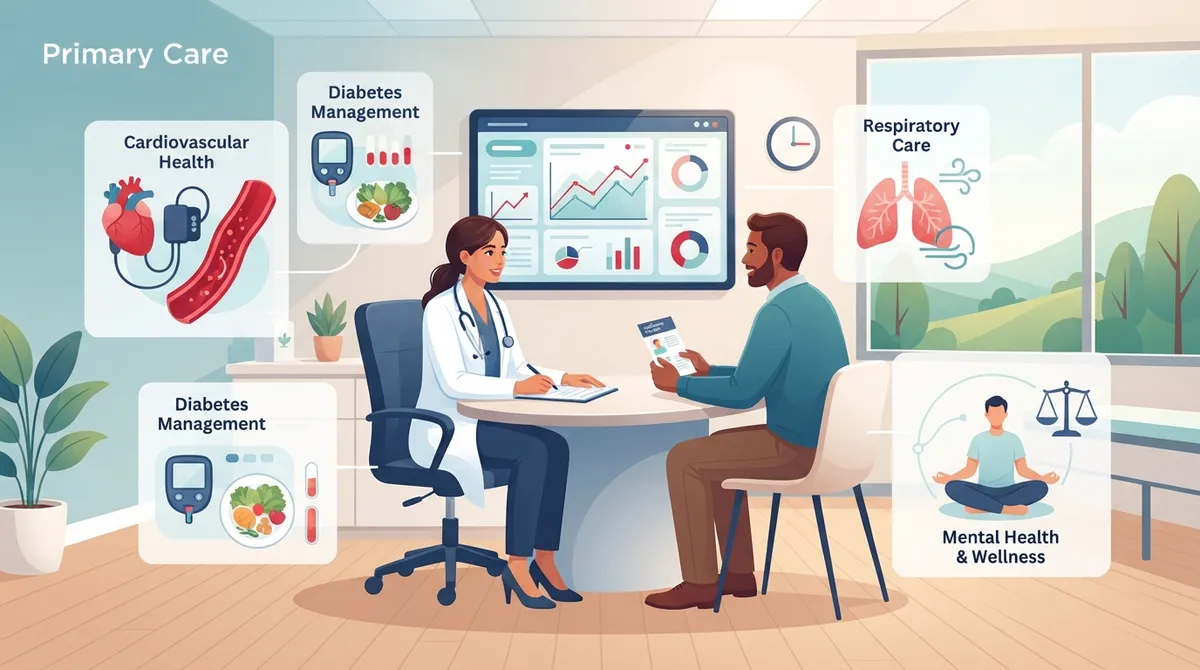
Common Conditions Managed in Primary Care
Primary care teams routinely manage many long-term conditions. The exact services vary by clinic, so it is wise to confirm what a practice offers before you book.
- Diabetes: blood sugar monitoring, medication review, and lifestyle coaching
- High blood pressure: regular readings and treatment adjustments
- High cholesterol: lab testing and heart-health planning
- Heart disease: risk reduction and coordination with cardiology
- Asthma and COPD: breathing assessments and symptom control
- Arthritis: pain management and mobility support
- Thyroid disorders: hormone testing and dose adjustments
Many patients live with more than one of these at the same time. A single primary care provider can look at the full picture instead of treating each condition in isolation. For example, common diabetes management mistakes often overlap with blood pressure and weight concerns.
What a Good Chronic Care Plan Includes
A useful care plan is more than a list of prescriptions. It gives you and your clinician a shared roadmap. A strong plan typically includes the following parts.
- Health problems identified: a clear list of your conditions and risk factors
- Measurable goals: targets such as blood pressure ranges, A1C levels, or weight milestones
- Planned interventions: lifestyle steps, treatments, and screenings
- Medication review: checks for side effects, duplicates, and interactions
- Monitoring schedule: labs, home readings, and follow-up visits
- Care coordination: communication with specialists, caregivers, and family
Reviewing your medicines regularly matters more than many people realize. These prescription management tips can help you stay organized between appointments.
How Often Should You See Your Provider?
There is no single schedule for everyone. The right frequency depends on your condition, how well it is controlled, and any recent changes in treatment. Some patients are seen every three months. Others may need visits less often once their numbers are stable.
Your clinician will set a schedule that fits your situation. Be sure to call sooner if symptoms change, a medication causes problems, or a home reading falls outside your target range.
Medicare Chronic Care Management: What to Know
For eligible Medicare patients, Chronic Care Management (CCM) offers added support beyond the regular office visit. According to the Centers for Medicare & Medicaid Services (CMS), the benefit is designed for patients with two or more chronic conditions that are expected to last at least 12 months or until death. These conditions must create a significant risk of death, acute worsening, or functional decline.
CMS materials describe care coordination that goes beyond the visit, with a minimum of 20 minutes of directed clinical staff time in a calendar month for the applicable service. Rules also apply for patient consent, documentation, and billing.
|
CCM Feature |
What It Means for You |
|---|---|
|
Eligibility |
Two or more qualifying chronic conditions lasting 12 months or longer |
|
Risk level |
Conditions that pose significant risk of death, worsening, or decline |
|
Time requirement |
At least 20 minutes of clinical staff time per calendar month |
|
Focus |
Care coordination outside the regular office visit |
|
Requirements |
Consent, documentation, and billing rules apply |
Coverage details can change, so confirm eligibility with your clinician and your Medicare plan. If you are comparing options, this guide to the best Medicare provider for primary care offers helpful tips.
Benefits of Coordinated Care Over Fragmented Care
When several doctors manage different parts of your health without talking to each other, gaps appear. Duplicate tests, conflicting medicines, and missed follow-ups become more likely. Coordinated primary care reduces these risks by keeping one team in the center.
Here is how the two approaches compare.
|
Care Approach |
Typical Experience |
|---|---|
|
Fragmented care |
Multiple offices, repeated paperwork, limited communication |
|
Coordinated primary care |
One home base, shared records, clear referrals, consistent follow-up |
Learn more in fragmented care vs. coordinated care.
When Your Primary Care Provider Refers You to a Specialist
Primary care can handle a wide range of long-term conditions. Still, some situations call for a specialist. Your provider may refer you when testing or treatment falls outside the clinic's scope, when a condition is not responding as expected, or when advanced procedures are needed.
A referral does not mean your primary care relationship ends. Your clinician continues to coordinate, review results, and update your plan. This keeps your care connected and easier to follow.
Prevention: The Best Way to Manage Chronic Disease
The most effective chronic disease management often begins before a diagnosis. Early screening, healthy habits, and risk assessment can slow or even prevent many conditions. Preventive tools may include blood work, cancer screenings, and lifestyle counseling.
InCare takes a whole-body view of health. Services such as cancer screening, DNA gene testing, and metabolic breath analysis help uncover risks early and support more personalized plans. For patients managing weight alongside other conditions, a structured weight loss program can also lower strain on the heart, joints, and blood sugar control.
You can also read how primary care doctors help prevent chronic diseases for practical steps you can start today.
How to Prepare for a Chronic Disease Management Visit
A little preparation helps you get more from every appointment. Bring the following items when you visit.
- A full list of medications, vitamins, and supplements
- Home readings such as blood pressure or glucose logs
- Recent lab results or records from other doctors
- A short list of questions and symptoms to discuss
- Your insurance or Medicare card
If you are switching clinics, these steps for a medical records request can make the transition smoother.
How to Choose a Riverview Clinic for Long-Term Care
Riverview has several primary care options, and it helps to compare them carefully. Local clinic listings can serve as a starting point, but services and availability change. Always confirm current offerings directly with any practice.
Consider these questions when you evaluate a clinic.
- Does the practice offer ongoing follow-up for conditions like diabetes and high blood pressure?
- Can you reach the care team between visits?
- Does the clinic coordinate with specialists and other providers?
- Are same-day or virtual appointments available?
- Does the team accept your insurance or Medicare plan?
You can also review signs you have found the right primary care practice and this guide to choosing the right Riverview clinic.
Why Riverview Patients Choose InCare
InCare is a personalized healthcare clinic that blends medical expertise with state-of-the-art technology. The Riverview location, along with a Tampa office and virtual visits, gives patients flexible ways to stay connected to their care. Patients benefit from tools such as 3D body composition tracking, in-house testing, and tailored wellness programs, all within a prevention-focused model.
The clinic holds a strong patient rating on Google, and reviews often praise the friendly staff and attentive physicians. You can read InCare reviews on Google to see what local patients say. To learn about the clinicians behind the care, visit the providers page, or explore why InCare is a leading choice for primary care in Riverview.
InCare also shares health tips and clinic updates on Instagram, Facebook, and TikTok, which is a simple way to follow along with new services and wellness advice.
Fitting Chronic Care Into a Busy Life
Many adults juggle work, family, and health goals all at once. Good chronic disease management should respect your time. Look for clinics that offer flexible scheduling, telemedicine options, and quick access when something changes. The right setup reduces missed appointments and keeps small problems from becoming big ones.
If you are new to a practice, these tips on what to expect at a new patient appointment will help you feel ready.
Take the Next Step Toward Steadier Health
Managing a long-term condition works best with a partner who knows your story and stays involved. Chronic disease management through primary care gives you regular monitoring, clear goals, and one team guiding the way. Whether you live with diabetes, high blood pressure, or several conditions at once, consistent support can help you feel more in control.
Ready to build a plan that fits your life? Book your appointment with InCare today, or contact our team with any questions about services, coverage, or getting started in Riverview.
FAQs
Q: What does chronic disease management in primary care include?
A: It includes regular follow-up visits, health monitoring, medication review, and adjustments to your treatment plan. A primary care clinician also coordinates your care with specialists and helps you set measurable health goals.
Q: Can a primary care doctor manage more than one chronic condition?
A: Yes. Primary care providers commonly manage several related conditions at once, such as diabetes, high blood pressure, and high cholesterol. They can also refer you to a specialist when testing or treatment falls outside the clinic's scope.
Q: Does Medicare cover chronic care management services?
A: Medicare offers a Chronic Care Management benefit for eligible patients with two or more qualifying chronic conditions expected to last at least 12 months. Consent, documentation, and billing rules apply, so confirm coverage with your clinician and Medicare plan.
Q: What should I bring to a chronic disease management appointment?
A: Bring a complete medication list, home monitoring logs, recent lab results, and any records from other providers. A short list of questions and symptoms will also help you use your visit time well.
Q: How can I find a primary care clinic for chronic disease management in Riverview?
A: Compare clinics based on follow-up care, specialist coordination, appointment access, and insurance acceptance. Confirm current services directly with each practice, since offerings and availability can change.