Key Takeaways
- Diagnosis should confirm low testosterone with compatible symptoms plus two separate early-morning blood tests; the AUA uses a total testosterone below 300 ng/dL as a supporting threshold.
- Avoid clinics that prescribe after a single test, promise guaranteed or rapid results, or push large prepaid packages before a diagnosis is confirmed.
- Testosterone therapy can suppress sperm production, so discuss fertility plans with your clinician before starting treatment.
- FDA labeling notes class-wide blood pressure increases with testosterone products, so periodic blood pressure checks are essential during treatment.
- AUA guidance recommends rechecking testosterone 6 to 12 months after levels stabilize, along with monitoring blood pressure and blood counts.
- Testosterone is not approved as a general treatment for age-related fatigue or wellness optimization without an established deficiency.
Low energy, a flat mood, poor sleep, and a fading drive can make any man wonder whether his hormones are to blame. Searching for the best men's hormone doctor in Tampa is a smart first step, but the right choice depends on more than a polished website or a promise of fast results.
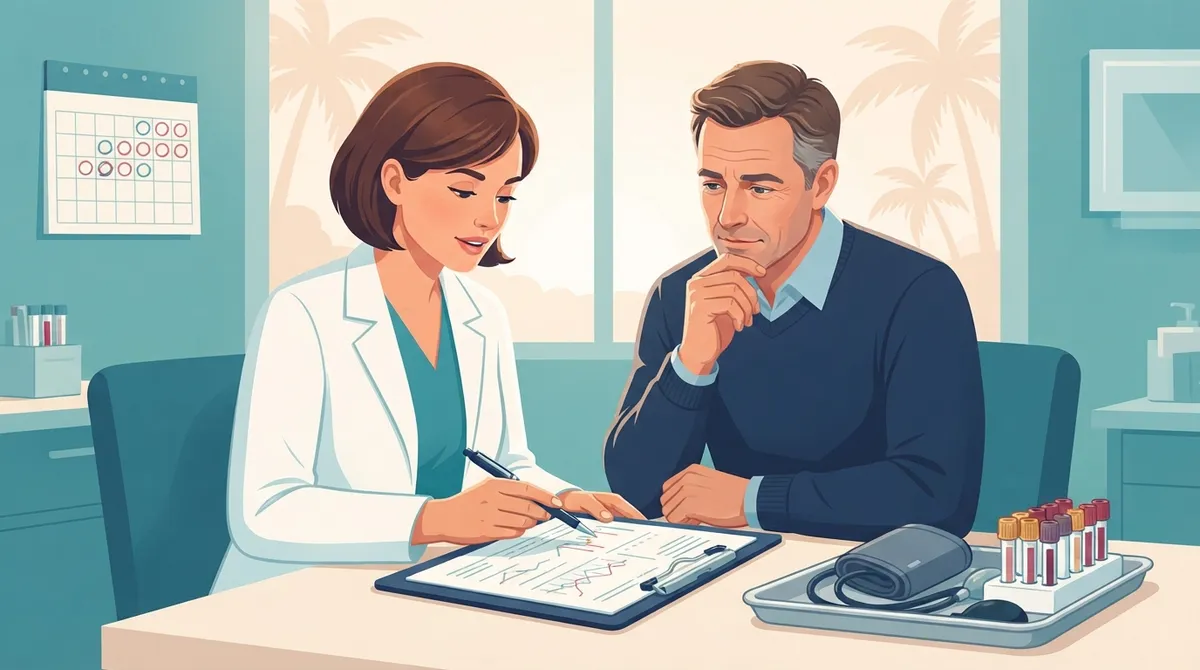
A strong hormone physician starts with a careful diagnosis. They confirm whether testosterone is truly low, look for other causes of your symptoms, and explain the risks before any treatment begins. They also keep checking your health long after the first prescription.
This guide explains what a qualified clinician does, which type of doctor may fit you best, what a proper evaluation includes, and which red flags to avoid. It draws on guidance from the American Urological Association (AUA) and the U.S. Food and Drug Administration (FDA) so you can judge any clinic by clear, evidence-based standards.

What Makes the Best Men's Hormone Doctor in Tampa?
The best men's hormone doctor in Tampa is not the one who prescribes the fastest. It is the one who diagnoses accurately, treats only when treatment is warranted, and monitors you closely over time.
Look for these core qualities:
- Diagnosis before treatment: Therapy begins only after symptoms and repeat blood tests point to testosterone deficiency.
- Whole-health thinking: The doctor checks sleep, weight, medications, mood, and chronic conditions that can mimic low testosterone.
- Honest risk talk: You hear about fertility effects, blood pressure, and blood count changes before you start.
- Ongoing monitoring: Follow-up labs and visits are built into the plan, not offered as an extra.
- Clear boundaries: The clinician explains that testosterone is not a general anti-aging or "optimization" shortcut.
A primary care practice that treats the whole person is often well suited to this kind of work. Hormone health connects to heart health, metabolism, sleep, and mental well-being, so a doctor who sees the full picture can catch problems a narrow focus might miss.

Primary Care, Urologist, or Endocrinologist?
Men often ask which specialist to see first. Several types of clinicians can evaluate male hypogonadism, the medical term for low testosterone. The best fit depends on your symptoms, history, and goals.
|
Clinician Type |
Best For |
Things to Consider |
|---|---|---|
|
Primary care physician |
First evaluation, symptom review, ruling out other causes, coordinating ongoing care |
Can refer you onward if your case is complex or fertility is a priority |
|
Urologist |
Fertility concerns, testicular issues, sexual function problems |
Often a referral stop after initial labs |
|
Endocrinologist |
Complex hormone problems, pituitary concerns, unclear lab patterns |
May have longer wait times |
For most men, a primary care doctor is a practical starting point. They can order the right tests, review your medications, and screen for related conditions like diabetes, sleep apnea, and high blood pressure. If your results are unusual or you want to father children, they can guide you to a specialist.
Patients who want one team to manage their overall health often prefer this route. It avoids the fragmented handoffs that can happen when hormone care sits apart from the rest of your medical care. You can read more about fragmented care versus coordinated care to see why this matters.
How Low Testosterone Is Properly Diagnosed
Diagnosis is where good care separates from questionable care. According to the AUA, testosterone deficiency should be diagnosed from compatible symptoms or signs together with consistently low blood testosterone. Symptoms alone are not enough, and a single test is not enough either.
The Diagnostic Standard
The AUA uses a total testosterone level below 300 ng/dL as a reasonable threshold supporting the diagnosis. It also recommends confirming a low result with two separate early-morning tests. Testosterone levels are highest in the morning, so timing matters.
Common symptoms that prompt testing include:
- Reduced sex drive or erectile changes
- Persistent fatigue or low energy
- Loss of muscle mass or increased body fat
- Low mood or trouble concentrating
- Reduced bone density in some cases
These symptoms overlap with many other conditions. Poor sleep, depression, thyroid disease, obesity, diabetes, and certain medications can all cause similar problems. A thorough doctor does not skip this step.
What a Careful Evaluation Includes
- Medical and medication history: Your doctor reviews symptoms, chronic conditions, supplements, and prescriptions that could affect hormones.
- Physical examination: This checks for signs related to testosterone levels and overall health.
- Repeat morning testosterone testing: Two separate early-morning blood draws confirm whether levels are consistently low.
- Additional lab work: Depending on your case, the clinician may assess pituitary or testicular function and check blood counts and prostate-related factors before any treatment.
- Fertility discussion: Your plans for children are reviewed before a treatment decision is made.
Many Tampa-area patients value having in-house lab testing, since it can speed up results and make repeat testing easier to schedule.
Why Testosterone Therapy Is Not for Everyone
Testosterone therapy can help men with a confirmed deficiency, but it is not a cure-all. A trustworthy doctor will say so plainly.
The FDA labeling for testosterone products keeps a limitation of use for age-related hypogonadism. In plain terms, testosterone is not approved as a general treatment for aging, low energy, or wellness optimization when a true deficiency has not been established. A clinic that offers it to every tired man who walks in deserves skepticism.
Fertility Matters
Testosterone treatment can suppress sperm production. It may be unsuitable for men who want to have children now or in the near future. Your doctor should discuss fertility plans and alternatives with you before starting therapy. If fertility is a priority, a urologist or reproductive specialist may be the better partner for your care.
Understanding the 2025 FDA Update
In February 2025, the FDA announced class-wide testosterone labeling changes. After reviewing the TRAVERSE trial, the agency removed boxed-warning language about increased cardiovascular risk. At the same time, it required blood-pressure warnings based on postmarket studies.
This is important to understand correctly. The change does not mean treatment is risk-free. The FDA reported that completed studies confirmed a class-wide increase in blood pressure with testosterone products. Product labels advise periodic blood-pressure monitoring. For example, one gel product label reported a mean increase of 1.9/1.3 mm Hg in systolic and diastolic pressure, while another reported 2.7/1.1 mm Hg after 16 weeks. These are product-specific study results, not predictions for every patient.
A good doctor will check your blood pressure at every follow-up visit and talk with you openly about this risk.
Monitoring: The Mark of Responsible Care
Starting treatment is only the beginning. Responsible hormone care includes a clear monitoring plan.
AUA guidance recommends checking testosterone levels after treatment begins and then every 6 to 12 months once levels are established. Clinicians should also monitor treatment-specific safety issues, including blood pressure and blood counts.
Here is what a solid monitoring plan typically looks like:
- A follow-up blood test soon after you start to confirm your levels are in the right range
- Routine testosterone checks every 6 to 12 months once stable
- Regular blood pressure readings at each visit
- Blood count checks to watch for changes that need attention
- Ongoing review of symptoms to see whether treatment is actually helping
If a clinic mails you product and rarely asks you to return for labs, that is a warning sign.
Red Flags When Choosing a Hormone Clinic
Not every clinic that advertises men's hormone care follows sound medical standards. Watch for these warning signs:
- Treatment offered after a single test or no test at all
- Promises of guaranteed results, rapid transformation, or "optimization" for healthy men
- No discussion of fertility, blood pressure, or other risks
- No plan for follow-up labs and visits
- Pressure to buy large prepaid packages before your diagnosis is confirmed
- Dismissal of other possible causes like sleep apnea, depression, or thyroid problems
You may also want to read how TRT, peptide therapy, and hormone replacement therapy differ so you understand each option before you commit.
How InCare Approaches Men's Hormone Health in Tampa
InCare is a personalized primary care and wellness clinic with locations in Tampa and Riverview, Florida. The practice combines medical expertise with advanced technology and focuses on prevention and whole-body health.
For men with hormone concerns, this approach means your evaluation is not isolated from the rest of your health. The care team can review your symptoms, order appropriate testing, and look at related factors such as weight, metabolism, sleep, and blood pressure. You can learn more about testosterone replacement therapy at InCare and meet the providers who guide patient care. InCare holds a 4.8 out of 5 rating on Google across 359 reviews, and you can visit us on Google — InCare to read what patients say about their experience.
InCare offers convenient options as well, with a Tampa office at 1213 N Franklin St, a Riverview office, and virtual appointments. That flexibility helps busy professionals and families fit follow-up visits into real schedules. Patients can also explore related services such as medical weight loss and body composition analysis, since body fat and metabolic health often influence hormone levels.
Stay connected with the practice through Instagram, Facebook, and TikTok for health tips and clinic updates.
Questions to Ask Before You Book
Bring a short list of questions to your first appointment. The answers will tell you a great deal about the quality of care.
- How will you confirm whether my testosterone is truly low?
- Will you test more than once, and at what time of day?
- What other conditions might explain my symptoms?
- How will treatment affect my fertility?
- What monitoring will I need, and how often?
- What are the blood pressure and blood count risks?
- What happens if testing shows my levels are normal?
A confident, patient-centered doctor welcomes these questions. If you feel rushed or brushed off, keep looking.
Take the Next Step Toward Clear Answers
Finding the best men's hormone doctor in Tampa comes down to evidence, honesty, and follow-through. Choose a clinician who confirms a diagnosis with repeat morning testing, explains the risks in plain language, respects your fertility goals, and commits to long-term monitoring. Treatment should solve a documented problem, not chase a trend.
If you are ready for a thorough, whole-body evaluation, Book Now to meet with the InCare team, or contact InCare with any questions before your visit. A careful first conversation can give you the clarity you need to move forward with confidence.
FAQs
Q: How do I find a qualified men's hormone doctor in Tampa?
A: Look for a primary care physician, endocrinologist, or urologist with experience evaluating male hypogonadism. A qualified doctor confirms low testosterone with symptoms plus repeat morning blood tests, discusses fertility and risks, and sets up regular monitoring.
Q: How many morning testosterone tests are needed before treatment?
A: The American Urological Association recommends confirming a low result with two separate early-morning tests. A total testosterone level below 300 ng/dL, combined with compatible symptoms or signs, supports a diagnosis of testosterone deficiency.
Q: Can testosterone therapy affect fertility or sperm count?
A: Yes. Testosterone treatment can suppress sperm production and may be unsuitable for men who want to have children. Discuss your fertility plans and alternatives with a clinician before starting therapy.
Q: What follow-up monitoring is needed while taking testosterone?
A: AUA guidance recommends checking testosterone after treatment begins and every 6 to 12 months once levels are established. Clinicians should also monitor blood pressure and blood counts, since product labels advise periodic blood-pressure checks.
Q: Does testosterone therapy help with age-related fatigue or low energy?
A: Not as a general treatment. FDA labeling retains a limitation of use for age-related hypogonadism, and therapy is intended for men with an established deficiency. Fatigue has many possible causes, so a full evaluation comes first.