

Key Takeaways
- Heart disease caused 23.6% and cancer 20.4% of U.S. male deaths in 2024, so catching these conditions early through prevention matters more than waiting for symptoms.
- The best men's health plan combines an annual physical for a full health baseline with targeted screenings based on age, family history, and risk factors.
- Colorectal cancer screening is recommended for average-risk adults ages 45 to 75, and men ages 65 to 75 who have ever smoked should ask about a one-time aortic aneurysm ultrasound.
- Prostate screening for men ages 55 to 69 is an individual decision made after weighing benefits and harms, and routine screening is not recommended at age 70 and older.
- Blood pressure often causes no symptoms, so regular checks and confirmation with measurements outside the clinic are essential before starting treatment.
- Mental health, sleep, and sexual health belong in routine primary care visits, so write down your top three concerns and raise them even if they feel awkward.
Many men put off medical care until something hurts. That habit is costly. In 2024, heart disease accounted for 23.6% of male deaths in the United States, and cancer accounted for 20.4%, according to the CDC. Both conditions are often easier to manage when they are found early. For this reason, men's health in 2026 is built around prevention, not crisis response.
A common question is whether a broad annual physical or a targeted screening plan is the better route. The honest answer is that each does a different job. A physical gives a doctor a full picture of your health. Targeted screening looks hard for specific risks based on your age, family history, and habits.
This article compares the two approaches side by side. You will learn what each one covers, where each one falls short, and how to combine them. Whether you are a busy father, a young professional, or a health-minded man who wants to optimize your long-term wellness, you will find clear steps you can use this year.

Why Men's Health Needs a Different Conversation
Men are less likely than women to receive mental health treatment, according to CDC data. In 2024, 19.3% of U.S. adults took medication for mental health and 14.0% received counseling or therapy, and women were more likely than men to receive either. Many men also skip routine visits because of busy schedules, cost worries, or the belief that feeling fine means being healthy.
Yet U.S. male life expectancy at birth was 76.5 years in 2024, up from 75.8 years in 2023. That progress shows prevention and better care can work. The goal is to keep the gains going by building a regular relationship with a primary care provider.
Good men's health care is also personal. Age, family history, gender identity, sexual practices, culture, disability, and access to care all shape which services make sense. A fixed checklist for every man does not exist. Care should be individualized.
The Annual Physical: What It Does Well
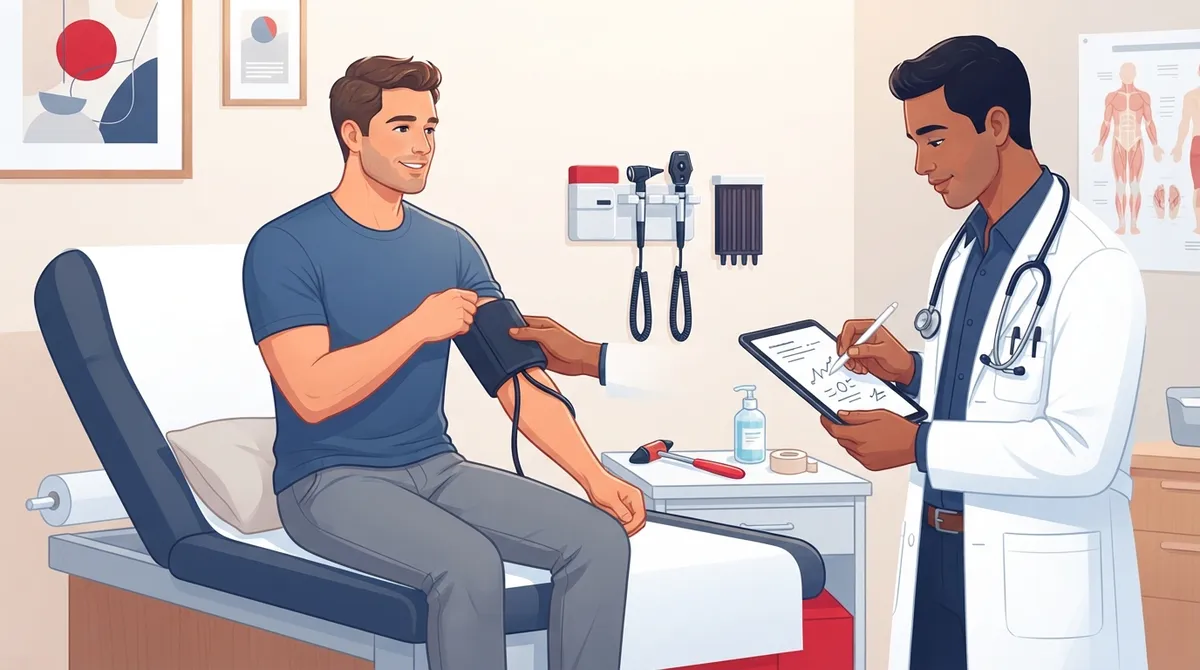
An annual physical is a broad review of your health. It builds a baseline and helps your doctor spot changes over time. If you are curious about the flow of a typical visit, what happens during an annual physical exam walks through it step by step.
What a Physical Typically Includes
- Blood pressure, heart rate, height, weight, and body mass index
- A review of medical history, family history, medications, and lifestyle
- A physical exam of the heart, lungs, abdomen, skin, and more
- Lab work such as cholesterol and blood sugar, when appropriate
- Vaccine review and updates
- Conversations about sleep, stress, alcohol, tobacco, nutrition, and activity
Where a Physical Falls Short
A physical alone may not pick up silent risks. Some cancers and vascular problems have no symptoms early on. A physical also depends on what you tell your doctor. If you skip topics like mood, sexual health, or substance use, they may never get addressed.
Targeted Screening: What It Does Well
Targeted screening uses evidence-based guidelines to look for specific diseases in people who are at risk. The U.S. Preventive Services Task Force (USPSTF) publishes many of these recommendations. Screening schedules should reflect your age, history, risk factors, and preferences.
Key Screenings for Men
- Blood pressure: Screening is recommended for adults. An elevated office reading should usually be confirmed with measurements outside the clinic before treatment begins.
- Colorectal cancer: The USPSTF recommends screening for average-risk adults ages 45 to 75. Adults ages 76 to 85 may benefit selectively, depending on health, prior screening, and preferences. Options include stool-based tests and visualization procedures.
- Prostate cancer: For men ages 55 to 69, PSA screening is an individual decision after discussing benefits and harms. The USPSTF recommends against routine screening at age 70 and older. Men with a family history may need an earlier discussion.
- Abdominal aortic aneurysm: A one-time ultrasound is recommended for men ages 65 to 75 who have ever smoked.
- Diabetes and lung cancer: Screening applies when eligibility criteria are met.
- Sexual health and STI testing: Based on your sexual practices and risk.
Many men find the prostate discussion confusing. This guide on key things men should know about prostate exams explains what to expect. For broader early detection, InCare also offers cancer screening backed by advanced technology.
Where Targeted Screening Falls Short
A screening test answers one question. It does not review your whole lifestyle, your mental health, your medications, or how your conditions interact. A man can pass every screening and still struggle with poor sleep, high stress, or rising weight.
Side-by-Side Comparison
|
Factor |
Annual Physical |
Targeted Screening |
|---|---|---|
|
Main goal |
Whole-person health review |
Early detection of specific diseases |
|
Scope |
Broad |
Narrow and focused |
|
Based on |
Overall health and history |
Age, risk factors, and guidelines |
|
Frequency |
Usually yearly |
Varies by test and risk |
|
Covers mental health |
Often, if discussed |
Only with a specific screening tool |
|
Best for |
Building a baseline and trust |
Catching silent disease early |
|
Main weakness |
May miss silent risks |
May miss lifestyle and mood issues |
The Verdict: Which One Wins?
Neither wins alone. The best men's health plan blends both. The physical sets the stage, and targeted screening fills in the details. Think of the physical as the map and screening as the close-up view of high-risk areas.
Here is a simple way to decide where to put your effort:
- Men in their 20s and 30s: Focus on a baseline physical, blood pressure, vaccines, mental health, and sexual health. Screening needs are usually lighter.
- Men in their 40s: Add colorectal screening starting at 45 and review cholesterol and diabetes risk closely.
- Men in their 50s and 60s: Include a prostate screening discussion, plus lung cancer screening if you qualify.
- Men 65 to 75 who have smoked: Ask about the one-time aneurysm ultrasound.
Heart Health: The Biggest Reason to Act
Heart disease leads male deaths in the United States. Prevention usually centers on blood pressure, cholesterol, diabetes risk, tobacco use, nutrition, physical activity, sleep, and alcohol use. A primary care provider can track these numbers over time and step in early.
Blood pressure deserves special attention because it often causes no symptoms. If you want practical steps, these proven strategies for blood pressure management are a helpful starting point. For men already living with a long-term condition, how primary doctors help manage chronic illnesses shows how steady follow-up keeps problems under control.
Mental and Sexual Health Belong in the Room
Mental health is part of routine primary care. A good clinician will ask about mood, anxiety, substance use, and suicide risk, offer first-line support, and connect you with the right treatment. You do not need to be in crisis to bring it up.
The same is true for sexual health. Erectile dysfunction, low libido, and STI concerns are common medical topics. They can also point to other issues, such as heart disease, diabetes, or low testosterone. If you are worried about infections, this overview of STD testing in primary care explains what to expect.
Tips for Opening the Conversation
- Write down your top three concerns before the visit.
- Be direct. Doctors hear these topics every day.
- Ask what tests or treatments fit your age and risk.
- Ask about follow-up so nothing gets dropped.
Going Beyond the Basics With Advanced Wellness
Some men want to look past standard care and optimize how they feel and perform. Modern primary care clinics now offer tools that add detail to the traditional exam. Examples include metabolic testing, body composition scans, and genetic insights.
- DNA gene testing can reveal personal predispositions and guide prevention.
- Metabolic breath analysis measures how your body uses energy.
- Body composition analysis tracks muscle and fat, not just weight on a scale.
- Medical weight loss programs give structured, supervised support.
- IV hydration and vitamin drips support energy and recovery for some patients.
These services work best as add-ons to a strong primary care foundation, not replacements for it. Tools are only useful when a trained physician interprets the results in the context of your full health picture. Men dealing with hair thinning can also explore hair restoration options under medical guidance.
Barriers That Keep Men From Care, and How to Beat Them
Knowing what to do is different from doing it. Most men cite one of a few reasons for delaying care. Each one has a practical fix.
- No time: Look for same-day appointments and virtual visits. Telemedicine can handle many follow-ups and routine questions.
- No regular doctor: Choose a primary care provider now, before you are sick. A long-term relationship makes every future visit easier.
- Fear of bad news: Early findings are usually more treatable. Not knowing does not make a problem go away.
- Cost concerns: Preventive care often costs less than treating advanced disease. Ask about what your plan covers.
- Embarrassment: Choose a clinic where the staff makes you feel comfortable and heard.
If you are not sure whether you need a doctor at all, this resource on whether you need a PCP can help you decide. You may also want to see why having a primary care doctor is essential for health.
How InCare Supports Men's Health
InCare is a personalized primary care and wellness clinic serving Tampa and Riverview, Florida. The practice pairs state-of-the-art technology with medical expertise to deliver preventive, whole-body care. Patients can access primary care, urgent care, cancer screenings, hormone and wellness services, and telemedicine, all under one roof.
InCare holds a 4.8 out of 5 rating on Google from 359 reviews, with patients praising the friendly staff and the quality of care. You can read what patients say and visit us on Google — InCare to see the team and locations. To meet the physicians behind the practice, visit the providers page.
For men who are curious about hormone health, InCare offers guidance on topics like testosterone replacement therapy. A physician can order the right lab work first, so treatment is based on data and not guesswork.
You can also follow practice updates and wellness tips on Instagram, Facebook, and TikTok.
Building Your Personal Men's Health Plan
Use this simple five-step approach to get started this year:
- Choose a primary care provider and schedule a baseline physical.
- Share your family history, including heart disease, cancer, and diabetes.
- Ask which screenings fit your age and risk, and book them.
- Raise mental health, sleep, and sexual health, even if they feel awkward.
- Set a yearly reminder so prevention becomes a routine.
Conclusion
The annual physical and targeted screening are not rivals. The physical gives a full view of your health, and screening digs deep into the risks that matter most for your age. Together they form the backbone of modern men's health. Men who combine both, speak openly with their doctor, and follow up consistently give themselves the best chance at a long, active life.
If you are ready to take the next step, book your appointment with InCare today, or contact our team with questions. We will help you build a plan that fits your life.
FAQs
Q: What preventive screenings should men get, and at what age?
A: It depends on age and risk. Blood pressure screening applies to adults, colorectal screening is recommended for average-risk adults ages 45 to 75, and prostate screening is an individual decision for men ages 55 to 69. Men ages 65 to 75 who have ever smoked should ask about a one-time abdominal aortic aneurysm ultrasound.
Q: How often should men have a primary care checkup?
A: Most healthy adult men benefit from a checkup about once a year. Men with chronic conditions, a strong family history, or new symptoms may need more frequent visits. Your provider can set a schedule based on your personal risk.
Q: When should men begin colorectal cancer screening?
A: The USPSTF recommends that average-risk adults begin colorectal cancer screening at age 45 and continue through age 75. Options include stool-based tests and visualization procedures. Men with a family history or other risk factors may need to start earlier.
Q: How can men talk to a doctor about depression, anxiety, or substance use?
A: Start by being direct and describing how you have felt, including changes in mood, sleep, or alcohol use. Primary care clinicians routinely ask about these topics, can offer initial support, and can connect you with appropriate treatment. Writing down your concerns before the visit can make the conversation easier.
Q: What should men discuss with a primary care provider about sexual health?
A: Men can raise concerns such as erectile dysfunction, low libido, and STI testing. These issues can sometimes signal other conditions, including heart disease, diabetes, or hormone changes. A primary care provider can run the right tests and recommend treatment or referrals.