
Key Takeaways
- The FDA has not approved compounded NAD+ infusions and has warned about safety concerns, including endotoxin contamination, so always ask whether a product is FDA-approved or compounded and who makes it.
- Evidence that NAD+ IV infusions improve energy, focus, or aging in healthy people is limited, so treat clinic marketing claims as promises rather than proven medical results.
- Fatigue has common treatable causes like thyroid problems, anemia, low vitamin B12 or D, sleep apnea, and depression, so get a primary care evaluation before paying for an elective infusion.
- Ask providers for total plan costs, session length (about 2 to 5 hours at higher doses), and who evaluates and monitors you, since prices and protocols vary widely across Tampa clinics.
Few wellness trends in Tampa have grown as quickly as NAD+ infusions. Clinics advertise them for energy, focus, recovery, and even longevity. The promises sound appealing, especially if you feel tired or want to optimize your health. But enthusiasm often outpaces evidence, and many people spend hundreds of dollars before asking the right questions.
NAD+ (nicotinamide adenine dinucleotide) is a real coenzyme that helps your cells produce energy. That is scientifically sound. What remains unproven is whether an IV infusion improves energy, thinking, or aging in healthy people. If you are considering NAD+ IV therapy in Tampa, this guide covers the nine most common mistakes, so you can protect your health, your time, and your budget.
What NAD+ IV Therapy Actually Is
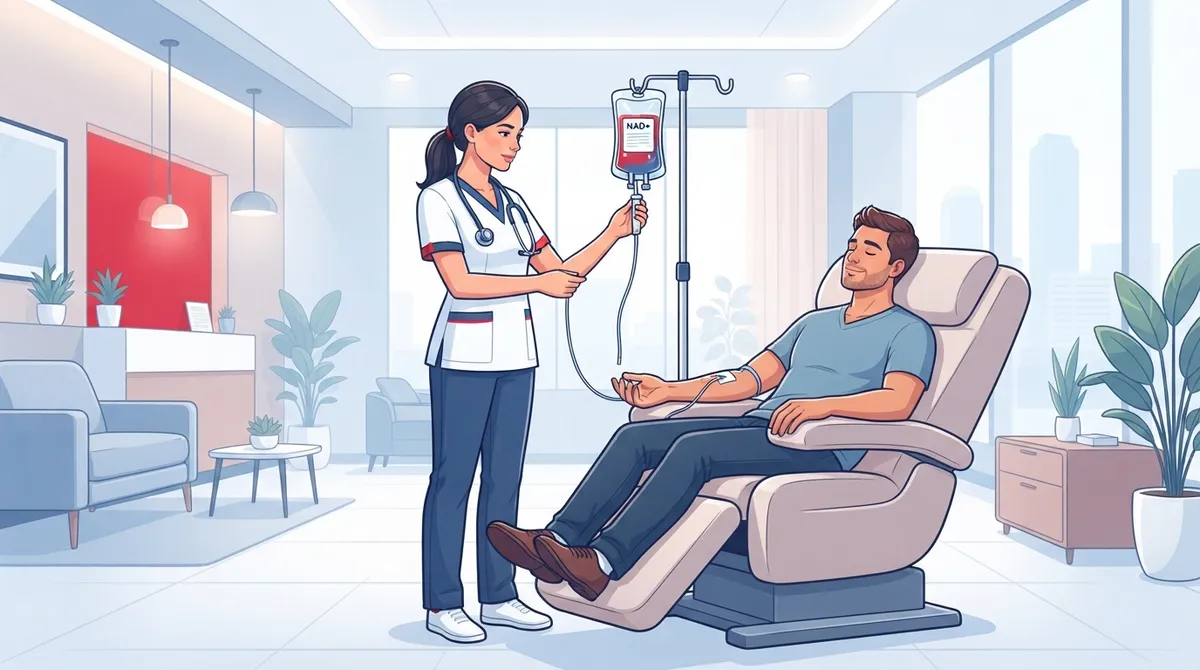
NAD+ IV therapy delivers the coenzyme directly into a vein through an infusion. Wellness clinics and medical spas across Tampa offer it, often alongside vitamin drips. Providers typically market it for energy, mental clarity, workout recovery, and healthy aging.
Those advertised outcomes are not established clinical benefits. Studies of NAD+ and its precursors show biological promise. But that does not prove an infusion helps healthy adults feel or function better. Keep this distinction in mind as you read the mistakes below.

Mistake 1: Treating Marketing Claims as Medical Fact
The most common error is believing clinic advertising at face value. Evidence for NAD+ IV therapy as a general wellness, anti-aging, fatigue, or cognitive treatment remains limited. A clinic web page is not a clinical trial.
Ask any provider what research supports their specific claims. A trustworthy clinician will separate what is promising from what is proven. If a provider promises dramatic results, treat that as a warning sign rather than a selling point.
Mistake 2: Skipping the Search for the Real Cause of Fatigue
Many people try an infusion because they feel exhausted or foggy. Fatigue, however, has many common and treatable causes. An elective infusion cannot replace a proper evaluation.
Before paying for a drip, consider whether any of these have been checked:
- Thyroid problems and other hormone imbalances
- Anemia or low vitamin B12 and vitamin D levels
- Sleep disorders such as sleep apnea
- Blood sugar problems or early diabetes
- Depression, anxiety, or chronic stress
- Medication side effects
A primary care visit can identify these issues using labs and a thorough history. At InCare primary care, evaluation comes first, so any wellness therapy is added for the right reasons. For a deeper look at this approach, see what comprehensive primary care includes.
Mistake 3: Assuming It Is FDA-Approved
Some clinics use language that implies official approval. The reality is different. The FDA has warned about safety concerns involving compounded injectable NAD+ products. These include reports of adverse events tied to products made from ingredients intended for food use, and concerns about endotoxin contamination.
Compounded drugs are not FDA-approved. A clinic's infusion should never be described as approved by the FDA. Ask directly: "Is this product FDA-approved, or is it compounded?" Then ask who makes it and how it is tested.
Mistake 4: Never Asking Where the Product Comes From
Product sourcing matters because you are placing the substance straight into your bloodstream. Quality problems carry more risk with an IV than with a pill.
Before any infusion, ask these questions:
- Which pharmacy or manufacturer supplies the NAD+?
- Is it compounded by a licensed pharmacy?
- Can the clinic share testing or quality documentation?
- What is the storage and handling process?
Vague answers are a reason to walk away. Clear, confident answers show a clinic takes safety seriously.
Mistake 5: Ignoring Side Effects and Risks
NAD+ infusions are not risk-free. Effects reported or discussed in clinical settings include:
- Nausea and abdominal discomfort
- Flushing and headache
- Chest tightness
- Changes in heart rate
Any IV also carries general risks, including infection, bruising, and vein irritation. These risks are the reason a licensed clinician should review your medical history, medications, and symptoms first. The infusion should also be monitored while it runs.
If you have a heart condition, take multiple medications, are pregnant or breastfeeding, or have a history of cancer, get medical clearance before considering NAD+ at all.
Mistake 6: Choosing a Provider by Price Alone
Tampa-area pricing varies widely by provider, dose, and format. The figures below come from provider pages and are advertised prices, not a market-wide average. Always confirm current pricing directly.
|
Provider (Advertised) |
Dose |
Listed Price |
|---|---|---|
|
Tampa Bay Total Wellness |
250 mg |
$250 |
|
Tampa Bay Total Wellness |
500 mg |
$375 |
|
Tampa Bay Total Wellness |
750 mg |
$500 |
|
Spectra Wellness |
800 mg |
$500 |
|
Spectra Wellness |
1,000 mg |
$600 |
One Tampa-area directory lists 18 NAD+ IV providers, including 12 clinic-based and 6 mobile services. It estimates a typical range of $400 to $1,200. That is a directory estimate, not a verified survey. The cheapest option is not automatically the safest, and the priciest is not automatically the best. Qualifications, sourcing, and monitoring matter more than the sticker price.
Mistake 7: Underestimating the Time and Total Cost
Many people expect a quick, lunch-break drip. NAD+ infusions often run much longer, especially at higher doses. One local provider lists estimated durations by dose:
|
Dose |
Estimated Duration |
|---|---|
|
500 mg |
2 to 3 hours |
|
750 mg |
3 to 4 hours |
|
1,000 mg |
4 to 5 hours |
Actual time depends on the provider's protocol and how well you tolerate the infusion. Some clinics also require advance ordering or medical clearance. Providers may recommend multiple sessions, which multiplies the cost quickly. Ask for the full plan and total price upfront, including any follow-up visits.
Mistake 8: Not Verifying Who Evaluates and Administers Treatment
Not every wellness venue is staffed the same way. Before you book, find out who actually does what.
Use this checklist when choosing a provider:
- Who reviews your medical history and orders the treatment: a physician, nurse practitioner, or neither?
- Who places the IV and monitors you during the infusion?
- What emergency procedures and equipment are on site?
- What happens if you have a reaction?
- Is there a follow-up plan after treatment?
Clinician-led care matters. You can review the credentials of the physicians at InCare on the providers page, including Dr. Naveen Paddu and Dr. Pramjeet Ahluwalia. Mobile and in-home services can be convenient, but make sure the same safety standards apply.
Mistake 9: Treating Infusions as a Substitute for Evidence-Based Care
The final mistake is letting an elective drip replace the basics. Sleep, nutrition, exercise, stress management, and preventive screening have far stronger evidence than any infusion. If you want to optimize your health, start with a foundation that works.
A well-rounded plan may include:
- A full annual physical and lab work
- Age-appropriate cancer screening
- DNA gene testing for personalized insights
- Metabolic breath analysis to understand how your body uses energy
- Medical weight loss support when appropriate
These tools give you measurable data. They also help you decide whether any add-on therapy makes sense for you.
Is There a Smarter Way to Approach IV Wellness?
If you are interested in IV support, start with a clinician who treats you as a whole person. Many people find that simple IV hydration and vitamin drips address dehydration or nutrient gaps more directly. You can learn more in our guide to the benefits of vitamin drips in 2026. For common pitfalls, read about IV hydration therapy mistakes.
If you want a longer-term view of cellular health, our article on how to evaluate NAD+ therapy safely offers more context. You can also see how the 2026 evidence on NAD+ therapy stacks up.
Questions to Ask Before You Book Any NAD+ Infusion
Bring this short list to any consultation in Tampa:
- What specific problem are we trying to solve, and how will we measure it?
- What is the evidence for this treatment in someone like me?
- Is the product compounded, and who makes it?
- What are the risks given my medications and history?
- What is the total cost, including repeat sessions?
- What is the plan if the treatment does not help?
A good provider welcomes these questions. If you feel rushed or pressured, step back.
The Bottom Line
NAD+ is a legitimate molecule, and research on it continues. But the case for IV infusions as a general energy, focus, or anti-aging solution is not settled. Avoid the nine mistakes above, and put evaluation, safety, and evidence ahead of marketing.
For personalized, whole-body care in Tampa and Riverview, InCare combines primary care with advanced wellness services. Our team starts with your health history and goals, and we recommend treatments only when they make sense for you. See what patients say when you visit us on Google — InCare, or follow our updates on Instagram, Facebook, and TikTok.
Ready to find out what is really behind your fatigue or wellness goals? Book your appointment now or contact our team with questions. Our clinicians will help you decide what truly deserves your time and money.
FAQs
Q: What is NAD+ IV therapy, and how does it work?
A: NAD+ IV therapy delivers nicotinamide adenine dinucleotide, a coenzyme involved in cellular energy metabolism, directly into a vein through an infusion. Clinics market it for energy, focus, recovery, and longevity. However, evidence that infusions deliver these benefits in healthy people is limited.
Q: Is NAD+ IV therapy FDA-approved?
A: No. The FDA has not approved compounded NAD+ infusions offered by wellness clinics, and it has issued warnings about safety concerns with some compounded injectable NAD+ products, including endotoxin contamination. Ask any provider where their product is sourced and how it is tested.
Q: What are the risks and side effects of NAD+ IV therapy?
A: Reported effects include nausea, abdominal discomfort, flushing, headache, chest tightness, and changes in heart rate. IV access also carries risks such as infection, bruising, and vein irritation. A clinician should review your history and medications and monitor the infusion.
Q: How much does NAD+ IV therapy cost in Tampa?
A: Prices vary by provider and dose. Advertised examples include $250 for 250 mg and $500 for 750 mg at one clinic, and $500 for 800 mg at another. A local directory estimates $400 to $1,200 overall, so confirm current pricing and total plan costs directly.
Q: How long does a NAD+ IV session take?
A: Duration depends on dose and protocol. One Tampa provider lists estimates of 2 to 3 hours for 500 mg, 3 to 4 hours for 750 mg, and 4 to 5 hours for 1,000 mg. Your actual time depends on the clinic's process and how well you tolerate the infusion.