
Key Takeaways
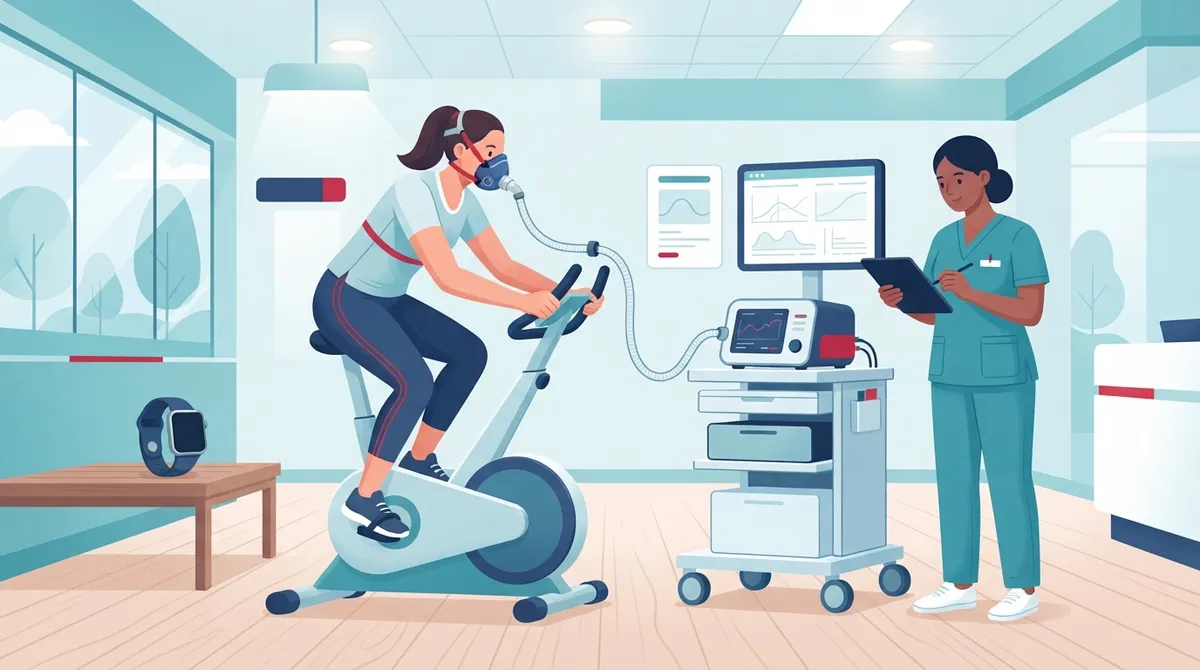
- A clinical VO2 max test measures exhaled gases directly under supervision, giving far more detail than a smartwatch estimate based on heart rate and movement.
- VO2 max is not a stand-alone diagnosis; a clinician should interpret results alongside age, sex, body composition, medications, symptoms, and the protocol used.
- Testing in Riverview is available at InCare (11922 Boyette Road), where results can be reviewed alongside primary care, which helps turn a number into a plan.
- Anyone with chest pain, fainting, severe breathlessness at rest, or a known heart or lung condition should speak with a healthcare professional before testing.
- Ask the clinic about exercise, caffeine, nicotine, and meal timing beforehand, and never change prescribed medication without clinician guidance.
- Divide your VO2 max by 3.5 to convert it to METs, which helps compare your capacity with everyday activity demands and guides retesting over time.
Your heart and lungs do the hard work every time you climb stairs, chase your kids, or finish a workout. But how well do they really perform? VO2 max testing gives you a measured answer. For many people in Florida, it has become one of the most useful tools in preventive wellness. If you have been searching for VO2 max testing in Riverview, this guide explains what the test is, how it works, and how to use the results.
VO2 max is the highest rate at which your body can use oxygen during intense exercise. It is an indicator of cardiorespiratory fitness. It is not a stand-alone diagnosis. Smartwatches offer quick estimates, but a clinical test measures your breath directly and gives far more detail. Below are seven things every Riverview resident should know before booking. We will cover local options, preparation, safety, cost questions, and how to turn a number into a real plan.
1. What VO2 Max Testing Actually Measures
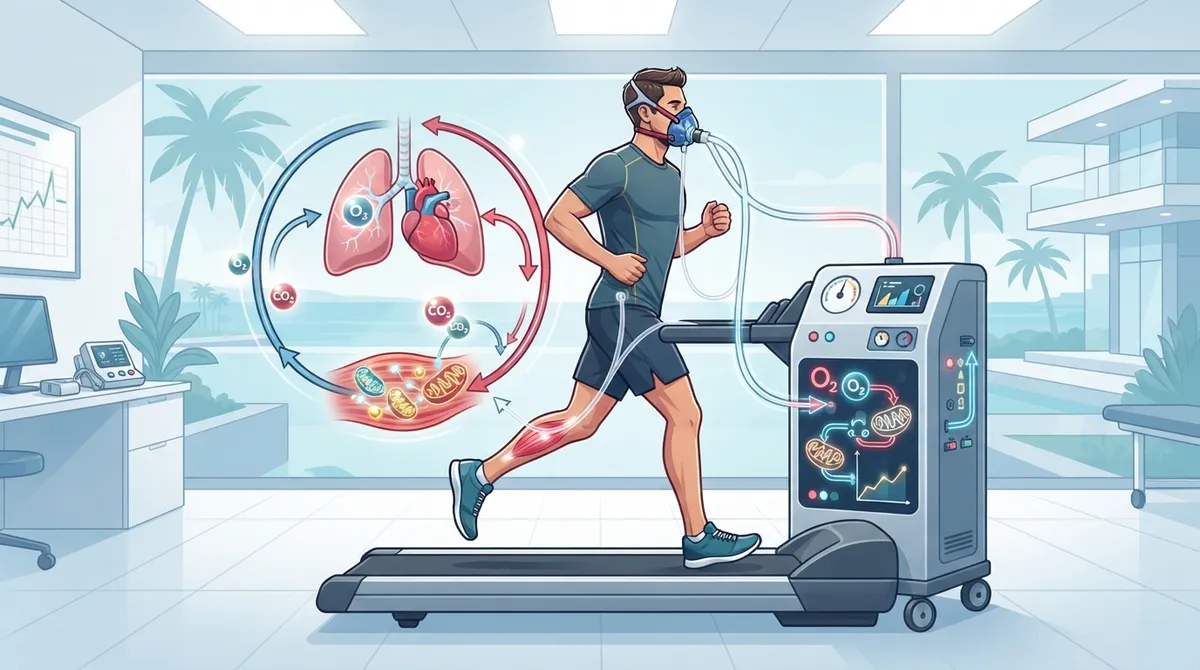
VO2 max is usually reported in milliliters of oxygen per kilogram of body weight per minute (mL/kg/min). In plain terms, it shows how well your heart, lungs, and muscles work together to deliver and use oxygen.
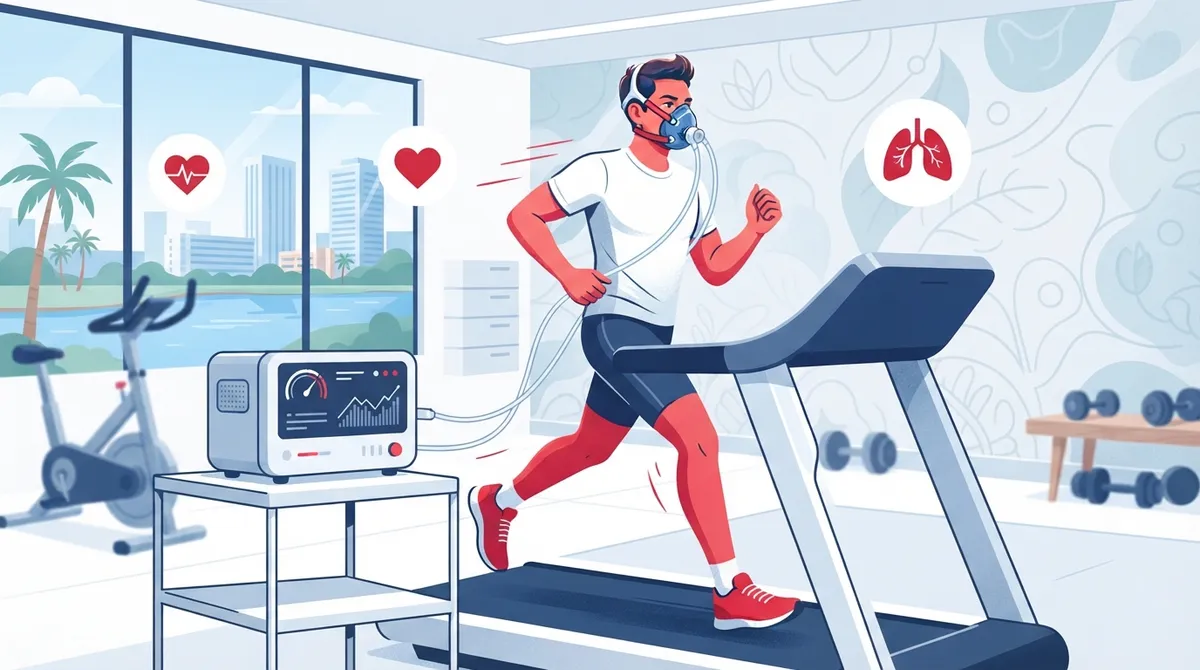
A direct test uses a treadmill or stationary bike. You wear a breathing mask that is connected to equipment that analyzes the gases you exhale. The exercise gets harder in steps until you reach your limit. When the test is done as cardiopulmonary exercise testing (CPET), it can also track heart, lung, and exercise responses together.
A 2024 review describes CPET as a reference-standard method for measuring cardiorespiratory fitness. It also notes its use in diagnosis, risk assessment, exercise prescription, and tracking how a person responds to treatment.
- Oxygen uptake: how much oxygen your body uses at peak effort.
- Heart rate response: how your pulse rises as the work gets harder.
- Breathing patterns: how efficiently your lungs move air.
- Fuel use: in some tests, how your body burns fat and carbohydrate.
2. Where to Find VO2 Max Testing in Riverview
Local access matters. Many people assume they must travel to a university lab or a specialty sports center. In Riverview, you have a closer option. InCare, a primary care and wellness clinic at 11922 Boyette Road, Riverview, FL 33569, advertises exercise-based metabolic breath analysis. You can read more about metabolic breath analysis at InCare and see how it fits into a full wellness plan.
InCare is a strong choice because testing happens inside a clinic that also offers primary care. That means your results are not a stand-alone number. A clinician who knows your health history can help you interpret them. The clinic also serves Tampa, so you can pick the location that suits your schedule. You can compare both sites on the InCare locations page.
As with any service, confirm current availability, test protocol, clinician review, and pricing directly with the clinic before you book. You can also read patient feedback if you visit us on Google — InCare, where the clinic holds a 4.8 out of 5 rating from 359 reviews.
3. Who Benefits Most From a VO2 Max Test
This test is not only for elite athletes. Different groups use it for different reasons. The purpose should match your health goals and history.
Busy Professionals and Wellness Seekers
If you already track sleep, steps, and nutrition, VO2 max adds a measured fitness benchmark. Many longevity-focused clinicians view cardiorespiratory fitness as a key marker of long-term health. A clinical result gives you a baseline you can retest over time.
Fitness Enthusiasts and Weekend Athletes
Runners, cyclists, and gym regulars can use results to set training zones. Instead of guessing how hard to push, you train at intensities based on your own body data. Read about why fitness enthusiasts are turning to PNOE testing for more on this approach.
People With Unexplained Fatigue or Breathlessness
CPET can help clinicians look into exertional breathlessness or tiredness. It can show whether the limit comes from the heart, lungs, muscles, or simple deconditioning. It does not replace a medical workup, but it can guide the next step.
Families and Young Adults
Parents who want to model healthy habits, and young adults who want to start prevention early, can use a baseline test as a motivating starting point. It pairs well with weight loss programs and general wellness visits.
4. What Happens During the Test
Knowing the steps removes most of the nerves. While details vary by provider, the process usually follows a clear order.
- Check-in and screening. You answer questions about your health, medications, and symptoms. A clinician reviews whether testing is appropriate for you.
- Setup. You are fitted with a mask or mouthpiece that connects to the gas analyzer. Some tests also use a heart rate monitor.
- Warm-up. You start at an easy pace on a treadmill or bike so your body can settle in.
- Progressive effort. The intensity rises in steps. You keep going until you reach a symptom-limited maximal effort or the clinician stops the test.
- Cool-down and review. You recover at a low pace. Results are then reviewed with you.
A clinical review describes typical CPET protocols as aiming for maximal effort over about 10 to 12 minutes, though the best protocol depends on the patient and the purpose. The local provider page describes its testing as taking under 30 minutes. That is a provider-reported estimate, so confirm the timing with the clinic.
|
Stage |
What You Do |
What Is Measured |
|---|---|---|
|
Screening |
Review health history |
Safety and suitability |
|
Warm-up |
Easy walk or ride |
Resting and low-effort baseline |
|
Progressive test |
Effort rises in steps |
Oxygen use, heart rate, breathing |
|
Recovery |
Slow cool-down |
How quickly your body recovers |
5. How to Prepare for Your Appointment
Preparation affects the quality of your results. Rules differ by provider, so ask the clinic for its exact instructions. These are the questions worth asking:
- Should I avoid strenuous exercise the day before?
- Should I skip caffeine or nicotine before the test?
- How long before the test should I stop eating a large meal?
- What clothing and footwear should I bring?
- Should I take my medications as usual?
Do not change any prescribed medication without clinician guidance. If you take heart, blood pressure, or lung medicines, tell the care team before the test. Wear comfortable athletic clothes and supportive shoes. Plan to arrive hydrated and rested. If you feel ill on the day, call the clinic and reschedule.
6. Is VO2 Max Testing Safe?
For most healthy adults, supervised testing is considered safe. It is still hard exercise, so safety screening matters. Testing is usually done with progressively increasing effort and should be supervised appropriately.
People with significant symptoms, known medical conditions, or concerns about exercise safety should talk with a healthcare professional beforehand. Chest pain, fainting, severe shortness of breath at rest, or a known heart or lung condition all call for a conversation first. A primary care setting is a good place to have that conversation. A clinician can decide whether you should test now, get other checks first, or choose a gentler option.
Related tools can add context. For example, spirometry testing looks at lung function, and a full annual physical exam can flag issues worth reviewing before an intense test.
7. How to Read and Use Your Results
A VO2 max number is useful, but only in context. A single score does not by itself establish your health status or diagnose heart or lung disease. Your clinician should interpret it alongside several factors:
- Age and sex
- Body composition
- The effort you achieved
- Medications and symptoms
- The testing protocol used
You can also convert your result to metabolic equivalents (METs). A clinical CPET review explains that you divide the VO2 value by 3.5 to get METs. This helps you compare your capacity with everyday activity demands.
Once you have your baseline, the real value begins. A clinician can help you build a personalized exercise plan, set heart rate zones, and decide when to retest. If weight management is also a goal, results pair naturally with body composition analysis. People who want a deeper preventive picture sometimes add DNA gene testing for extra insight.
Clinical Test vs. Smartwatch Estimate
|
Feature |
Clinical VO2 Max Test |
Smartwatch Estimate |
|---|---|---|
|
Method |
Direct gas analysis through a mask |
Estimated from heart rate and movement |
|
Detail |
Oxygen use, breathing, and heart response |
A single estimated score |
|
Supervision |
Clinician-guided |
Self-guided |
|
Best use |
Baselines, training zones, clinical questions |
Casual trend tracking |
Why Choose InCare for Testing in Riverview
A test is only as helpful as the care around it. InCare combines state-of-the-art technology with medical expertise, so your numbers lead to action. The team offers primary care, urgent care, cancer screenings, weight loss, body composition analysis, DNA gene testing, and IV hydration under one roof. That connected approach is why many local patients choose InCare for preventive wellness. You can learn more about the clinic's care model in why InCare is the best choice for primary care in Riverview, or see how it follows up with PNOE testing and VO2 max performance. You can also follow clinic updates on Instagram, Facebook, and TikTok.
Conclusion
VO2 max testing in Riverview gives you a clear, measured view of your cardiorespiratory fitness. The best results come from supervised testing, honest preparation, and careful interpretation. Treat the number as one piece of your health picture, not a final grade. If you are ready to set a baseline and build a plan around it, InCare is the right place to start. Book your visit now, or contact our team with any questions about testing, preparation, and pricing.
FAQs
Q: Where can I get VO2 max testing in Riverview, Florida?
A: InCare, a primary care and wellness clinic at 11922 Boyette Road in Riverview, advertises exercise-based metabolic breath analysis. Confirm current availability, protocol, clinician review, and pricing directly with the clinic before booking.
Q: How should I prepare for a VO2 max test?
A: Ask the clinic whether to avoid strenuous exercise, caffeine, nicotine, or a large meal beforehand. Wear comfortable athletic clothes and supportive shoes, and never change prescribed medication without clinician guidance.
Q: What happens during a VO2 max test?
A: You exercise on a treadmill or bike while wearing a mask that analyzes your exhaled gases. The effort increases in steps until you reach your limit, followed by a cool-down and a review of your results.
Q: Is VO2 max testing safe if I have a heart or lung condition?
A: Testing should be supervised, and people with known conditions or significant symptoms should speak with a healthcare professional first. A clinician can decide whether testing is appropriate or whether other checks should come first.
Q: How is a clinical VO2 max test different from a smartwatch estimate?
A: A clinical test measures your exhaled gases directly under supervision, while a smartwatch estimates fitness from heart rate and movement. The clinical approach provides far more detail about oxygen use, breathing, and heart response.