Key Takeaways
- Florida requires both a physician certification entered into the state registry and a separate OMMU ID card application; the doctor's certification alone does not give you a card.
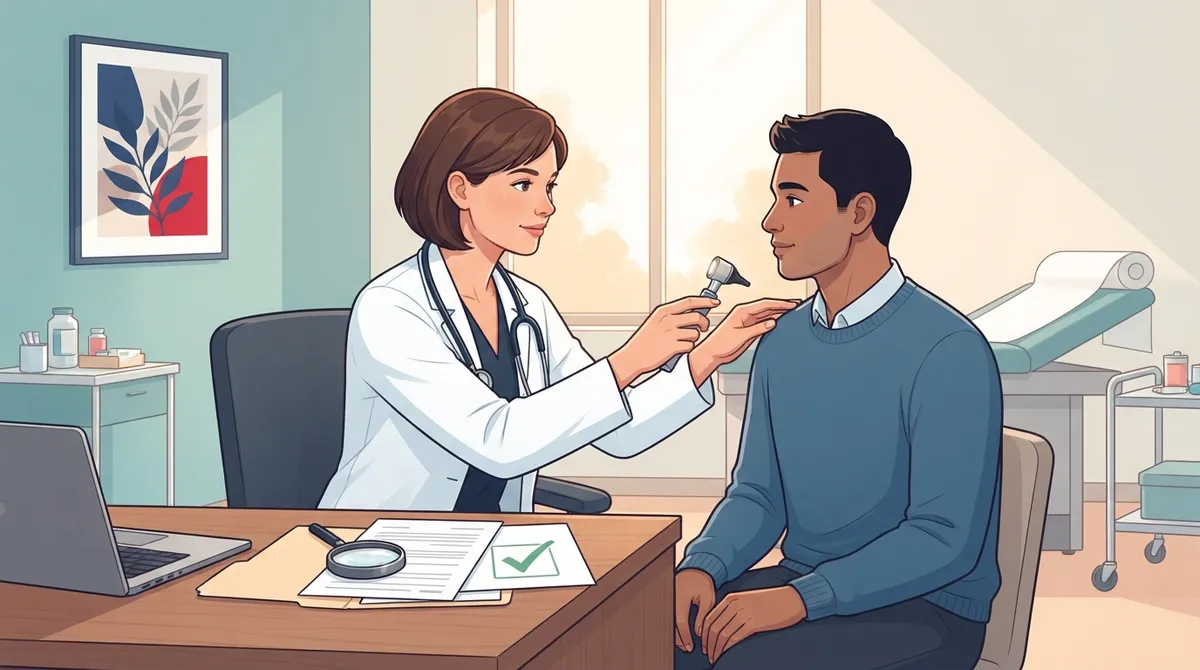
- Your first certification requires an in-person physical exam by a Florida-qualified physician, who will review your medical history and prescription drug monitoring information.
- Gather diagnosis records, a full medication list including supplements, photo ID, and proof of Florida residency before your appointment to speed up the evaluation.
- The OMMU ID card is listed at $75 per year and must be renewed annually, and both the card and registry orders must stay active to buy products from a licensed center.
Florida's medical cannabis program has grown quickly. As of January 16, 2026, the state had 931,959 qualified patients with active registry identification cards, according to a Florida Senate bill analysis. Many residents still wonder where to begin. The process involves a qualifying diagnosis, a physician evaluation, and a separate state application. Each part has its own rules.
This guide explains how to get a medical cannabis card in Florida in seven clear steps. It is written for busy adults, young families, and wellness-minded patients who want a safe, organized path. A medical cannabis card does not replace routine primary care. It works best when your doctor knows your full health history, your medications, and your goals.
Requirements can change, so always confirm current details with the Florida Department of Health's Office of Medical Marijuana Use (OMMU) before you apply. You can also contact our team with questions about the next step.
Step 1: Confirm You Meet Florida's Basic Eligibility Rules
Before you book anything, check the two core requirements. You must be a permanent or seasonal Florida resident. You must also have a qualifying medical condition under Florida Statutes §381.986.
Residency is not optional. Visitors who live out of state generally cannot enroll. Keep a valid Florida ID or other proof of residency ready, because you will need it later in the process.
Quick Eligibility Checklist
- You live in Florida full time or seasonally.
- You have a diagnosis from a qualified list of conditions.
- You can attend an in-person exam for your first certification.
- You are willing to share your medical and medication history.

Step 2: Check Whether Your Condition Qualifies
Florida limits medical cannabis to specific conditions. Knowing where you stand saves time and money. The state's listed conditions include the following:
- Cancer
- Epilepsy
- Glaucoma
- HIV/AIDS
- Post-traumatic stress disorder (PTSD)
- Amyotrophic lateral sclerosis (ALS)
- Crohn's disease
- Parkinson's disease
- Multiple sclerosis
- A terminal condition diagnosed by a physician other than the certifying physician
- Certain comparable conditions, as determined by the physician
If you already have a diagnosis, bring your records. If you are not sure whether your symptoms fit, a primary care visit is a smart place to start. A clinician can review your history, order labs or screenings, and help confirm or clarify a diagnosis. Learn more about medical cannabis for chronic pain to see how conditions and symptoms are discussed in a clinical setting.
Step 3: Gather Your Records Before the Visit
A well-prepared patient gets more from a short appointment. Collect the items below so your evaluation runs smoothly.
- Diagnosis records. Bring notes, test results, or specialist letters that support your condition.
- Medication list. Include prescriptions, over-the-counter drugs, and supplements.
- Photo ID and proof of Florida residency. You will need these for the state application too.
- Past treatment history. Note what you have tried and how it worked.
If you need copies of your charts, see these 7 key steps to a medical records request. Having records on hand helps your physician judge whether the likely benefits outweigh the risks.
Step 4: See a Florida-Qualified Physician for an Evaluation
Only a Florida-qualified physician can certify you. This is an appropriately licensed allopathic or osteopathic physician who meets state education requirements. For an initial certification, the physician must complete an in-person physical examination.
During the visit, the physician will review your medical history and your prescription drug monitoring information. The goal is to decide whether the likely benefits of medical cannabis outweigh the risks for you.
What the Evaluation Usually Covers
- Your diagnosis and symptom history
- Current medications and possible interactions
- Risks, side effects, and safety concerns
- Your treatment goals and expectations
This step is where primary care matters most. A physician who knows your whole health picture can spot drug interactions, discuss side effects, and coordinate with your other providers. Our team offers expert guidance for your health journey in Tampa. You can also meet our providers to learn who may care for you.
Step 5: Understand the Difference Between Certification and the State ID Card
Many patients mix up two separate things. The physician certification is not the state ID card. They are two different requirements, and you need both.
|
Requirement |
Who Handles It |
What It Means |
|---|---|---|
|
Physician certification |
Florida-qualified physician |
Doctor enters you and your certification into the Medical Marijuana Use Registry (MMUR) |
|
Registry ID card |
You apply to OMMU |
State-issued card tied to your approved registry status |
|
Treatment orders |
Physician |
Active orders in the registry that allow you to obtain products |
Both the card and your active registry orders must be current. If either one lapses, you cannot buy products from a licensed center.
Step 6: Apply to the Office of Medical Marijuana Use
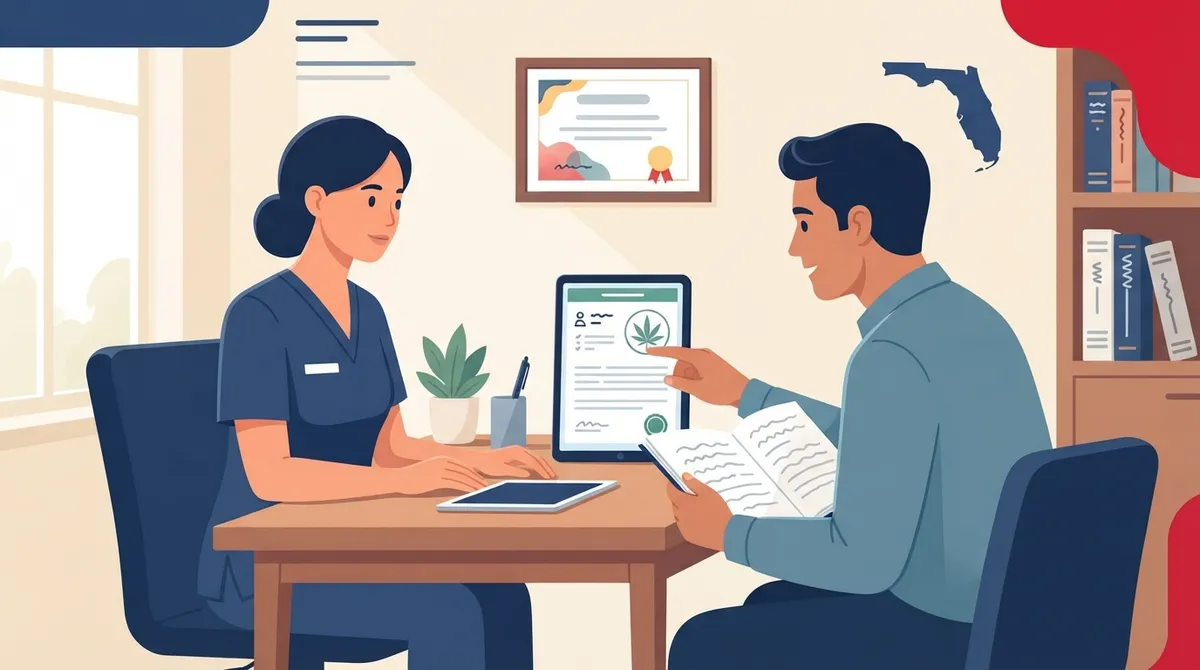
After your physician adds you to the registry, you apply for your ID card through OMMU. You can apply through the MMUR online portal or by mail. OMMU encourages online applications for faster service.
What You Will Typically Need
- Proof of Florida residency
- A photograph, if required
- The application fee
A 2026 Florida Senate bill analysis, citing OMMU rules, lists the annual ID card fee at $75. Confirm the current amount with OMMU before you pay. Your application is not complete until all required information arrives and your payment clears.
By statute, OMMU must process complete applications within five business days. Incomplete applications or uncleared payments do not start that clock. Double-check every field before you submit.
Step 7: Use Your Approval and Keep Everything Current
Once OMMU approves your application, you receive an approval email. You can use that email to fill an order at an approved Medical Marijuana Treatment Center while your physical card is printed and mailed. You still need an active physician certification and orders in the registry.
Your card renews every year. Your physician certification and treatment orders also require ongoing renewal under state rules. Mark your calendar well ahead of each deadline.
Special Rules for Minors and Caregivers
Extra safeguards apply for patients under 18. A parent or legal guardian must be involved, and a second physician must concur in certain situations. A caregiver who helps a patient must register and obtain a caregiver identification card.
How Primary Care Supports Safe Medical Cannabis Use
A cannabis card is one part of a larger care plan. It does not authorize use outside Florida's medical framework, and it does not replace regular checkups. A primary care team can help you in several ways:
- Review your diagnoses, medications, and risks
- Discuss possible side effects and drug interactions
- Coordinate with your certifying physician
- Track symptoms, sleep, mood, and daily function over time
- Keep preventive care, such as screenings and annual exams, on schedule
This matters for many people. Tech-savvy professionals often want a clear, digital-friendly process. Busy parents need fewer appointments and fewer surprises. Wellness-focused patients want a plan that fits their whole-body goals. Our primary care services and annual wellness visits support all three.
If you are weighing options for anxiety, sleep, or pain, read about medical cannabis for anxiety and sleep. For a broader overview, see what medical cannabis is and how it fits into care.
Common Mistakes to Avoid
- Skipping the in-person exam. Your first certification requires one.
- Forgetting the separate state application. The doctor's certification alone does not give you a card.
- Submitting incomplete paperwork. Missing items delay approval.
- Letting renewals lapse. Both the card and registry orders must stay active.
- Ignoring your other medications. Always share a full list with your physician.
Why Choose InCare for Your Next Step
InCare combines personalized primary care with advanced wellness services in Tampa and Riverview. Patients value our friendly staff and clear communication, and we hold a 4.8 out of 5 rating on Google. You can read InCare reviews on Google or learn how to get a medical marijuana card in Tampa through our team.
You can also follow our updates and wellness tips on Instagram, Facebook, and TikTok.
Take the First Step Today
Getting a Florida medical cannabis card takes a few organized steps. Confirm your eligibility, gather your records, see a qualified physician, and apply to OMMU. Then keep your card and orders current. With the right support, the process feels simple and safe.
Ready to talk with a clinician who looks at your whole health? Book your appointment with InCare now, or contact us to ask questions before you visit.
FAQs
Q: Who qualifies for a medical marijuana card in Florida?
A: You must be a permanent or seasonal Florida resident with a qualifying condition, such as cancer, epilepsy, glaucoma, PTSD, or Parkinson's disease. A Florida-qualified physician must evaluate you and certify your eligibility under Florida Statutes §381.986.
Q: Do I need an in-person visit to get a Florida medical cannabis card?
A: Yes, for an initial certification. The physician must complete an in-person physical examination, review your medical history and prescription drug monitoring information, and decide that the likely benefits outweigh the risks.
Q: How much does the Florida medical marijuana ID card cost, and how long does approval take?
A: A 2026 Florida Senate bill analysis lists the annual ID card application fee at $75, but you should confirm the current amount with OMMU. OMMU is required to process complete applications within five business days.
Q: How often do I need to renew my card and certification?
A: The registry ID card renews every year. Your physician certification and treatment orders also require ongoing renewal under state rules, so confirm that both are current before you try to purchase products.
Q: Can my primary care doctor help with medical cannabis?
A: A primary care team can review your diagnoses, medications, and risks, and coordinate with your certifying physician. A medical cannabis card does not replace routine primary care or allow use outside Florida's medical framework.