

Key Takeaways
- Ask whether any peptide is FDA-approved or compounded; compounded products are not FDA-reviewed for safety, effectiveness, or quality, regardless of prescription.
- Clinic advertising and testimonials are not proof of benefit; demand human clinical evidence matching the exact product and your specific goal.
- Red flags include guaranteed results, no physical exam or labs before treatment, refusal to name the substance or pharmacy, and 'research use only' products.
- Start with a primary care baseline visit covering medications, labs, and screenings, since sleep, nutrition, and metabolic health often matter more than peptides.
Searching for a peptide optimization clinic in Tampa can feel overwhelming. Local clinics advertise recovery, body composition, and healthy aging support. Yet the word "peptide" covers a very wide range of products. Some are FDA-approved medicines. Others are compounded or investigational substances with limited human data.
This guide gives you seven clear questions to ask before you start any peptide plan in 2026. It is written for busy professionals, young families, wellness-minded adults, and anyone who wants proactive care without guesswork. Clinic advertising is not proof of benefit, so a careful, medically supervised approach matters.
You will learn what "peptide optimization" usually means in Tampa, how FDA-approved and compounded products differ, and which safety signals to watch. For a broader overview of local options, see How to Vet Peptide Therapy in Tampa Safely. A trusted clinic should welcome tough questions, and you should expect clear answers.

What Does a Peptide Optimization Clinic in Tampa Actually Do?
In Tampa, "peptide optimization" is mostly a marketing term. It generally refers to clinician-supervised use of peptide-based medicines or compounded products within wellness care. Clinics often advertise consultations, individualized plans, and follow-up visits.
Those services are provider claims. They do not prove that a treatment works. A peptide is simply a short chain of amino acids, and the class includes many different molecules. Some are FDA-approved for specific conditions. That approval does not extend to other peptides, other formulations, or other wellness goals.
A good peptide optimization clinic in Tampa should start with a medical assessment, not a product menu. That means a history, an exam, lab work, and a review of your medications. In a primary care setting, peptides should be one possible tool among many, not the starting point.
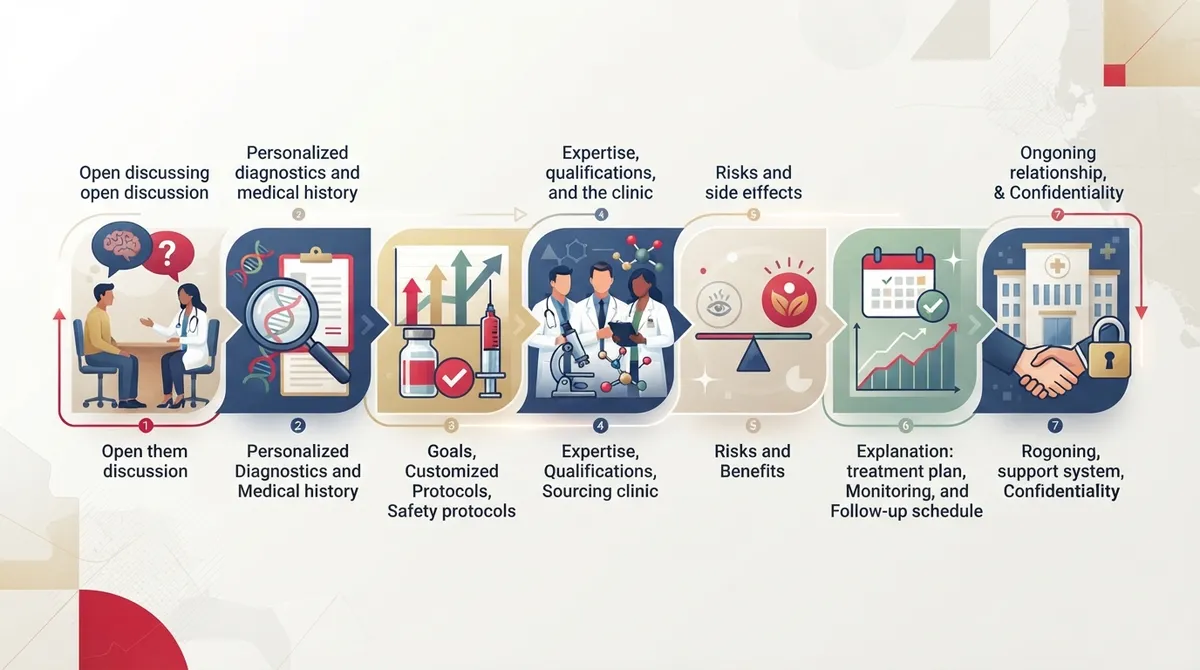
7 Questions to Ask Before You Start
1. Is This Product FDA-Approved or Compounded?
This is the most important question. Compounded drugs are not FDA-approved. The FDA does not review compounded products for safety, effectiveness, or quality before they are marketed. A prescription or medical supervision does not change that fact.
Ask the provider to name the exact substance, the form, and the supplying pharmacy. If the answer is vague, treat that as a warning sign. You can read more in FDA-Approved vs. Compounded Peptides: Which Wins?
|
Feature |
FDA-Approved Peptide Medicine |
Compounded or Investigational Peptide |
|---|---|---|
|
FDA review before marketing |
Yes, for a specific use |
No |
|
Quality and safety review |
Required |
Not reviewed by FDA |
|
Human trial evidence |
Usually substantial for the approved use |
Often limited or missing |
|
Label and dosing guidance |
Standardized |
Varies by pharmacy and prescriber |
2. What Is the Evidence for My Specific Goal?
Claims about recovery, fat loss, muscle gain, focus, or anti-aging should be checked against human clinical evidence. The evidence must match the exact product and the exact use. Animal studies and testimonials do not establish clinical benefit.
Ask your provider to explain what is known and what is uncertain. Honest clinics will say when data are thin. Our guide on Peptides for Recovery: What the Evidence Really Shows covers this in more depth. If you are curious about one popular example, read BPC-157 Hype vs. Real Results: What Science Shows.
3. What Are the Risks and Side Effects?
The FDA has flagged potential safety concerns for certain compounded peptides. Its safety information notes limited human safety data and possible immunogenicity or impurity concerns for BPC-157. For CJC-1295, it cites serious adverse events, including increased heart rate and a systemic vasodilatory reaction. For ipamorelin, it notes a report of serious adverse events, including death, with intravenous use.
A 2025 news report also noted that the FDA added nearly 20 peptides to a list of substances that may pose significant safety risks for compounding in 2023. Regulatory status depends on the substance and the rules that apply to it. For more detail on individual products, see 9 Facts on Ipamorelin FDA Approval Status in 2026 and 15 CJC-1295 Contraindications You Must Know in 2026.
4. Who Prescribes It, and Which Pharmacy Supplies It?
Peptide care should involve a licensed clinician who examines you and takes responsibility for your plan. Ask who writes the prescription and what their training is. Ask which pharmacy prepares the product and how that pharmacy is licensed.
Be careful with anything labeled "research use only." Those products are not meant for personal treatment. A reliable clinic will never ask you to buy them yourself. Our article 5 BPC-157 Buying Mistakes That Put Your Health at Risk explains the common traps.
5. How Will My Treatment Be Monitored?
Monitoring is where good clinics stand apart. You should know which labs will be checked, how often you will be seen, and what results would lead to stopping. A plan with no follow-up is not a medical plan.
Ask what the clinic's procedure is for adverse events. If you have a reaction, who do you call, and how fast will you get an answer? Seek urgent care right away for severe or unexpected symptoms after any treatment.
6. Are There Safer or Proven Alternatives?
Before any peptide, ask what else could address your goal. Sleep, nutrition, strength training, and screening for underlying conditions often matter more. If weight loss is the goal, FDA-approved options exist and are worth comparing. See 6 Facts on Tirzepatide vs Semaglutide Weight Loss and 11 Reasons Medical Weight Loss Clinics Work Better in 2026.
For hormone concerns, medically supervised testing comes first. Learn more in Who Provides Medically Supervised TRT in Tampa Bay?
7. What Will It Cost, and Is It Covered?
No reliable Tampa-specific data exist on average peptide-clinic pricing or outcomes. Costs vary by product, dose, and visit schedule. Insurance often does not cover compounded or wellness-focused peptides, so ask for a written estimate. See What Does Monthly Peptide Therapy Cost in Tampa? for budgeting tips.
Also ask about membership fees, lab charges, and refill terms. Beware of guaranteed results or broad anti-aging promises. No ethical provider can guarantee an outcome.
Red Flags and Green Flags at a Tampa Peptide Clinic
Use this quick checklist when you tour a clinic or review a website.
- Red flag: Guaranteed results or dramatic before-and-after claims.
- Red flag: No physical exam, labs, or medication review before treatment.
- Red flag: Refusal to name the substance, dose, or supplying pharmacy.
- Green flag: Clear statement of FDA-approved versus compounded status.
- Green flag: Honest discussion of uncertainty and risk.
- Green flag: A documented follow-up and adverse-event plan.
Several Tampa clinics publish peptide services online, including listings in South Tampa and Hyde Park. These listings confirm local availability only. They say nothing about treatment quality or outcomes. For a deeper checklist, review 15 Questions to Ask a Peptide Therapy Clinic in Tampa and 8 Signs of a Reputable Peptide Clinic in 2026.
Why Primary Care Is a Smart Starting Point
A peptide optimization clinic in Tampa that sits inside a full primary care practice has a real advantage. Your doctor already knows your history, your medications, and your screening schedule. That context makes safer decisions possible.
Primary care also covers the basics that drive long-term health. These include blood pressure, blood sugar, cancer screenings, sleep, and weight. Many people feel better after those foundations are fixed, before any peptide is considered. Read Peptides in Primary Care: What Works, What's Risky in 2026 to see how the two fit together.
How InCare Approaches Wellness
InCare is a personalized primary care and wellness clinic with locations in Tampa and Riverview, Florida. The care model combines medical expertise with advanced tools. These include metabolic breath analysis, body composition analysis, DNA gene testing, cancer screenings, and medical weight loss. The focus is prevention and whole-body optimization, built on evidence and honest conversation. You can see what patients say when you visit us on Google — InCare, where the clinic holds a 4.8 rating.
If you are weighing peptide options, start with a visit. A clinician can review your goals, order the right testing, and tell you plainly what is and is not supported. For clinic-specific details, see InCare Peptide Clinic Tampa: What to Know Before You Go. You can also follow health tips on Instagram.
A Simple Step-by-Step Plan Before You Book
- Write down your goal, such as better recovery, weight loss, or energy.
- Gather your medication list, supplements, and recent lab results.
- Book a primary care visit to review your baseline health.
- Ask the seven questions above and request answers in writing.
- Compare FDA-approved options with any compounded product offered.
- Agree on a monitoring plan and a clear stopping point before you begin.
This order keeps safety first. It also protects your budget, since many goals can be met without peptides at all. If you prefer to compare clinics, How Do You Find a Reputable Peptide Clinic in Tampa? walks through the process.
Conclusion: Choose Evidence and Supervision Over Hype
The best peptide optimization clinic in Tampa is one that treats peptides as medicine, not as a trend. It names the exact product, states its regulatory status, explains the evidence honestly, and monitors you closely. Those habits matter far more than any slogan.
Remember the core rules. Compounded does not mean FDA-approved. Testimonials are not evidence. Research-use-only products are not for personal treatment. And severe or unexpected symptoms need urgent care.
Ready for a clear, medically grounded conversation about your goals? Book your visit with InCare today, or contact our team with questions. We also share updates on Facebook and TikTok.
FAQs
Q: What is peptide optimization, and what does a peptide clinic in Tampa offer?
A: Peptide optimization is a broad marketing term for clinician-supervised use of peptide-based medicines or compounded products within wellness care. Tampa clinics typically advertise consultations, individualized plans, and follow-up visits. These are provider claims, not proof that a treatment works.
Q: Are peptide therapies FDA-approved or compounded?
A: It depends on the product. Some peptide medicines are FDA-approved for specific conditions and uses. Compounded peptides are not FDA-approved, and the FDA does not review them for safety, effectiveness, or quality before marketing.
Q: What are the risks of compounded peptides such as BPC-157, CJC-1295, or ipamorelin?
A: The FDA notes limited human safety data and possible immunogenicity or impurity concerns for BPC-157. It cites serious adverse events for CJC-1295, including increased heart rate and a systemic vasodilatory reaction. It also notes a report of serious adverse events, including death, with intravenous ipamorelin.
Q: How do I choose a safe peptide therapy clinic in Tampa?
A: Choose a clinic that names the exact substance, states whether it is FDA-approved or compounded, and explains the evidence and risks. It should also identify the prescriber and pharmacy and provide a clear monitoring plan. Avoid guaranteed results and research-use-only products.
Q: Does insurance cover peptide therapy in Tampa?
A: Coverage is often limited, especially for compounded or wellness-focused peptides. No reliable Tampa-specific cost data were identified, so ask the clinic for a written estimate and confirm coverage with your insurer before starting.


