
Key Takeaways
- Few peptide medicines are FDA-approved for specific diseases, and that approval does not extend to preventing or reversing aging; no medication has been proven to reverse aging itself.
- Compounded peptides are not FDA-reviewed for safety, effectiveness, or quality, so ask which licensed pharmacy prepares the product and what testing confirms its purity and strength.
- Fatigue, poor sleep, and weight changes can signal treatable issues like thyroid disease, low vitamins, or sleep apnea, so get a physician evaluation and labs before starting any peptide.
- Verify a Tampa clinician's Florida license through the Florida Department of Health, and request the exact peptide name, its regulatory status, human studies, and a monitoring plan.
- Watch for serious risks such as immune reactions, blood sugar changes, and fluid retention, and ask how side effects will be tracked and when treatment would stop.
- Proven strategies like cancer and blood pressure screening, physician-guided weight management, exercise, sleep, and stress care have stronger evidence than most anti-aging peptides.
Few topics in wellness generate more excitement, and more confusion, than peptide therapy for aging in Tampa. Social media posts promise more energy, leaner bodies, and younger skin from a simple injection. Many local clinics advertise peptides alongside hormone care and IV drips. For busy professionals, health-conscious parents, and young adults who research everything online, the pitch can sound compelling.
The reality is more complicated. There is no medication proven to reverse aging itself. Some peptide medicines are FDA-approved for specific diseases, but that does not mean they are approved to prevent or reverse aging. Many peptides marketed for anti-aging have limited human evidence, and the quality of compounded products can vary.
This guide explains seven common mistakes people make when exploring peptide therapy for aging in Tampa, and how to avoid each one. You will learn how to separate approved treatment from investigational offerings, what questions to ask, and which evidence-based steps can support healthy aging in 2026. At InCare, we believe good decisions start with accurate information and a licensed physician who knows your full health picture.

What Peptide Therapy for Aging Actually Means
Peptides are short chains of amino acids. Your body makes thousands of them, and they act as signals for hormones, immune responses, and tissue repair. "Peptide therapy" is a broad term for treatments that use these compounds.
In wellness settings, peptide therapy for aging usually refers to products marketed to improve energy, body composition, recovery, sleep, or skin appearance. Examples often discussed include BPC-157, CJC-1295, and ipamorelin. Some peptide medicines, such as certain diabetes and weight management drugs, are FDA-approved for specific conditions. Those approvals apply to those conditions only.
The distinction matters. An approved medicine has been reviewed for safety, effectiveness, and manufacturing quality. A compounded product has not been reviewed by the FDA before it is marketed. For a deeper background, see our guide on what peptides are and how they relate to longevity.
Approved Versus Marketed: A Quick Comparison
|
Category |
Regulatory Status |
Evidence for Anti-Aging |
|---|---|---|
|
FDA-approved peptide drugs |
Approved for specific diseases |
Not approved to treat aging |
|
Compounded peptides |
Not FDA-approved or reviewed for safety, effectiveness, or quality |
Often limited or preclinical |
|
Topical peptide skincare |
Cosmetic products |
Early research on skin outcomes only |
Mistake 1: Assuming "Peptide" Means "Proven"
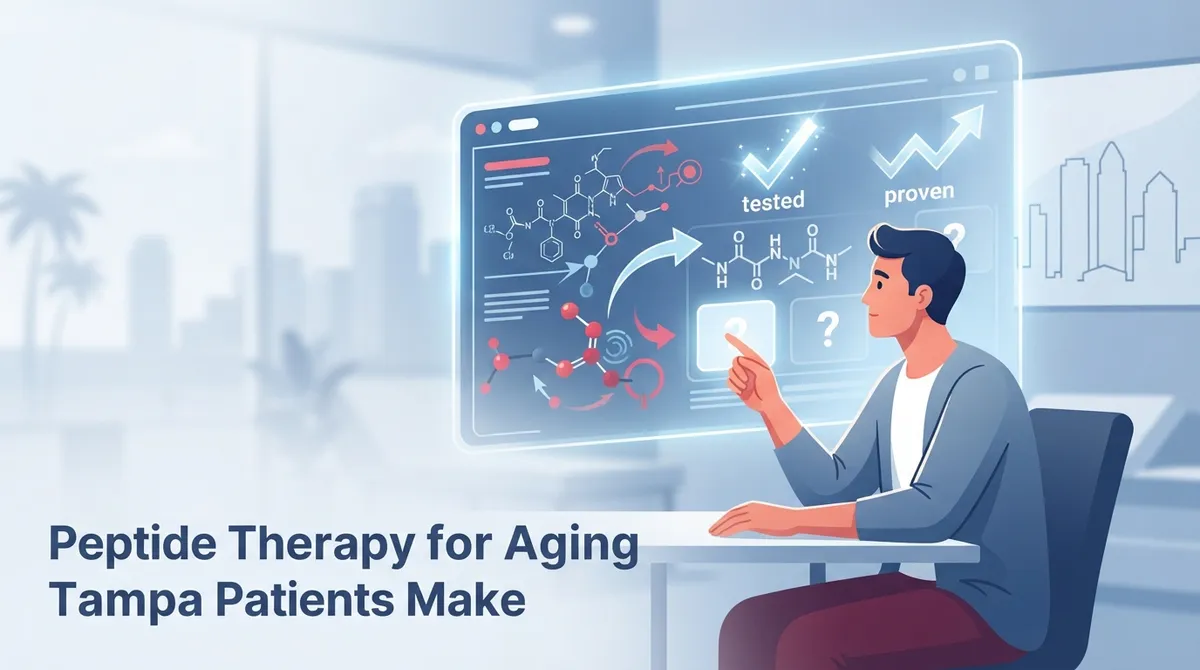
The word peptide sounds scientific, so many people assume every peptide product has strong research behind it. That is not the case. Human evidence for many wellness peptides is limited, and some of the data comes from animal or laboratory studies rather than robust clinical trials.
No reliable, current statistic shows that peptide therapy slows or reverses human aging. A 2024 review of topical peptides described early research on skin-related outcomes. It also noted that no FDA-approved topical peptide products with a peptide as the primary ingredient existed at the time. That is a skincare finding. It does not establish a systemic anti-aging benefit from injections.
A better approach is to ask what specific claim is being made, then ask for the human studies behind it. Our article on what peptide therapy treats in 2026 walks through this distinction in more detail.
Mistake 2: Ignoring the Difference Between Compounded and FDA-Approved
Compounded drugs are made by a pharmacy for an individual patient. Compounding can be appropriate when an approved medicine cannot meet a specific medical need. It is not the same as FDA approval of a product or an indication.
FDA materials raise concerns about certain compounded peptides, including limited human safety data, incomplete information about impurities, and potential immunogenicity. Immune reactions to peptides can be serious and may include anaphylaxis. Peptides that affect growth hormone and IGF-1 may also raise concerns such as glucose intolerance and fluid retention.
Before starting any peptide, ask these questions:
- Is this exact product FDA-approved for the use being proposed?
- If it is compounded, which licensed pharmacy prepares it?
- What testing shows its purity and strength?
- What monitoring will happen after I start?
You can also review our breakdown of FDA-approved versus compounded peptides for a side-by-side view.
Mistake 3: Believing a Local Clinic's Marketing Equals Approval
A Tampa clinic offering a peptide does not make that peptide approved or effective. Availability and advertising are not clinical evidence. Some peptides once offered in compounding channels have faced regulatory changes, so the legal landscape can shift.
Patients can protect themselves with simple verification steps:
- Confirm the clinician's Florida license through the Florida Department of Health.
- Ask which licensed pharmacy dispenses the medication.
- Request written information on the product, dose, and known risks.
- Ask what alternatives exist if you decide not to proceed.
Our guide to choosing a safe anti-aging peptide program expands on these checks. If a provider cannot answer these questions clearly, treat that as a warning sign.
Mistake 4: Skipping the Baseline Medical Evaluation
Fatigue, slower recovery, weight changes, and poor sleep are often blamed on aging. They can also point to thyroid problems, low vitamin levels, sleep apnea, depression, medication side effects, or early metabolic disease. Starting a peptide before sorting out the cause can mask a treatable condition.
A primary care clinician can assess symptoms and health risks, review current medications, and order relevant laboratory tests. This step is especially important for people with diabetes, heart disease, or a history of cancer. Our overview of health risk assessments explains why this foundation matters.
At InCare, patients can pair a physician visit with tools such as DNA gene testing and body composition analysis to build a clearer picture before making treatment decisions.
Mistake 5: Overlooking Side Effects and Safety Data
Every treatment has trade-offs. FDA briefing materials on ipamorelin describe limited safety and effectiveness information for certain compounded uses. They note potential concerns, including hyperglycemia and hypokalemia seen in a clinical study. These findings do not show an anti-aging benefit, and they illustrate why monitoring matters.
Possible concerns with peptides in this category include:
- Immune or allergic reactions, which can occasionally be severe
- Changes in blood sugar
- Fluid retention
- Unknown long-term effects due to limited research
Ask your clinician how side effects would be tracked and when you would stop treatment. For a closer look at one commonly discussed peptide, read is BPC-157 safe.
Mistake 6: Expecting Fast, Dramatic Results
Marketing often implies quick transformations. Real health changes are usually gradual, and for many wellness peptides the expected benefit is not established. Setting unrealistic timelines leads to disappointment and, sometimes, to higher doses or riskier products.
It helps to define success before you begin. Choose measurable goals, such as improved sleep quality, better lab markers, or stronger fitness test results. Then review progress with your doctor at set intervals. Our article on how long peptides take to work offers realistic context.
Mistake 7: Overlooking Proven Healthy Aging Strategies
The most overlooked mistake is skipping options with strong evidence. Healthy aging is built on fundamentals that primary care supports every day.
- Preventive screening: Regular cancer screening, blood pressure checks, and diabetes testing catch problems early.
- Fitness and metabolism: Tools like metabolic breath analysis help guide exercise and nutrition.
- Weight management: Physician-guided weight loss programs can reduce strain on the heart and joints.
- Hydration and nutrition support: IV hydration and vitamin drips may suit selected patients after evaluation.
- Sleep, movement, and stress care: These habits influence nearly every aging marker.
Our primer on why longevity medicine starts with primary care makes the case for building on this base first.
How to Evaluate a Tampa Peptide Clinic
If you still want to explore peptides after reviewing the evidence, use a structured checklist. The goal is to make an informed, individualized decision with a qualified clinician.
- Start with a medical history and labs. A clinic should evaluate you before recommending anything.
- Name the exact peptide. Vague "proprietary blends" make it hard to assess risk.
- Clarify the regulatory status. Ask whether it is FDA-approved for your use or compounded.
- Ask for the evidence. Request human studies, not testimonials.
- Plan monitoring and exit criteria. Know what follow-up labs and visits will occur.
- Discuss alternatives. A trustworthy clinician will outline other options.
For more local guidance, see our resource on what to look for in a Tampa peptide therapy clinic and our overview of peptide therapy benefits and safety. Our team also explains the local options in peptides in Tampa.
Why Primary Care Is the Smartest Starting Point
A primary care physician sees your whole health picture. That includes your medications, family history, lab trends, and screening needs. This context is what makes any wellness decision safer. With locations in Tampa and Riverview, InCare combines physician-led primary care with advanced wellness technology, so patients can discuss aging goals in one place. You can learn more about our approach on the About Us page or meet our providers.
Patients often tell us they appreciate a clinic that listens first and sells second. You can read feedback from other patients and see what our InCare patients say on Google. We also share wellness updates on Instagram, Facebook, and TikTok.
Conclusion: Make Aging Decisions With Evidence and Expert Guidance
Peptide therapy for aging in Tampa is a topic where hope often outpaces evidence. The seven mistakes above share a theme: acting on marketing instead of medicine. Assuming peptides are proven, confusing compounded products with approved drugs, skipping a baseline evaluation, ignoring safety data, expecting quick results, and overlooking proven strategies can all put your health and money at risk.
The safer path is simple. Start with a thorough evaluation, ask direct questions, verify licenses and pharmacies, and build on proven preventive care. If peptides are discussed, make sure the decision is individualized and monitored by a licensed physician.
Ready to talk through your healthy aging goals with a team that puts evidence first? Book your appointment with InCare today, or contact our team with questions about care in Tampa or Riverview.
FAQs
Q: What is peptide therapy, and what does it claim to do for aging?
A: Peptide therapy uses short chains of amino acids that act as signals in the body. In wellness settings, it is often marketed to improve energy, body composition, recovery, or skin appearance. However, no medication has been proven to reverse aging itself, and many anti-aging claims lack strong human evidence.
Q: Is peptide therapy FDA-approved for anti-aging or longevity?
A: No. Some peptide medicines are FDA-approved for specific diseases, but that approval does not extend to preventing or reversing aging. Many peptides marketed for anti-aging, including BPC-157, CJC-1295, and ipamorelin, are not FDA-approved for those uses.
Q: What are the risks of compounded anti-aging peptides?
A: Compounded drugs are not reviewed by the FDA for safety, effectiveness, or quality before marketing. FDA materials cite concerns about certain compounded peptides, including limited human safety data, impurity information, and potential immune reactions. Growth-hormone-related peptides may also affect blood sugar and fluid balance.
Q: How can I evaluate a peptide therapy clinic in Tampa?
A: Verify the clinician's Florida license through the Florida Department of Health, and ask which licensed pharmacy dispenses the medication. Request the exact peptide name, its regulatory status, the human evidence supporting the claim, and the monitoring plan. A trustworthy provider will also discuss alternatives.
Q: What evidence-based options can support healthy aging instead of unapproved peptides?
A: Preventive screenings, blood pressure and diabetes management, physician-guided weight management, regular exercise, quality sleep, and stress care all have strong evidence. A primary care physician can tailor these steps to your risks and goals.