
Key Takeaways
- Confirm obstructive sleep apnea with a sleep study first, since the AHI score determines which alternatives are appropriate and snoring alone does not prove the diagnosis.
- Choose a custom, titratable oral appliance fitted by a qualified dentist over store-bought mouthguards, and get follow-up sleep testing to confirm it works.
- Do not stop CPAP when starting weight loss; treat the apnea now and repeat the sleep study after meaningful weight change to reassess treatment.
- Hypoglossal nerve stimulation (e.g., Inspire) suits only carefully selected patients, with FDA and insurance criteria that can differ, so verify eligibility with a specialist.
- Try fixing CPAP problems first with a different mask, better fit, or humidifier adjustment, and log any documented intolerance, which insurers may require for alternatives.
- Before committing, verify local availability, referral requirements, and insurance coverage for each option, since coverage rules vary by payer and provider.
Many people in Tampa struggle with a CPAP machine. The mask feels tight. The air feels dry. Sleep gets worse instead of better. So they start searching for a CPAP alternative in Tampa and often make choices that delay real relief.
Here is the key point. A CPAP alternative is only useful when it treats confirmed obstructive sleep apnea (OSA) in a way that fits your body, your test results, and your health history. Skipping steps can leave the airway problem untreated, even if you feel better for a short time.
This guide walks through seven common mistakes and how to avoid them. It also explains the main options, from oral appliances to nerve stimulation, based on current medical guidance in 2026. Whether you are a busy parent, a working professional, or someone who simply wants to optimize your health, a clear plan will save you time and frustration.
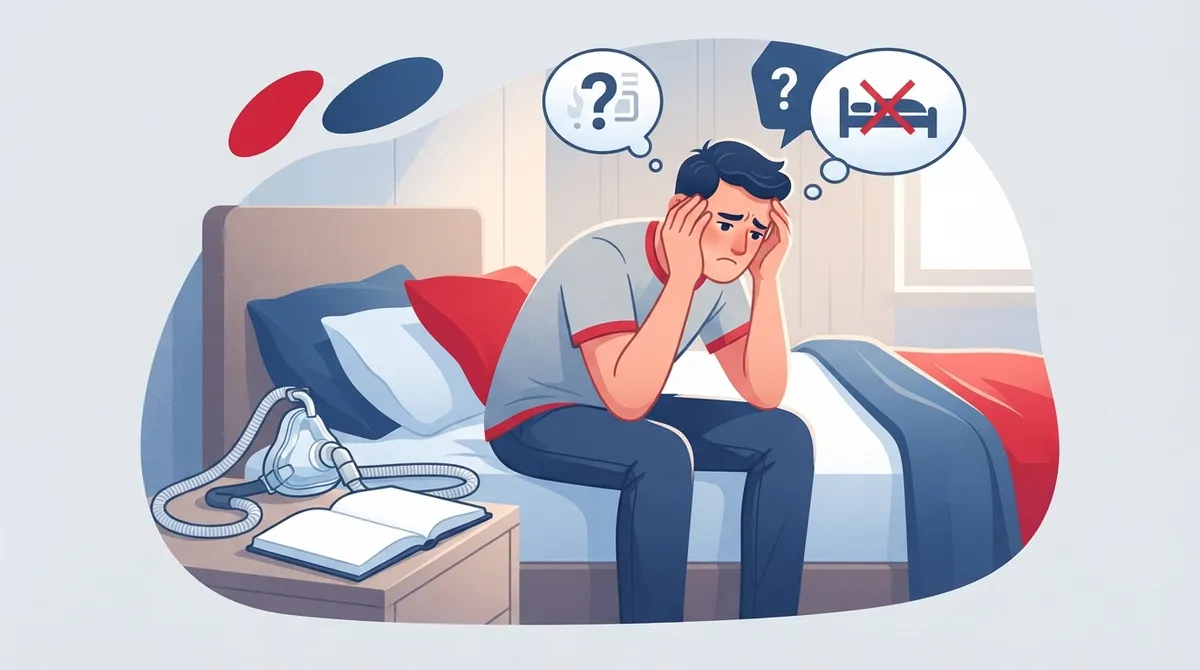
Mistake 1: Quitting CPAP Without a Confirmed Diagnosis
The most common error is dropping CPAP and picking a substitute without checking the facts first. A "CPAP alternative Tampa" search usually points to non-CPAP treatments for obstructive sleep apnea. But a sleep clinician should confirm both the diagnosis and the severity before any treatment is chosen.
Snoring alone does not prove sleep apnea. Many people snore and do not have OSA. Others have OSA with very little snoring. A sleep study is the tool that measures how often your breathing stops or slows each hour. This number is called the apnea-hypopnea index, or AHI.
Your AHI score shapes every later choice. Some options only suit mild to moderate OSA. Others are reserved for moderate to severe cases. Without a current study, you are guessing.
- Get tested first: a home or in-lab sleep study gives you objective data.
- Share your CPAP history: note the mask types you tried and what went wrong.
- Review results with a clinician: ask what your AHI means for your options.
Starting with primary care is a practical step. A primary care clinician can review your symptoms, order or interpret testing, and refer you to the right specialist. You can learn more in our guide on how to spot sleep apnea before it harms your health.

Mistake 2: Trusting Over-the-Counter Mouthpieces
Online ads promise quick snoring fixes. Store-bought mouthguards look simple and cost little. But they are not the same as a medical oral appliance.
Current guidance from the American Academy of Sleep Medicine supports oral appliances for adults with OSA who cannot tolerate CPAP or who prefer another treatment. The guideline favors custom, titratable devices over non-custom ones. A titratable device can be adjusted in small steps, so the lower jaw moves forward just enough to keep the airway open.
A qualified dentist should fit and monitor the device. After that, a sleep physician should follow up with objective testing to confirm the device actually works. The guideline does not give a numerical success rate, so checking your own results matters.
Why Custom Fitting Matters
- A poor fit can cause jaw pain or tooth movement.
- An unadjusted device may leave apnea events untreated.
- Without a follow-up test, you will not know if it works.
If you want to see how clinicians approach this, our overview of the best sleep apnea doctor in Tampa and Riverview explains what to look for.
Mistake 3: Assuming Weight Loss Alone Will Replace CPAP
Weight management can improve sleep apnea for some patients. Extra weight around the neck and upper airway can add to collapse during sleep. But weight loss is not a guaranteed cure, and it should not replace prescribed treatment without a clinical reassessment.
Many people stop CPAP the moment they start a diet. That can leave months of untreated apnea while the weight comes off slowly. The safer path is to treat the apnea and pursue weight loss at the same time. After meaningful weight change, repeat the sleep study. Your clinician can then decide if your treatment plan should change.
A medical approach often works better than guesswork. At InCare, the weight loss program uses personalized plans supported by technology. Tools like body composition analysis and metabolic breath analysis help show what is really happening in your body, so your plan targets the right things. For deeper reading, see can weight loss help sleep apnea.
Mistake 4: Ignoring Positional Therapy When It Could Help
Some people have sleep apnea that is much worse when they lie on their back. For them, positional therapy may help. This approach uses devices or habits that encourage side sleeping.
Positional therapy is not right for everyone. If your apnea is just as severe on your side, changing position will not solve the problem. A sleep study can report how your events change by body position. That detail tells you if this option is worth trying.
Even when it helps, results should be checked. Do not assume a wedge pillow or wearable device is working because you feel a little better. Ask for follow-up testing when possible.
Mistake 5: Overlooking Hypoglossal Nerve Stimulation
Some patients never hear about implanted therapy. Hypoglossal nerve stimulation, including the Inspire system, is an option for carefully selected people with moderate-to-severe OSA who cannot use or tolerate positive airway pressure (PAP).
It works by stimulating the nerve that moves the tongue, which helps keep the airway open during sleep. Evaluation generally includes a sleep study and a procedure called drug-induced sleep endoscopy, where a specialist views how your airway collapses.
Who May Qualify
The FDA information on Inspire describes use in selected patients age 22 and older with an AHI of 15 to 100, PAP failure or intolerance, and no complete concentric collapse of the soft palate. It also lists exclusions, including central and mixed events that exceed 25% of total AHI. The FDA source notes an upper recommended BMI limit of 40.
Insurance rules can be narrower. CMS coverage guidance returned in current research lists criteria such as age 22 or older, a BMI below 35, a recent sleep study with an AHI of 15 to 65, mostly obstructive events, documented PAP failure or intolerance, and no complete concentric collapse on endoscopy. Coverage varies by payer and can change, so confirm details with your insurer and specialist.
|
Factor |
FDA Labeling (Inspire) |
CMS Coverage Guidance |
|---|---|---|
|
Minimum age |
22 or older |
22 or older |
|
AHI range |
15 to 100 |
15 to 65 |
|
BMI |
Upper limit of 40 |
Below 35 |
|
PAP history |
Failure or intolerance |
Documented failure or intolerance |
|
Airway collapse |
No complete concentric collapse |
No complete concentric collapse |
Always confirm current device labeling and your own eligibility with a specialist. These details may change over time.
Mistake 6: Expecting Surgery to Be a Universal Fix
Upper-airway surgery and treatment of nasal blockage or enlarged tonsils can help in selected cases. A nasal problem can make breathing harder at night. Large tonsils can narrow the airway, especially in some adults.
But surgery is not a universal replacement for PAP. Results depend on where and how your airway collapses. An ENT or sleep specialist should evaluate you individually before any procedure is discussed.
Treat any surgical claim with care. Ask what the procedure targets, what the risks are, and how success will be measured after healing.
Mistake 7: Skipping Coverage and Availability Checks
The last mistake is assuming every option is available and covered locally. Research for this topic does not verify specific Tampa clinic availability, and coverage rules differ. Referral requirements also vary.
Before you commit, call providers and your insurer directly. Ask clear questions and write down the answers.
- Does this provider treat sleep apnea or refer to a sleep specialist?
- Do I need a referral before scheduling?
- Is a recent sleep study required, and how recent?
- Does my plan cover oral appliances, Inspire, or other options?
- What follow-up testing is included after treatment starts?
If you have Medicare, plan details matter even more. Our guide on what Medicare covers for seniors in primary care can help you prepare.
Comparing Your CPAP Alternative Options
Use this table to compare the main choices at a glance. It is a starting point, not a substitute for medical advice.
|
Option |
Best For |
Key Requirement |
Main Caution |
|---|---|---|---|
|
Custom oral appliance |
Adults who cannot tolerate CPAP or prefer another option |
Fitted and monitored by a qualified dentist |
Needs follow-up testing to confirm results |
|
Positional therapy |
Apnea much worse on the back |
Sleep study showing position dependence |
Not helpful if apnea occurs in all positions |
|
Weight management |
Patients with excess weight contributing to OSA |
Clinical reassessment after weight change |
Not a guaranteed cure |
|
Hypoglossal nerve stimulation |
Selected moderate-to-severe OSA with PAP failure |
Sleep study and drug-induced sleep endoscopy |
Strict eligibility and coverage criteria |
|
Airway or nasal surgery |
Selected anatomical problems |
ENT or sleep specialist evaluation |
Not a universal replacement for PAP |
What If You Cannot Tolerate Your CPAP Mask?
Before switching treatments, try fixing the problem. Many CPAP complaints have simple solutions. A different mask style, a better fit, or a humidifier adjustment can change the experience. Your clinician or equipment provider can help.
If these steps fail, that documented intolerance matters. It may be needed for insurance approval of an alternative. Keep a log of what you tried and when. It also helps your care team understand your goals.
A Practical Care Pathway for Tampa Residents
Here is a simple path to follow if you live in the Tampa area.
- Start with a clinician visit. Discuss your symptoms, such as loud snoring, daytime fatigue, morning headaches, or witnessed pauses in breathing.
- Obtain or review a sleep study. This confirms diagnosis and severity.
- Discuss every option. Ask about benefits, risks, and fit for your body.
- Verify access and coverage. Confirm local availability and insurance rules.
- Test again after treatment. Objective follow-up shows whether the plan works.
Untreated sleep apnea can affect energy, mood, blood pressure, and long-term heart health. That is why a thoughtful plan matters. It connects to broader wellness, including blood pressure, metabolism, and weight. Learn more in our guide on 12 proven strategies for blood pressure management in 2026.
How InCare Supports Your Sleep and Whole-Body Health
InCare is a personalized healthcare clinic in Tampa and Riverview that blends medical expertise with modern technology. A team approach is valuable because sleep apnea rarely stands alone. It often connects to weight, metabolism, blood pressure, and daily habits.
At InCare, you can begin with a comprehensive visit, review your symptoms, and map out the next steps. Our providers can help coordinate referrals and keep your overall health in view. You can meet the team on our providers page, or see our locations in Tampa and Riverview. For virtual convenience, telemedicine visits are also available.
Patients value this kind of coordinated care. You can see what others say by reading InCare reviews on Google at Visit us on Google — InCare. You can also follow clinic updates on Instagram, Facebook, and TikTok.
Key Takeaways
- Confirm sleep apnea with a sleep study before choosing any alternative.
- Choose custom, titratable oral appliances over store-bought mouthguards.
- Do not rely on weight loss alone to replace prescribed treatment.
- Positional therapy only helps if apnea is position dependent.
- Nerve stimulation is for carefully selected patients with strict criteria.
- Surgery needs individual evaluation and is not a universal fix.
- Check local availability, referrals, and insurance before you commit.
Take the Next Step Toward Better Sleep
Finding the right CPAP alternative in Tampa takes patience, but you do not have to figure it out alone. A clear diagnosis, honest conversations, and follow-up testing will guide you to the option that truly fits.
Ready to talk through your sleep concerns with a trusted team? Book Now to schedule a visit at InCare, or contact our team with questions. Better rest, clearer thinking, and stronger health can start with one appointment.
FAQs
Q: What are the alternatives to CPAP for sleep apnea in Tampa?
A: Options can include a custom oral appliance fitted by a dentist, positional therapy, weight management, selected airway surgery, and hypoglossal nerve stimulation for eligible patients. The right choice depends on your sleep study results, anatomy, health history, and insurance coverage. A sleep clinician should confirm your diagnosis before treatment is selected.
Q: Do I need a sleep study before choosing a CPAP alternative?
A: Yes. A sleep study confirms whether you have obstructive sleep apnea and how severe it is. Snoring alone does not establish the diagnosis, and your results guide which treatments are appropriate.
Q: Who qualifies for Inspire therapy?
A: The FDA describes Inspire use for selected patients age 22 and older with an AHI of 15 to 100 who have failed or cannot tolerate PAP. Patients must also have no complete concentric soft-palate collapse, and central and mixed events must not exceed 25% of total AHI. Insurance criteria can be narrower, so confirm eligibility with a specialist.
Q: Can a dental mouthpiece treat sleep apnea?
A: A custom, titratable oral appliance that advances the lower jaw is a guideline-supported option for adults who cannot tolerate CPAP or prefer another treatment. A qualified dentist should fit and monitor it, with follow-up testing by a sleep physician. Non-custom store-bought devices are not favored by the guideline.
Q: Can weight loss or lifestyle changes replace CPAP?
A: Weight management can improve sleep apnea for some patients, but it is not a guaranteed cure. It should not replace prescribed treatment without a clinical reassessment and repeat testing. Your clinician can advise when a treatment change is appropriate.