
Key Takeaways
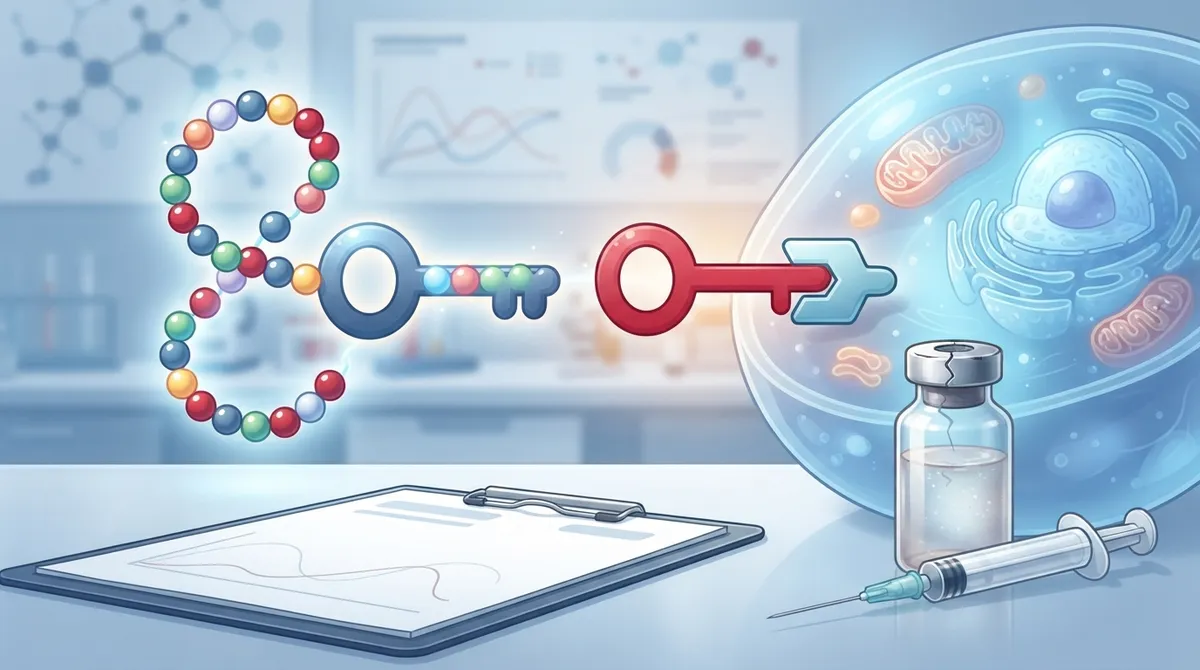
- Peptides are short amino acid chains that act as signaling molecules, binding to cell receptors to trigger effects like insulin release, appetite changes, or hormone production.
- "Peptide therapy" is a broad marketing label, not one treatment; effects, dosing, and safety depend entirely on the specific peptide and the condition being treated.
- FDA approval applies to a specific product for a specific use, such as insulin, semaglutide, or tirzepatide for certain diabetes and weight-management indications, not to peptide therapy in general.
- Popular wellness peptides like BPC-157, CJC-1295, and ipamorelin are not FDA-approved for recovery or anti-aging, and their human evidence is limited, mostly from lab or animal studies.
- Compounded peptides are not reviewed by the FDA for safety, effectiveness, or quality, and the FDA has raised concerns about impurities, limited human safety data, and immune reactions.
- Start with a health goal and a diagnosis, not a product, and ask a provider which exact peptide is proposed, what it is approved for, what human studies support it, and whether it is compounded.
Peptide therapy is one of the most talked-about topics in wellness today. You may have seen it on social media, heard about it from a friend, or noticed it listed at a local clinic. But what is it, really? And how does peptide therapy work inside the body?
The short answer is this: peptides are short chains of amino acids. Many of them act like messengers. They bind to specific receptors on cells and tell the body to do something, such as release insulin, feel full, or make a hormone. Yet "peptide therapy" is a broad marketing label, not one single treatment. Some peptide medicines are FDA-approved and well studied. Others are sold for recovery or anti-aging with very little human evidence.
This guide explains the science in plain language. You will learn how peptides signal, which ones are approved, where the evidence is thin, and how a primary care team can help you decide what is right for you in 2026.

1. Peptides Are Short Chains of Amino Acids That Act as Signals
Think of amino acids as letters and proteins as long books. A peptide is a short sentence. Because it is short, it can act fast and carry a clear message.
Many peptides work as signaling molecules. They travel through the blood and attach to receptors on cell surfaces. When a peptide fits a receptor, it sets off a chain of events inside the cell. This is the core answer to how peptide therapy works: it uses a peptide to trigger or adjust a signal the body already understands.
Peptide signals can affect several body processes:
- Appetite and fullness
- Blood sugar control
- Hormone release
- Immune activity
- Tissue function
The effect depends on the exact peptide, the dose, how it is given, and the health condition involved. That is why one peptide cannot stand in for another.
2. "Peptide Therapy" Is Not One Standard Treatment
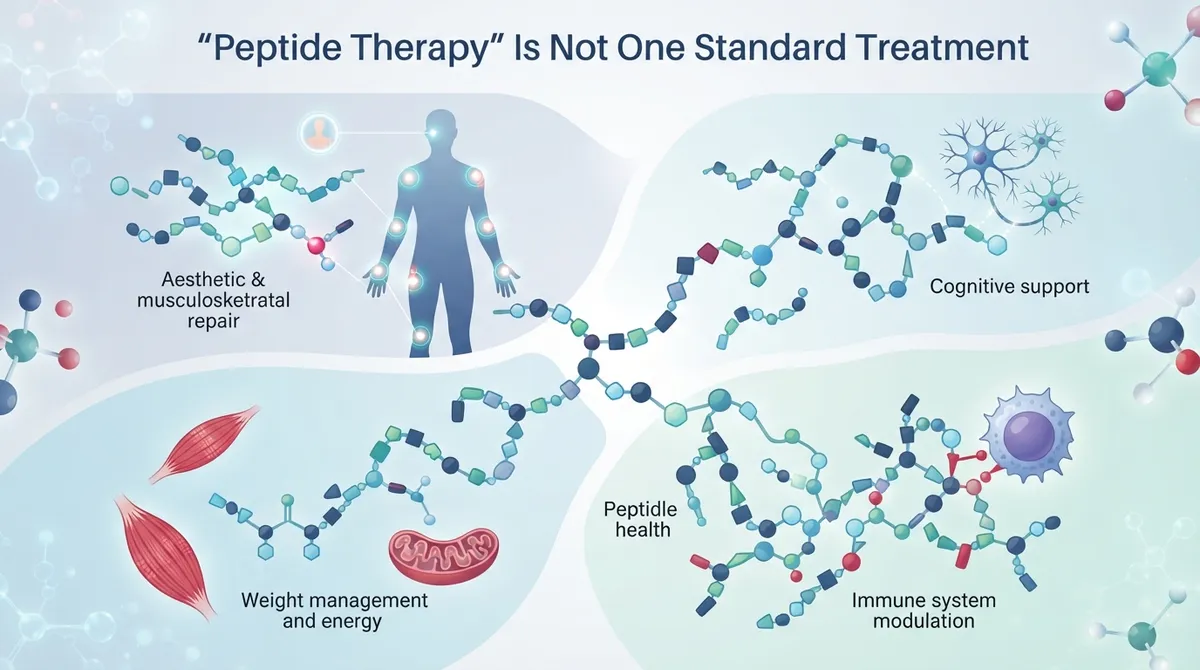
This is the most important point to understand. There is no single dose, no set length of treatment, and no one safety profile for peptide therapy as a whole. The term covers very different products.
Insulin is a peptide. So are some weight-loss and diabetes medicines. At the same time, many injectables sold online or at wellness spas are also called peptides. These two groups are not the same. One has strong trial data and clear labeling. The other often does not.
When you ask how peptide therapy works, the honest answer is: it depends on which peptide. A good provider will ask which drug, for which diagnosis, and with what evidence.
3. Some Peptide Medicines Are FDA-Approved for Specific Uses
FDA approval applies to a specific product and a specific use. It does not apply to peptide therapy in general. A 2024 review of FDA-approved peptide medicines describes many therapeutic areas, including diabetes and hormone disorders.
Well-known examples include:
- Insulin for diabetes
- Semaglutide for certain diabetes and weight-management uses
- Tirzepatide for certain diabetes and weight-management uses
These medicines come with approved labels. The labels list who should use them, who should not, and which side effects to watch for. If you want to learn more about the weight-loss side, our guide on how to choose the best injection for weight loss in 2026 walks through the options.
How GLP-1 Medicines Work
GLP-1 receptor agonists copy a natural gut hormone called GLP-1. Here is what they do in the body:
- They raise insulin release when blood sugar is high.
- They lower glucagon, a hormone that raises blood sugar.
- They slow how fast the stomach empties.
- They act on appetite centers so you feel full sooner.
Tirzepatide goes one step further. It targets both the GIP and GLP-1 receptors. For eligible patients, these effects can improve blood sugar and support weight loss. To see how this fits into a full plan, read about what makes medical weight loss different from dieting.
4. Many Popular "Wellness Peptides" Lack Strong Human Evidence
Peptides such as BPC-157, CJC-1295, and ipamorelin are often promoted for recovery, muscle gain, anti-aging, or general wellness. These products are not FDA-approved for those uses. Reliable human research on them is limited.
Many of the claims come from lab or animal studies. Those findings are interesting, but they do not prove that a peptide works or is safe at a given dose in people. A mouse study is a starting point, not a result.
Here is a simple way to compare the two groups:
|
Feature |
FDA-Approved Peptide Medicines |
Unapproved Wellness Peptides |
|---|---|---|
|
Regulatory review |
Reviewed for safety and effectiveness |
Not approved for these uses |
|
Human trial data |
Typically extensive |
Often limited or lacking |
|
Dosing guidance |
Defined on the label |
No reliable standard |
|
Known risks |
Listed on the label |
Poorly characterized |
|
Examples |
Insulin, semaglutide, tirzepatide |
BPC-157, CJC-1295, ipamorelin |
If you are curious about a specific peptide, these InCare resources give a careful look at the evidence: 7 facts about BPC-157 every wellness patient should know and what CJC-1295 actually does for your health.
5. Compounded Peptides Carry Extra Questions About Safety and Quality
A compounded drug is made by a pharmacy for a specific patient. Compounded drugs are not FDA-approved. The FDA does not review them for safety, effectiveness, or quality before they are sold.
Compounding can be appropriate when a patient has a real medical need that a standard product cannot meet. But compounding does not turn an unproven peptide into a proven one. It also does not make it risk-free.
The FDA has raised concerns about certain bulk peptides used in compounding. These concerns include:
- Possible impurities in the product
- Limited safety information in humans
- The chance of immune reactions to the peptide
Injections also carry their own risks, such as skin irritation or infection. For a closer look at the differences, see our article on FDA-approved vs. compounded peptides.
Risks Vary by Peptide
Approved medicines have known side effects. GLP-1 medicines, for example, often cause stomach symptoms such as nausea. They also have important warnings and contraindications. Unapproved injectables add more unknowns, including dose accuracy, purity, contamination, and long-term effects.
No single number can describe the safety or effectiveness of unapproved wellness peptides. The data simply is not there. A careful provider will tell you that plainly.
6. A Primary Care Doctor Can Help You Decide Safely
Peptide therapy should not start with a product. It should start with a goal and a diagnosis. A primary care clinician can guide that process in a safe, step-by-step way.
A good evaluation usually follows this path:
- Clarify your goal. Are you managing blood sugar, losing weight, or seeking help with recovery or energy?
- Review your history. Your doctor looks at past conditions, current medicines, and family history.
- Discuss evidence-based options. This includes lifestyle, labs, and approved medicines.
- Use a legitimate prescription. If a peptide medicine fits, it should come from a real prescriber and a trusted source.
- Monitor your progress. Follow-up and lab work are matched to the drug and to you.
This approach protects you. It also keeps the focus on whole-body health, not just a single injection. Because InCare blends primary care, medical weight loss, and advanced wellness testing under one roof, your care team can look at the full picture. Services such as DNA gene testing and metabolic breath analysis can add useful insight before you start any plan.
Questions to Ask Before You Start
Bring this short list to your visit:
- Which exact peptide is this, and what is it approved to treat?
- What human studies support it for my goal?
- Is this an FDA-approved product or a compounded one?
- What side effects should I watch for?
- What labs or follow-up visits will I need?
- What happens if I stop?
If a provider cannot answer these clearly, that is a signal to slow down. You can learn more about what to look for in our guide on choosing a peptide therapy clinic in Tampa.
Who May Benefit and Who Should Be Cautious
Peptide medicines can be a good fit for some people. Adults with type 2 diabetes or obesity may qualify for approved GLP-1 treatments. These patients often work with a doctor to pair the medicine with nutrition, movement, and regular check-ins.
Caution is wise for others. People who are pregnant or breastfeeding, who have certain medical conditions, or who take interacting medicines may need a different plan. Athletes should also be careful, since some peptides are banned in competition. Anyone drawn to an unapproved peptide should understand the limits of the evidence first.
For busy families, young professionals, and wellness-minded adults, the best first step is a simple conversation. Many people find that a proven basics plan, built on good sleep, strength training, balanced meals, and preventive screenings, delivers more than any single product. You can read more in our overview of peptide therapy in 2026: what it treats and how it works.
Why InCare Is a Strong Place to Start
Choosing a clinic matters as much as choosing a treatment. InCare is a personalized primary care and wellness clinic with locations in Tampa and Riverview, Florida, plus virtual visits. The team combines medical expertise with modern technology, including body composition tracking and metabolic testing, so decisions are based on your own data, not guesswork.
Patients rate InCare 4.8 out of 5 on Google across 359 reviews. You can read InCare reviews on Google to see what neighbors in Tampa and Riverview say about their care. You can also follow the clinic on Instagram, Facebook, and TikTok for health tips and updates.
If you want a deeper dive into the local options, see our guide to peptide therapy in Tampa: benefits and safety.
The Bottom Line
So, how does peptide therapy work? Peptides are small signaling molecules. They attach to receptors and nudge the body to change how it handles blood sugar, appetite, hormones, or tissue repair. Some peptide medicines, like GLP-1 drugs, are FDA-approved and backed by strong evidence. Many wellness peptides are not, and the human data is thin.
The safest path is to start with your health goal, not a product. Work with a licensed clinician who explains the evidence, the risks, and the monitoring plan in plain terms. That is the kind of care InCare is built to provide.
Ready to talk through your options with a team that puts safety and evidence first? Book your visit with InCare today, or contact our team with any questions.
FAQs
Q: What is peptide therapy, and how does it work in the body?
A: Peptides are short chains of amino acids. Many act as signaling molecules that bind to specific receptors on cells and influence processes such as appetite, blood sugar, hormone release, immune activity, or tissue function. Because "peptide therapy" is a broad term, how it works depends on the exact peptide, dose, and condition being treated.
Q: Which peptide medications are FDA-approved?
A: Examples include insulin for diabetes and GLP-1-based medicines such as semaglutide and tirzepatide for specified diabetes or weight-management uses. FDA approval applies to each specific product and indication, not to peptide therapy as a whole.
Q: Are peptides like BPC-157 or ipamorelin FDA-approved?
A: No. Peptides such as BPC-157, CJC-1295, and ipamorelin are not FDA-approved for recovery, anti-aging, or general wellness uses. Reliable human evidence is limited, and animal or lab findings do not establish clinical benefit or safe dosing in people.
Q: What are the risks and side effects of peptide therapy?
A: Risks vary by peptide. Approved GLP-1 medicines commonly cause stomach symptoms and carry important warnings and precautions. Unapproved or poorly characterized injectable peptides add uncertainty about dose, purity, contamination, immune reactions, and long-term effects, and any injection can cause local irritation or infection.
Q: What should I ask a primary care provider before starting peptide therapy?
A: Ask which exact peptide is being recommended, what it is approved to treat, what human studies support it, and whether it is FDA-approved or compounded. Also ask about side effects, the labs and follow-up visits you will need, and what happens if you stop.


