

Key Takeaways
- Confirm with the doctor's office directly, not just the online directory, that the specific clinician is in-network with your exact plan and accepting new patients before booking.
- Match the provider type to your life stage: family medicine lets one doctor cover the whole family, while internal medicine suits adults with complex or chronic conditions.
- Verify board certification, active licensure through your state board, and experience with your specific health needs before committing to a primary care doctor.
- Judge the fit at your establish-care visit by whether the doctor listens without interrupting, explains options clearly, and respects your preferences and questions.
Picking a primary care doctor sounds simple. Most people search online, scan a few reviews, and book the closest office. Yet this single choice shapes your health for years. A good fit helps you catch problems early, manage chronic conditions, and feel heard. A poor fit leads to rushed visits, missed screenings, and care that feels disconnected.
The data shows why this matters. A 2026 study of traditional Medicare beneficiaries found that primary care continuity fell from 0.72 in 2019 to 0.65 in 2023. Patients are seeing the same clinician less often, which makes a strong, lasting relationship more valuable than ever.
This guide explains how to choose a primary care doctor by showing the five most common mistakes and how to avoid each one. Whether you are a busy parent, a young professional, or someone focused on preventive health, these steps will help you find a clinician you can trust.
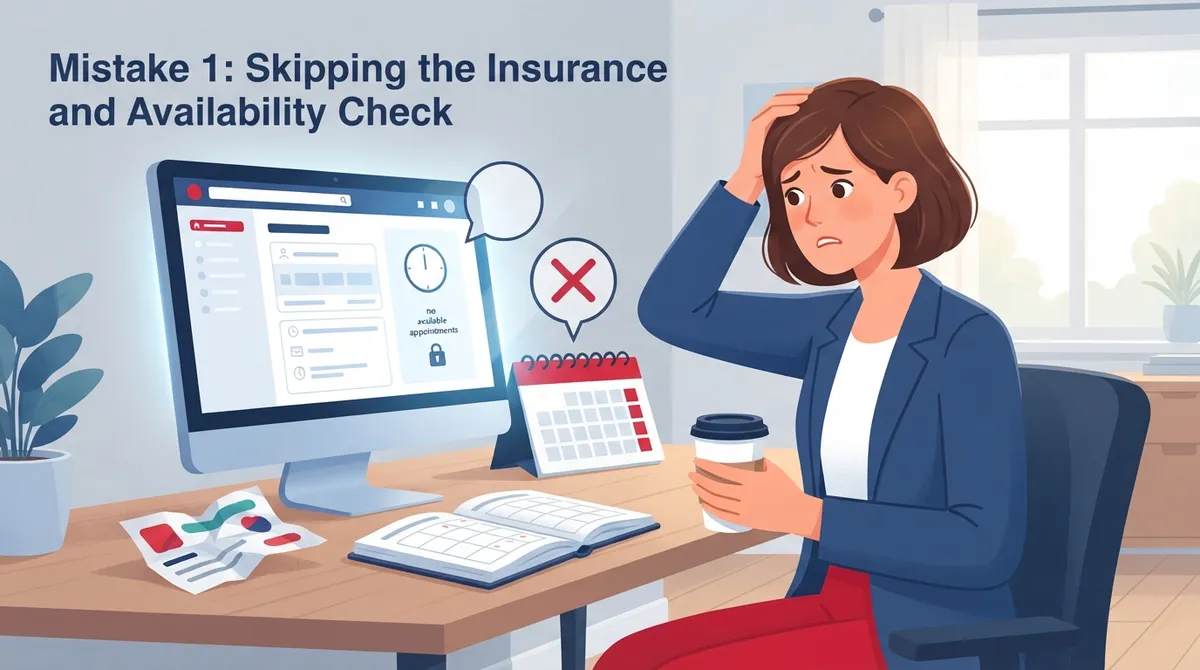
Mistake 1: Skipping the Insurance and Availability Check
Many people choose a doctor first and think about coverage later. That order can lead to surprise bills and wasted time. Network status affects what you pay out of pocket, and online directories are not always current.
How to Verify Coverage the Right Way
Start with your health plan's provider directory. Then call the doctor's office directly to confirm three things. Do not rely on the directory alone.
- The specific clinician is in-network with your exact plan, not just the practice as a whole.
- The doctor is accepting new patients right now.
- The first visit will be billed as a preventive or problem-focused visit, and what your copay will be.
Also ask about referral rules, lab arrangements, and cancellation policies. These details affect your costs more than most people expect. If you need help finding open appointments, this guide on finding doctors accepting new patients near you walks through the process.

Mistake 2: Choosing the Wrong Type of Provider
Not every primary care provider is the same. The right choice depends on your age, your health needs, and your family situation. Picking the wrong type can mean you outgrow your doctor or need a second office for your children.
Understand the Main Provider Types
|
Provider Type |
Who They Treat |
Best For |
|---|---|---|
|
Family Medicine |
Babies, children, adults, and seniors |
Families who want one doctor for everyone |
|
Internal Medicine |
Adults only |
Adults with complex or chronic conditions |
|
Pediatrics |
Children and teens |
Kids who need age-specific care |
|
Nurse Practitioner or Physician Assistant |
Varies by practice and plan |
Routine care, follow-ups, and prevention |
Nurse practitioners and physician assistants often provide excellent primary care. Their role depends on the practice and your insurance plan, so ask how they work with the physicians on staff.
Busy young families often benefit most from family medicine, since one practice can handle checkups for every age. Learn more about the benefits of family medicine for whole-family health. Adults with ongoing conditions may prefer an internist, and you can see the key roles of an internal medicine physician to compare.
Mistake 3: Ignoring Credentials and Experience
A friendly office is nice, but credentials matter. You are trusting this person with your long-term health. A few minutes of research can protect you.
What to Check Before You Commit
- Education and residency: Confirm where the clinician trained.
- Board certification: Look for specialty certification in family medicine or internal medicine.
- Active license: Verify the license through your state licensing board.
- Relevant experience: Ask about their work with your conditions or health goals.
Experience should match your needs. If you want help with weight management, hormone health, or cancer screening, ask whether the practice offers those services. At InCare, patients can meet the physicians through the provider directory and read about their backgrounds before booking.
Mistake 4: Overlooking Access and Convenience
The best doctor in the world cannot help you if you cannot get an appointment. Many patients focus only on reputation and forget about daily logistics. Then a minor illness turns into a two-week wait.
Questions That Reveal Real-World Access
Before you enroll, ask the practice about the following:
- How long is the wait for a routine appointment?
- Are same-day sick visits available?
- Does the office offer evening or weekend hours?
- Can you do a virtual visit when you cannot travel?
- Who covers your care when your doctor is away?
- Is there after-hours advice by phone?
Telehealth matters more than many people realize. In the 2026 Medicare study covering 2017 to 2023, virtual visits made up 7% of primary care visits, and 14% of beneficiaries who used primary care accessed it through telemedicine. These findings describe Medicare patients and should not be applied to everyone, but they show how common virtual care has become.
Tech-savvy patients will also want a patient portal and secure messaging. These tools make it easy to ask questions, view results, and request refills without calling the office. Location counts too. InCare serves patients at its Tampa and Riverview locations, with virtual visits available for added flexibility. You can also explore same-day primary care appointments if you value speed.
Mistake 5: Not Testing the Relationship Before You Commit
Many patients stay with a doctor who feels wrong simply because switching seems hard. It is not. You can change providers if the relationship is not a good fit, subject to your plan's rules. The first visit is your chance to find out.
What to Notice at Your First Visit
An establish-care visit tells you a lot. Pay attention to how the clinician communicates, not just what they say.
- Does the doctor listen without interrupting?
- Are options explained in clear, simple language?
- Are your preferences respected?
- Do you feel comfortable asking questions?
- Are you involved in decisions about your care?
Good primary care is a partnership. You should leave feeling informed and supported, not rushed. Come prepared with your medical history, current medications, and a short list of questions. This new patient appointment guide explains what to expect and how to get ready.
Look for Preventive and Coordinated Care
A strong practice does more than treat illness. It helps you stay well. Look for routine checkups, age-appropriate screenings, vaccinations, chronic condition management, referrals, and coordination of test results and specialist visits.
This is especially important for women aged 18 to 40 who may only see an OB/GYN, and for high-income wellness seekers who want advanced options. At InCare, comprehensive primary care goes beyond the basics. The clinic combines state-of-the-art technology with medical expertise to offer cancer screening, DNA gene testing, and personalized weight loss programs under one roof. That whole-body approach is why many patients see InCare as the best choice for prevention-focused care in Tampa and Riverview.
Patients also notice the difference in how they are treated. InCare holds a 4.8 out of 5 rating on Google, and reviewers often praise the friendly staff and attentive physicians. You can read InCare reviews on Google to see what real patients say.
A Simple Checklist for Choosing Your Doctor
Use this short list to pull everything together. If a practice checks most of these boxes, you are likely on the right track.
- Confirm in-network status and new-patient availability by phone.
- Choose the provider type that fits your age and needs.
- Verify credentials, board certification, and license.
- Check appointment wait times, hours, and telehealth options.
- Ask about preventive screenings and care coordination.
- Schedule an establish-care visit and judge the communication.
For more ideas, you can also review signs you have found the right primary care practice. And if you want to see how clinics are sharing health tips and updates, follow InCare on Instagram for patient-friendly wellness content.
Why the Right Doctor Changes Your Health
The right primary care doctor becomes your health guide. They know your history, spot patterns, and help you avoid bigger problems. Strong relationships lead to better follow-through on screenings and treatment plans. That is why taking time to choose wisely pays off for years.
Do not settle for a doctor who rushes you or a practice that makes access difficult. Look for a team that listens, uses modern tools, and cares about prevention. When you find that fit, stay with it. Continuity is one of the most valuable parts of primary care.
Take the Next Step Toward Better Care
Choosing a primary care doctor does not have to be stressful. Avoid these five mistakes, ask the right questions, and trust your experience at the first visit. InCare is ready to be your partner in prevention and wellness, with experienced physicians, modern technology, and personalized plans for every stage of life.
Ready to meet a team that puts you first? Book your appointment with InCare today, or contact our team with any questions about services, insurance, or new-patient visits.
FAQs
Q: How do I find a primary care doctor who accepts my insurance?
A: Start with your health plan's provider directory, then call the doctor's office to confirm the specific clinician is in-network, accepts your exact plan, and is taking new patients. Directories are not always current, so a direct call protects you from surprise costs.
Q: What is the difference between family medicine, internal medicine, and pediatrics?
A: Family medicine clinicians care for patients of all ages, from children to seniors. Internal medicine doctors focus on adults, while pediatricians care for children and adolescents. Your choice depends on your age and whether you want one doctor for the whole family.
Q: How can I check a primary care doctor's credentials and license?
A: Review the clinician's education, residency, and specialty certification, then verify their current license through your state licensing board. You can also ask the practice about their experience with your specific health needs.
Q: What should I look for at my first primary care appointment?
A: Notice whether the doctor listens, explains options clearly, respects your preferences, and welcomes questions. Also ask how to reach the care team and whether the practice offers secure messaging or a patient portal.
Q: Can I change my primary care doctor if it is not a good fit?
A: Yes. You can switch providers if the relationship does not work for you, subject to your insurance plan's rules. Check whether your plan covers a new-patient visit with the new clinician before you book.


