

Key Takeaways
- KPV is a three-amino-acid peptide derived from alpha-MSH that shows promise in blocking NF-κB and MAPK inflammatory pathways in lab studies, reducing TNF-α, IL-1β, and IL-6 cytokine production, but lacks human clinical trial data.
- Animal studies on colitis models demonstrate KPV reduces inflammation markers, but these results from mice do not guarantee safety or efficacy in humans, and no large randomized human trials have been conducted.
- KPV enters intestinal cells through the PepT1 transporter at nanomolar concentrations, suggesting targeted effects on gut tissue, but the exact mechanism in humans remains unresolved with unclear receptor involvement.
- Human dosing, long-term immune effects, drug interactions, and safety during pregnancy are completely unstudied, making KPV inappropriate for clinical use until rigorous human trials establish these parameters.
- Before considering any investigational peptide, patients should undergo comprehensive primary care evaluation with inflammatory marker testing and discuss FDA-approved treatments as evidence-based alternatives.
- KPV products sold as research compounds lack FDA approval and quality standards of approved medicines, positioning them as investigational tools only rather than legitimate wellness or clinical treatment options.
Peptide therapy has become a hot topic in wellness circles, and KPV is one of the names showing up most often. People searching for ways to calm chronic inflammation or manage gut issues are asking whether this small peptide could help. Before you get swept up in the buzz, it helps to understand exactly what the science says about KPV cytokine regulation and what it does not say yet.
This guide breaks down the research in plain language. We will cover how KPV interacts with inflammatory pathways, what studies actually show, and why primary care providers urge caution before trying it. If you are exploring peptide therapy or looking for real answers about inflammation control, this is the place to start. For broader guidance on evidence-based options, InCare's primary care team can help you sort fact from hype.
1. What Is KPV and Why Does It Matter for Inflammation?
KPV stands for Lysine-Proline-Valine. It is a tiny peptide made of just three amino acids. This tripeptide comes from the tail end of a larger molecule called alpha-melanocyte-stimulating hormone, or alpha-MSH.
Alpha-MSH has long been studied for its role in skin pigmentation and appetite. But researchers noticed something else: the last three amino acids, KPV, seemed to carry anti-inflammatory properties on their own. This discovery sparked interest in using KPV as a possible tool for calming an overactive immune response.
- KPV is the smallest active fragment of alpha-MSH studied for inflammation.
- It represents amino acids 11 through 13 of the original 13-amino-acid hormone.
- Scientists are most interested in its effects on gut inflammation.
- It is currently classified as a research compound, not an approved medicine.
Understanding this background is the first step in knowing what KPV cytokine regulation really means in a lab setting versus real-world patient care.

2. How KPV Cytokine Regulation Works in Lab Studies
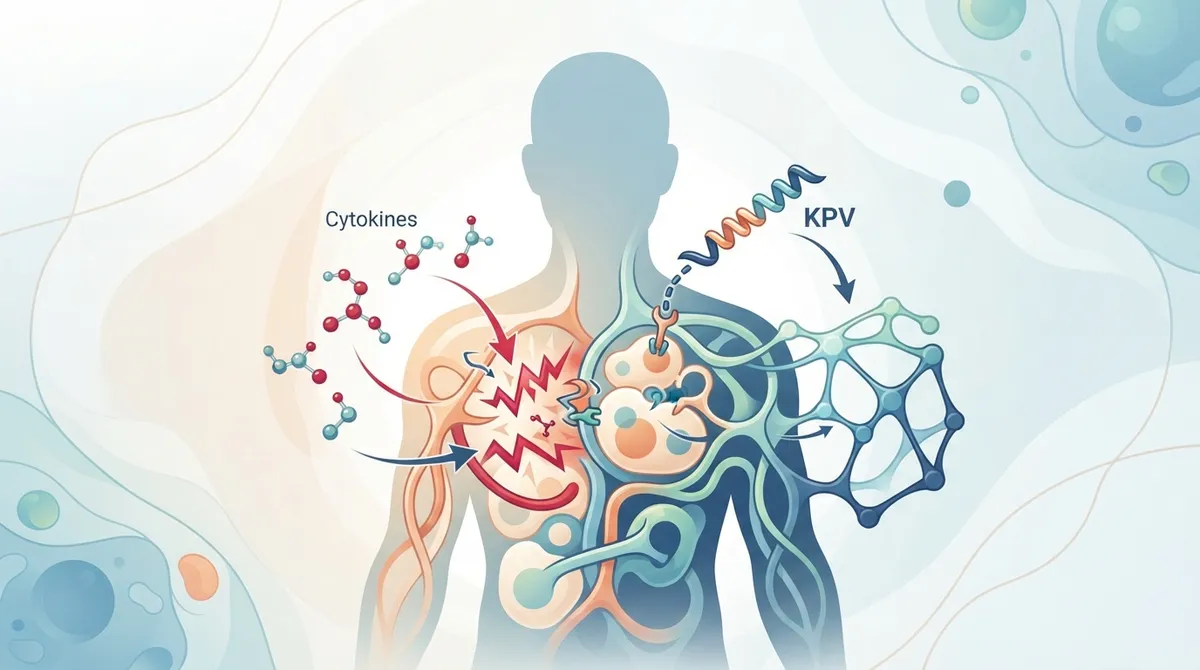
Cytokines are small proteins your immune cells use to communicate. When your body senses an injury or infection, cytokines ramp up inflammation to help you heal. But when this process runs too long or too strong, it can damage tissue and contribute to chronic disease.
Laboratory research suggests KPV may reduce this overactive signaling. Two key pathways are involved in this process:
- NF-κB signaling: This pathway acts like a switch that turns on inflammatory genes. Studies suggest KPV can block this switch, reducing the signals that lead to more inflammation.
- MAPK signaling: Mitogen-activated protein kinase pathways also help control immune cell activity. KPV appears to dampen this pathway too, based on cell studies.
- Cytokine output: When these pathways are blocked, cells produce less tumor necrosis factor-alpha (TNF-α), interleukin-1 beta (IL-1β), and interleukin-6 (IL-6). These are three of the most common markers of inflammation.
- Anti-inflammatory balance: Some research also links alpha-MSH-related peptides to higher levels of interleukin-10 (IL-10), a cytokine that helps calm the immune system rather than activate it.
A widely cited study published in Gastroenterology by Dalmasso and colleagues in 2008 found that KPV was active at very low, nanomolar concentrations in intestinal cells. The peptide appeared to enter cells through a transporter called PepT1, found in gut lining and immune cells. This gave researchers a possible explanation for why KPV showed the strongest effects in digestive tissue models.
3. What Animal Studies Show About Gut Inflammation
Most of the excitement around KPV comes from animal research, particularly studies on colitis. Colitis is inflammation of the colon, and it is often used in labs to mimic conditions like inflammatory bowel disease.
In these studies, researchers used two common chemical models to trigger colitis in mice:
|
Model |
Method |
Reported KPV Effect |
|---|---|---|
|
DSS-induced colitis |
Dextran sulfate sodium added to drinking water |
Reduced disease severity and lower inflammatory cytokine levels |
|
TNBS-induced colitis |
Trinitrobenzene sulfonic acid injected into the colon |
Reduced inflammation markers in colon tissue |
Oral KPV given to mice in these studies appeared to lower inflammatory cytokine expression and ease symptoms of colitis. This is interesting science, but it is important to remember these results come from mice, not people. A treatment that works in an animal model does not always translate to safe or effective use in humans.
4. Why Human Evidence Remains Limited
This is the most important point for anyone considering KPV for wellness purposes. As of now, there is no strong body of human clinical trial data confirming that KPV safely and effectively regulates cytokines in people.
Here is what is still unknown or unresolved:
- The exact mechanism by which KPV works in humans is not fully settled.
- Some research suggests KPV works through melanocortin receptors like MC1R, while other studies point to receptor-independent effects.
- Human dosing, safety, and long-term effects on the immune system have not been well studied.
- Drug interactions and effects during pregnancy or immune suppression are not established.
- Products sold as research peptides may not meet the same quality standards as FDA-approved medicines.
Because of these gaps, primary care providers cannot currently recommend KPV as a treatment for gut disorders, autoimmune disease, skin inflammation, or general wellness. Preclinical cytokine data is a useful starting point for future research, but it is not the same as proof that something works safely in real patients.
Comparing What We Know vs. What We Don't
|
Category |
Current Evidence |
|---|---|
|
Cell and animal studies |
Multiple studies show reduced NF-κB, MAPK, and cytokine activity |
|
Human clinical trials |
No large, well-established randomized trials identified |
|
Safety data |
Limited human pharmacokinetic and safety data available |
|
Regulatory status |
Not FDA-approved as a treatment for any condition |
|
Recommended use |
Investigational only; not a substitute for diagnosed treatment |
How Primary Care Approaches Chronic Inflammation Today
While KPV research continues, patients dealing with chronic inflammation, digestive symptoms, or autoimmune concerns still need real answers today. This is where a comprehensive primary care visit makes a difference. A physician can order lab work, check inflammatory markers, and build a plan based on evidence-backed treatments.
At InCare, providers combine traditional diagnostic tools with newer wellness technology to get a full picture of your health. Services like DNA gene testing can reveal genetic factors that influence inflammation, while body composition analysis tracks how your body responds to lifestyle changes over time. These tools give you measurable data instead of guesswork.
For patients interested in peptide therapy more broadly, it helps to work with a clinic that understands both the science and the limits of current research. Learn more about how peptide therapy is approached responsibly in Tampa before considering any investigational compound.
Steps to Take Before Trying Any Investigational Peptide
- Schedule a comprehensive wellness visit to identify the real source of your symptoms.
- Ask your provider about lab testing for inflammatory markers like CRP, ESR, or specific cytokines.
- Review your family and personal health history, including any autoimmune conditions.
- Discuss FDA-approved treatment options before considering research compounds.
- Verify the quality and sourcing of any peptide product before use.
- Follow up regularly with your primary care doctor to track progress and adjust your plan.
Following these steps helps you make informed decisions rather than relying on unverified claims found online.
Common Signs You Should See a Doctor About Inflammation
Chronic inflammation does not always feel dramatic. It can show up as fatigue, joint discomfort, digestive changes, or skin flare-ups that come and go. If you notice any of the following, it is worth booking a visit with a primary care provider:
- Ongoing digestive symptoms like bloating, cramping, or irregular bowel habits
- Unexplained fatigue that does not improve with rest
- Joint pain or stiffness that lasts more than a few weeks
- Skin issues that flare up repeatedly without a clear cause
- A family history of autoimmune or inflammatory bowel disease
A thorough evaluation, rather than a peptide bought online, is the safest first step toward relief. Patients across Tampa and Riverview have shared their experiences with InCare's approach to whole-body care, and you can visit us on Google — InCare to read what current patients say about their visits.
Where Peptide Research Is Headed Next
Scientists continue to study KPV and similar peptides to better understand their potential role in managing inflammation. Future human trials, if conducted, would need to confirm safe dosing, identify who might benefit, and rule out long-term risks. Until that data exists, KPV remains a research tool rather than a clinical treatment option.
Staying informed matters. Following credible health sources and clinic updates, such as InCare's Facebook page or Instagram account, can help you keep up with new developments as they emerge. You can also check ongoing peptide education content on platforms like Tik Tok for simplified explainers on emerging wellness topics.
Why Choose a Primary Care Partner for Inflammation Concerns
Chronic inflammation affects nearly every system in your body, from your gut to your joints to your skin. Instead of chasing trends, a trusted primary care team can help you find the actual cause and build a treatment plan grounded in real evidence. InCare's providers in Tampa and Riverview combine advanced diagnostics with a personalized approach so you are never left guessing.
Whether you are managing digestive symptoms, exploring weight loss support, or simply want a baseline health check, the right care team makes all the difference. Explore the full range of providers and locations available to find the option that fits your schedule and goals.
If you are ready to get real answers about inflammation, gut health, or overall wellness, do not wait for unverified peptide trends to guide your decisions. Reach out to InCare's team today to schedule a consultation, or go ahead and book your appointment now to start building a health plan based on real evidence and expert guidance.
FAQs
Q: What is KPV peptide and how does it relate to alpha-MSH?
A: KPV is a three-amino-acid peptide made of lysine, proline, and valine. It corresponds to the C-terminal portion of alpha-melanocyte-stimulating hormone, a larger hormone studied for its effects on inflammation and pigmentation.
Q: How does KPV affect NF-κB and inflammatory cytokines?
A: Laboratory studies suggest KPV can reduce NF-κB and MAPK signaling, which are pathways that trigger inflammation. This may lower the secretion of cytokines like TNF-α, IL-1β, and IL-6 in cell and animal models.
Q: Can KPV lower TNF-alpha, IL-1 beta, or IL-6 in humans?
A: Most evidence for this effect comes from cell cultures and animal studies, not human trials. There is currently no well-established clinical data confirming these effects occur safely or consistently in people.
Q: Is KPV supported for inflammatory bowel disease, IBS, or gut health?
A: Animal studies using colitis models showed reduced inflammation with KPV, but these findings have not been confirmed in human patients. It should not be used as a substitute for evidence-based IBD or gut health treatment.
Q: Should primary-care patients use KPV for chronic inflammation or wellness?
A: KPV remains an investigational compound without sufficient human safety or efficacy data. Primary care providers recommend evidence-based diagnosis and treatment instead of relying on unproven research peptides.