
Key Takeaways
- Ipamorelin has no FDA-approved dose for wellness use; any dosing chart found online is not medically validated and may carry serious safety risks.
- Regulatory authorities have flagged safety concerns with compounded ipamorelin, including immunogenicity risks and insufficient data on subcutaneous safety, because compounded peptides lack FDA manufacturing standards.
- Published human research on ipamorelin used short-term, supervised hospital protocols (IV administration) that cannot be extrapolated to self-administered subcutaneous home injection routines.
- Before considering peptide therapy, consult a licensed clinician who can verify FDA approval status, assess sourcing quality, monitor glucose and IGF-1 changes, and discuss proven alternatives.
Searching online for "how much ipamorelin to inject" will turn up dozens of forums, blogs, and unofficial charts. Here is the honest truth: none of them are backed by an FDA-approved standard. If you are a busy professional exploring wellness optimization, or a health-conscious individual curious about peptide therapy, this gap in reliable information matters. Getting the dose wrong is not just ineffective, it could be dangerous.
Ipamorelin has become a buzzword in anti-aging and wellness circles because it stimulates growth hormone release. But popularity does not equal proven safety. Before you consider any injectable peptide, it is worth understanding what the science actually shows, what regulators have said, and why a conversation with a licensed clinician matters more than any online chart. This guide breaks down four essential facts every patient should know before making decisions about ipamorelin.

1. There Is No FDA-Approved Ipamorelin Dose for Wellness Use
The single most important fact to understand is this: ipamorelin has no FDA-approved human indication and no official prescribing label. That means there is no medically validated injection amount for anti-aging, weight loss, or general wellness purposes.
Any dosing chart you find online, whether it lists micrograms per kilogram or a flat daily amount, is not derived from an approved clinical protocol. These numbers often come from anecdotal reports, bodybuilding forums, or extrapolated animal data. None of this qualifies as medical guidance.
This distinction matters because dosing decisions for approved medications go through rigorous review. Regulators evaluate safety margins, interactions, and long-term effects before publishing a label. Ipamorelin has skipped that entire process for wellness use. Patients considering peptide therapy should discuss options directly with a licensed primary care provider rather than relying on unverified online sources.
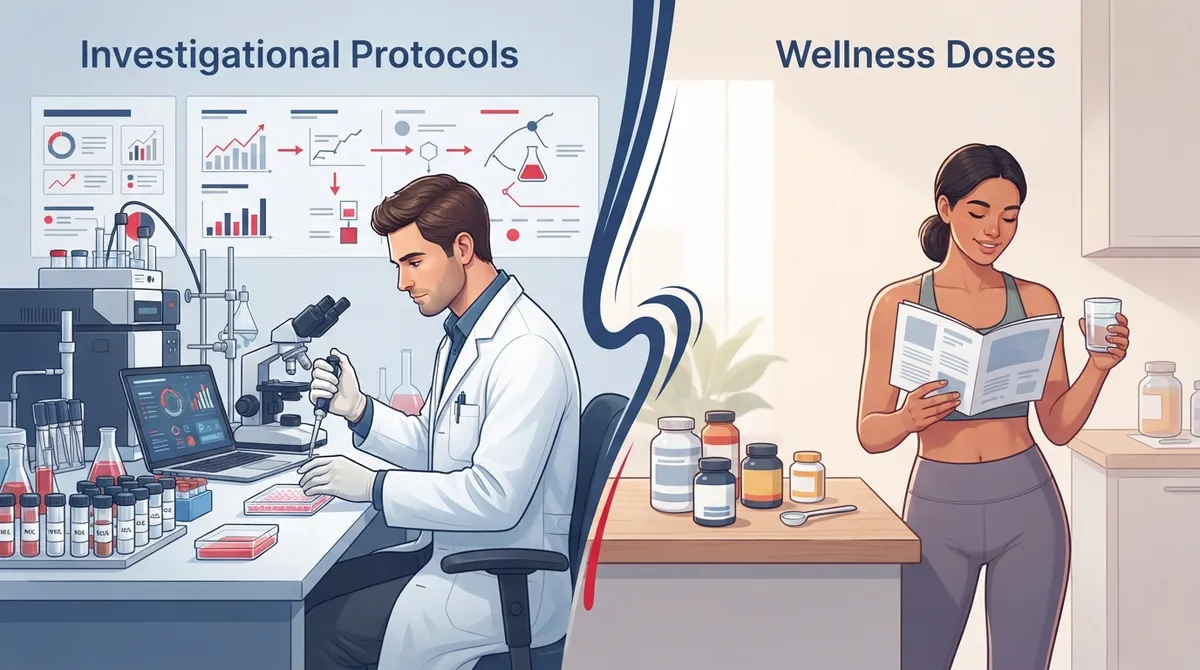
2. Human Research Used Investigational Protocols, Not Wellness Doses
Some published studies have tested ipamorelin, but these were narrow, controlled research settings, not blueprints for at-home injection schedules. Understanding the difference helps explain why online "doses" are misleading.
- Pharmacokinetic study: Human research measured a terminal half-life of about two hours, with growth hormone response peaking around 30 to 45 minutes after administration. These findings describe how the compound behaves in the body during a study, not a recommended wellness routine.
- Phase II bowel-resection trial: One clinical trial used ipamorelin at 0.03 mg per kilogram, delivered intravenously twice daily for up to seven days, in patients recovering from bowel surgery. This was a short-term hospital protocol under direct medical supervision.
- Route matters: That bowel-resection study used IV administration in a hospital, not subcutaneous injection at home. Converting an IV hospital dose into a self-administered subcutaneous amount is not something regulators or researchers have validated.
- No approved indication resulted: Despite this research, no regulatory body approved ipamorelin for any human condition based on these trials. The studies remain investigational.
In short, the data that does exist was never designed to answer the question "how much should I inject at home for wellness." Extrapolating from a hospital IV protocol to a self-injected wellness routine ignores major differences in supervision, monitoring, and purpose.
3. Regulators Have Flagged Safety Concerns With Compounded Ipamorelin
Beyond the lack of an approved dose, there are documented safety concerns tied specifically to how ipamorelin is often sourced and prepared. This is a critical piece of the puzzle that many online sellers do not mention.
|
Concern |
What Regulatory Materials Say |
|---|---|
|
Compounding safety |
Materials reviewed in October 2024 raised concerns about using ipamorelin-related bulk substances in compounded preparations |
|
Immunogenicity risk |
Aggregation or peptide-related impurities may trigger unwanted immune responses |
|
Serious adverse events |
A study using intravenous ipamorelin for gastric motility reported serious adverse events, including deaths, though this does not confirm risk for every route |
|
Subcutaneous data gap |
There is insufficient information to determine the safety of subcutaneous ipamorelin use in many contexts |
These are not minor technicalities. Compounded peptides are not held to the same manufacturing standards as FDA-approved drugs, which means purity, dosing accuracy, and contamination risks can vary widely from one supplier to another. Patients considering any peptide therapy should ask hard questions about sourcing and manufacturing oversight, and a trustworthy peptide therapy clinic will be transparent about these limitations.
Why Glucose and IGF-1 Levels Matter
Because ipamorelin stimulates growth hormone release, it can also affect glucose regulation and IGF-1 levels. Growth hormone pathways are tightly connected to metabolic health, and disrupting them without medical supervision carries real risk. Unsupervised or prolonged use has not been studied enough to establish long-term safety, which is another reason self-directed dosing is not advisable.
4. The Safest Answer Is to Consult a Licensed Clinician, Not a Chart
Given everything above, the most responsible answer to "how much ipamorelin to inject" is straightforward: there is no evidence-based, FDA-approved amount for wellness use. Patients should not self-inject or follow protocols found on forums or unverified websites.
Instead, the right first step is a conversation with a licensed healthcare provider. A qualified clinician can:
- Review your symptoms, goals, and full medical history
- Explain which treatments have proven safety and efficacy data
- Discuss FDA-approved alternatives that may address your underlying goals
- Monitor for interactions, glucose changes, or other risks if any peptide therapy is considered
- Help you understand sourcing, quality control, and realistic expectations
This is exactly the kind of guidance you should expect from a comprehensive primary care practice. Rather than guessing at dosing charts, patients deserve a personalized plan built on your lab work, your health history, and current medical evidence.
What to Ask Before Considering Any Peptide Therapy
If you are exploring wellness optimization and peptide therapy comes up in conversation, bring these questions to your appointment:
- Is this treatment FDA-approved for my specific goal, or is it being used off-label or unapproved?
- What does the compounding pharmacy's quality testing look like?
- What are the realistic risks, including effects on blood sugar and hormone levels?
- Are there proven alternatives with a longer safety track record?
- How will my progress and safety be monitored over time?
A clinic that welcomes these questions and answers them honestly is one you can trust. At InCare, our approach centers on evidence-based care, whole-body optimization, and transparent conversations about what treatments can and cannot do. We combine advanced diagnostics like DNA gene testing and body composition analysis with the medical oversight patients need to make informed decisions.
Exploring Wellness Options Beyond Unproven Peptides
If your goal is better energy, improved body composition, or long-term wellness, there are many well-studied paths worth discussing with a provider. These include structured weight loss programs, metabolic testing, and preventive screenings that come with a much stronger evidence base than unregulated peptide injections.
Our Tampa and Riverview teams, including physicians like Dr. Naveen Paddu, Dr. Pramjeet Ahluwalia, and Dr. Teshy John, are trained to evaluate your full health picture before recommending any treatment path. You can also learn more about our approach to whole-body care by visiting one of our Tampa and Riverview locations.
Patients often share their experiences after visiting our clinics. You can visit us on Google — InCare to read what current patients say about their care experience. We also stay connected with our community through Facebook, Instagram, and TikTok, where we share wellness education and clinic updates.
Making an Informed Decision About Peptide Therapy
The bottom line on "how much ipamorelin to inject" is simple: no trustworthy dose exists for wellness use, and self-injection based on internet research carries real risk. Regulatory reviews have flagged safety concerns, and the human studies that do exist used short-term, supervised, investigational protocols that do not translate into a home wellness routine.
If you are curious about peptide therapy, growth hormone optimization, or any other advanced wellness service, the smartest step is a conversation with a provider who can review your goals against current evidence. Our team can also walk you through related options like IV hydration therapy or metabolic breath analysis, which offer measurable, monitored paths toward your wellness goals.
Ready to talk through your options with a real medical professional? Book your appointment today and get answers that are actually backed by evidence, not guesswork.
FAQs
Q: Is ipamorelin FDA-approved for human use?
A: No. Ipamorelin has no FDA-approved human indication and no official prescribing label. Any dosing information found online is not medically validated for wellness or anti-aging purposes.
Q: What is a medically approved dose of ipamorelin?
A: There is no medically approved dose for wellness, weight loss, or anti-aging use. Published research used short-term, supervised, investigational protocols in hospital settings, not routines for self-administration.
Q: Is subcutaneous ipamorelin safe?
A: Regulatory materials note there is insufficient information to determine the safety of subcutaneous ipamorelin use in many contexts. This uncertainty is a key reason to avoid self-injection without medical guidance.
Q: Can ipamorelin affect blood sugar or IGF-1 levels?
A: Yes. Because ipamorelin stimulates growth hormone release, it can influence glucose regulation and IGF-1 levels. These effects require medical monitoring, which is not possible with unsupervised use.
Q: What should I ask my clinician before considering peptide injections?
A: Ask whether the treatment is FDA-approved for your goal, how the product is sourced and tested, what the realistic risks are, and how your safety will be monitored over time. A licensed provider can walk through proven alternatives as well.


