
Key Takeaways
- Verify before booking: call the practice to confirm it is accepting new patients and in network for your exact insurance plan, then check with your insurer, since online directories are often outdated.
- Don't choose by distance alone; compare appointment wait times, telehealth options, office hours, after-hours support, and prescription refill speed.
- Match the care setting to your need: primary care for ongoing health, urgent care for minor same-day issues, and the ER or 911 for life-threatening symptoms like chest pain or stroke signs.
- Use official tools like Medicare Care Compare, your insurer's directory, and HRSA's Find a Health Center locator, which offers sliding-fee pricing for lower-cost care.
Typing "doctor near me" into a search bar feels simple. You see a list, pick the closest name, and book. But the closest clinic is not always the right one. In 2026, patients have more choices than ever, and a rushed choice can lead to surprise bills, long waits, and care that does not fit your life.
The data shows why this matters. According to the CDC, 90.3% of U.S. adults reported having a usual source of health care in 2024. Most of them, 77.5%, named a doctor's office or health center. A steady source of care is the norm. Yet many people still pick one based on distance alone.
This guide covers three common mistakes people make when they search for a doctor near them. It also shows you how to avoid each one. Whether you are a busy parent, a young professional, or someone who wants to take charge of your long-term health, these steps will help you find primary care that works.
Why Your Search for a Doctor Near Me Matters
A primary care clinician is often your first stop for routine health needs. That person can help with preventive care, chronic conditions, referrals, and follow-up. Primary care may come from a physician, a nurse practitioner, or a physician assistant, depending on the practice and state rules.
A good fit makes health easier to manage. A poor fit can leave you without answers. To learn more about the role, read what a primary care physician does for your health.
Here is what a strong primary care relationship can give you:
- One place to manage checkups, screenings, and prescriptions
- A clinician who knows your history and health goals
- Faster referrals when you need a specialist
- Support for prevention, not only for sickness
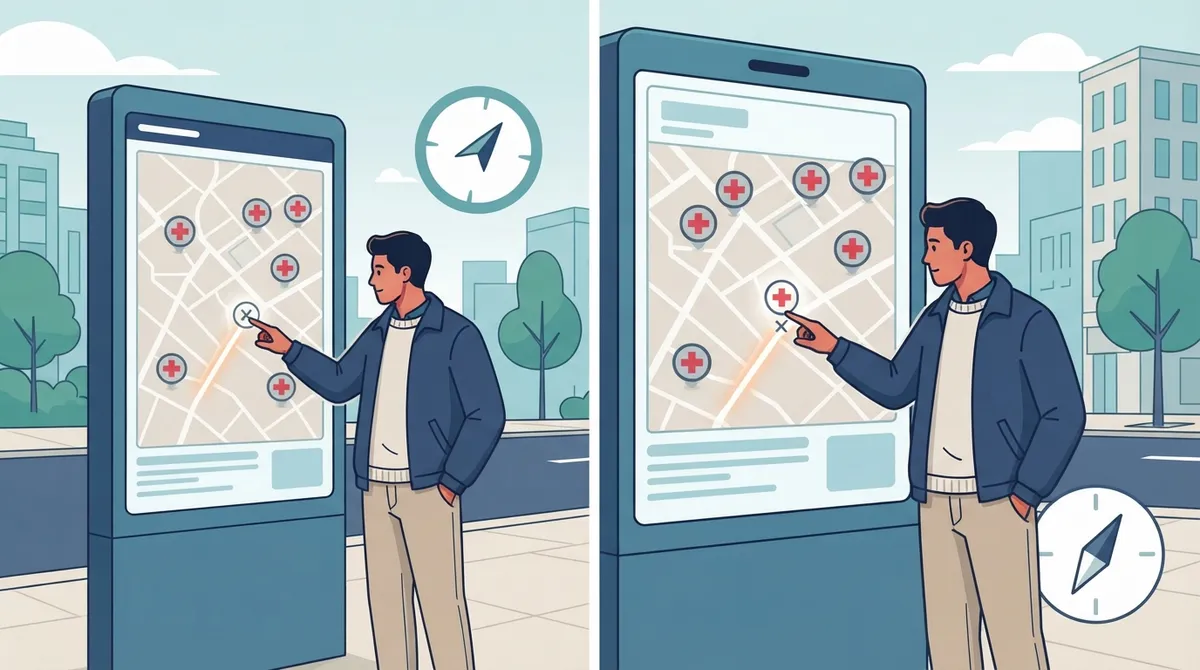
Mistake 1: Choosing by Distance Alone
The word "near" is the problem. Distance is only one part of access. A clinic five minutes away may have a three-week wait. Another clinic ten minutes away may offer same-day visits and virtual care.
What to Compare Besides Location
Look at how the practice fits your schedule and habits. Ask about these items before you commit:
- Appointment availability: How soon can a new patient be seen?
- Office hours: Are evening or weekend slots offered?
- Telehealth options: Can you handle some visits from home?
- After-hours questions: Who answers if you have a concern at night?
- Prescription refills: How fast are they handled?
- Language and accessibility: Does the office meet your needs?
For tech-savvy patients, virtual access matters. For busy families, same-day care can save hours. You can learn how fast care works in same-day appointments for primary care.
Distance vs. Fit: A Quick Comparison
|
Factor |
Distance-Only Search |
Fit-Focused Search |
|---|---|---|
|
Wait for a new-patient visit |
Often unknown |
Confirmed before booking |
|
Telehealth access |
May be missed |
Checked up front |
|
Services offered |
Basic only |
Matched to your needs |
|
After-hours support |
Unclear |
Clear process |
Mistake 2: Skipping the Insurance and New-Patient Check
This is the most costly error. You find a clinic you like, book a visit, and learn later that it is out of network or not taking new patients. Online directories can be incomplete or out of date, so you should confirm details yourself.
How to Verify Before You Book
Follow these steps in order:
- Call the practice and ask if it is accepting new patients.
- Ask if it is in network for your exact insurance plan, not just the insurer name.
- Call your insurer to confirm the same information.
- Ask what a first visit will cost and what you may owe.
- Write down the date, the name of the person you spoke with, and what they said.
This simple routine can prevent most billing surprises. If you need help with this step, see how to find doctors accepting new patients near you.
Use Official Tools
Medicare beneficiaries can use Medicare Care Compare to find and compare clinicians enrolled in Medicare. Patients with other coverage can check their insurer's directory and the state licensing board. People who need lower-cost care can use the HRSA Find a Health Center tool. HRSA reports about 1,400 health centers and more than 16,600 service sites across the country. Many offer sliding-fee pricing based on your ability to pay, but you should call to confirm eligibility and costs.
Mistake 3: Confusing Primary Care With Urgent Care or the ER
Many people search "doctor near me" when they feel sick, then end up at the wrong type of facility. Each setting serves a different purpose, and knowing the difference saves time and money.
CDC data show that 8.6% of adults use an urgent care center or a retail clinic as their usual source of care. Another 1.7% rely on a hospital emergency room. Those choices can work in a pinch, but they do not build a lasting relationship with a doctor who knows you.
Which Setting Fits Which Need
|
Setting |
Best For |
Not Ideal For |
|---|---|---|
|
Primary care |
Checkups, chronic conditions, screenings, ongoing care |
Life-threatening emergencies |
|
Urgent care |
Minor injuries, flu, infections, same-day needs |
Long-term condition management |
|
Emergency room |
Chest pain, severe bleeding, stroke signs |
Routine or minor issues |
For a life-threatening emergency, call 911 or go to an emergency department. For other symptoms, a primary care office or an urgent care clinic may be the right choice. Mixing these up can lead to long waits and higher bills. You can read more about what urgent care services can treat and avoid common urgent care mistakes.
Check Credentials and Practice Details
Once you have a short list, confirm that the clinician is qualified. Check the clinician's credentials, specialty, and practice information through reliable sources. Your insurer's directory and the state licensing board are good places to start.
It also helps to meet the team. A practice with clear provider profiles makes this easy. At InCare, you can review the care providers and read about physicians such as Dr. Pramjeet Ahluwalia. For a wider view of what to look for, see 7 signs you have found the right primary care practice.
What a Modern Primary Care Practice Can Offer
Primary care today goes beyond a basic checkup. Different patients want different things, and the right clinic should be able to support them.
- Busy families: Care for adults and children in one place, plus preventive screenings and weight support.
- Tech-savvy millennials: Virtual visits and digital tools that fit a packed schedule.
- Wellness-focused adults: Advanced options such as DNA gene testing, body composition analysis, and IV hydration.
- Women and young adults without a regular doctor: Full wellness visits and screenings that go beyond reproductive care.
InCare is a personalized clinic that blends technology with medical expertise. It offers primary care, urgent care, cancer screening, weight loss programs, and DNA gene testing. For the Tampa and Riverview area, it is a strong choice for patients who want preventive, whole-body care under one roof. You can see all InCare locations and read what patients say on Google reviews for InCare. The practice holds a 4.8 out of 5 rating with 359 reviews, and patients often praise the friendly staff and the care from Dr. Ahluwalia.
How to Prepare for Your First Visit
A little prep makes a first appointment far more useful. Use this list:
- Gather your medication list, including doses and supplements.
- Collect past records, test results, and vaccine history if you have them.
- Write down your top three health concerns or goals.
- Bring your insurance card and a photo ID.
- Ask how to reach the office and how to see test results online.
If you are switching doctors, learn how to request your medical records ahead of time. For a full walk-through, see what to expect at a new patient appointment.
Quick Checklist: Your Doctor Search in 2026
- Confirm the practice is taking new patients.
- Verify your insurance with both the clinic and the insurer.
- Compare hours, telehealth, and after-hours support.
- Check credentials through trusted sources.
- Match the setting (primary, urgent, or ER) to your need.
- Ask about cost before your first visit.
You can also follow us for health tips on Instagram, Facebook, and TikTok.
Conclusion
A search for a doctor near me should end with a clinician you trust, not simply the closest door. Avoid the three mistakes covered here: choosing by distance alone, skipping the insurance and new-patient check, and mixing up primary, urgent, and emergency care. Do that, and you will save time, money, and stress.
InCare makes the process easier with personalized primary care, same-day options, and advanced wellness services in Tampa and Riverview. Ready to find a doctor who fits your life? Book your visit with InCare today, or contact our team with any questions.
FAQs
Q: How do I find a primary care doctor near me who is accepting new patients?
A: Start by calling the practice directly and asking if it is accepting new patients. Online directories can be outdated, so confirm with the office and your insurer before you book.
Q: What is the difference between a primary care doctor and an urgent care clinic?
A: A primary care doctor manages your ongoing health, including checkups, screenings, and chronic conditions. Urgent care handles minor illnesses and injuries that need same-day attention but are not life-threatening.
Q: Can I see a nurse practitioner or physician assistant for primary care?
A: Yes. Primary care may be provided by physicians, nurse practitioners, or physician assistants, depending on the practice and state rules. Ask the office who will be your main point of contact.
Q: What should I bring to my first appointment with a new doctor?
A: Bring your insurance card, photo ID, a current medication list, and any past records or test results. It also helps to write down your top health concerns so you can discuss them clearly.
Q: How do I find a low-cost doctor or community health center near me?
A: Use the HRSA Find a Health Center locator to search by location. Many HRSA-funded centers offer sliding-fee pricing based on your ability to pay, so call ahead to confirm services and costs.


