Key Takeaways
- Verify hours, on-site testing, insurance, age limits, and online check-in before going to any clinic, since listed details may be outdated or incomplete.
- Urgent care treats non-life-threatening issues like colds, flu, sprains, ear infections, and minor cuts, but call 911 for chest pain, severe breathing trouble, stroke signs, or serious bleeding.
- Urgent care is not a substitute for primary care; ask how your visit connects to a regular doctor so underlying issues and follow-up care don't fall through the cracks.
- Downtown Tampa options listed include TGH Urgent Care at The Heights (303 W Palm Ave) and Channelside (564 Channelside Dr), both listed 8 a.m. to 8 p.m. daily.
It is a Tuesday evening in downtown Tampa. Your child has a fever, your ankle is swelling after a fall on the Riverwalk, or a sore throat has turned into something worse. You open your phone and type a request to recommend urgent care near downtown Tampa. Within seconds, you face a list of clinics, each with different hours, services, and wait times. Choosing quickly feels important, but choosing carelessly can cost you time, money, and sometimes your health.
Most people make the same few errors when they search under pressure. They pick the closest pin on the map, assume every clinic offers the same tests, or visit urgent care when they actually need an emergency room. This guide explains three common mistakes and shows you how to avoid them. You will also learn what downtown Tampa urgent care options exist, what they typically treat, and how to decide when a primary care and wellness clinic like InCare is the smarter choice.

Mistake 1: Choosing the Closest Clinic Without Checking the Details
Proximity matters, but it should not be your only filter. A clinic that is two blocks away is no help if it closes in an hour, lacks the test you need, or does not accept your insurance. Before you walk in, spend two minutes confirming the basics.
Downtown Tampa Urgent Care Options at a Glance
Search results show two TGH Urgent Care clinics powered by Fast Track in the downtown area. The table below summarizes the listed details. These come from provider location listings, so always confirm hours and services directly before you travel.
|
Clinic |
Address |
Listed Hours |
Phone |
|---|---|---|---|
|
TGH Urgent Care, Downtown at The Heights |
303 W Palm Ave, Tampa, FL 33602 |
8 a.m. to 8 p.m. daily |
813-925-1903 |
|
TGH Urgent Care, Downtown Channelside |
564 Channelside Drive, Tampa, FL 33602 |
8 a.m. to 8 p.m. daily |
813-925-1903 (general Tampa line) |
Both locations offer walk-in care for many non-life-threatening problems. Schedules can change, so a quick phone call is a smart habit.
What to Verify Before You Go
- Current hours: Holiday and evening schedules may differ from the posted listing.
- Available testing: Ask whether the clinic can run flu, COVID-19, RSV, pregnancy, or lab tests on site.
- Insurance and self-pay costs: Search results do not confirm current prices or coverage, so ask upfront.
- Age limits: Some clinics have rules for infants and young children.
- Online check-in: Many clinics let you reserve a spot and reduce your wait.
Taking these steps turns a hopeful guess into an informed decision. It also protects you from surprise bills, which is a top frustration for busy families and professionals alike.
Mistake 2: Confusing Urgent Care With Emergency Care
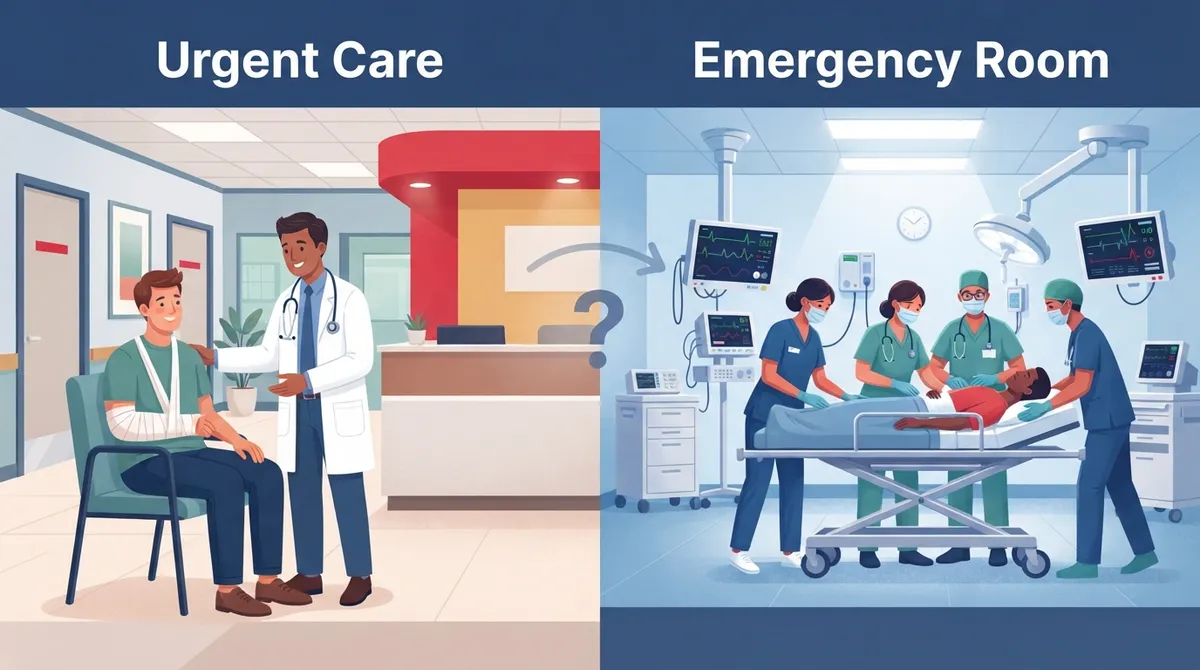
Urgent care fills an important gap. It handles problems that need attention today but are not life-threatening. When people misjudge the difference, they either overspend at an emergency room or delay care that cannot wait.
What Urgent Care Typically Treats
According to the research available for downtown Tampa clinics, walk-in urgent care commonly addresses these issues:
- Cold and flu symptoms
- Sore throat and suspected strep
- Ear infections
- Minor cuts that may need closure
- Sprains and strains
- Rashes and skin irritation
- Some minor fractures
If you want a deeper look at the range of problems these clinics handle, read what urgent care services can actually treat for you.
When to Skip Urgent Care Entirely
Some symptoms are emergencies. Call 911 or go straight to an emergency department for any of the following:
- Severe chest pain or pressure
- Major difficulty breathing
- Signs of a stroke, such as face drooping, arm weakness, or slurred speech
- Severe bleeding that will not stop
- Serious trauma, such as a major car accident or a deep head injury
Do not drive yourself if you are experiencing a possible heart attack or stroke. Calling 911 gets care started sooner. For a broader look at errors that put health at risk, see our guide on urgent care mistakes that could cost you your health.
Quick Comparison: Urgent Care, ER, and Primary Care
|
Care Type |
Best For |
Typical Experience |
|---|---|---|
|
Urgent care |
Minor illness or injury that cannot wait |
Walk-in, shorter visits, extended hours |
|
Emergency room |
Life-threatening symptoms |
Open 24 hours, triage based on severity |
|
Primary care |
Ongoing health, prevention, chronic conditions |
Relationship-based, personalized planning |
Knowing where your symptoms fit saves time and reduces stress. It also helps you avoid the cost of an emergency room visit for a problem that a clinic can handle.
Mistake 3: Treating Urgent Care as Your Only Source of Care
Urgent care is excellent for the moment. It is not designed to manage your long-term health. Many patients bounce between walk-in clinics for years without anyone tracking their blood pressure trends, screening schedules, or medication history. That pattern is known as fragmented care, and it can leave gaps that matter later.
Why Continuity Makes a Difference
A primary care physician knows your history. That knowledge shapes better decisions when you are sick, and it helps catch problems early. You can read more about this in fragmented care versus coordinated care. Coordinated care means one team follows your results, refills your prescriptions, and builds a plan around your goals.
This matters for several types of readers:
- Tech-savvy professionals who want fast access, online scheduling, and virtual visits without sacrificing quality.
- Busy young families who need one trusted place for both sick visits and preventive screenings.
- Wellness-focused adults who want more than a quick fix, including DNA gene testing, metabolic analysis, and cancer screening.
- Young adults and women without a regular doctor who need a clear starting point for comprehensive care.
How InCare Fits Into the Picture
InCare is a personalized clinic that combines primary care, urgent care, and advanced wellness services under one roof. With a downtown Tampa location at 1213 N Franklin St and a second clinic in Riverview, InCare gives patients a practical alternative to bouncing between providers. Patients can address a sudden illness through urgent care services and then continue with primary care for follow-up, prevention, and whole-body optimization.
The practice holds a 4.8 out of 5 rating on Google across 359 reviews, with patients often praising the friendly staff and the quality of care. You can read InCare reviews on Google to see what neighbors in Tampa and Riverview say about their visits. To understand why this model works, review 8 reasons urgent care at InCare beats the ER in 2026.
How to Make a Smart Decision in Under Five Minutes
When symptoms strike, you do not have time for lengthy research. Use this simple process to recommend the right option for yourself or your family.
- Assess severity. If any emergency warning sign appears, call 911 immediately.
- Check the clock. Confirm which clinics are open and whether they accept walk-ins.
- Confirm services. Call ahead to ask about the testing or treatment you need.
- Ask about cost. Request insurance details or self-pay pricing before you arrive.
- Plan the follow-up. Ask how the visit will connect to your regular doctor or a primary care team.
That final step is the one most people skip. Without follow-up, a successful urgent visit can still leave an underlying issue unresolved. If you are new to the area or do not have a doctor yet, our guide to finding doctors accepting new patients near you can help you build that relationship.
Preparing for Your Visit
A little preparation speeds up any urgent care visit. Bring the following items:
- A photo ID and your insurance card
- A list of current medications and allergies
- A short timeline of your symptoms
- The name of your primary care provider, if you have one
Having this information ready lets the clinician make faster, safer decisions. It also makes it easier to share records with your primary care team afterward. If you need to move records between providers, see 7 key steps to a medical records request in primary care.
Other Helpful Services When You Are Not Sick
The best time to find a reliable clinic is before you need one. Healthy periods are ideal for building a baseline. Many patients use that time for services that go beyond a standard checkup, including cancer screening, DNA gene testing, and medical weight loss programs. These tools support prevention, which is the foundation of long-term wellness.
If you also manage a vehicle or home comfort needs in Tampa, trusted local service providers such as Marks Air can help keep your household running smoothly. Staying comfortable at home supports recovery when you are under the weather.
For ongoing wellness tips and clinic updates, follow InCare on Instagram, connect through Facebook, or watch short health videos on TikTok.
Conclusion: Choose Care That Fits Your Whole Health
When you recommend urgent care near downtown Tampa to a friend or family member, the best advice goes beyond a street address. Check hours and services before you go, know when an emergency room is the right choice, and connect every urgent visit to a larger plan for your health. The TGH Urgent Care clinics at The Heights and Channelside offer walk-in options, and InCare gives you a personalized path that links urgent needs with primary care and wellness.
Ready to experience care that looks beyond the single visit? Book your InCare appointment now, or contact our team with questions. You can also call 813-553-3330 to speak with a member of our staff.
FAQs
Q: Which urgent care clinics are near downtown Tampa?
A: Search results list two TGH Urgent Care clinics powered by Fast Track in downtown Tampa: Downtown at The Heights (303 W Palm Ave) and Downtown Channelside (564 Channelside Drive). InCare also operates a Tampa location at 1213 N Franklin St that offers urgent care alongside primary care and wellness services.
Q: Do downtown Tampa urgent care clinics accept walk-ins?
A: Yes, the listed downtown clinics offer walk-in care for many non-life-threatening illnesses and minor injuries. Hours are listed as 8 a.m. to 8 p.m. daily, but patients should confirm current hours and any online check-in options before visiting.
Q: Should I go to urgent care or the emergency room?
A: Choose urgent care for problems that need prompt attention but are not life-threatening, such as cold and flu symptoms, sprains, ear infections, or minor cuts. Call 911 or go to an emergency department for severe chest pain, major breathing difficulty, stroke symptoms, severe bleeding, or serious trauma.
Q: Can urgent care near downtown Tampa perform tests or X-rays?
A: Many urgent care clinics offer diagnostic testing such as flu, COVID-19, RSV, and pregnancy tests, along with selected lab work. Availability varies by clinic, so call ahead to confirm that the specific test or imaging you need is offered.
Q: Does urgent care accept my insurance, and what does a visit cost?
A: Coverage and pricing differ by clinic and plan, and current costs for the downtown locations are not confirmed in available research. Contact the clinic directly before your visit to verify insurance acceptance and ask about self-pay rates.