
Key Takeaways
- "Clinical grade" is a marketing term with no formal FDA definition, so it does not prove a peptide is approved, tested, or appropriate for you.
- FDA states compounded drugs are not reviewed before marketing for safety, effectiveness, or quality, so ask whether your product is FDA-approved or compounded.
- Products labeled "research use only" are not intended or approved for human use and should never be used as a treatment.
- Injectable peptides carry immunogenicity risks, and sterility, potency, and storage errors can cause harm even when the ingredient itself is sound.
- Verify the clinician's active Florida license, identify the dispensing pharmacy, and get the product type in writing before committing to treatment.
- Be wary of guaranteed results, before-and-after photos, and pressure to buy a bundle on the first visit; no reliable Tampa-specific outcome data was found.
Peptides have moved from research labs to wellness marketing, and Tampa is no exception. Search for clinical grade peptides Tampa and you will find clinics promising everything from faster recovery to anti-aging results. The phrase sounds reassuring. But here is the problem: "clinical grade" is a marketing term, not an official FDA category. It does not tell you whether a product is approved, tested, or even appropriate for you.
That gap between the label and the facts is where patients make costly mistakes. Some buy products labeled "research use only." Some accept a compounded injection without asking who made it. Others skip a medical evaluation entirely. In 2026, the smartest approach is to treat peptide therapy like any other medical treatment. It needs a licensed clinician, a clear indication, and honest conversation about evidence and risk.
This guide covers the three biggest mistakes Tampa-area patients make when shopping for peptide care. It also explains what the term really means, how regulation works, and what questions to ask before you say yes.
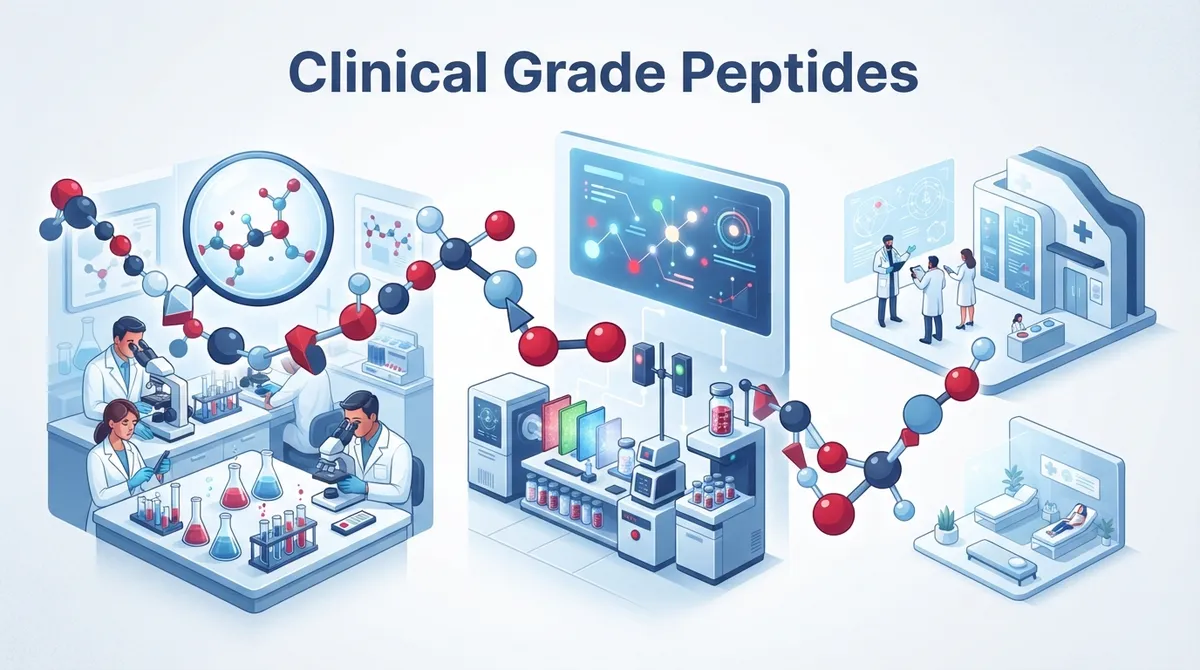
What Does "Clinical Grade Peptides" Actually Mean?
Peptides are short chains of amino acids. Your body makes thousands of them naturally. Some peptide medicines are FDA-approved for specific medical uses, such as certain diabetes and weight management drugs. Approval applies to a particular product and a particular condition. It does not extend to peptides as a whole, and it does not cover general wellness claims.
The phrase "clinical grade" has no formal definition from the FDA. A clinic may use it to suggest high purity, medical oversight, or pharmacy-level quality. Any of those may be true. None are guaranteed by the words alone. When you see the phrase, treat it as a starting point for questions, not an answer.
FDA-Approved vs. Compounded vs. Research-Use-Only
Understanding the three common product categories helps you read any clinic's claims with clear eyes.
|
Category |
FDA Review |
Intended Use |
Key Caution |
|---|---|---|---|
|
FDA-approved peptide drug |
Reviewed for safety, effectiveness, and quality for a defined indication |
Specific medical conditions on the label |
Approval covers only the labeled use |
|
Compounded peptide |
Not reviewed before marketing for safety, effectiveness, or quality |
Patient-specific need when an approved option is unsuitable |
Quality depends on the pharmacy and the ingredient |
|
"Research use only" peptide |
Not intended or approved for human use |
Laboratory research |
Should not be used as a treatment |
The takeaway is simple. Ask which row your product falls into. A trustworthy provider will answer clearly and without hesitation.

Mistake 1: Treating "Clinical Grade" as Proof of Safety
The first mistake is assuming the label guarantees quality. It does not. The FDA states that compounded drugs are not reviewed before marketing for safety, effectiveness, or quality. That is a national rule, and it applies in Tampa just as it does everywhere else.
FDA materials also point to specific concerns with certain peptide ingredients proposed for compounding. These include potential immune reactions and problems linked to impurities or poorly characterized substances. Eligibility for compounding depends on the specific substance and current FDA policy, which changes over time.
Why Injectable Peptides Deserve Extra Caution
Injectables bypass many of the body's natural defenses. FDA materials describe immunogenicity risks, meaning the immune system may react to a peptide product. In rare cases that can include serious reactions such as anaphylaxis. No reliable figures on how often this happens were identified in the sources reviewed, so no one should promise you it will not happen.
Quality factors matter just as much. Sterility, potency, purity, storage, and dosing all affect safety. A product that is stored incorrectly or mixed inaccurately can cause harm even if the ingredient itself is sound.
Questions That Cut Through the Label
Before agreeing to any peptide, ask your clinician to answer these directly:
- What is the exact peptide, and what is the intended medical indication?
- Is this an FDA-approved drug or a compounded medication?
- Which pharmacy prepares and dispenses it?
- What does the evidence show, and what are the known risks?
- What alternatives exist, including approved treatments?
If answers are vague, that tells you something important. A provider who respects you will welcome these questions.
Mistake 2: Buying Research-Use-Only Products or Skipping Medical Oversight
The second mistake is the most dangerous. Products labeled "research use only" are not intended or approved for human use. They are sold for laboratory work. Injecting or ingesting them outside of that context removes every layer of protection that medical care provides.
Online sellers and some storefronts blur this line on purpose. They may use polished packaging and words like "pharmaceutical quality." Yet the label itself says the product is not meant for people. A responsible clinic should never present such a product as an established treatment. It also should never substitute it for a prescription and appropriate medical oversight.
What Real Medical Oversight Looks Like
Safe peptide care begins with an evaluation, not a sales pitch. In a primary care setting, that evaluation usually covers several steps:
- Medical history review. Your clinician looks at chronic conditions, past reactions, and family history.
- Medication check. Peptides can interact with other drugs and supplements, so a full list matters.
- Lab work and testing. Baseline data helps guide decisions and track response.
- Evidence discussion. You hear what is proven, what is experimental, and what is marketing.
- Follow-up plan. Ongoing monitoring catches problems early and checks whether treatment is helping.
This is the standard you should expect. At InCare primary care, treatment starts with whole-body evaluation and personalized planning, because the right plan depends on the person, not the product. You can also read how our team approaches peptide therapy in Tampa and its safety considerations.
Mistake 3: Ignoring Evidence and Overpromising Outcomes
The third mistake is believing outcome promises. Peptides are often marketed for fat loss, muscle gain, sleep, skin, and longevity. Some claims have limited support. Others rest on animal studies or early research that has not been confirmed in people. Evidence-based, FDA-approved treatment is not the same thing as an experimental wellness claim, and a good clinician will keep that line clear.
No reliable Tampa-specific data on peptide therapy use or outcomes was found in the sources reviewed. That means any clinic quoting local success rates deserves a closer look. Be wary of guarantees, before-and-after photos presented as proof, and pressure to buy a bundle on the first visit.
How to Weigh a Claim
A simple filter can help you judge what you hear. Strong claims tend to share these traits:
- They name a specific product and a specific condition.
- They point to FDA approval or published human research.
- They explain risks as clearly as benefits.
- They include a plan for monitoring and stopping if needed.
Weak claims tend to be broad, emotional, and urgent. They promise that you will feel younger, stronger, or sharper without saying how that was measured. If a pitch sounds too good, slow down and ask for the evidence in writing.
How to Verify a Tampa Peptide Provider
You do not have to take anyone's word for their credentials. Florida provides public tools to check them. Use these steps before you commit to treatment:
- Verify the clinician's license. Use Florida's licensing resources to confirm the provider holds an active license and review any disciplinary history.
- Identify the pharmacy. Ask for the dispensing pharmacy's name, then check its credentials with the appropriate state regulator.
- Confirm the product type. Get it in writing whether the medication is FDA-approved or compounded.
- Request documentation. Ask about sourcing, storage, and testing practices.
- Check for oversight. Make sure a physician or qualified prescriber is involved, not just a sales staff member.
These steps take little time and can prevent serious problems. Patients who want to compare options can also review our guide on how to choose a peptide therapy provider in Tampa Bay, which walks through additional red flags.
Who Should Be Extra Careful?
Some people face higher stakes and should involve their clinician before considering any peptide. This includes anyone with a history of allergic reactions, autoimmune conditions, or cancer. People who are pregnant or breastfeeding should also be cautious, since safety data in these groups is often lacking. The same goes for anyone taking multiple prescriptions.
Busy parents and younger adults who research health online should also pause before acting on social media advice. Influencer testimonials are not clinical evidence. A short visit with a licensed clinician costs far less than treating a preventable complication.
A Smarter Path to Wellness in Tampa
Peptides are one tool among many. For most people, the biggest gains still come from the basics: sleep, nutrition, movement, preventive screening, and managing chronic conditions. A primary care team can look at the whole picture and tell you whether a peptide makes sense, or whether another option would serve you better.
InCare serves patients across Tampa and Riverview with primary care, advanced wellness testing, and personalized treatment planning. Services such as DNA gene testing, metabolic breath analysis, and body composition analysis help guide decisions with real data instead of guesswork. If you want a trusted, physician-led partner for questions like these, InCare is built for exactly that purpose. You can read what InCare patients say on Google and follow updates on Instagram, Facebook, and TikTok.
Conclusion
"Clinical grade peptides Tampa" is a phrase worth examining, not trusting on sight. The term has no official FDA meaning. Safe care depends on knowing the exact product, its regulatory status, the prescriber, and the pharmacy behind it. Avoid the three big mistakes: treating the label as proof of safety, using research-only products or skipping medical oversight, and believing outcome promises without evidence.
Ask direct questions, verify licenses, and insist on an individualized evaluation with follow-up. Results vary, and no responsible provider will guarantee them. If you are ready to talk through your goals with a clinician who puts evidence and your safety first, book an appointment with InCare today or contact our team with your questions.
FAQs
Q: What does "clinical grade peptides" mean?
A: It is a marketing phrase, not a formal FDA quality or approval category. Ask the provider to name the exact peptide and product, and whether it is an FDA-approved drug or a compounded medication.
Q: Are peptide therapies FDA-approved?
A: Some peptide medicines are FDA-approved for specific conditions, but approval applies to the particular product and indication, not to peptides as a class. Many peptides promoted for wellness are unapproved or compounded.
Q: Are compounded peptides safe, and how are they regulated?
A: Compounded medications are not reviewed by the FDA before marketing for safety, effectiveness, or quality. FDA materials also note risks for certain injectable peptides, including immune reactions, so oversight by a licensed clinician and a reputable pharmacy is essential.
Q: Are research-use-only peptides safe for human use?
A: No. Products labeled research use only are not intended or approved for human use. A responsible clinic should not present them as established treatments or substitute them for a prescription and medical oversight.
Q: How can I verify a Tampa clinician or compounding pharmacy?
A: Use Florida's licensing resources to confirm the clinician's active license and disciplinary history. Ask for the dispensing pharmacy's name and check its credentials with the appropriate state regulator.