

Key Takeaways
- Peptide therapy is not one standard treatment; the route (usually subcutaneous injection, but also oral, nasal, or topical), dose, and schedule depend entirely on the specific prescribed medicine.
- Compounded peptides are not FDA-reviewed for safety, effectiveness, or quality, so compounded or unapproved 'research' peptides sold online carry risks that approved medicines do not.
- Dosing errors are a serious, documented problem, especially when measuring from multidose vials or misreading syringe units; call your prescriber or pharmacist if the dose is unclear before injecting.
- Self-injection should only begin after hands-on teaching from a clinician or pharmacist covering preparation, site rotation, storage, and safe needle disposal, with a new needle and syringe for every dose.
- Never change the route, dose, or schedule on your own, and keep follow-up visits so your clinician can monitor response, side effects, and drug or health interactions.
- A safe provider performs a medical review, confirms whether an FDA-approved option fits first, prescribes in writing, and answers questions openly; a low price often signals unverified sourcing.
Few wellness topics create as much confusion as peptide therapy. Online ads promise dramatic results, and many people ask the same practical question: how is peptide therapy administered? The honest answer is that it depends on the specific medicine. "Peptide therapy" is a broad marketing term, not one standard treatment. Peptides are short chains of amino acids, and the route, dose, evidence, and risks change from one product to the next.
This matters because many patients get hurt by simple administration errors. They measure a dose wrong, reuse a needle, buy an unapproved product online, or skip medical follow-up. In 2026, these mistakes are still common. This guide covers 15 of them so you can approach treatment safely and ask better questions.
At InCare, we believe the safest peptide care starts with a licensed clinician, a clear plan, and proper teaching. For your Tampa Bay care team, the details below will help you know what good care looks like.
How Is Peptide Therapy Administered? The Short Answer
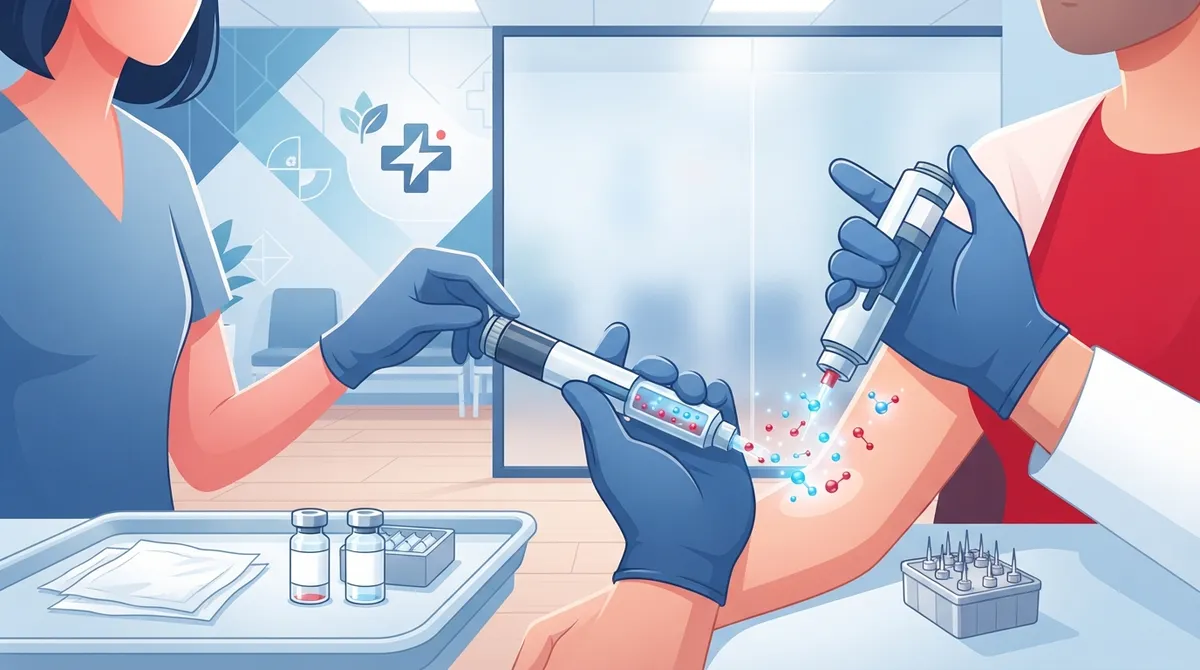
Peptide therapy is administered by the route listed for the specific medicine your clinician prescribes. Most commonly, that means a small injection under the skin. Some peptide medicines use other routes, such as oral tablets, nasal sprays, or topical products. A few are given by a healthcare professional in a clinic.
Here are the main routes you may hear about:
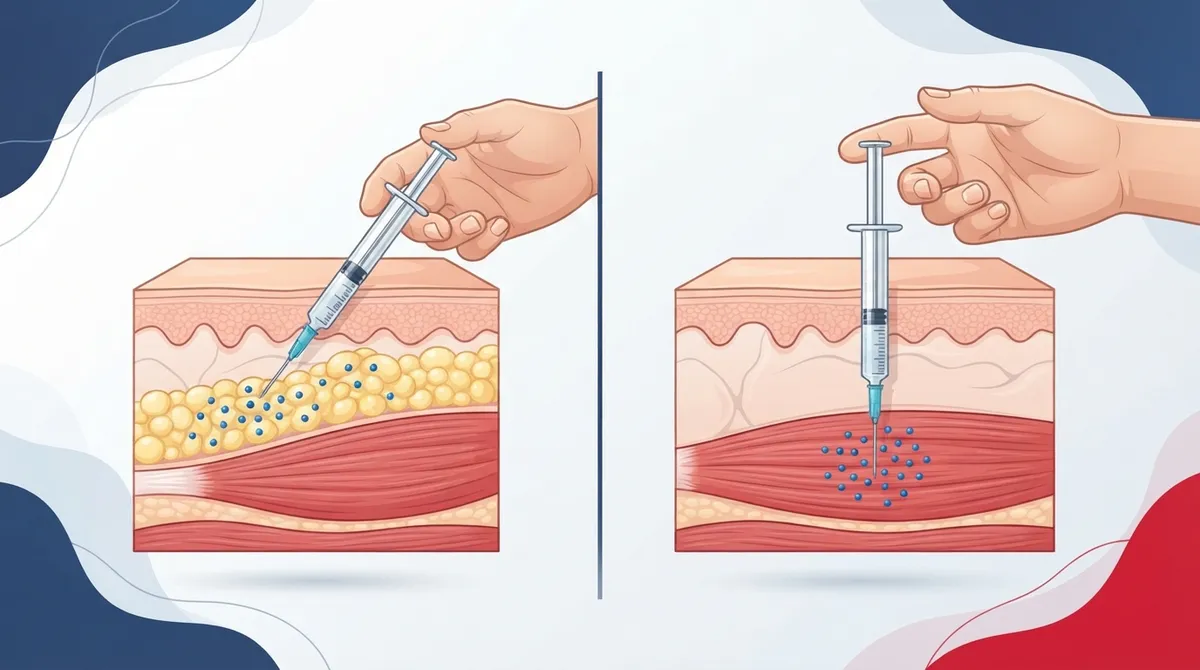
- Subcutaneous injection: A small needle places the medicine into the fat layer under the skin. This is the most common route for many injectable peptide medicines.
- Intramuscular injection: The medicine goes into muscle. It is less common and is usually given by a trained professional.
- Intravenous administration: The medicine enters a vein. This is done in a clinical setting.
- Oral: A pill or tablet taken by mouth. Oral semaglutide is one example of an FDA-approved peptide medicine with its own instructions.
- Nasal or topical: Sprays or creams for specific products, depending on the label.
No single route fits every peptide. Always follow the label and your prescriber's instructions, not a generic online protocol.
Subcutaneous vs. Intramuscular: Quick Comparison
Patients often ask about the difference between these two injection types. This table gives a simple overview.
|
Feature |
Subcutaneous |
Intramuscular |
|---|---|---|
|
Where it goes |
Fat layer under the skin |
Muscle tissue |
|
Needle size |
Usually short and thin |
Usually longer |
|
Who gives it |
Often the patient, after training |
Often a healthcare professional |
|
Common sites |
Abdomen, thigh, upper arm |
Thigh, upper arm, buttock |
|
Typical use |
Many pen and syringe peptide medicines |
Select medicines per label |
Your clinician will tell you which route applies to your medicine. Do not switch routes on your own.
15 Peptide Administration Mistakes to Avoid
1. Treating "Peptide Therapy" as One Standard Treatment
The biggest mistake is assuming all peptides work the same way. Each medicine has its own approved use, dose, schedule, and risks. A protocol that suits one product may be unsafe for another. Always ask which exact medicine you are being offered and what evidence supports it.
2. Skipping the Clinical Assessment
A good provider reviews your health history, current medicines, goals, and possible contraindications before prescribing anything. Skipping this step is risky. Your clinician should also check whether an evidence-based, FDA-approved option fits your needs first. Many patients start with a primary care visit to review these basics.
3. Buying "Research" Peptides Online
Products sold online as "research only" are not meant for human use. The FDA has raised safety concerns about certain unapproved peptides, including risks of immune reactions that vary by peptide and route. You cannot verify what is inside these vials. Talk with a licensed clinician before using any such product. You can learn more in our guide on non-FDA approved peptides in 2026.
4. Assuming Compounded Means Approved
Compounded drugs are not FDA-approved. The FDA does not review them for safety, effectiveness, or quality before they are marketed. The agency says compounding should generally be reserved for cases where a patient's medical need cannot be met by an approved drug. It is not a blanket substitute for an approved product.
5. Guessing the Dose From a Multidose Vial
This is a serious and well-documented problem. The FDA has warned about dosing errors with compounded injectable semaglutide. Patients measured doses from multidose vials or misread syringe units. Some cases led to hospitalization. If the dose or units are unclear, call your prescriber or pharmacist before you inject.
6. Skipping Injection Training
Many peptide medicines are self-injected under the skin. That is safe only after proper teaching. A clinician or pharmacist should show you how to use the pen or syringe, pick a site, and dispose of needles. Practice with supervision before your first home dose.
7. Never Rotating Injection Sites
Using the same spot again and again can irritate the skin and affect how the medicine is absorbed. Your care team will teach you how to rotate sites, such as moving between areas of the abdomen or thigh. Keep a simple log so you remember where your last dose went.
8. Reusing Needles or Sharing Pens
Needles and pens are single-patient items. Reusing a needle raises infection risk and can dull the tip. Sharing a pen can spread infections. Use a new needle each time and place used needles in an approved sharps container.
9. Storing the Medicine Incorrectly
Heat, light, and freezing can damage peptide medicines. Many need refrigeration before use. Others have different rules. Follow the exact storage instructions on your product label, and ask your pharmacist if you are unsure. Never use a vial that looks cloudy or discolored unless the label says that is normal.
10. Changing Dose or Schedule on Your Own
Dosing and titration are drug-specific. Some medicines start low and increase slowly over weeks. Others are given daily, and some weekly. Taking extra doses to speed up results can raise the risk of side effects. For example, our guide on semaglutide dosage steps shows why gradual, supervised adjustment matters.
11. Ignoring the Route on the Label
FDA materials note that peptides given by subcutaneous, intravenous, intramuscular, and similar routes carry greater immune-reaction risk than oral or rectal routes. This is a general risk, not a measured rate. It shows why you should never swap a route or mix products without medical advice.
12. Skipping Follow-Up and Monitoring
Good care does not end after the first injection. Your clinician should check your response, side effects, adherence, and relevant health measures. Follow-up visits help catch problems early. They also confirm the treatment is still right for you. Our wellness doctor guide explains what ongoing care looks like.
13. Overlooking Drug and Health Interactions
Peptide medicines can interact with other prescriptions, supplements, and health conditions. Tell your clinician about everything you take. Our article on prescription management tips can help you keep your medicine list organized.
14. Ignoring Warning Signs
Call your prescriber if you notice severe stomach pain, a spreading skin reaction, trouble breathing, swelling of the face, or a dose mix-up. For emergencies, seek urgent care right away. InCare offers urgent care for many same-day concerns, though true emergencies need 911.
15. Choosing Price Over Safety
The cheapest product is rarely the safest. Low prices often signal unverified sourcing or poor quality control. Ask where the medicine comes from, who prepares it, and how it is tested. A trustworthy clinic answers these questions openly.
What Safe Peptide Administration Looks Like
Safe care follows a clear sequence. Here is what you should expect from a quality provider:
- Medical review: Your clinician reviews your history, medicines, goals, and risks.
- Evidence check: They confirm whether an FDA-approved option fits your needs before considering anything else.
- Clear prescription: You receive the exact product, dose, route, and schedule in writing.
- Hands-on teaching: You learn how to prepare, inject, rotate sites, store, and dispose of supplies.
- Follow-up: You return for checks on response, side effects, and next steps.
If a provider skips any of these steps, that is a warning sign.
The Numbers Behind the Warnings
The FDA reported 605 adverse-event reports tied to compounded semaglutide and 545 tied to compounded tirzepatide as of July 31, 2025. These are reports only. They do not prove each drug caused each event, and they do not show how often problems occur. Still, they show why careful sourcing and clear dosing instructions matter.
Is Home or Clinic Administration Better?
It depends on the product. Some medicines are built for home use with a pen. Others need a clinician to give them. Even home injections work best when the first dose happens with a trained professional nearby. Telehealth can support follow-up, but the first teaching session should be thorough.
If you want to see how supervised care works for weight management, read about choosing the best injection for weight loss. For a broader look at peptides, see our overview of peptides.
Questions to Ask Before You Start
Bring this short list to your appointment:
- Is this medicine FDA-approved, compounded, or unapproved?
- What is the exact route, dose, and schedule?
- Will you teach me how to inject and store it?
- How will you monitor my progress and side effects?
- Who do I call if the dose is unclear?
A confident, honest provider welcomes these questions.
Why Patients Choose InCare for Peptide Guidance
InCare combines primary care, advanced wellness services, and modern technology under one roof. Our clinicians focus on prevention, personalized plans, and patient education. We serve patients in Tampa and Riverview, and we also offer virtual visits. Learn more about our approach in our guide to peptide therapy in Tampa. You can also follow our wellness tips on Instagram, Facebook, and TikTok. Curious what patients say? You can visit our InCare location on Google and read reviews from Tampa Bay families.
Conclusion
So, how is peptide therapy administered? Most often by a small injection under the skin, but the right route depends on the specific medicine. The best results come from avoiding the 15 mistakes above: buying unverified products, guessing doses, skipping training, and skipping follow-up. A licensed clinician should assess you, prescribe an evidence-based treatment, teach safe use, and monitor your progress.
Ready for a safe, personalized plan? Book your InCare appointment today or contact our team with any questions. Your health deserves expert guidance every step of the way.
FAQs
Q: How is peptide therapy administered?
A: The route depends on the specific medicine. Many peptide medicines are injected under the skin, while others are taken by mouth, nasal spray, or topical use. Your clinician prescribes the route, dose, and schedule based on the product label and your health needs.
Q: Are peptide therapy injections given at home or in a clinic?
A: Both are possible, depending on the product. Many subcutaneous peptide medicines can be self-injected at home after a clinician or pharmacist teaches you how. Some medicines must be given by a healthcare professional in a clinic.
Q: Are peptide therapy treatments FDA-approved?
A: Some peptide medicines are FDA-approved for specific uses, but many products marketed as peptide therapy are not. Compounded and unapproved peptides are not reviewed by the FDA for safety, effectiveness, or quality. Ask your clinician which category your treatment falls into.
Q: What are the risks of compounded peptide injections?
A: Risks include dosing errors, especially when measuring from multidose vials, and possible immune reactions that vary by peptide and route. The FDA has received adverse-event reports tied to compounded semaglutide and tirzepatide. Clear instructions and clinical monitoring help lower these risks.
Q: What should I ask my primary care provider before starting peptide therapy?
A: Ask whether the medicine is FDA-approved or compounded, what the exact dose and route are, and how you will be monitored. Also ask who will teach you to inject safely and who to call if the dose is unclear. A good provider answers these questions clearly.