

Key Takeaways
- Verify your provider's Florida medical license through the Florida Department of Health before booking—many 'peptide clinics' range from full medical practices to retail shops with minimal oversight.
- Distinguish between FDA-approved medications like semaglutide and tirzepatide versus unapproved peptides like BPC-157 and CJC-1295, which lack extensive clinical evidence and long-term safety data.
- Insist on full medical evaluation including health history review, current medications assessment, and lab testing before starting any peptide treatment—clinics that skip these steps are red flags.
- Ask which pharmacy prepares your medication and whether it's a state-licensed 503A or FDA-registered 503B facility, as compounding standards vary significantly and affect product quality.
- Choose integrated primary care clinics that combine peptide therapy with routine screenings and follow-up visits rather than standalone peptide shops that disappear after the first payment.
- Expect monthly costs between $200-$600 in Tampa and get complete pricing upfront including consultation fees, lab testing, and follow-up visit costs to avoid surprise bills.
Peptide clinics have grown fast across Tampa, Florida. Search directories now list dozens of options in the area. But not all peptide clinics offer the same level of safety, honesty, or medical oversight. Some patients end up with products that lack proper testing. Others get promised results that science cannot back up. If you are thinking about peptide therapy in Tampa, knowing what mistakes to avoid can protect your health and your wallet.
This guide walks through the most common errors people make when choosing a peptide clinic. It also explains what separates a responsible provider from one that puts profit ahead of patient safety. Whether you are exploring weight management support, recovery treatments, or general wellness optimization, understanding these pitfalls matters. Practices like InCare combine peptide-related care with full primary care oversight, which is exactly the kind of integrated model this article recommends.

Mistake 1: Assuming All Peptide Clinics Are Regulated the Same Way
Many patients believe every clinic offering peptides follows the same rules. That is not true. In Tampa, "peptide clinics" can range from full medical practices to wellness lounges with limited oversight. A directory search may show over 80 listings in the Tampa area alone, but this number reflects marketing listings, not a government registry of approved providers.
Some locations are staffed by licensed physicians who perform full evaluations. Others operate more like retail shops selling products with minimal medical review. Before booking an appointment, verify the clinician's license through the Florida Department of Health. This single step can save you from unnecessary risk.
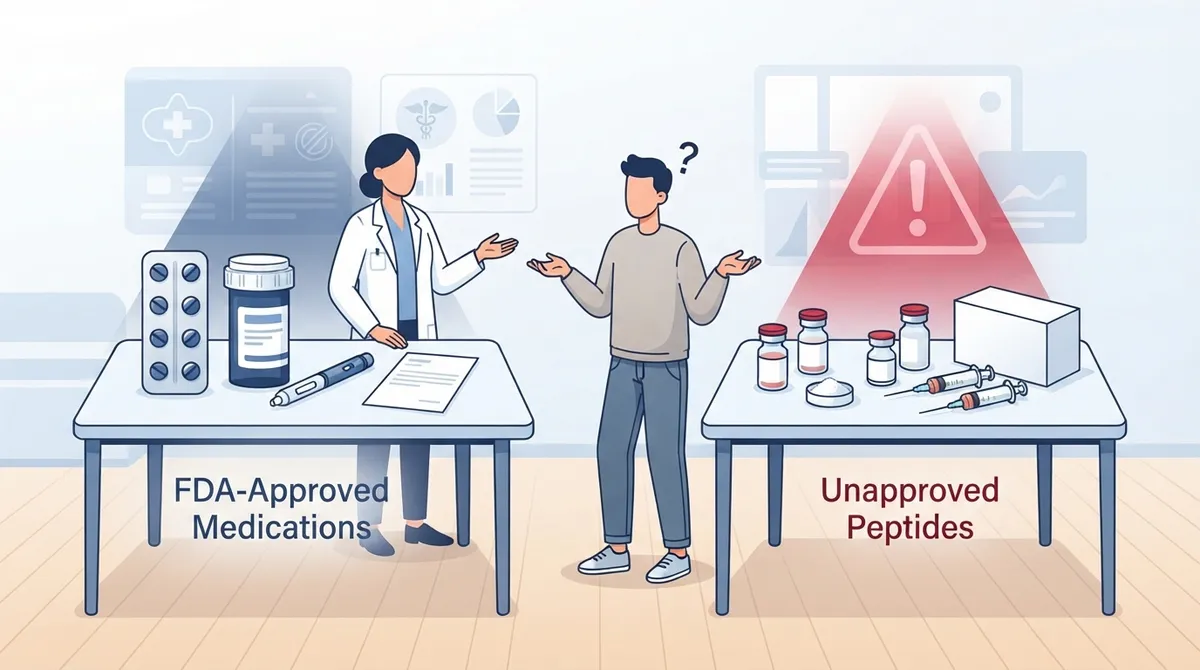
Mistake 2: Confusing FDA-Approved Medications With Unapproved Peptides
This is one of the biggest points of confusion in the peptide space. Medications like semaglutide and tirzepatide are FDA-approved prescription drugs for specific uses, including chronic weight management. These medications have gone through clinical trials and ongoing safety monitoring.
On the other hand, peptides such as BPC-157, CJC-1295, and ipamorelin are often marketed for anti-aging, muscle recovery, or fat loss. Many of these products are not FDA-approved for those purposes. Their purity, dosing accuracy, and long-term safety remain uncertain. If you're exploring medical weight loss options, ask specifically whether your treatment plan includes an approved medication or an unapproved compound.
Quick Comparison: Approved vs. Unapproved Peptide Products
|
Category |
FDA-Approved Medications |
Unapproved or Investigational Peptides |
|---|---|---|
|
Examples |
Semaglutide, Tirzepatide |
BPC-157, CJC-1295, Ipamorelin |
|
Regulatory Status |
Approved for specific indications |
Not approved for marketed uses |
|
Clinical Evidence |
Extensive trial data |
Limited or preliminary evidence |
|
Pharmacy Source |
Manufacturer-produced |
Often compounded |
|
Monitoring Standard |
Established protocols |
Varies by clinic |
Mistake 3: Skipping the Medical History and Lab Work
A responsible provider will never hand you a prescription without a real evaluation. This includes reviewing your medical history, current medications, and supplements. In many cases, lab testing is needed before starting any peptide-related treatment.
If a clinic skips this step and rushes you toward a purchase, that is a red flag. Quality primary care clinics, including those offering cancer screening and other preventive services, build treatment plans around your actual health data, not guesswork.
Mistake 4: Not Asking Where the Medication Comes From
Compounded medications are not the same as FDA-approved drugs. Compounding pharmacies fall into two categories: state-licensed 503A pharmacies and FDA-registered 503B outsourcing facilities. The 503B facilities follow current good manufacturing practices, while standard compounded products generally skip the FDA's full premarket safety review.
Before starting treatment, ask these questions:
- Which pharmacy prepares this medication?
- Is it a 503A or 503B facility?
- How is the product tested for purity and potency?
- What steps are taken if there's an adverse reaction?
A trustworthy clinic will answer these questions clearly and without hesitation.
Mistake 5: Ignoring Florida's Telehealth Requirements
Telehealth has made peptide therapy more accessible, but Florida has specific rules. Florida Statute 456.47 governs telehealth practice and has been in effect since July 2019. It requires providers to meet licensure and standard-of-care requirements, whether they are based in Florida or elsewhere.
If you're considering a virtual consultation, confirm the prescriber is either Florida-licensed or a properly registered out-of-state telehealth provider. InCare offers both in-person and local clinic visits across Tampa and Riverview, giving patients flexibility without sacrificing oversight.
Mistake 6: Believing Marketing Claims Without Question
Terms like "anti-aging," "fat-burning," and "cellular regeneration" sound appealing. But these phrases do not prove a product works. Marketing language is not the same as clinical evidence.
Be cautious of any clinic that:
- Promises guaranteed results
- Prescribes without a real evaluation
- Sells products labeled "for research use only"
- Avoids giving clear pricing or risk information
- Has no follow-up plan after your first visit
These warning signs often point to a business model built around sales, not patient care.
Mistake 7: Overlooking the Cost Differences Between Clinics
Pricing varies widely across Tampa. Commercial directories report monthly peptide program costs ranging from about $200 to $600, depending on the medication, dosage, and included lab work. Some clinics bundle consultation fees into memberships, while others charge separately for each visit.
Understanding the full cost structure before you commit helps avoid surprise bills. Ask about consultation fees, lab testing costs, and whether follow-up visits are included in your plan.
Mistake 8: Choosing a Clinic With No Follow-Up Care
Starting a peptide-related treatment is not a one-time event. Your provider should schedule follow-up visits to check how your body is responding. This includes reviewing side effects, adjusting doses, and confirming the treatment still makes sense for your goals.
A clinic that disappears after your first payment is not providing real medical care. Look for practices that treat peptide therapy as part of ongoing primary care, not a standalone product sale.
Mistake 9: Forgetting to Ask About Side Effects and Contraindications
Every medication carries some risk. GLP-1 medications like semaglutide and tirzepatide can cause nausea, digestive changes, or other side effects. Some patients should avoid these medications entirely based on personal or family medical history.
Unapproved peptides carry additional uncertainty since their side effect profiles are not as well documented. Before starting any treatment, ask your provider to walk through possible risks and how they would be managed.
Mistake 10: Letting Peptide Therapy Replace Routine Primary Care
Peptide treatments should support your overall health plan, not replace it. Routine screenings, blood pressure checks, cholesterol monitoring, and mental health care remain essential. A good wellness plan integrates peptide-related treatments with these established practices rather than substituting one for the other.
This is where a full-service clinic makes a difference. Instead of visiting a stand-alone peptide shop, patients can combine treatments with experienced provider oversight and complete body composition tracking for a clearer picture of progress.
Mistake 11: Not Verifying the Clinic's Physical Location and Licensing
Some online peptide sellers operate without any physical clinic presence in Florida. This makes it harder to verify credentials or seek in-person follow-up care. Tampa residents benefit from choosing clinics with an established local presence, such as those with offices in both Tampa and Riverview.
You can check patient feedback and satisfaction directly. For example, you can visit us on Google — InCare to see real reviews from patients who have used local primary care and wellness services.
Mistake 12: Overlooking DNA and Metabolic Testing Options
Peptide therapy works best when paired with a full understanding of your body's baseline. Services like DNA gene testing and metabolic breath analysis give providers more accurate data to guide treatment decisions. Skipping these tools means your provider is working with less information, which can affect the quality of your care plan.
Mistake 13: Assuming All Clinics Offer the Same Level of Technology
Wellness clinics differ in the tools they use to track progress. Some rely on basic scales and estimates. Others use advanced body composition analysis and lab-based monitoring to measure real change over time. If a clinic cannot show you data-driven progress tracking, it may be harder to know if your treatment is actually working.
Mistake 14: Not Asking About Long-Term Support and Lifestyle Guidance
Peptide therapy is not a stand-alone fix. Nutrition, physical activity, and sleep all affect results. A responsible clinic will discuss these factors alongside any medication or peptide-related treatment. If a provider never mentions lifestyle support, that's a sign the plan may be incomplete.
Checklist Before Starting Peptide Therapy in Tampa
- Confirm the provider's Florida license
- Ask if the medication is FDA-approved or compounded
- Request full pricing details upfront
- Ask about lab testing requirements
- Confirm follow-up visit schedules
- Discuss lifestyle factors like diet and exercise
- Verify the pharmacy source and quality standards
Following this checklist can help you avoid the most common problems patients face when exploring peptide-related treatments in Tampa.
Why Integrated Primary Care Matters More Than a Standalone Peptide Shop
Choosing a clinic that combines peptide-related services with full primary care creates a safer, more complete experience. This approach allows your provider to see the full picture, from routine screenings to specialized wellness programs like IV hydration therapy and hair restoration treatments. It also means any medication decisions are made with your complete health history in mind, not just your immediate request.
InCare has built its reputation in Tampa and Riverview around this integrated model. Patients can follow the clinic's updates and patient stories on Facebook, Instagram, and TikTok for a closer look at how the practice approaches whole-body wellness.
Final Thoughts on Choosing a Peptide Clinic in Tampa
Peptide therapy can play a role in a broader wellness plan, but only when handled with care. Avoiding these 14 mistakes puts you in a stronger position to make informed decisions. Always verify credentials, ask direct questions, and choose a provider who treats your safety as the top priority.
If you're ready to explore peptide-related treatments alongside comprehensive primary care in Tampa or Riverview, our team is here to help you build a plan that fits your goals safely. Schedule your appointment today or reach out to our team with any questions about your care options.
FAQs
Q: What do peptide clinics in Tampa, FL treat?
A: Peptide clinics in Tampa commonly support weight management, hormone care, recovery, and general wellness goals. Treatments often include FDA-approved medications like semaglutide, along with other peptides marketed for anti-aging or metabolic support that may lack full FDA approval for those uses.
Q: Are peptide injections legal and safe in Florida?
A: FDA-approved peptide medications are legal when prescribed by a licensed provider after proper evaluation. Many other peptides sold for anti-aging or performance purposes are not FDA-approved for those uses, so their safety and effectiveness remain less certain.
Q: Do Tampa peptide clinics prescribe semaglutide or tirzepatide for weight loss?
A: Yes, many Tampa clinics prescribe these FDA-approved medications for chronic weight management after a clinical evaluation. These medications should only be used under medical supervision, with monitoring for side effects and contraindications.
Q: What is the difference between FDA-approved peptide medications and compounded peptides?
A: FDA-approved medications undergo strict premarket testing for safety and effectiveness. Compounded peptides are prepared by pharmacies and do not go through this same review process, which means quality and purity can vary between providers.
Q: How much does peptide therapy cost in Tampa, Florida?
A: Monthly costs for peptide-related programs in Tampa commonly range from about $200 to $600, depending on the medication, required lab work, and clinic pricing structure. Always ask for a full cost breakdown before starting treatment.