
Key Takeaways
- GHK-Cu topical products show promise in small human studies for collagen support and wrinkle reduction, but sample sizes remain too small to draw firm conclusions—larger, independently conducted trials are needed before marketing claims can be validated.
- GHK-Cu is sold as a cosmetic ingredient without FDA approval as a drug, meaning manufacturers can legally market it without proving therapeutic benefits; view it as an optional skincare product, not a proven medical treatment.
- For wounds, diabetic ulcers, or slow-healing sores, GHK-Cu should not replace standard medical care—a Phase 2 clinical trial is still evaluating its wound-healing efficacy, confirming it remains an open scientific question.
- Most people tolerate topical GHK-Cu well; patch test first and space it away from vitamin C or strong acids to avoid reduced effectiveness or irritation, and discuss use with your provider if you have sensitive skin or copper sensitivities.
Copper peptide serums have become a common talking point at wellness visits across Tampa and Riverview. Patients want to know if GHK-Cu topical products truly support skin health, or if the claims outpace the science. This guide breaks down what current research actually shows, so you can make an informed decision before adding this ingredient to your routine.
GHK-Cu, also called copper tripeptide-1, shows up in serums, creams, and post-procedure skincare lines. It has generated real interest among people focused on prevention and whole-body wellness. But separating cosmetic marketing from clinical evidence takes a closer look. Below are 14 facts that explain what GHK-Cu topical products can and cannot do, backed by the latest research available in 2026.
1. GHK-Cu Is a Naturally Occurring Copper Peptide
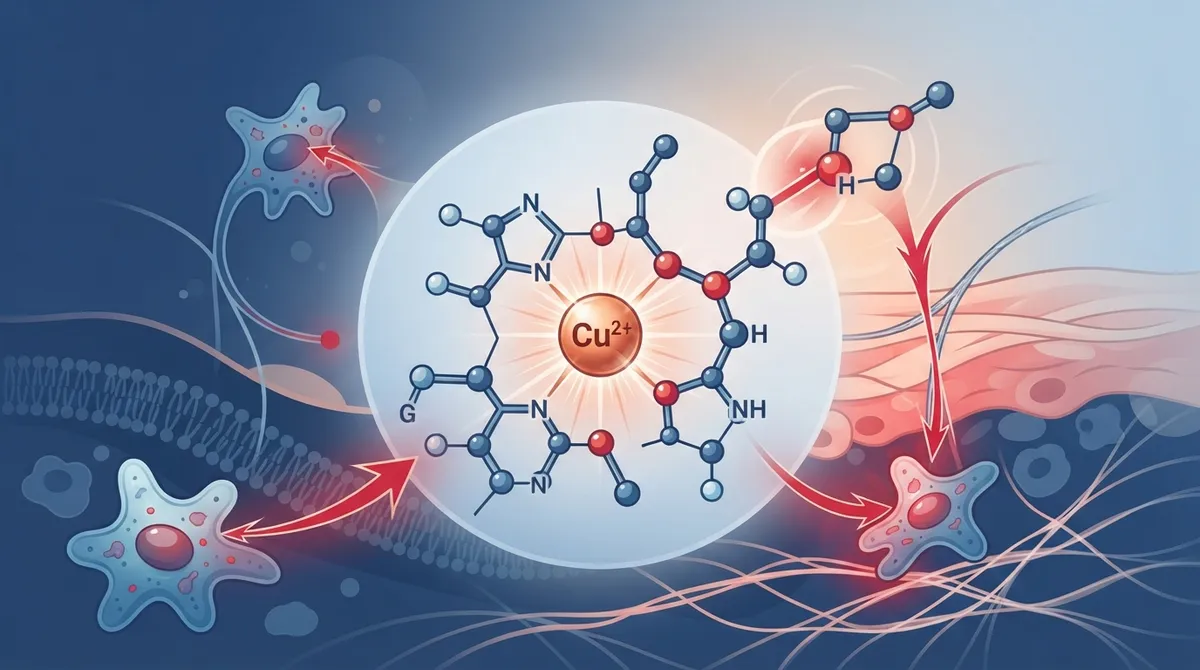
GHK-Cu stands for glycyl-L-histidyl-L-lysine bound to copper (Cu2+). This tripeptide occurs naturally in the human body, though levels decline with age. In skincare, manufacturers isolate and concentrate this peptide for use in serums and creams.
2. It Is Mainly Sold as a Cosmetic Ingredient
Topical GHK-Cu is primarily marketed as a cosmetic skincare ingredient, not a prescription drug. You will find it in anti-aging serums, moisturizers, and products designed for use after cosmetic procedures. This distinction matters because cosmetics and drugs face very different regulatory standards.
3. Proposed Benefits Focus on Skin Repair and Collagen Support
Researchers have studied GHK-Cu for its potential role in several skin processes. Proposed effects include:
- Supporting extracellular-matrix activity in the skin
- Encouraging collagen and elastin production
- Assisting general skin repair processes
- Boosting antioxidant defenses
- Helping modulate inflammation
Most of these mechanisms come from laboratory and animal studies rather than large human trials. That gap is important for setting realistic expectations.
4. Small Human Studies Show Some Promise
A few small studies have tested GHK-Cu on human skin. One randomized, double-blind study followed 40 women aged 40 to 65 who used a lipid-encapsulated GHK-Cu preparation twice daily for 8 weeks. Researchers tracked changes in collagen, elastin, matrix-metalloproteinase activity, and wrinkle depth.
5. A Larger Trial Compared GHK-Cu to Other Anti-Aging Ingredients
A randomized clinical study involving 67 women with moderate-to-severe facial aging compared topical GHK-Cu against vitamin C, melatonin, and tretinoin over 12 weeks. The collagen-related findings were encouraging but need confirmation in larger, independently run trials before firm conclusions can be drawn.
6. Study Sizes Remain Small Across the Board
Nearly all human research on GHK-Cu topical products involves a small number of participants. This limits how confidently results can be applied to the general population. Larger, well-designed studies are still needed to confirm early findings.
Why Sample Size Matters
Small studies can produce results that don't hold up when repeated in bigger groups. This is a common challenge in cosmetic ingredient research, not unique to GHK-Cu. Patients should keep this limitation in mind when reading marketing claims.
7. A 2006 Laser Study Found Mixed Results
A notable study published on PubMed tested GHK-Cu-containing products after carbon-dioxide laser resurfacing. Only 13 participants completed the study. Researchers found no statistically significant objective improvement in erythema, wrinkles, or overall skin quality compared to controls. However, patients using GHK-Cu reported higher satisfaction with their results.
8. GHK-Cu Is Not FDA-Approved as a Drug
No FDA-approved GHK-Cu drug product exists for a specific human therapeutic indication as of 2026. Cosmetics generally do not require premarket approval in the United States. That means a company can legally sell a GHK-Cu serum without proving it treats any medical condition.
9. Wound Healing Research Is Still Developing
Laboratory and animal studies have reported effects on wound contraction, fibroblast activity, blood vessel formation, and tissue regeneration at physiological concentrations. These findings are interesting, but they cannot be directly translated into guaranteed benefits for human patients.
10. A Phase 2 Clinical Trial Is Underway
A clinical trial listed on ClinicalTrials.gov is evaluating a topical GHK-Cu gel for standardized acute skin wounds in healthy adults. This Phase 2 study aims to assess safety and healing speed. Its existence shows that wound-healing efficacy for GHK-Cu remains an open scientific question, not a settled fact.
11. GHK-Cu Should Not Replace Standard Wound Care
Patients with open wounds, diabetic ulcers, burns, or surgical incisions need proper medical evaluation. GHK-Cu topical products are not a substitute for evidence-based wound care. If you have a wound that is not healing properly, seek prompt attention through urgent care or a scheduled visit with your primary care provider.
12. Skin Tolerance Varies From Person to Person
Most people tolerate topical GHK-Cu well, but reactions can happen. Before adding any new serum to your routine, consider these steps:
- Patch test the product on a small area of skin first
- Wait 24 to 48 hours to check for redness or irritation
- Start with a lower frequency of use, such as every other day
- Watch for signs of sensitivity, especially if you have eczema or rosacea
- Discuss the product with a healthcare provider if you have sensitive or reactive skin
People with known copper sensitivities or active skin conditions should talk to a clinician before starting any new topical product.
13. GHK-Cu Differs From Injectable Copper Peptides
Topical GHK-Cu products are applied directly to the skin surface. Injectable copper peptide formulations work differently and are handled under separate clinical protocols. The two forms are not interchangeable, and their safety profiles, absorption, and intended uses are distinct.
14. It Can Be Combined With Other Skincare Ingredients, With Caution
Many patients ask whether GHK-Cu topical products can be layered with retinol, vitamin C, other peptides, or exfoliating acids. In general, GHK-Cu is considered compatible with most skincare ingredients, but combining it with strong acids or high-concentration vitamin C in the same routine may reduce effectiveness or increase irritation. Spacing out application times, such as using vitamin C in the morning and GHK-Cu at night, is a common approach.
Comparing GHK-Cu Topical Claims to Current Evidence
The table below summarizes common claims about GHK-Cu topical products next to what current research actually supports.
|
Common Claim |
What Research Shows |
Confidence Level |
|---|---|---|
|
Increases collagen production |
Suggested in small trials; needs larger confirmation |
Low to Moderate |
|
Reduces fine lines and wrinkles |
Some improvement reported in small studies |
Low to Moderate |
|
Speeds up wound healing |
Promising in lab/animal studies; Phase 2 human trial ongoing |
Low |
|
Improves skin texture and laxity |
Reported in small human studies |
Low to Moderate |
|
FDA-approved for medical treatment |
Not established; sold as cosmetic ingredient only |
Not Supported |
|
Safe for daily use |
Generally well tolerated in studied populations |
Moderate |
How to Approach GHK-Cu Topical Products Responsibly
Whether you are exploring GHK-Cu for cosmetic reasons or general skin support, a measured approach works best. Consider the following:
- View GHK-Cu as an optional cosmetic ingredient, not a proven medical treatment
- Choose products from reputable manufacturers with transparent ingredient sourcing
- Set realistic expectations based on small-study evidence, not marketing language
- Bring up any skincare questions during your next wellness visit
- Seek medical evaluation for any wound, rash, or skin condition that concerns you
At InCare, our team in Tampa and Riverview helps patients sort through wellness trends with clear, evidence-based guidance. Whether you are curious about topical peptides, DNA gene testing, or broader skin and body optimization goals, our providers can help you separate hype from science.
When to Talk to a Primary Care Provider
Not every skin question needs a specialist visit. Many concerns can be addressed during a routine primary care appointment. Bring up topical GHK-Cu products if you:
- Have sensitive skin or a history of allergic reactions
- Are managing a chronic skin condition like eczema or psoriasis
- Have an open wound, surgical incision, or slow-healing sore
- Want guidance on layering new products with existing prescriptions
- Are considering GHK-Cu alongside other wellness services like IV hydration therapy
Our providers, including those featured on our providers page, can help you weigh the evidence and decide what fits your skin and health goals.
The Bottom Line on GHK-Cu Topical Products
GHK-Cu topical serums carry an interesting research history, but the evidence remains limited. Small human studies suggest possible benefits for collagen support and skin texture. Wound healing research is still in early clinical stages, including an active Phase 2 trial. None of this evidence supports treating GHK-Cu as a replacement for standard medical care.
If you are exploring wellness options and want an honest conversation about what works, our team is ready to help. Learn more about our approach to preventive care by following us on Facebook, Instagram, or TikTok. You can also visit us on Google — InCare to read reviews from patients in Tampa and Riverview.
Ready to talk through your skin and wellness goals with a trusted provider? Book your appointment today and get personalized, evidence-based guidance from the InCare team.
FAQs
Q: What is topical GHK-Cu and how does it work?
A: Topical GHK-Cu is a copper peptide applied to the skin in serums and creams. Laboratory research suggests it may support collagen production, antioxidant defenses, and skin repair processes, though large human trials confirming these effects are still limited.
Q: Does GHK-Cu topical serum increase collagen or reduce wrinkles?
A: Small human studies have reported improvements in collagen-related measures and wrinkle appearance after regular use. However, sample sizes are small and results need confirmation in larger, independently conducted trials before firm conclusions can be made.
Q: Is topical GHK-Cu FDA approved?
A: No FDA-approved GHK-Cu drug product exists for a specific therapeutic indication. It is sold as a cosmetic ingredient, and cosmetics generally do not require FDA premarket approval in the United States.
Q: Can topical GHK-Cu help with wounds, scars, or surgical incisions?
A: Experimental research shows promising effects on wound contraction and tissue repair in lab and animal studies, and a Phase 2 human trial is currently evaluating acute wound healing. Despite this, GHK-Cu should not replace standard medical wound care for serious or slow-healing wounds.
Q: Can GHK-Cu be used with retinol, vitamin C, or other peptides?
A: GHK-Cu is generally considered compatible with most skincare ingredients, though pairing it with strong acids or high-concentration vitamin C in the same application may reduce effectiveness. Many people separate these ingredients by using them at different times of day.