

Key Takeaways
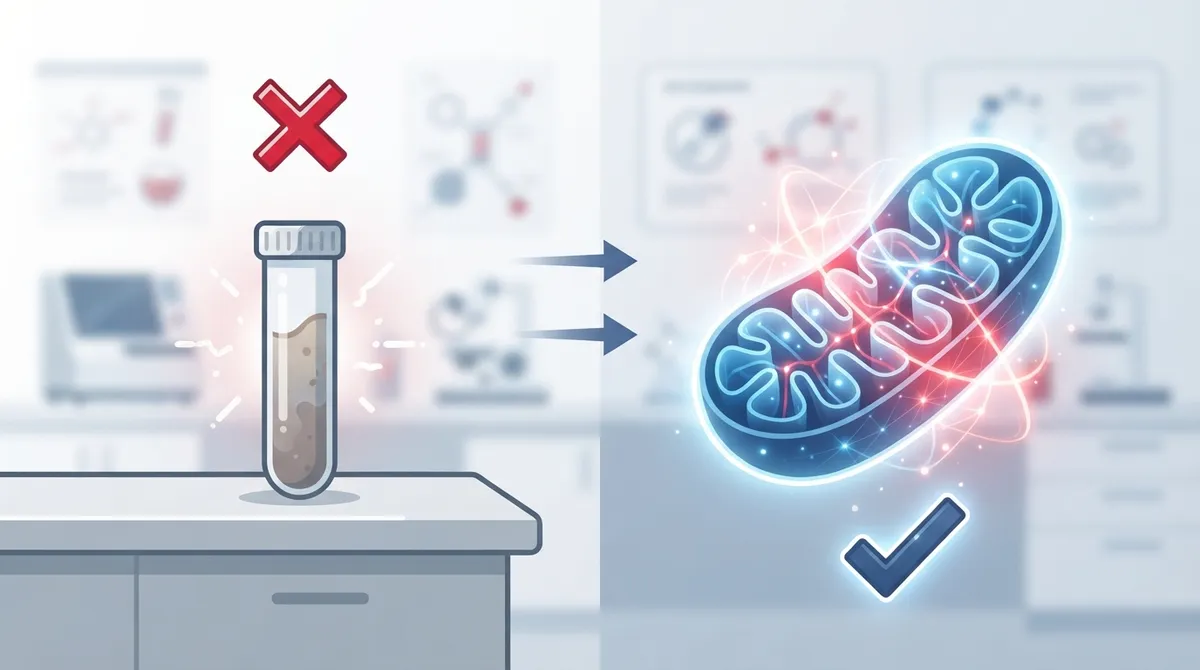
- Clinical mitochondrial disease evaluation and wellness measurements like RMR or DEXA are different: RMR and DEXA cannot diagnose mitochondrial disease or measure mitochondrial function.
- A symptom and history conversation with a clinician should come before any test, since results only gain meaning when interpreted alongside symptoms and family history.
- Rule out common causes of fatigue first, such as thyroid problems, anemia, sleep apnea, low vitamin levels, depression, and medication effects.
- Lactate is a screening clue only: elevated levels are not specific to mitochondrial disease, and a normal result does not rule it out.
- A normal test does not end the question if symptoms persist; ask your physician about next steps such as specialist referral or further testing.
- Biopsy is not routinely required; evaluations usually start with blood, urine, and genetic testing, with biopsy considered only when suspicion remains unresolved.
Few topics in modern wellness generate as much confusion as mitochondrial health testing in Tampa. Search online and you will find clinical genetic panels, metabolic breath tests, body scans, and supplement quizzes, all promoted under the same phrase. These tests do not measure the same things, and they do not answer the same questions.
The stakes are real. A patient may spend money on a test that cannot answer their question, or skip a medical evaluation that their symptoms deserve. Others may assume a wellness number proves something it does not.
This guide walks through 13 common mistakes people make when they pursue mitochondrial health testing in Tampa. You will learn what these tests can and cannot show, when a physician should lead the process, and how primary care fits in. If you are a busy professional, a young parent, or a health-minded explorer, the goal is the same: spend your time and money on the right test for the right reason.

Understanding What Mitochondrial Health Testing Really Means
Mitochondria are the structures inside your cells that turn food and oxygen into usable energy. Because nearly every organ depends on them, the phrase "mitochondrial health" gets applied to very different goals.
In practice, mitochondrial health testing in Tampa can mean one of two separate things:
- Clinical evaluation: A medical workup for suspected inherited mitochondrial disease, guided by symptoms, family history, and specialist interpretation of biochemical and genetic results.
- Wellness-oriented measurement: Tools such as resting metabolic rate (RMR) testing and body composition scans that describe how your body uses energy and where it stores fat and muscle.
These two paths are not interchangeable. An RMR test or a DEXA scan does not diagnose mitochondrial disease. Keeping that distinction clear prevents most of the mistakes below.
|
Test Type |
What It Measures |
Can It Diagnose Mitochondrial Disease? |
|---|---|---|
|
Lactate and pyruvate (blood) |
Clues about energy metabolism |
No. It is a screening clue only |
|
Genetic testing (mtDNA and nuclear genes) |
Inherited variants linked to mitochondrial disorders |
Central to many diagnoses, with specialist review |
|
Amino acids, acylcarnitines, urine organic acids |
Metabolic patterns that support or question a suspicion |
Supportive only |
|
Resting metabolic rate (RMR) |
Calories burned at rest |
No |
|
DEXA body composition |
Fat, lean mass, and bone density |
No |
Mistake 1: Assuming Every Test Called "Mitochondrial" Is Diagnostic
Marketing language often blurs the line between wellness data and medical diagnosis. A report with the word "mitochondrial" in the title is not automatically a clinical test. Ask who ordered it, what it measures directly, and who will interpret it. If the answers are vague, treat the result as general wellness information at best.
Mistake 2: Treating an RMR or DEXA Result as Proof of Mitochondrial Function
RMR shows how much energy your body uses at rest. DEXA shows body composition. Both are useful for weight management and fitness planning. Neither measures mitochondrial function or detects mitochondrial disease.
A Tampa listing has surfaced for DEXA and RMR testing on West Kennedy Boulevard, arranged through a third-party health company. Services like this can be helpful for tracking body composition. Confirm current availability, ordering requirements, and exactly what the service measures before you book.
If you want metabolism data interpreted within a broader care plan, InCare offers metabolic breath analysis and body composition testing alongside physician guidance.
Mistake 3: Skipping the Symptom and History Conversation
A clinician typically starts with your symptoms, medical history, family history, and a physical exam. Testing comes after that conversation, not before it. Many people jump straight to a lab order and miss the step that gives the results meaning.
Symptoms that deserve medical attention include progressive problems affecting several body systems. Examples include:
- Muscle weakness or exercise intolerance that keeps worsening
- Neurologic symptoms such as seizures, balance trouble, or developmental delays
- Heart rhythm or heart muscle concerns
- Hearing or vision changes
- Endocrine problems such as early-onset diabetes
A primary care visit is the right place to sort these out. Learn more about what a primary care physician does in Tampa before your first appointment.
Mistake 4: Ignoring Other Common Causes of Fatigue
Tiredness is the most common reason people look into mitochondrial health testing in Tampa. Yet fatigue has many everyday causes. Thyroid problems, anemia, sleep apnea, low vitamin levels, depression, hormone imbalance, and medication effects all come first on a careful workup.
A good clinician rules out these causes before suggesting specialized testing. Starting with a complete evaluation is faster, cheaper, and more likely to reveal the real answer. InCare's primary care team can order the foundational labs and review them with you in one place.
Mistake 5: Relying on a Single Lactate Result
Lactate is one of the most discussed markers in this field, and also one of the most misunderstood. Elevated lactate is not specific to mitochondrial disease. A normal lactate does not rule it out either.
Collection and handling also matter. Lactate results can be affected by how the sample is drawn and processed. For context, GeneReviews notes that a fasting plasma lactate above 3 mmol/L can support suspicion in the right clinical setting, but it is a clue, not a verdict. Results always need interpretation alongside your symptoms and other tests.
Mistake 6: Believing a Normal Result Means You Are in the Clear
The reverse error is just as common. A single normal blood test does not close the question if symptoms persist. Mitochondrial disorders can be difficult to detect, and specialists sometimes consider additional tests or another tissue sample when blood testing is negative but suspicion remains.
If your symptoms continue despite reassuring labs, return to your physician and ask about next steps rather than assuming nothing is wrong.
Mistake 7: Expecting a Muscle Biopsy Every Time
Many people fear that testing automatically means a muscle biopsy. That is not the case. A biopsy is not routinely required. Specialists may consider it when genetic and biochemical testing has not resolved a strong clinical suspicion, or when tissue-specific testing is needed.
Understanding this can reduce anxiety about the process. The path usually begins with a conversation, blood and urine studies, and genetic analysis when appropriate.
Mistake 8: Overlooking the Role of Genetic Testing
Genetic testing is central to establishing many mitochondrial disease diagnoses. Depending on the clinical picture, it may include mitochondrial DNA sequencing and analysis of nuclear genes. These results are complex and should be reviewed by a clinician or genetic specialist who understands the limits of each panel.
For general wellness and prevention goals, personalized insights are also available through DNA gene testing at InCare. Keep in mind that a wellness gene report is different from a clinical mitochondrial panel ordered to answer a specific medical question.
Mistake 9: Confusing a Lab Draw Site With a Mitochondrial Clinic
Tampa has many laboratory collection locations. Collecting a sample is not the same as evaluating a patient, ordering the right panel, and interpreting the findings. A draw site follows an order; it does not decide which tests make sense for you.
Before you go to any lab, confirm that a clinician has ordered the appropriate tests and will review the results with you. Ask who will explain the numbers and what the follow-up plan looks like.
Mistake 10: Delaying a Specialist Referral When Symptoms Point That Way
Primary care is the starting point, not always the finish line. Progressive, multi-system problems may warrant referral to a neurologist, geneticist, or mitochondrial disease specialist. Waiting too long can delay answers that matter, especially for children and young adults with developmental or neurologic concerns.
A primary care physician can coordinate this referral and keep your care connected. This is one reason many families prefer a single trusted practice. You can read more about the benefits of coordinated care versus fragmented care.
Mistake 11: Buying Supplements Before Getting Answers
The internet is full of products promising to "boost your mitochondria." Many people purchase them before they have any data about their own health. Supplements are not a substitute for evaluation, and some can interact with medications or mask symptoms.
Talk with your physician first. A clinician can check for deficiencies, review your current medications, and recommend only what fits your needs.
Mistake 12: Overlooking Lifestyle Foundations
Even when no disease is present, daily habits strongly influence how your body produces and uses energy. Consider these basics:
- Sleep: Consistent, adequate sleep supports recovery and metabolism.
- Movement: Regular aerobic and strength training improves energy use.
- Nutrition: Balanced meals with enough protein, fiber, and micronutrients support steady energy.
- Stress management: Chronic stress can drain energy and disrupt sleep.
- Medical follow-up: Annual checkups catch problems early.
These steps are not glamorous, but they often deliver the largest return. For a full picture of what a yearly visit covers, see what happens during an annual physical exam.
Mistake 13: Choosing a Provider Without Checking Their Approach
Not every practice approaches testing the same way. Look for a provider that explains the purpose of each test, is honest about its limits, and ties results to a clear action plan. Be cautious about promises of dramatic results from a single panel.
InCare is a personalized healthcare clinic in Tampa and Riverview that blends advanced technology with medical expertise. The team offers primary care, cancer screening, weight management, and advanced wellness services, with a focus on prevention and whole-body optimization. Patients can see why others trust the practice by reading reviews on Google for our InCare Tampa location.
How to Approach Mitochondrial Health Testing in Tampa: A Step-by-Step Plan
If you are considering testing, follow this simple order:
- Define your goal. Are you investigating unexplained symptoms, or optimizing fitness and weight?
- Book a primary care visit. Share symptoms, history, and family background.
- Complete foundational labs. Rule out common causes first.
- Match the test to the question. Clinical testing for medical concerns; wellness tools for performance and body composition.
- Request clear interpretation. Ask how results will change your care.
- Follow up. Retest or refer only when it serves a purpose.
Who Benefits Most From a Primary Care-Led Approach
Different readers come to this topic with different needs:
- Busy families: A single practice can evaluate fatigue, order labs, and coordinate referrals without extra runaround.
- Tech-savvy professionals: Data from metabolic and body composition tools becomes more useful when a physician connects it to a plan.
- Wellness-focused adults: Preventive screening and personalized guidance help you act on numbers instead of just collecting them.
- Young adults and women new to primary care: A whole-body visit establishes a baseline and a trusted point of contact.
You can also follow practice updates on Instagram and Facebook, or watch short wellness videos on TikTok.
Final Thoughts: Test With a Purpose
Mitochondrial health testing in Tampa works best when the test matches the question. Clinical evaluation belongs with physicians and specialists who can interpret biochemical and genetic data. Wellness tools like RMR and body composition scans can inform fitness and weight goals, but they should never be treated as a diagnosis.
The safest first step is a conversation with a clinician who listens, rules out common causes, and guides you to the right next test. Ready to start? Book your appointment with InCare or contact our team to talk through your symptoms and goals.
FAQs
Q: What does mitochondrial health testing measure?
A: It depends on the purpose. Clinical testing for suspected mitochondrial disease may include blood and urine metabolic studies and genetic analysis. Wellness-oriented testing, such as RMR and body composition scans, measures energy use and body makeup but does not diagnose mitochondrial disease.
Q: Can a primary care doctor order mitochondrial disease tests?
A: A primary care physician can begin the evaluation by reviewing symptoms, history, and exam findings, and by ordering initial labs. When mitochondrial disease is suspected, the clinician typically coordinates referral to a neurologist, geneticist, or mitochondrial disease specialist for further testing and interpretation.
Q: Does a normal lactate test rule out mitochondrial disease?
A: No. Lactate is a screening clue, not a stand-alone diagnosis. A normal result does not exclude mitochondrial disease, and an elevated result is not specific to it. Results must be interpreted within the full clinical picture.
Q: Is an RMR test or DEXA scan a mitochondrial health test?
A: No. RMR estimates calories burned at rest and DEXA measures body composition. Both can support weight and fitness planning, but neither diagnoses mitochondrial disease or directly measures mitochondrial function.
Q: Does mitochondrial testing require a muscle biopsy?
A: Not automatically. Specialists may consider a tissue biopsy when genetic and biochemical testing has not resolved a strong clinical suspicion, or when tissue-specific testing is needed. Many evaluations rely on blood, urine, and genetic testing first.