
Key Takeaways
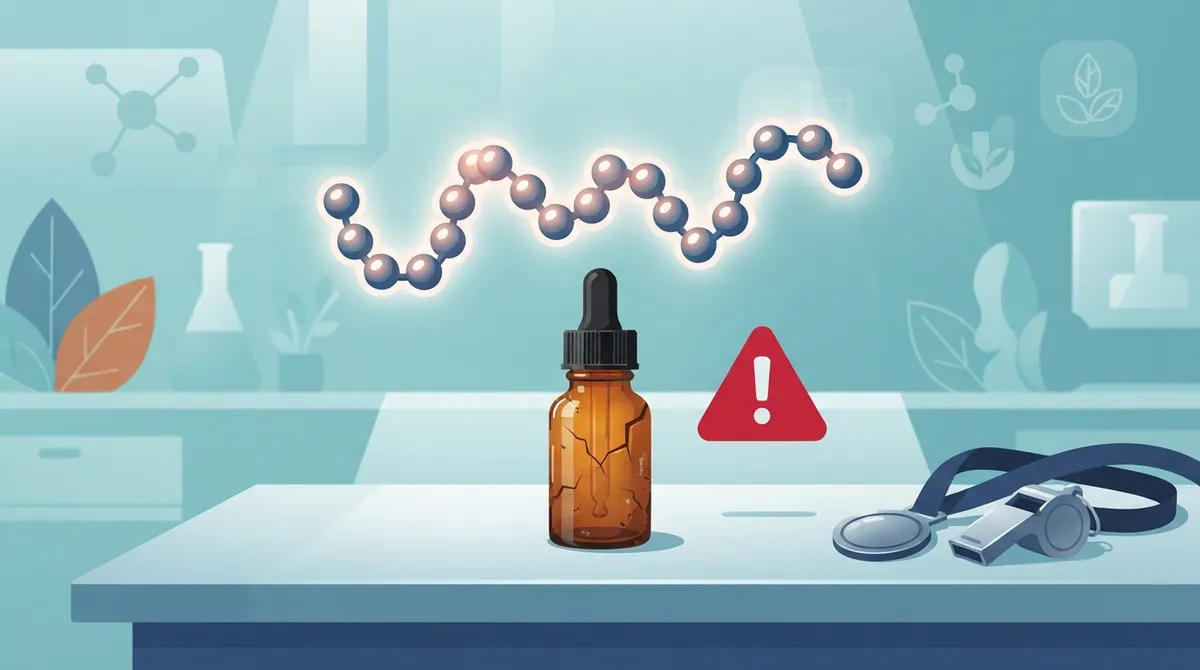
- BPC-157 is a lab-made 15-amino-acid peptide with mostly animal research and very little human evidence; it is not FDA-approved for any condition.
- A 2026 systematic review found only three small, uncontrolled human studies totaling 30 people, rated very low certainty, so safety and benefit are unproven.
- Products sold as research chemicals may have wrong doses, contamination, or impurities, so buying online carries real health risks.
- Injectable peptides bypass natural defenses; seek medical care right away for spreading redness, fever, hives, trouble breathing, or pus after an injection.
- BPC-157 is prohibited for athletes under the WADA 2026 Prohibited List (category S0), effective January 1, 2026.
- Proven recovery steps such as proper diagnosis, physical therapy, adequate sleep and protein, and gradual training increases are better supported than BPC-157.
If you have scrolled through wellness social media lately, you have probably seen BPC-157 promoted as a recovery shortcut. So, what is BPC-157, and does it deserve the buzz? The short answer is that it is an experimental peptide with a lot of hype and very little proof in humans.
In this guide, we explain what BPC-157 is, what the research really shows, and what safety and legal questions remain in 2026. We keep the language simple and stick to the evidence. Whether you are a busy parent, a fitness-minded professional, or a young adult curious about wellness trends, these 13 facts will help you ask smarter questions. Your primary care clinician is the best partner for that conversation.

1. What Is BPC-157?
BPC-157, short for Body Protection Compound-157, is a synthetic peptide made of 15 amino acids. Peptides are short chains of amino acids, the building blocks of proteins. Many peptides are well-known medicines, but that does not mean every peptide is safe or proven.
So when people ask what BPC-157 is, the most accurate answer is this: it is a lab-made compound studied mostly in animals and promoted in wellness settings for healing and recovery. It is not an approved medicine. For a broader introduction, see What Is BPC-157 and Why Are Clinics Buzzing About It?
2. What Is BPC-157 Claimed to Do?
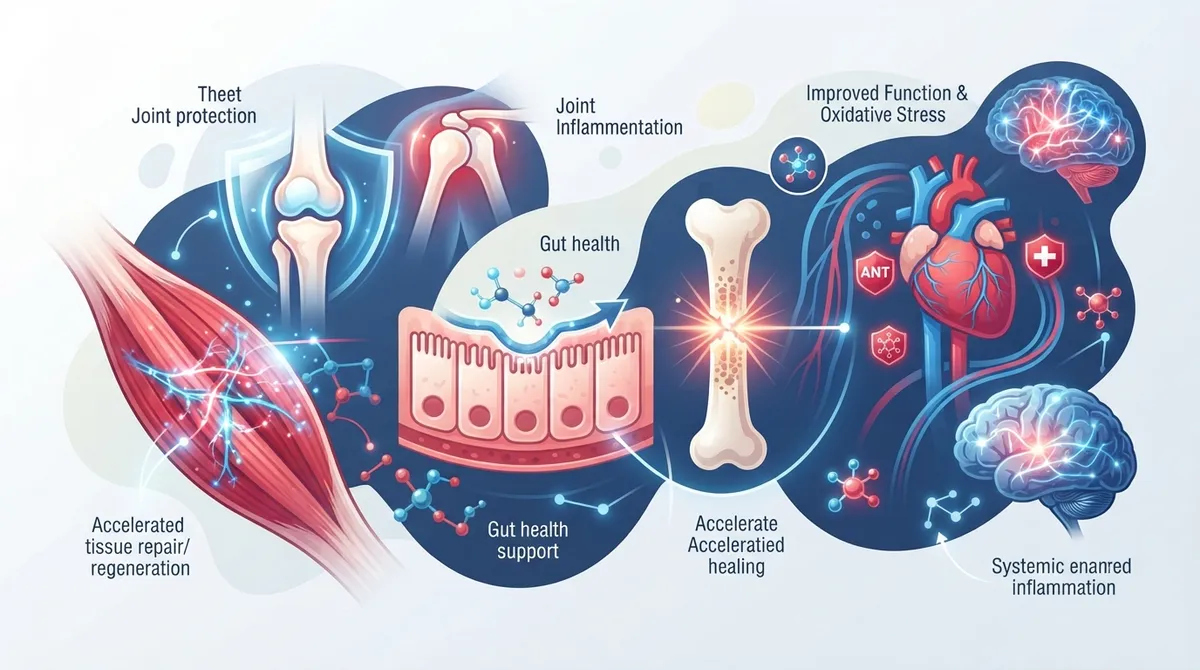
Marketing materials often claim that BPC-157 can speed up healing. The most common claims fall into a few groups:
- Faster recovery from muscle, tendon, and joint injuries
- Relief from stomach and gut problems
- Lower inflammation
- Better skin and wound healing
These claims sound appealing. However, they are not established clinical benefits. Most of them come from animal studies and sales pages, not from strong human trials.
3. Most of the Research Is in Animals
The bulk of BPC-157 research comes from laboratory and animal experiments. Animal results can point scientists toward new ideas, but they often fail to hold up in people. Doses, body chemistry, and injury types differ widely between species.
This is why a clear line must be drawn between animal findings and proven human outcomes. If you want a deeper look at animal data, read BPC-157 Hype vs. Real Results: What Science Shows.
4. Human Evidence Is Extremely Limited
A 2026 systematic review searched for human studies of BPC-157 and found only three small, uncontrolled studies. Together they included just 30 people. The authors rated the evidence as very low certainty and concluded that solid proof of safety or benefit is missing.
|
Human Study |
Participants |
Design |
|---|---|---|
|
Knee pain study |
16 |
Retrospective, no control group |
|
Interstitial cystitis pilot |
12 |
Retrospective, no control group |
|
Intravenous safety pilot |
2 |
Small pilot |
With no control groups and tiny sample sizes, these studies cannot show that BPC-157 works. They also cannot prove that it is safe. For a look at how clinic claims compare with data, see 8 BPC-157 Clinical Outcome Mistakes Patients Make.
5. BPC-157 Is Not FDA-Approved
BPC-157 is not an FDA-approved medicine for any condition. FDA materials point to major gaps in human safety information. They also raise concerns about immune reactions, peptide impurities, and clumping, which is called aggregation.
FDA staff reviewing the topic in 2026 reported no human studies for proposed oral, subcutaneous, nasal, or transdermal uses. Regulatory status can change, so always check current guidance. You can learn more in 4 Facts on BPC-157 FDA Approval Status in 2026.
6. Compounding Does Not Prove Safety
Some people assume that if a pharmacy can compound a substance, it must be safe. That is not true. Compounded drugs are not FDA-approved, and compounding does not show that a product is safe or effective.
FDA has raised concerns about the quality and safety evidence for BPC-157 in the compounding setting. For this reason, a careful clinician will not simply hand out a prescription because a patient asks. To understand the difference, read FDA-Approved vs. Compounded Peptides: Which Is Safer?
7. Online "Research Chemical" Products Are a Gamble
Many BPC-157 products sold online are labeled as research chemicals or wellness peptides. These products may not have verified identity, purity, strength, or sterility. The label on the vial may not match what is inside.
Here are common problems with unverified products:
- Wrong dose or inconsistent strength
- Contamination with bacteria or other substances
- Impurities from poor manufacturing
- No proof of what the powder actually is
Buying mistakes can put your health at risk. See 5 BPC-157 Buying Mistakes That Put Your Health at Risk before you consider any purchase.
8. Injectable Products Carry Added Risks
Injected products bypass many of your body's natural defenses. If a vial is not sterile, the result can be a serious infection. Injectable peptides can also trigger allergic or immune reactions, and their drug effects in people are still unknown.
Seek medical care right away if you notice any of these signs after an injection:
- Spreading redness, warmth, or swelling at the site
- Fever or chills
- Hives, itching, or trouble breathing
- Severe pain or pus
To learn what to watch for, read How to Spot BPC-157 Side Effects Before They Escalate.
9. The Safety Picture Is Unclear
Because human data is so thin, no one can say what the true side effect profile of BPC-157 is. "No reported problems" is not the same as "proven safe." Missing data simply means we do not know.
Unknowns also include how BPC-157 might interact with medicines you already take. This matters for people who use blood thinners, diabetes medicines, or weight loss drugs. A clinician can review your full medication list. You can also read 9 BPC-157 Interactions Every Patient Should Know.
10. BPC-157 Is Banned in Competitive Sport
Athletes need to be especially careful. BPC-157 appears on the World Anti-Doping Agency 2026 Prohibited List as a non-approved substance in category S0. The list took effect on January 1, 2026.
If you compete under anti-doping rules, you should avoid BPC-157 entirely. Check with your governing organization before taking any supplement or peptide. For more on this topic, see Peptides for Athletes: Hype vs. Medical Reality?
11. Recovery Claims Deserve Extra Skepticism
Many people try BPC-157 hoping to bounce back faster from workouts or injuries. Yet there is no reliable human proof that it speeds muscle, tendon, or joint healing. Proven options for recovery are far less glamorous but much better supported.
Evidence-based recovery steps include:
- Getting a proper diagnosis of the injury
- Following a physical therapy or rehab plan
- Sleeping enough and eating enough protein
- Increasing training load gradually
- Using approved medicines when needed
For a closer look, read Does BPC-157 Really Speed Up Muscle Recovery? and Can BPC-157 Really Help Chronic Digestive Issues?
12. Your Primary Care Clinician Can Help You Sort Fact From Hype
A good primary care visit is a safe place to talk about wellness trends. A prudent clinician will not endorse unproven claims. Instead, they will listen, explain the evidence gap, and focus on the problem you actually want to solve.
Here is what a helpful visit often includes:
- Asking whether you already use any peptides, and where you got them
- Reviewing your medications and health history for risks
- Checking for symptoms or reactions
- Discussing proven treatments for your pain, gut issue, or injury
This kind of whole-person care is the heart of what we do at InCare in Tampa and Riverview. You can learn how clinics approach this topic in How to Evaluate BPC-157 Peptide Therapy Safely.
13. Questions to Ask Before You Consider BPC-157
If you are still curious, bring a list of questions to your clinician. Strong questions can protect your health and your wallet. Consider asking:
- What is the evidence in humans for my specific goal?
- Is this product FDA-approved, or is it compounded or sold as a research chemical?
- Who tested the product for purity and sterility?
- Could it interact with my medicines or health conditions?
- What proven options should I try first?
- What warning signs should send me to urgent care?
For a longer checklist, see 15 Questions to Ask a Peptide Therapy Clinic in Tampa.
Who Should Be Most Cautious?
Some groups face higher risk and should speak with a clinician before trying any unproven peptide. These include people who are pregnant or breastfeeding, people with cancer or a history of cancer, and people with chronic conditions or allergies. Parents of teens should also be careful, since young people are often drawn to online wellness trends.
Gen Z and millennial readers often get health tips from short videos. Those clips rarely mention the missing human data or the product quality problems. A quick check with a licensed clinician can save you from a costly or risky mistake.
The Bottom Line on What BPC-157 Is
BPC-157 is a lab-made peptide with interesting animal research and very little human proof. It is not FDA-approved. Product quality is uncertain, and it is banned for athletes under anti-doping rules. Anyone selling it as a proven treatment is going beyond the evidence.
The good news is that you do not have to guess. InCare offers personalized primary care and wellness services in Tampa and Riverview, including preventive screenings, weight loss support, and metabolic testing. See what patients say by reading InCare reviews on Google, or follow our health tips on Instagram, Facebook, and TikTok.
Ready to talk through your recovery goals with a clinician who puts evidence first? Book your appointment with InCare today, or contact our team with any questions.
FAQs
Q: What is BPC-157 and what is it claimed to do?
A: BPC-157 (Body Protection Compound-157) is a synthetic peptide made of 15 amino acids, studied mainly in lab and animal research. It is promoted for tissue repair, injury recovery, inflammation, and gut health. However, these uses are not established clinical benefits in humans.
Q: Is BPC-157 FDA-approved?
A: No. BPC-157 is not an FDA-approved medicine for any condition. FDA materials note significant gaps in human safety data and concerns about impurities, immune reactions, and aggregation, so readers should check current FDA guidance.
Q: Does BPC-157 work in humans?
A: Human evidence is extremely limited. A 2026 systematic review found only three small, uncontrolled studies with 30 total participants and rated the evidence very low certainty. This means robust proof of safety or benefit is lacking.
Q: Is BPC-157 prohibited for athletes?
A: Yes. BPC-157 is listed as a non-approved substance (S0) on the World Anti-Doping Agency 2026 Prohibited List, which took effect January 1, 2026. Athletes subject to anti-doping rules should avoid it and check with their governing organization.
Q: What should I ask my primary care clinician before considering BPC-157?
A: Ask what human evidence exists for your goal, whether the product is FDA-approved or compounded, and how its purity and sterility were verified. Also ask about drug interactions and which proven treatments you should try first. Seek medical care promptly for any reaction, especially after an injection.


