
Key Takeaways
- Medicines like semaglutide and tirzepatide support overall weight loss in eligible patients but do not selectively burn visceral fat; any drop in belly fat comes with total body weight loss.
- Visceral fat is best assessed through waist circumference plus blood pressure, glucose, A1C, and cholesterol testing, since BMI alone can miss excess abdominal fat.
- Compounded peptide products are not FDA-approved or reviewed for safety and quality, and the FDA has warned about dosing errors tied to multidose vials.
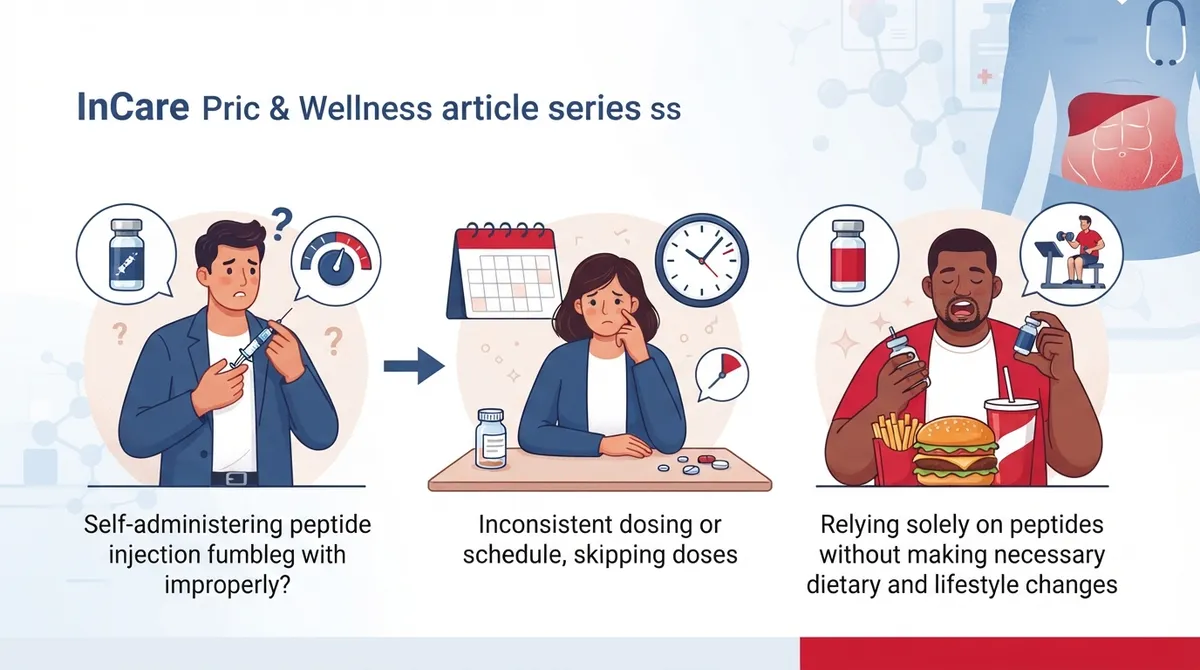
- Effective visceral fat care pairs medical evaluation and prescribing with protein intake, resistance training, daily movement, and sleep, since results tend to stall or reverse without them.
Belly fat that sits deep inside the abdomen is more than a cosmetic concern. It surrounds the organs and is linked to a higher risk of heart disease and type 2 diabetes. It is no surprise that many adults in Hampton Roads... in Florida are searching for visceral fat peptides Tampa options in 2026.
The trouble is that the search results are crowded with bold promises. Some clinics advertise "targeted fat-melting peptides." Others sell products with no clear medical oversight. This article walks through 11 common mistakes so you can avoid them. You will learn what peptide-based weight medicines can and cannot do, how doctors measure abdominal fat, and what a safe plan looks like.
Here is the key point up front: medicines like semaglutide and tirzepatide can support overall weight loss for the right patient. They do not selectively burn visceral fat. Real results come from a medical evaluation, a safe prescription path, and steady lifestyle support. At InCare, that is exactly how care is built for patients in Tampa and Riverview.
What Is Visceral Fat and Why Does It Matter?
Visceral fat is stored deep in the abdomen, around organs such as the liver and intestines. It is different from subcutaneous fat, the softer layer under the skin. Excess visceral fat is associated with higher cardiometabolic risk, including cardiovascular disease and type 2 diabetes.
Many people with a normal-looking weight still carry too much fat around the middle. That is why body mass index (BMI) alone can miss the problem. Doctors often add waist circumference to the picture. U.S. guidance commonly flags a waist above 40 inches for men and above 35 inches for women as a higher-risk range, though thresholds can vary by guideline and population.
How Doctors Assess Abdominal Fat
CT and MRI scans are the most accurate ways to separate visceral from subcutaneous fat. They are not used for routine screening, though. In primary care, a clinician usually combines several simple tools:
- Waist circumference measured with a standard technique
- Weight, height, and blood pressure
- Medical history and current medications
- Blood work such as glucose, A1C, and cholesterol
InCare also offers body composition analysis and metabolic breath analysis. These tools give a clearer picture of how your body stores fat and burns energy.

What Do "Peptides" Mean for Visceral Fat in Tampa?
The word "peptide" is broad. A peptide is simply a short chain of amino acids. In weight care, the term most often points to incretin-based medicines, such as semaglutide and tirzepatide. These are prescription drugs that help control appetite and blood sugar.
Here is what the evidence supports. These medicines can help eligible patients lose weight and improve metabolic health. Any drop in visceral fat usually happens as part of overall weight loss. No approved peptide removes belly fat on its own. If a clinic promises that, treat it as a warning sign.
|
Claim You May Hear |
What Is Accurate |
|---|---|
|
"This peptide targets belly fat only" |
Fat loss is not selective. Visceral fat falls with overall weight loss. |
|
"All peptide injections are FDA-approved" |
Only certain products are approved. Compounded drugs are not. |
|
"No exam is needed" |
A medical evaluation is required for safe prescribing. |
|
"Guaranteed results in weeks" |
No ethical provider can guarantee a result. |
11 Visceral Fat Peptide Mistakes to Avoid
1. Believing a Peptide Can Target Belly Fat Alone
This is the most common myth. Fat does not leave one body area on command. Medicines such as semaglutide and tirzepatide work by lowering appetite and improving how the body handles sugar. Visceral fat often responds well when total body weight drops, but the effect is not selective.
2. Skipping the Medical Evaluation
Medication choices should follow an individual review. That includes your diagnoses, current medicines, contraindications, and goals. A proper visit also checks your blood pressure, blood sugar, and cholesterol. Skipping this step puts your safety at risk. A visit with a primary care clinician is the right first move.
3. Confusing FDA-Approved Drugs With Compounded Products
These are not interchangeable. The FDA states that compounded drugs are not FDA-approved. The agency does not review them for safety, effectiveness, or quality before they are marketed. Compounding is generally meant for cases where an individual patient's needs cannot be met by an approved drug.
4. Ignoring Dosing Error Risks
The FDA has warned about dosing errors tied to compounded semaglutide and tirzepatide. Many errors happened when patients measured doses from multidose vials. As of May 31, 2026, the FDA reported receiving 990 adverse-event reports tied to compounded semaglutide and more than 730 tied to compounded tirzepatide. These reports do not prove cause, and they do not show how often problems occur. Still, they are a reminder to ask questions.
5. Not Verifying the Prescriber and Pharmacy
Before you start, confirm who is prescribing and who is dispensing. Ask these questions:
- Is the prescriber a licensed physician or clinician?
- Which pharmacy supplies the product?
- Is the product FDA-approved or compounded?
- How will my progress and side effects be monitored?
You can meet the care team on the InCare providers page, including Dr. Naveen Paddu.
6. Relying on Peptides Without Lifestyle Support
Medication works best with a plan around it. Food quality, protein intake, strength training, daily movement, and sleep all affect abdominal fat. Without them, results tend to stall. If the medicine stops, the weight often returns. Learn how medical weight loss differs from dieting.
7. Trusting Social Media Hype Over Evidence
Short videos can make any product look like a miracle. Before and after photos rarely show lighting, timing, or diet changes. Use social posts to spot questions to ask, not to choose treatment. You can follow InCare on Instagram for general wellness updates, but always confirm medical decisions with your clinician.
8. Measuring Progress by the Scale Only
Weight is only one number. A person can lose inches around the waist while the scale moves slowly. Muscle loss during rapid weight loss is also a real concern. Tracking waist size, body composition, blood pressure, and lab results gives a fuller view. Read more about preserving lean muscle mass while losing weight.
9. Overlooking Side Effects and Risks
GLP-1 type medicines can cause nausea, constipation, diarrhea, and stomach discomfort. More serious risks exist and depend on your history. This is why monitoring matters. A clinic should explain risks in plain language and tell you when to call. See InCare's guides on managing semaglutide side effects and key semaglutide side effects.
10. Never Asking About Cost and Follow-Up
A low starting price can hide extra fees. Ask what is included. Does the plan cover visits, lab work, dose changes, and nutrition guidance? Cost planning also matters because many people stay on treatment for months. Review what weight loss injections cost in 2026 before you commit.
11. Choosing a Clinic That Only Sells Peptides
A single-product clinic may not look at your whole health. Visceral fat is tied to blood sugar, blood pressure, hormones, sleep, and more. A full-service primary care and wellness clinic can manage those pieces together. It can also refer you onward when needed.
What a Safe Visceral Fat Plan Looks Like
A responsible plan has clear steps. It starts with questions, not a needle. Here is a simple path many patients follow:
- Baseline review: history, medications, waist size, blood pressure, and labs.
- Body assessment: body composition and metabolic testing where useful.
- Treatment decision: medication only if it fits your health profile and goals.
- Lifestyle plan: nutrition, strength work, movement, and sleep habits.
- Follow-up: regular visits to adjust dose, track progress, and manage side effects.
This structure matters for busy people, too. Tampa professionals and young families often need a plan that fits a packed week. InCare offers in-person visits in Tampa and Riverview, plus virtual options, so follow-up does not have to disrupt your schedule.
Lifestyle Habits That Help Reduce Abdominal Fat
- Eat enough protein to protect muscle during weight loss
- Add resistance training two to three times each week
- Walk daily and build up steady aerobic activity
- Limit sugary drinks and heavily processed snacks
- Aim for consistent, good-quality sleep
- Manage stress, which can affect appetite and eating habits
Why Choose InCare for Visceral Fat Care in Tampa
InCare is a personalized primary care and wellness clinic with locations in Tampa and Riverview. The team pairs medical expertise with modern technology to look at the whole picture, not just one number. That means prevention, testing, treatment, and follow-up all under one roof.
For patients focused on belly fat, InCare's weight loss program starts with a medical evaluation and a plan built around you. You can also learn how InCare approaches peptide therapy in Tampa with safety and oversight in mind. Patients rate the clinic highly, and you can read InCare reviews on Google to see what others say. For wellness tips and clinic updates, you can also find InCare on Facebook.
Take the Next Step Toward a Healthier Waistline
The best approach to visceral fat is steady and medically guided. Avoid the promise of a quick peptide fix. Choose a team that checks your health first, explains your options honestly, and stays with you after the first visit.
Ready to start? Book Now to schedule your evaluation, or contact the InCare team with any questions.
FAQs
Q: What is visceral fat, and why is it a health concern?
A: Visceral fat is stored deep in the abdomen around internal organs. Higher levels are linked to a greater risk of cardiovascular disease and type 2 diabetes. It differs from subcutaneous fat, which sits just under the skin.
Q: How can a doctor assess visceral fat without a scan?
A: Clinicians commonly measure waist circumference and review weight, blood pressure, medical history, and blood work. CT and MRI are the most accurate tools but are not usually needed for routine screening.
Q: Can semaglutide or tirzepatide reduce visceral fat?
A: These medicines can support overall weight loss in eligible patients, and visceral fat often decreases as total weight drops. They do not selectively target visceral fat, so results depend on the whole treatment plan.
Q: What is the difference between FDA-approved and compounded GLP-1 medications?
A: FDA-approved drugs are reviewed for safety, effectiveness, and quality before marketing. Compounded drugs are not FDA-approved and do not receive that review, and the FDA has warned about dosing errors with some compounded products.
Q: What should I expect during a medical weight loss consultation in Tampa?
A: Expect a review of your health history, medications, waist size, blood pressure, and lab results. Your clinician will then discuss whether medication fits your goals and build a plan that includes nutrition, activity, and regular follow-up.