

Key Takeaways
- Medigap pays for care but does not provide it—you still need a strong primary care team to manage your health; pairing the right plan with trusted physicians gives the strongest protection for both health and wallet.
- The six-month Medigap Open Enrollment Period after turning 65 and enrolling in Part B offers protected enrollment rights without medical underwriting; missing this window can result in higher prices or denied applications.
- Plan G does not cover the $202.90 Part B deductible (2026) or provide primary care, and high-deductible options require $2,950 out-of-pocket before coverage begins—budget accordingly based on your actual doctor visit frequency.
- Medigap does not cover prescription drugs, dental, vision, or hearing care, and it does not work with Medicare Advantage; confirm your state's specific plan offerings and compare total costs beyond premiums alone.
Choosing a Medicare supplement plan feels like a paperwork task, but it shapes how much you pay for care every year. Many people pick a plan based on a low premium alone. Later, they find out it does not fit how they use their primary care doctor. A Physicians Mutual Medicare Supplement plan can help protect your budget, but only if you understand what it does and what it does not do.
Medigap coverage works alongside Original Medicare. It helps pay some of the out-of-pocket costs Medicare leaves behind, which can make covered primary care visits more predictable. It does not deliver care, choose your doctor, or replace Medicare Part B. The details also vary by state, plan letter, and your enrollment timing.
This guide covers 11 common mistakes people make with Physicians Mutual Medicare Supplement plans in 2026. You will also learn how to pair a plan with strong primary care. For a practical look at how coverage connects to real visits, see our guide on what Medicare covers for seniors in primary care.
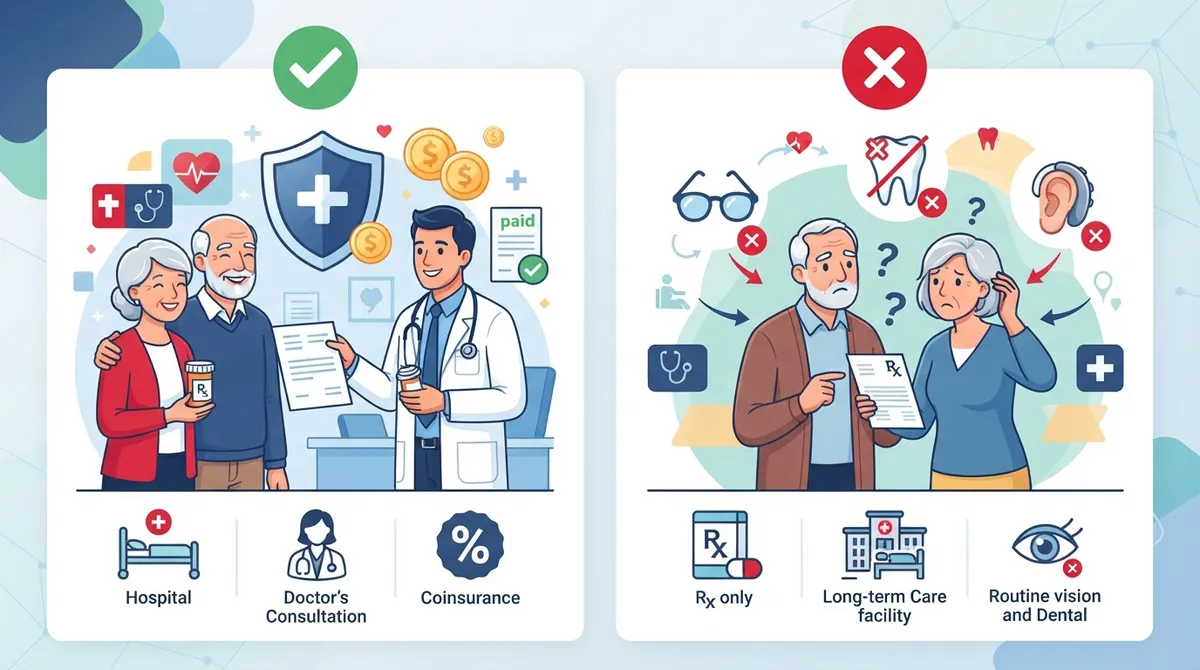
Quick Overview: What Medigap Does and Does Not Do
Before the mistakes, it helps to see the big picture. A Medigap policy is a standardized product. Federal rules set the core benefits for each plan letter. That means a Plan G has the same core benefits no matter which insurer sells it.
|
Feature |
What Medigap Does |
What It Does Not Do |
|---|---|---|
|
Doctor visits |
Helps pay eligible Medicare cost-sharing for covered visits |
Does not provide or select your doctor |
|
Medicare Part B |
Works alongside it |
Does not replace it |
|
Prescription drugs |
Generally not included |
Needs a separate Part D plan |
|
Dental, vision, hearing |
Generally not included |
Needs separate coverage or cash payment |
|
Plan benefits |
Standardized by plan letter |
Prices and rules still differ by company |

Mistake 1: Assuming Every State Offers the Same Plans
Physicians Mutual sells Medicare Supplement insurance through Physicians Mutual Insurance Company and related entities. However, the plan lineup is not the same nationwide. State-specific materials show offerings that can include Plan A, Plan F, Plan G, and High-Deductible Plan G.
Do not assume the plan you read about online is available in your ZIP code. Always check the current outline of coverage and a personal quote for your state.
Mistake 2: Confusing Medigap With Medicare Advantage
This is one of the most common errors. Medigap supplements Original Medicare. It does not work with Medicare Advantage. If you enroll in an Advantage plan, a Medigap policy generally does not help with that plan's costs.
For covered services under Original Medicare, Medicare pays its share first. Then your Medigap insurer may pay some or all of what remains, based on your plan. You pay any leftover amount.
Mistake 3: Believing Medigap Provides Primary Care
A supplement plan pays. It does not treat you. It cannot find you a physician, schedule your annual wellness visit, or manage your chronic conditions.
That is why your choice of clinic matters just as much as your choice of plan. A strong primary care team keeps you healthy, and the plan helps with the bills. Learn more about the traits of the best Medicare provider for primary care.
Mistake 4: Missing Your Open Enrollment Window
Timing is one of the biggest factors in your cost and access. The six-month Medigap Open Enrollment Period begins when you are both 65 or older and enrolled in Part B.
During this window, insurers generally cannot deny you coverage or charge you more because of health problems. Outside protected enrollment rights, medical underwriting may apply, depending on state law. Missing the window can mean higher prices or a denied application.
- Confirm you have Medicare Part A and Part B.
- Note the date your Part B coverage starts.
- Mark the six-month window on your calendar.
- Request quotes early, before the window closes.
- Apply within the window to avoid health-based underwriting.
Mistake 5: Comparing Only Premiums
A low monthly premium can hide higher costs later. Premiums are individualized. They can depend on your age, sex, tobacco status, payment method, and state. Physicians Mutual's state outlines of coverage show sample premiums by these factors, which is a reminder that any figure you see may not match your own quote.
Compare the total picture, including deductibles, cost-sharing you will still owe, and how often you visit the doctor.
Mistake 6: Overlooking the Part B Deductible
Many people think a popular plan covers everything. It does not. For 2026, the Medicare Part B deductible is $202.90. Plan G does not cover this deductible. After you meet it, Plan G generally covers eligible Part B coinsurance and copayments.
So budget for the deductible each year. It is a small, predictable cost, but it surprises people who expected zero bills.
Mistake 7: Ignoring the High-Deductible Option's Real Cost
High-Deductible Plan G often has a lower premium. That looks attractive. But for 2026, the high-deductible Medigap plan deductible is $2,950. You pay covered costs up to that amount before the policy starts paying.
This option can suit someone who rarely uses care and wants protection from large bills. It can be a poor fit for someone who sees a doctor often. Think honestly about your usage before choosing it.
Mistake 8: Not Knowing What Plan Letters Actually Cover
Plan letters are not marketing names. They are standardized benefit packages. Understanding the differences helps you pick the right level of protection.
|
Plan |
Key 2026 Details |
|---|---|
|
Plan G |
Covers 100% of Part B excess charges; does not cover the Part B deductible |
|
Plan N |
Office-visit copayments of up to $20; ER copayments of up to $50 when there is no inpatient admission |
|
Plan K |
Annual out-of-pocket limit of $8,000 |
|
Plan L |
Annual out-of-pocket limit of $4,000 |
|
High-Deductible Plan G |
$2,950 deductible before the policy pays |
Plans K and L pay 100% of covered services for the rest of the year once you reach the applicable limit and meet the Part B deductible. Physicians Mutual may not offer every plan in your state, so confirm what is available.
Mistake 9: Expecting Drug, Dental, Vision, or Hearing Coverage
Medigap policies generally do not cover outpatient prescription drugs, routine dental, vision, or hearing care. This gap catches many new enrollees off guard.
If you take regular medications, look into a separate Part D plan. For other services, you may need separate coverage or plan to pay out of pocket. Your primary care team can help you plan around these gaps. Our tips on prescription management may help you stay organized.
Mistake 10: Treating a Financial Rating as a Quality Guarantee
Physicians Mutual reports an A+ (Superior) A.M. Best financial-strength rating for its insurance companies, cited as of November 2025. That is a positive sign about the insurer's financial standing.
However, a financial-strength rating is not a guarantee of future claims payment. It also does not measure plan quality or customer service. Use it as one data point, not the whole decision.
Mistake 11: Skipping the Primary Care Connection
The biggest mistake is treating insurance and care as separate things. A supplement plan lowers the cost barrier to visits. But you still need a doctor who knows you, tracks your health, and catches problems early.
Strong primary care helps you use your coverage well. It supports preventive screenings, chronic condition management, and coordinated referrals. Read how a Medicare doctor supports your health to see what good care looks like.
How to Choose a Plan in 5 Steps
- Confirm you are enrolled in Medicare Parts A and B.
- Identify your open enrollment window.
- Request the current state-specific outline of coverage and a personal quote.
- Compare plan letters based on how often you see a doctor.
- Verify details on Medicare.gov before you apply.
Who Should Think Carefully About Medigap?
Medigap is not right for everyone. Consider these points before you decide:
- You use Original Medicare and want predictable costs for covered care.
- You want freedom to see any doctor who accepts Medicare.
- You are willing to pay a monthly premium for lower surprise bills.
- You understand you may need a separate drug plan.
If you prefer a bundled plan with extra benefits, a different Medicare path may fit better. A conversation with your doctor and a licensed advisor can help.
Pair Your Coverage With Care That Fits You
Insurance works best when paired with a clinic that puts prevention first. InCare offers personalized primary care and wellness services in Tampa and Riverview, Florida. Our team combines modern technology with hands-on medical expertise, from annual wellness visits to cancer screenings and chronic condition support. You can meet our providers and see our locations to find the best fit.
Not sure how a visit works with your coverage? Learn what happens during an annual wellness visit so you can plan ahead. You can also follow us on Instagram for health tips. To verify current plan rules and enrollment details, visit Medicare.gov's guide to how Medigap works. For local reviews, visit InCare on Google.
Conclusion
A Physicians Mutual Medicare Supplement plan can make covered care more affordable and predictable. But the best results come from avoiding these 11 mistakes. Check your state's plan lineup, protect your enrollment window, and budget for the Part B deductible. Remember that Medigap pays for care. It does not provide it.
Pairing the right plan with a trusted primary care team gives you the strongest protection for your health and your wallet. Ready to build a care relationship that supports you year-round? Book your appointment with InCare today, or contact our team with questions.
FAQs
Q: What does a Physicians Mutual Medicare Supplement plan cover?
A: It helps pay certain Medicare-approved out-of-pocket costs that Original Medicare leaves behind, based on your plan letter. Medicare pays its share first, and the Medigap insurer may pay some or all of the remainder. It generally does not cover prescription drugs, dental, vision, or hearing.
Q: Does Physicians Mutual Plan G cover primary care doctor visits?
A: Plan G does not provide primary care, but it generally covers eligible Part B coinsurance and copayments for covered visits after you meet the Part B deductible. For 2026, that deductible is $202.90. Plan G also covers 100% of Part B excess charges.
Q: When can I enroll without medical underwriting?
A: The six-month Medigap Open Enrollment Period begins when you are 65 or older and enrolled in Part B. During this time, insurers generally cannot deny coverage or charge more because of health problems. Outside protected rights, underwriting may apply under state law.
Q: Can I keep my primary care doctor with a Physicians Mutual Medigap plan?
A: Medigap works with Original Medicare, so you can generally see any doctor who accepts Medicare. The plan does not select or limit your physician. Confirm that your doctor accepts Medicare before you schedule visits.
Q: How much does Physicians Mutual Medicare Supplement insurance cost?
A: Premiums are individualized and vary by state, age, sex, tobacco status, and payment method. Sample rates in one state's outline should not be treated as a quote elsewhere. Request a current, state-specific quote for accurate pricing.


