

Key Takeaways
- The FDA has not approved compounded CJC-1295, and FDA materials cite limited clinical data, immune response risks, peptide purity problems, and reports of increased heart rate and vasodilatory reactions.
- The main human study (2006, healthy adults) measured only hormone levels like GH and IGF-1, not weight loss, muscle gain, sleep, aging, or long-term safety.
- Ask which exact formulation is offered (with DAC or without DAC), since the two forms behave differently and should not be treated as interchangeable.
- Ask the clinic which pharmacy supplies the product, whether it is compounded, and for certificates of analysis to verify batch quality and purity.
- Require a full evaluation before starting, including medical history, medication review, physical exam, and lab work, plus a scheduled follow-up and monitoring plan.
- Red flags include implying FDA approval, promising guaranteed results, same-day sales without testing, and any answer to every concern being simply 'take the peptide.'
Peptide therapy is a hot topic in wellness circles in 2026. If you live near Riverview, Florida, you may have seen ads for CJC-1295 and wondered whether it is right for you. The claims are bold. The science is thin. And the details matter a great deal.
CJC-1295 is a lab-made peptide that mimics growth hormone-releasing hormone (GHRH). Some wellness providers promote it to raise growth hormone and IGF-1. But the FDA has raised concerns about compounded versions, and human research is limited. That is why the clinic you choose matters as much as the product itself.
This guide gives you 10 clear questions to ask any CJC-1295 peptide clinic in Riverview before you agree to treatment. You will learn what the evidence shows, what the FDA has said, and how a primary care approach keeps you safer. Whether you are a busy parent, a health-conscious professional, or simply curious, these questions will help you separate marketing from medicine.
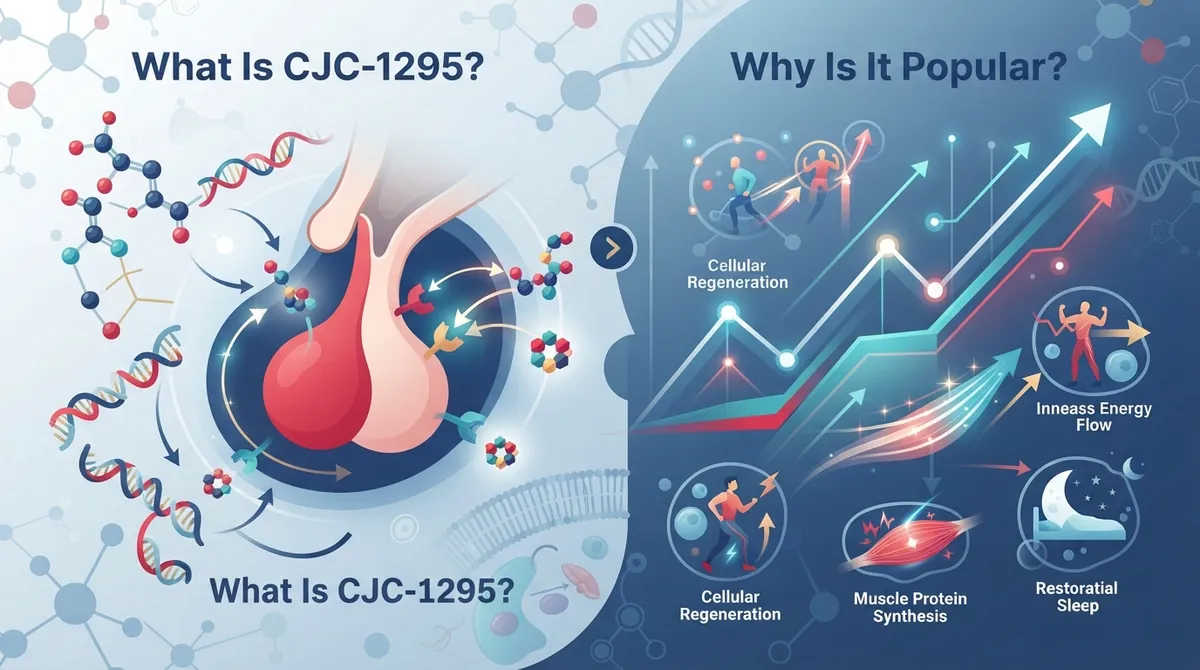
What Is CJC-1295 and Why Is It Popular?
CJC-1295 is a synthetic analogue of growth hormone-releasing hormone. It is designed to signal the pituitary gland to release more growth hormone (GH). That, in turn, can raise levels of insulin-like growth factor 1 (IGF-1).
The peptide comes in two main forms. One is CJC-1295 without a drug-affinity complex (DAC). The other is CJC-1295 with DAC. These forms are not identical and should never be treated as interchangeable. You can read more in our guide on what CJC-1295 without DAC is and whether it is safe.
People are drawn to it because of promises tied to weight loss, muscle gain, better sleep, and healthy aging. Those are appealing goals. But appeal is not proof. Social media and wellness marketing often move faster than clinical research.

What the Research Actually Shows
The most cited human work is a small, short-term 2006 study in healthy adults. Researchers measured hormone levels after injections. They did not measure long-term health benefits or test the peptide in patients with diagnosed growth hormone deficiency.
|
Finding from the 2006 Study |
What Was Observed |
|---|---|
|
Growth hormone (GH) |
Mean increases of about 2 to 10 times baseline for six days or longer |
|
IGF-1 |
Mean increases of about 1.5 to 3 times baseline for 9 to 11 days |
|
Estimated half-life |
Approximately 5.8 to 8.1 days |
|
What was NOT measured |
Weight loss, muscle gain, sleep, aging, or long-term safety |
In plain terms, the peptide raised hormone numbers. That does not prove it improves how you look, feel, or live. For a deeper look, see what CJC-1295 human studies actually show.
What the FDA Has Said About Compounded CJC-1295
The FDA has flagged several concerns. These include limited clinical data, possible immune responses to the peptide, and issues with peptide purity and characterization. The agency has also noted reports of increased heart rate and systemic vasodilatory reactions linked to CJC-1295.
FDA materials prepared for its Pharmacy Compounding Advisory Committee described insufficient evidence to support adding the evaluated CJC-1295 bulk substances to the 503A Bulks List. Compounded drugs are not FDA-approved drugs. Compounding is generally meant for an individual patient when an approved medication cannot meet that patient's medical need.
A clinic offering CJC-1295 does not mean the product is approved or proven. Keep that point in mind as you read the questions below. For safety details, review our article on CJC-1295 contraindications you must know.
10 Questions to Ask a CJC-1295 Peptide Clinic in Riverview
Use this list at your first consultation. A trustworthy clinic will welcome every question. Vague or defensive answers are a warning sign.
1. Which Exact Formulation Do You Offer?
Ask whether the product is CJC-1295 with DAC or without DAC. The two behave differently in the body. A clinic should name the formulation, explain the difference, and tell you why it chose one over the other. If staff cannot answer clearly, step back.
You can prepare by reading how to evaluate CJC-1295 with DAC before you try it.
2. Is This Product Compounded, and Which Pharmacy Supplies It?
Compounded products are made by a pharmacy for an individual patient. They are not the same as FDA-approved medications. Ask for the pharmacy name, its licensing, and whether it follows recognized quality standards. A clinic should share this without hesitation.
3. What Evidence Supports Using It for My Goal?
This is the most important question. If your goal is weight loss, better sleep, or anti-aging, ask what human studies back that specific use. As noted above, the limited research measured hormone levels, not those outcomes. An honest provider will say so.
4. Is It FDA-Approved?
The honest answer is no for compounded CJC-1295. A clinic that implies approval is misleading you. Ask the provider to explain the regulatory status in plain words and put it in writing.
5. What Testing Will You Do Before I Start?
Responsible care begins with a full evaluation. That means a medical history, a medication review, a physical exam, and lab work. Without a baseline, no one can tell whether treatment is safe or whether it helps. See our guide on what monitoring is needed with growth hormone peptides.
6. What Side Effects Should I Watch For?
The FDA has noted reports of increased heart rate and vasodilatory reactions. Ask what symptoms should prompt a call or a visit, and who answers the phone after hours. A clear safety plan is a sign of quality.
7. How Will You Monitor Me Over Time?
Ask how often you will return, which labs will be repeated, and what results would lead the clinic to stop treatment. Follow-up should be built in, not optional.
8. How Do You Verify Product Quality?
Peptide impurity is one of the FDA's concerns. Ask whether batches are tested and whether you can see certificates of analysis. Our article on 6 ways to verify CJC-1295 quality before you try it explains what to look for.
9. Who Is the Licensed Clinician Overseeing My Care?
You should know the name and credentials of the physician or licensed provider responsible for you. Peptide care should never be handled only by a salesperson or an online form. Learn how to choose a peptide specialist with confidence.
10. What Are My Alternatives?
A good clinic will discuss other options, including lifestyle changes, evidence-based medications, and treatment of any underlying condition. If the answer to every concern is "take the peptide," that is a red flag.
Quick Comparison: Red Flags vs. Green Flags
|
Topic |
Green Flag |
Red Flag |
|---|---|---|
|
Regulatory status |
Clear, honest explanation |
Implies FDA approval |
|
Evidence |
Admits research limits |
Promises guaranteed results |
|
Evaluation |
Labs and medical history first |
Same-day sale with no testing |
|
Follow-up |
Scheduled monitoring |
No plan after purchase |
|
Sourcing |
Names the pharmacy |
Vague about the supplier |
Wellness Marketing vs. Evidence-Based Care
It helps to separate two ideas. One is general wellness marketing. The other is the diagnosis and treatment of a real endocrine disorder. They are not the same.
If a true growth hormone deficiency is suspected, the path runs through proper testing and, often, an endocrinologist. Treatment for a diagnosed condition follows established medical standards. Marketing a peptide for general "optimization" does not.
That is why a primary care relationship is so valuable. A primary care physician can review your symptoms, history, and medications. They can order appropriate tests and refer you to a specialist if needed. They look at the whole picture, not just one product. You can compare approaches in our piece on doctor-prescribed CJC-1295 versus evidence-based care.
Who Should Be Extra Cautious?
Some groups need more care before considering any growth hormone peptide. Talk to a licensed clinician first if any of these apply to you:
- You have a history of cancer or a tumor.
- You have heart disease, high blood pressure, or an irregular heartbeat.
- You have diabetes or blood sugar problems.
- You are pregnant, trying to conceive, or breastfeeding.
- You take several prescription medications.
- You compete in a sport that tests for banned substances.
These are general cautions, not a full list. Your own history may add others. Only a clinician who knows you can weigh the risks. If you are curious how peptides compare, read CJC-1295 vs. Ipamorelin.
How to Prepare for Your First Visit
A little preparation makes any consultation more useful. Follow these steps:
- Write down your main health goal in one sentence.
- List every medication and supplement you take now.
- Gather recent lab results and your family health history.
- Prepare the 10 questions from this article.
- Ask for written information about any product and its regulatory status.
- Take time to decide. A good clinic will never rush you.
These steps put you in control. They also help the clinician give you safer, more personal advice.
Why Primary Care Is the Smart Starting Point
Before you consider a peptide, ask a bigger question. Have you had a full health review lately? Sleep problems, low energy, and weight changes can come from thyroid issues, sleep apnea, vitamin gaps, or blood sugar changes. Many of these have proven, well-studied treatments.
InCare is a personalized primary care and wellness clinic serving Tampa and Riverview. The team combines medical expertise with advanced tools such as DNA gene testing, metabolic breath analysis, body composition analysis, and in-house lab work. That approach helps find the root cause first. It supports prevention and whole-body health rather than quick fixes.
You can see what patients say by reading InCare reviews on Google. You can also follow health updates on Instagram, Facebook, and TikTok.
The Bottom Line on Choosing a CJC-1295 Clinic in Riverview
CJC-1295 raises hormone numbers in short studies. It has not been shown to deliver the benefits many ads suggest. The FDA has raised real concerns about compounded versions. None of this means you cannot ask about it. It means you should ask carefully.
Choose a clinic that is open about the evidence, clear about regulation, and serious about testing and follow-up. Choose a provider who looks at your whole health. And remember that you are never obligated to start a treatment you do not fully understand.
Ready for a trusted second opinion? Book your visit with InCare to talk with a licensed clinician in Riverview, or contact our team with your questions. We will help you build a safe, personalized plan.
FAQs
Q: Is CJC-1295 FDA-approved?
A: No. Compounded CJC-1295 is not an FDA-approved drug. FDA materials cite limited clinical data and safety concerns, including immune response risks, peptide purity issues, and reports of increased heart rate and vasodilatory reactions.
Q: What does CJC-1295 do in the body?
A: CJC-1295 is a synthetic analogue of growth hormone-releasing hormone. In a small 2006 study of healthy adults, it raised growth hormone and IGF-1 levels. That study measured hormone levels only, not long-term benefits for weight loss, muscle, sleep, or aging.
Q: What is the difference between CJC-1295 with DAC and without DAC?
A: The two forms are built differently and should not be assumed to act the same way. The DAC version is designed to stay active longer. A licensed clinician should explain which form is being offered and why.
Q: How do I evaluate a peptide clinic in Riverview, Florida?
A: Ask which exact formulation is offered, whether it is compounded, and which pharmacy supplies it. Also ask what evidence supports your goal, what testing happens first, and how follow-up is handled. A trustworthy clinic answers openly and does not rush you.
Q: Should I see a primary care doctor before considering a peptide?
A: Yes. A primary care physician can review your symptoms, history, and medications, and order appropriate tests. They can also refer you to an endocrinologist if a true hormone disorder is suspected.


