
Key Takeaways
- Kisspeptin is not FDA-approved for hypogonadism treatment; the FDA found insufficient evidence in October 2024, and it remains available only through clinical research trials, not routine prescribing.
- Kisspeptin may preserve sperm production better than testosterone replacement therapy because it stimulates the natural hormone axis rather than suppressing it, making it theoretically beneficial for men seeking fertility.
- Kisspeptin research targets hypogonadotropic hypogonadism specifically—where LH and FSH are too low—not primary testicular failure, because the therapy works by stimulating a broken signaling pathway higher up.
- Early studies show kisspeptin can raise LH levels acutely in healthy men, but current evidence is limited to short-term studies with small populations and inconsistent dosing methods, lacking long-term efficacy data.
- Proper diagnosis requiring multiple morning testosterone tests, LH/FSH measurements, prolactin checks, and investigation of reversible causes must precede any experimental therapy discussion for suspected hypogonadism.
- Established treatments like testosterone replacement therapy and gonadotropin therapy already work well for hypogonadism; kisspeptin has not been shown to outperform these proven options.
Low testosterone symptoms send many adults searching online for answers, and kisspeptin often appears near the top of the list. This hypothalamic hormone has generated real excitement in research circles because it may stimulate the body's own reproductive hormone system rather than replacing it from the outside. But excitement is not the same as proof, and patients deserve clear, honest information before they consider any new therapy.
At InCare, our approach to primary care centers on evidence-based guidance, not hype. This article breaks down what kisspeptin actually is, what the science currently shows about kisspeptin hypogonadism treatment, and why a careful diagnostic workup always comes before any experimental therapy discussion. Whether you live in Tampa, Riverview, or anywhere in between, understanding these ten facts will help you have a more informed conversation with your doctor.
1. Kisspeptin Is a Natural Trigger for Reproductive Hormones
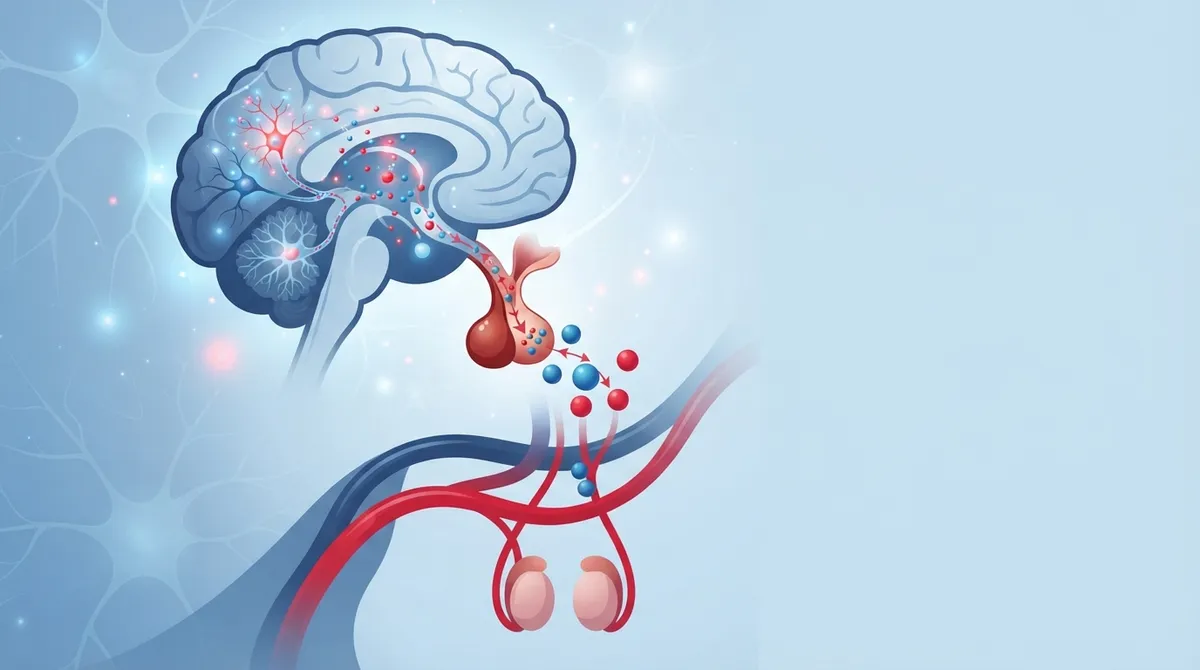
Kisspeptin is a neuropeptide made in the hypothalamus, a small region deep in the brain. It activates a receptor called KISS1R, found on neurons that release gonadotropin-releasing hormone, or GnRH.
Once GnRH is released, it signals the pituitary gland to produce luteinizing hormone (LH) and follicle-stimulating hormone (FSH). These two hormones control testosterone production in men, along with sperm development, ovarian function, and menstrual cycles in women.
In simple terms, kisspeptin sits at the very top of the reproductive hormone chain. Without it, the entire cascade that leads to healthy testosterone or estrogen levels may not start properly.
2. Hypogonadotropic Hypogonadism Is the Condition Researchers Are Targeting
Not all low testosterone is the same. In primary or testicular hypogonadism, the testes themselves fail to produce enough hormone even though LH and FSH signals are strong.
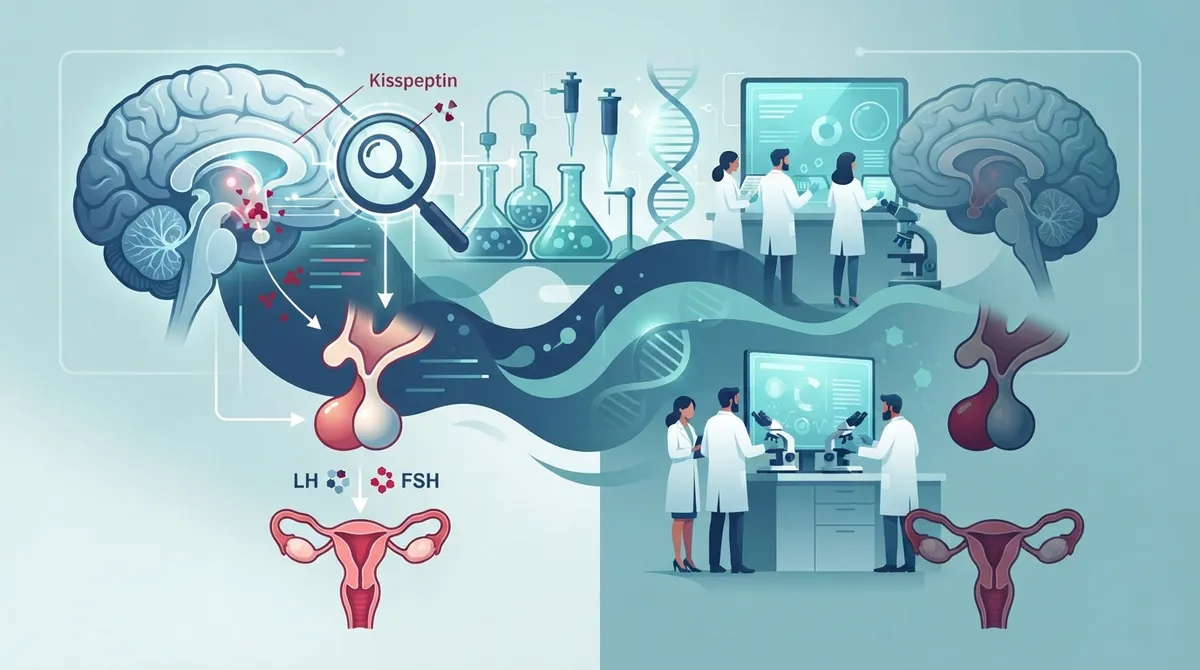
Hypogonadotropic hypogonadism is different. Here, LH and FSH are too low or inappropriately normal, so the testes never receive the signal to produce testosterone. Several conditions can cause this pattern:
- Congenital GnRH deficiency present from birth
- Kallmann syndrome, which also affects the sense of smell
- Functional hypothalamic suppression from extreme stress or dieting
- Obesity and severe energy deficits
- Hyperprolactinemia caused by certain medications or pituitary tumors
- Chronic systemic illness
Kisspeptin research focuses almost exclusively on this second category because the therapy works by stimulating a signaling pathway that is broken higher up, not by fixing damaged testicular tissue.
3. Kisspeptin Is Not FDA-Approved for Hypogonadism
This point cannot be overstated. Kisspeptin remains an investigational compound. It has not received FDA approval as a treatment for hypogonadism of any kind.
Access to kisspeptin is generally limited to clinical research settings rather than routine prescribing at a doctor's office. Anyone offering kisspeptin as a standard wellness or hormone-optimization product outside of a research trial should be viewed with caution.
What the FDA Review Found
In October 2024, the FDA's Pharmacy Compounding Advisory Committee reviewed compounded kisspeptin-10 for male secondary hypogonadism. The committee concluded that current evidence was insufficient to determine effectiveness.
The review also noted that approved treatments already exist for secondary hypogonadism. This weighed against adding kisspeptin-10 to the list of substances allowed for pharmacy compounding.
4. Early Studies Show Kisspeptin Can Raise LH Levels Quickly
Human research does show measurable hormone responses after kisspeptin administration. A 2025 randomized, placebo-controlled crossover study using intranasal kisspeptin-54 found a mean maximal LH increase of about 4.4 IU/L in healthy men.
The placebo-adjusted difference was roughly 3.1 IU/L, with a reported P value of 0.002, a statistically meaningful result. However, this was an acute hormone-response study conducted over a short period. It does not prove that kisspeptin can treat hypogonadism reliably over months or years.
Ongoing Clinical Trials
ClinicalTrials.gov study NCT05896293 is currently evaluating subcutaneous, pulsatile kisspeptin for idiopathic hypogonadotropic hypogonadism in both men and women. The treatment period is approximately two weeks, with LH-pulse patterns as one of the primary outcomes measured.
A 2024 review identified multiple kisspeptin studies covering Kallmann syndrome, GnRH deficiency, and related reproductive disorders. Most of these were early-phase or ongoing trials rather than definitive proof of long-term efficacy.
5. Kisspeptin May Offer a Fertility Advantage Over Testosterone Replacement
This is one of the most promising theoretical benefits of kisspeptin hypogonadism treatment. Traditional testosterone replacement therapy raises blood testosterone levels but suppresses the body's own LH and FSH production.
That suppression can shut down sperm production, which is a problem for men trying to conceive. Kisspeptin, by contrast, works by stimulating the hypothalamic-pituitary-testicular axis from the top down. In theory, this could preserve or even improve intratesticular testosterone and sperm production while still raising overall hormone levels.
Men interested in fertility-focused options should discuss testosterone replacement therapy versus other approaches with a knowledgeable provider before choosing a path forward.
6. Study Limitations Make It Too Early to Recommend Kisspeptin Broadly
Several factors limit what we can confidently say about kisspeptin right now. Study populations remain small. Treatment periods are short, often just weeks rather than months.
Researchers have also used different peptide forms, doses, and delivery routes across studies, making it hard to compare results directly. Because physiological GnRH signaling is naturally pulsatile, researchers are still working out whether pulsatile kisspeptin delivery will outperform steady dosing.
No reliable long-term statistics currently exist for:
- Sustained testosterone normalization over months or years
- Pregnancy rates in couples using kisspeptin for fertility support
- Sperm recovery and testicular volume improvement
- Long-term side effects with repeated or continuous use
Until larger, longer trials are complete, kisspeptin should be viewed as promising but unproven.
7. Proper Diagnosis Comes Before Any Hormone Discussion
Low testosterone symptoms, including fatigue, low libido, and mood changes, do not automatically mean a patient has kisspeptin-responsive disease. A thorough evaluation is essential before considering any experimental therapy.
A responsible workup typically includes these steps, in order:
- Confirm symptoms are present and consistent over time
- Measure morning testosterone on at least two separate occasions
- Test LH and FSH levels to distinguish primary from secondary hypogonadism
- Investigate reversible causes such as obesity, medication side effects, or sleep apnea
- Check prolactin levels if secondary hypogonadism is suspected
- Order pituitary imaging when red-flag symptoms are present
- Refer to endocrinology for complex or unclear cases
This is exactly the kind of methodical evaluation offered through comprehensive primary care visits, where providers take time to look at the whole picture rather than jumping straight to a prescription.
8. Certain Symptoms Require Immediate Specialist Referral
Some findings during a hypogonadism workup point to more serious underlying problems. Patients with any of the following should be referred to endocrinology promptly, and pituitary imaging may be necessary:
- Suspected pituitary mass effects or tumor symptoms
- Markedly elevated prolactin levels
- Severe headaches or new visual-field changes
- Multiple pituitary hormone deficiencies occurring together
- Rapid onset of symptoms without clear cause
A trusted primary care team knows when to manage a condition directly and when to bring in a specialist. This kind of coordinated care model protects patients from delayed diagnoses.
9. Standard Treatments Already Exist and Work Well for Many Patients
While kisspeptin remains experimental, several established treatment options are available today depending on a patient's diagnosis and goals.
|
Treatment Option |
Best For |
Fertility Impact |
|---|---|---|
|
Testosterone replacement therapy |
Men not seeking fertility |
Can suppress sperm production |
|
Gonadotropin therapy (hCG/hMG) |
Men seeking fertility with secondary hypogonadism |
Supports sperm production |
|
Pulsatile GnRH therapy |
Specialist-managed fertility cases |
Mimics natural signaling |
|
Weight and lifestyle changes |
Obesity-related or functional hypogonadism |
Can restore natural hormone axis |
|
Treating the underlying cause |
Medication-induced or illness-related cases |
Varies by cause |
For men who are not focused on fertility, options like TRT for men over 40 remain a well-studied, effective path to restoring energy and vitality. Gonadotropin therapy or pulsatile GnRH under specialist supervision may be better suited for men actively trying to conceive.
How Kisspeptin Compares
Kisspeptin should be presented as investigational, not as an established hormone-optimization therapy. It has not been shown to outperform, or even reliably match, the effectiveness of these current standard treatments. Patients interested in learning more about peptide therapy in Tampa should ask specifically which peptides have solid clinical backing versus which remain experimental.
10. The Right Primary Care Partner Makes All the Difference
Navigating hormone health requires more than a quick blood test. It requires a provider who listens, orders the right diagnostic panel, and explains results in plain language.
At InCare, our providers, including Dr. Naveen Paddu, Dr. Pramjeet Ahluwalia, and Dr. Teshy John, take a whole-body approach to hormone concerns. We combine thorough lab work with technologies like DNA gene testing and body composition analysis to build a complete picture of your health before recommending any treatment path.
Patients across Tampa and Riverview trust our team because we prioritize honest, evidence-based conversations over quick fixes. You can follow our latest health updates on Facebook, see wellness tips on Instagram, or catch quick educational clips on Tik Tok. You can also see what our InCare patients say firsthand by visiting our InCare location on Google, where we maintain a 4.8 out of 5 rating from hundreds of reviews.
Bringing It All Together
Kisspeptin hypogonadism treatment represents a genuinely exciting area of hormone research, especially for men who want to preserve fertility while addressing low testosterone. But the science is still young. Small study sizes, short trial periods, and inconsistent dosing methods mean kisspeptin is not ready for routine use outside of clinical trials.
What matters most right now is getting an accurate diagnosis and exploring treatments that are proven to work. If you are experiencing symptoms of low testosterone or hormone imbalance, do not wait to get answers. Our team at InCare is ready to guide you through testing, diagnosis, and a treatment plan built around your specific goals. Book your appointment today and take the first step toward understanding your hormone health with a team that puts your care first.
FAQs
Q: What is kisspeptin and how could it treat hypogonadism?
A: Kisspeptin is a hypothalamic hormone that activates GnRH neurons, which then trigger LH and FSH release from the pituitary gland. In hypogonadotropic hypogonadism, this signaling chain is disrupted, so researchers are studying whether kisspeptin can restart it and restore natural testosterone or estrogen production.
Q: Is kisspeptin FDA-approved for low testosterone or hypogonadism?
A: No, kisspeptin is not FDA-approved for hypogonadism treatment. The FDA's October 2024 review found insufficient evidence to support compounded kisspeptin-10 for male secondary hypogonadism, and access remains limited to clinical research settings.
Q: Can kisspeptin increase testosterone without suppressing sperm production?
A: Early theory suggests kisspeptin may stimulate the body's own hormone axis, potentially preserving sperm production better than testosterone replacement therapy does. However, this has not been proven in large, long-term human studies and remains an area of active research.
Q: What tests are needed to diagnose secondary hypogonadism before considering experimental treatment?
A: Diagnosis typically requires repeated morning testosterone measurements along with LH and FSH testing to distinguish primary from secondary hypogonadism. Providers also check prolactin levels and investigate reversible causes like obesity, medications, or sleep disorders before considering any advanced therapy.
Q: Can patients obtain kisspeptin through a primary care clinic or only through a clinical trial?
A: Kisspeptin is currently available almost exclusively through clinical research trials rather than routine primary care prescribing. Patients interested in kisspeptin research should ask their provider about active studies, such as those listed on ClinicalTrials.gov, rather than seeking it as a standard wellness treatment.