Key Takeaways
- Fatigue alone does not prove low testosterone; a diagnosis requires compatible symptoms, such as reduced libido or fewer spontaneous erections, plus consistently low levels on lab testing.
- Testosterone should be measured with a fasting blood draw early in the morning, and any low result should be repeated on a separate morning, since about 30% of initially low results test normal on retesting.
- The AUA uses total testosterone below 300 ng/dL as a reasonable cutoff to support diagnosis, but a single number is never enough on its own.
- Common causes of low energy such as poor sleep or sleep apnea, chronic stress, depression, thyroid problems, diabetes, anemia, and medications should be ruled out before blaming hormones.
- Testosterone therapy is not a general energy treatment, since evidence on improving fatigue is inconclusive according to the AUA, so it should only be considered for confirmed deficiency with matching symptoms.
- Primary care is the recommended first step for low energy, since a clinician can review symptoms, order tests, and refer to a urologist or endocrinologist if needed.
You wake up tired, drag through the afternoon, and feel flat by evening. If you are a man in Tampa, you may wonder whether low energy and low testosterone are connected. It is a fair question, and the answer deserves care. Fatigue is common, and it has many causes. Low testosterone is only one of them.
This guide explains how clinicians sort out the real reason behind low energy. You will learn which symptoms are more specific to low testosterone, how testing works, and why one blood draw is not enough. You will also see where treatment helps and where it does not. For busy professionals, young families, and health-minded adults across Tampa and Riverview, a clear plan beats guessing. A primary care visit is the right first step, and InCare in Tampa and Riverview is built around that kind of whole-body, prevention-focused evaluation.
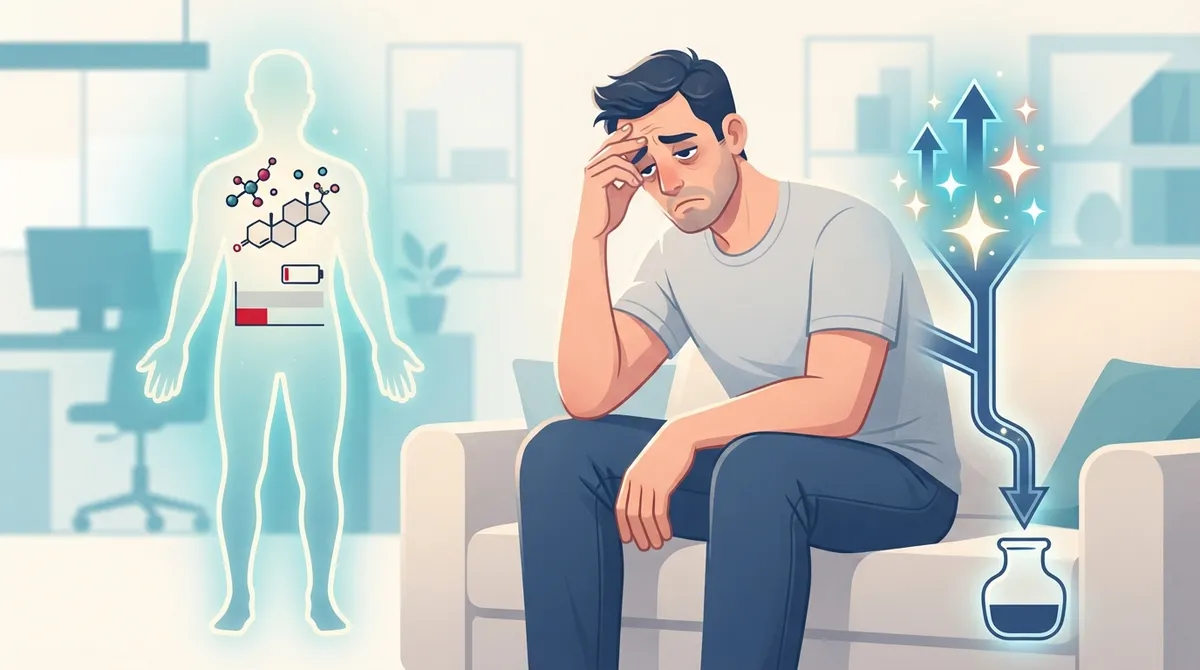
Can Low Testosterone Really Cause Low Energy?
It can contribute, but low energy alone does not prove low testosterone. Current guidelines are clear on this point. A diagnosis of testosterone deficiency requires two things together: symptoms or signs that fit the condition, and consistently low testosterone levels confirmed by lab testing.
Fatigue is a nonspecific symptom. That means many different problems can produce it. If a clinician blamed every tired patient on testosterone, they would miss the true cause in many cases. A careful evaluation looks at the full picture, not one complaint.
Why fatigue alone is not enough
Tiredness shows up with poor sleep, chronic stress, depression, thyroid problems, diabetes, anemia, and some medications. Even a busy work and family schedule can drain anyone. Because the list is so long, fatigue is a reason to start a conversation, not a reason to start treatment.
What Symptoms Point More Strongly to Low Testosterone?
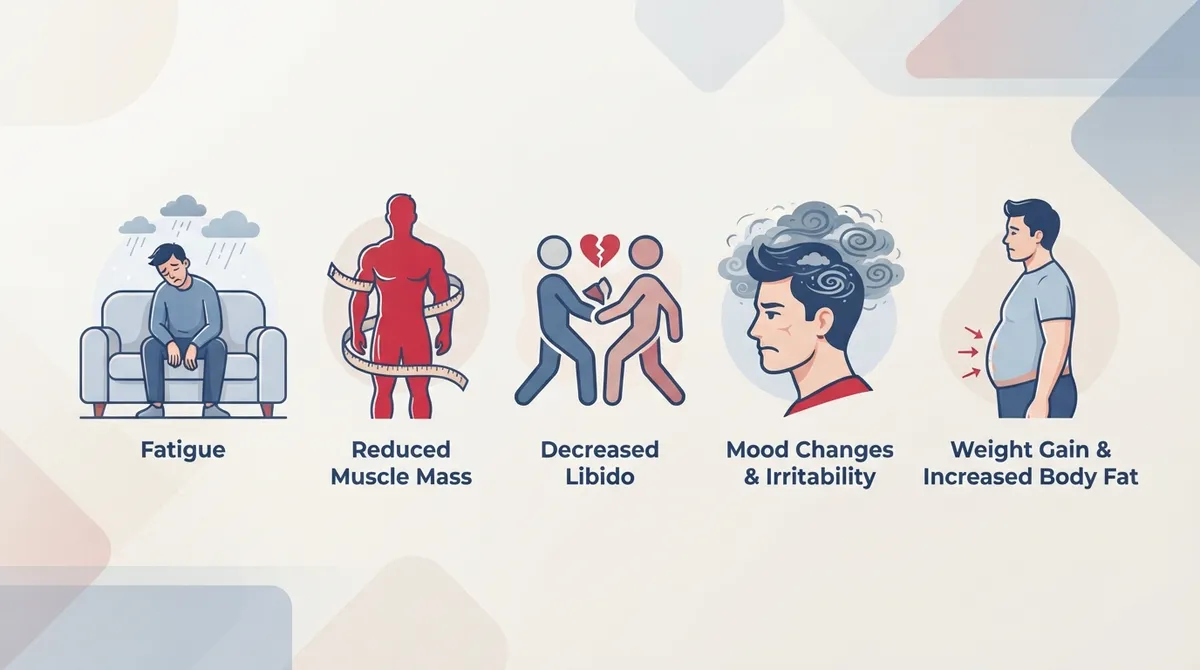
Some symptoms are more specific than fatigue. Reduced sexual desire and fewer spontaneous erections are stronger clues. When these appear alongside low energy, a clinician takes the possibility of low testosterone more seriously.
Other signs that may fit include:
- Lower interest in sex or reduced libido
- Fewer morning or spontaneous erections
- Loss of muscle mass or strength
- Increased body fat, especially around the waist
- Low mood or trouble concentrating
- Reduced bone density in some men
None of these proves low testosterone on its own. They simply raise the odds and guide which tests to order. If low desire is your main concern, our guide on when to see a doctor for low libido explains the warning signs in more detail.
What Else Can Cause Low Energy Besides Low Testosterone?
Before blaming hormones, a good clinician rules out the more common causes. This is where primary care adds real value. A single visit can cover sleep, mood, medications, and basic lab work together.
|
Possible Cause |
Why It Drains Energy |
How It Is Checked |
|---|---|---|
|
Poor sleep or sleep apnea |
Broken sleep prevents real rest |
Sleep history, screening, sleep study |
|
Chronic stress or burnout |
Keeps the body in a constant alert state |
History and stress screening |
|
Depression or anxiety |
Low mood often shows up as fatigue |
Mood questionnaires |
|
Thyroid problems |
Slow thyroid lowers energy use |
Blood tests |
|
Diabetes or prediabetes |
Unstable blood sugar causes tiredness |
Glucose and A1C tests |
|
Anemia or low vitamins |
Less oxygen and nutrients reach tissues |
Blood count and vitamin levels |
|
Medications |
Some drugs cause drowsiness |
Medication review |
Sleep deserves special attention. Loud snoring and daytime sleepiness can signal sleep apnea, which also lowers testosterone in some men. Learn more in our article on sleep apnea and daytime fatigue, or read how to know when to see a doctor for poor sleep.
How Is Low Testosterone Diagnosed?
Diagnosis follows a clear, stepwise process. Guidelines from the American Urological Association (AUA) and the Endocrine Society agree on the core steps. Here is how it usually works:
- Review your symptoms and history. Your clinician asks about energy, libido, sleep, mood, and medications.
- Perform a physical exam. This may include checking weight, blood pressure, and signs of hormone changes.
- Order a morning blood test. Testosterone is measured early in the morning, when levels are naturally highest.
- Repeat the test. A low result is confirmed on a second, separate morning draw.
- Look for the cause if levels stay low. Additional tests help find where the problem starts.
This process protects you from a wrong diagnosis. It also protects you from starting a long-term treatment you may not need.
What Testosterone Level Is Considered Low?
The AUA uses a total testosterone level below 300 ng/dL as a reasonable cutoff to support a diagnosis. The key word is support. A number below 300 does not diagnose the condition on its own. The AUA also requires compatible symptoms or signs and two low measurements.
This matters because a number without context can mislead. A man with a borderline level and no symptoms is very different from a man with a low level, low libido, and fatigue. Your clinician reads the number alongside your story.
Why Does Testosterone Need to Be Tested Twice in the Morning?
Testosterone levels swing during the day and from one day to the next. They are highest in the early morning and drop later. A blood draw at 3 p.m. can look low even when your true level is fine.
The Endocrine Society recommends fasting morning measurements and repeating the test to confirm a low result. Its 2018 guideline reports that about 30% of men with an initially low result may have a normal result on repeat testing. That is a large share. It shows why a single test should never drive a major treatment decision.
Tips for accurate testing
- Schedule your blood draw early in the morning
- Follow any fasting instructions from your clinic
- Avoid testing during an acute illness or after a very poor night of sleep
- Tell your clinician about all medications and supplements
If you want to understand the lab side in more detail, our guide to blood tests needed for TRT walks through what a full workup may include.
What Happens If Low Testosterone Is Confirmed?
If two morning tests are low, the next question is why. Clinicians may order additional tests, such as luteinizing hormone (LH). LH helps show whether the problem starts in the testes or in the pituitary gland and hypothalamus, the brain areas that signal the testes to make testosterone.
This distinction matters for treatment planning. Further evaluation also depends on your history and exam findings. Some men may need a referral to an endocrinologist or a urologist, especially when the cause is unclear or when fertility is a concern.
Does Testosterone Therapy Improve Energy?
This is where expectations need to be realistic. Testosterone therapy is not a general-purpose energy treatment. The AUA notes that the evidence is inconclusive on whether it improves energy or fatigue. Benefits and risks should be weighed carefully, and treatment requires ongoing monitoring.
Therapy may help when a man has confirmed deficiency and matching symptoms, especially low libido. It is not a shortcut for tiredness caused by poor sleep, stress, or another medical problem. Treating the wrong cause leaves you tired and exposed to side effects.
If treatment is appropriate, medical supervision is essential. Read about who provides medically supervised TRT in Tampa Bay and whether TRT can help with energy and mood to set clear expectations. You can also review how to start medically supervised TRT in Tampa safely.
Should You See a Primary Care Doctor, Urologist, or Endocrinologist?
For most men with low energy, primary care is the best starting point. A primary care clinician can assess fatigue, review your health history and medications, order the right tests, and decide whether a specialist is needed.
|
Provider |
Best For |
|---|---|
|
Primary care |
First evaluation, ruling out common causes, ordering labs, coordinating care |
|
Urologist |
Sexual function concerns, fertility questions, testicular issues |
|
Endocrinologist |
Complex or unclear hormone problems, pituitary concerns |
Starting in primary care keeps your care connected. One clinician sees the whole picture, from sleep and weight to blood sugar and mood. That approach fits InCare's focus on prevention and whole-body optimization. Our team offers primary care, in-house testing, and wellness services at our Tampa and Riverview locations, plus virtual visits for people who prefer to start from home. If you are choosing a clinic, our guide on how to choose the best primary care doctor in Tampa can help.
What Can You Do Right Now to Support Your Energy?
While you wait for an appointment, a few habits support energy and may improve hormone health. They are not a substitute for evaluation, but they help.
- Protect your sleep. Aim for seven to nine hours and keep a steady schedule.
- Move regularly. Strength training and daily walking support muscle, mood, and metabolism.
- Manage weight. Excess body fat is linked with lower testosterone in many men.
- Limit alcohol. Heavy drinking can disrupt sleep and hormones.
- Track your symptoms. Note energy, libido, and mood for two weeks to share with your clinician.
Weight and metabolism play a large role. If that is part of your story, see 14 ways a primary care doctor aids weight loss. A thorough checkup is also a smart move; here is what a wellness checkup in Tampa includes.
Take the Next Step With a Clear Plan
Low energy and low testosterone in Tampa can be related, but they are not the same thing. The safest path is a careful evaluation: review symptoms, rule out common causes, test in the morning, and repeat any low result. Treatment decisions come after the diagnosis is solid, not before.
InCare is a trusted option for this kind of evaluation. Our clinicians combine medical expertise with modern testing to find the true cause of your fatigue, then build a personalized plan. See what patients say when you visit us on Google — InCare, and follow our health tips on Instagram, Facebook, and TikTok.
Ready to find out what is behind your low energy? Book your visit with InCare now, or contact our team with questions. You can also call 813-553-3330.
FAQs
Q: Can low testosterone cause low energy or fatigue?
A: It can contribute, but fatigue alone does not prove low testosterone. Guidelines require compatible symptoms, such as reduced libido or fewer spontaneous erections, plus consistently low levels confirmed by repeat morning testing.
Q: What time of day should testosterone be tested, and does it need to be repeated?
A: Testosterone should generally be measured in the early morning, when levels are highest. The Endocrine Society recommends repeating a low result on a separate occasion, since about 30% of men with an initial low result may test normal the second time.
Q: What testosterone level is considered low?
A: The American Urological Association uses total testosterone below 300 ng/dL as a reasonable cutoff. The diagnosis also requires symptoms or signs and two separate low measurements, not a single number alone.
Q: Does testosterone therapy improve energy?
A: Evidence on whether testosterone therapy improves energy or fatigue is inconclusive, according to the AUA. Treatment decisions should weigh benefits, risks, and monitoring needs with a clinician.
Q: Should I see a primary care doctor, urologist, or endocrinologist for low testosterone in Tampa?
A: Primary care is usually the best first step. A primary care clinician can assess fatigue, review medications, order tests, and refer you to a urologist or endocrinologist if needed.