
Key Takeaways
- Florida adults show high obesity rates (29.6% in 2024 per CDC), so evidence-based, individualized care matters; a good specialist reviews your full history, medications, sleep, and stress before building a plan.
- Medication eligibility per NIDDK guidance generally starts at BMI 30+, or BMI 27+ with a weight-related condition, but a clinician must still assess risks, interactions, and your preferences.
- Medical weight loss differs from self-directed dieting by including labs, medication review when appropriate, scheduled follow-up, and management of related conditions like diabetes or high blood pressure.
- Ask before starting: who oversees your care, what tests come first, whether you are a medication candidate, how to reach the team between visits, and what the full cost including labs will be.
- Weight regain can occur after stopping medication, so discuss the expected treatment duration and a maintenance plan with your prescriber before beginning.
- Avoid clinics promising rapid or guaranteed results or using one plan for everyone; look for individualized plans, structured follow-up, transparent pricing, and integration with primary care.
Finding a Tampa weight loss specialist can feel overwhelming. Ads promise quick results, and every clinic claims to be different. Yet the real question is simple. Who can look at your whole health and build a plan that lasts?
In Florida, 29.6% of adults had obesity in 2024, according to CDC survey data. Another 35.8% were overweight. Those numbers show how common this challenge is. They also show why accessible, evidence-based care matters.
A good specialist does more than hand you a diet sheet. They review your medical history, medications, sleep, and stress. They check for conditions like diabetes or high blood pressure. Then they build a plan around you, not a target number.
This guide explains what a Tampa weight loss specialist does, how medical weight loss works, and which medicines may be used. It also shows how to compare clinics and what to ask before you start. If you are busy, tech-minded, or new to primary care, you will find clear steps here.

What Does a Tampa Weight Loss Specialist Do?
A weight loss specialist in primary care looks at weight as one part of your overall health. The goal is better health outcomes, not a quick fix. That approach is more sustainable and safer.
During your care, a specialist typically reviews:
- Your medical history and current medications
- Nutrition habits and daily routines
- Physical activity and sleep quality
- Weight-related conditions such as diabetes, high blood pressure, or sleep apnea
- Your goals, schedule, and past weight loss attempts
Many medications can affect weight. So can thyroid problems and poor sleep. A clinician who sees the full picture can spot these issues early. A generic program often misses them.
Primary care also adds continuity. Your weight plan connects to your preventive screenings, lab work, and chronic condition care. You do not have to explain your history to a new provider each time. To see how this works day to day, read 14 Ways a Primary Care Doctor Aids Weight Loss (2026).
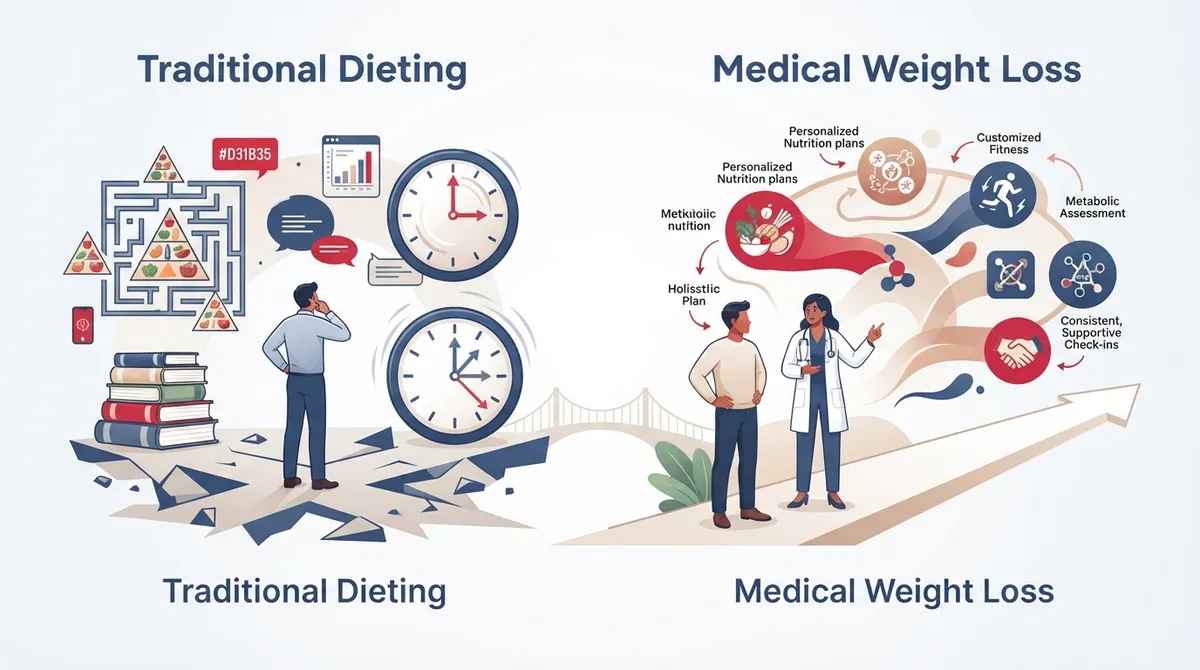
Why Medical Weight Loss Differs From Dieting
Dieting alone often leads to short-term loss and later regain. Medical weight loss adds clinical tools. These include lab testing, monitoring, behavior support, and, when appropriate, prescription medication.
The main differences are easy to see:
|
Feature |
Typical Self-Directed Diet |
Medically Supervised Plan |
|---|---|---|
|
Health review |
Rarely done |
Full history, labs, and medication review |
|
Plan design |
One-size-fits-all |
Individualized to your health and goals |
|
Medication option |
Not available |
Considered when clinically appropriate |
|
Follow-up |
Self-monitored |
Scheduled check-ins and adjustments |
|
Related conditions |
Often ignored |
Managed alongside weight care |
Medical supervision also adds safety. A clinician can adjust treatment if side effects appear. They can also check whether weight loss is improving blood pressure, blood sugar, and other markers. For a deeper look at the process, see How Is Medical Weight Loss Different From Dieting?
Who May Qualify for Prescription Weight Loss Medication?
The National Institute of Diabetes and Digestive and Kidney Diseases (NIDDK) gives general guidance. Clinicians may consider weight-management medication for adults with a BMI of 30 or higher. They may also consider it for adults with a BMI of 27 or higher who have a weight-related health condition.
BMI is only a starting point. A clinician must still assess your full health. They look at benefits, risks, contraindications, drug interactions, and your preferences. Not everyone who meets the BMI threshold is a good candidate.
Medication is also not a substitute for lifestyle change. NIDDK describes these medicines as tools used alongside nutrition, activity, and behavior changes. The best results come from combining them.
FDA-Approved Long-Term Options
NIDDK lists several FDA-approved long-term prescription options for weight management:
- Orlistat
- Phentermine-topiramate
- Naltrexone-bupropion
- Liraglutide
- Semaglutide
- Tirzepatide
Each works in a different way, and each has its own risks. Your clinician will help you choose based on your health history and goals. If you want to understand how newer options work, see How to Understand Semaglutide's Mechanism of Action and 9 Ways Tirzepatide Works Inside Your Body (2026).
What Happens at a First Medical Weight Loss Visit?
Knowing what to expect makes the first step easier. Most visits follow a similar path.
- Health history review. You discuss past conditions, family history, medications, and previous weight loss attempts.
- Baseline measurements. Your clinician records weight, blood pressure, and other vital signs. Some clinics add body composition or metabolic testing.
- Lab work when needed. Tests may check blood sugar, cholesterol, thyroid function, and other markers tied to weight.
- Goal setting. You and your clinician agree on realistic goals that focus on health, not only the scale.
- Plan creation. The plan may include nutrition guidance, activity advice, behavior support, and medication if appropriate.
- Follow-up schedule. You set dates for check-ins so progress and side effects can be reviewed.
InCare offers advanced tools that add detail to this process. These include metabolic breath analysis, 3D body composition tracking, and DNA gene testing. Such tools can show how your body uses energy and where you carry fat. They help turn a general plan into a personal one. You can learn more in What Does a Metabolic Breath Test Show About Your Body?
Why Follow-Up Care Matters
Weight loss is not a one-time event. Ongoing follow-up is where good programs separate from weak ones. At each visit, your clinician checks how well treatment is working and how well you tolerate it.
They may adjust your plan based on:
- Your rate of progress
- Side effects or tolerability
- Changes in blood pressure, blood sugar, or lab results
- Life changes such as travel, stress, or new medications
Maintenance planning matters just as much. Weight regain can occur after stopping medication. For that reason, you should discuss how long to take a medicine and how to maintain results before you start. Read Why Does Weight Return After Stopping Tirzepatide? for more detail, and How Can You Keep Weight Off for Good After 2026? for long-term habits.
How to Compare Tampa Weight Loss Providers
Many clinics in the Tampa area advertise medical weight management. Local examples include Internal Medicine of Tampa Bay and Palm Wellness Center. These are simply examples of what exists locally, not endorsements. Always verify current services, credentials, and availability on your own.
Use this checklist when you compare any Tampa weight loss specialist:
- Credentials and scope. Confirm the clinician's license and training. Ask who prescribes and who monitors.
- Integration with primary care. Ask whether weight care connects with your preventive and chronic condition care.
- Individualized plans. Be cautious of any program that promises rapid results or uses the same plan for everyone.
- Follow-up structure. Ask how often you will be seen and how problems are handled between visits.
- Costs and insurance. Ask about visit fees, lab costs, and medication prices. Confirm what your insurance covers.
- Safety practices. Ask how side effects are monitored and how treatment is adjusted.
These points matter most for busy families and working adults. A clinic that combines primary care, urgent care, and weight management in one place saves time. You can see the same team for a sick visit, a physical, and a weight check. For a closer look at red flags, read 8 Mistakes to Avoid at a Premium Weight Loss Center.
Costs and Insurance in Tampa
Cost is a common concern. Prices vary based on visit type, lab work, and medication. Insurance coverage for weight loss medication also varies by plan. Some plans cover certain medicines. Others do not.
Before you commit, ask for a clear cost breakdown. Ask what is included in each visit and what is billed separately. Also ask what happens to costs if you adjust or stop treatment. Planning ahead prevents surprises. For budgeting help, see How to Budget for Tirzepatide Costs in 2026 and What Are Your Best Uninsured Weight Loss Treatment Options?
Weight Loss as Part of Whole-Body Health
Weight affects many parts of health. It can influence blood pressure, blood sugar, sleep, joint pain, and energy. A primary care approach looks at all of these together.
For example, losing weight may help lower blood pressure for some people. It can also improve sleep quality and reduce strain on joints. A clinician can track these changes through routine lab work and checkups. That is one reason integrated care works well. Your weight plan, screenings, and chronic condition management all stay in sync.
This whole-body view also fits the preventive mindset many younger adults and wellness seekers value. Instead of waiting for a problem, you act early. Tools like DNA testing, body composition scans, and metabolic analysis support that goal.
Why InCare Is a Strong Choice in Tampa
InCare is a personalized healthcare clinic that combines primary care, urgent care, and advanced wellness services. With locations in Tampa and Riverview, plus virtual visits, it is easy to fit care into a busy schedule. Patients rate the practice 4.8 out of 5 on Google across 359 reviews, with praise for friendly staff and quality care. You can visit us on Google — InCare to read recent reviews.
What sets InCare apart is the full picture. Your weight loss plan is built by a team that also handles your annual physical, your lab work, and your chronic condition care. Advanced tools such as metabolic breath analysis, 3D body composition tracking, and DNA gene testing add precision. You get a plan shaped by data, not guesses.
To learn how the program works, read How Does Medically Supervised Weight Loss Work? You can also explore What Does a Weight Management Clinic Actually Do? and 3 Steps to Find a Weight Loss Doctor in Tampa (2026).
You can also follow InCare for health tips and updates on Facebook, Instagram, and Tik Tok.
Questions to Ask Before You Start
Bring a short list of questions to your first visit. Clear answers help you feel confident in your choice.
- Who will oversee my care, and what are their credentials?
- What tests will you run before creating my plan?
- Am I a candidate for medication, and what are the risks?
- How often will I be seen, and how can I reach you between visits?
- What will this cost, including labs and medication?
- What is the plan if I stop treatment or reach my goal?
A trustworthy specialist welcomes these questions. They explain risks as clearly as benefits. They also avoid promising a specific result on a fixed timeline.
Take the Next Step With InCare
The right Tampa weight loss specialist treats you as a whole person. They look at your health history, set realistic goals, and follow up so your plan keeps working. Medication may help when it is appropriate, but it works best alongside lasting habits and steady monitoring.
If you are ready to start, InCare is here to help. Book your weight loss visit with InCare to build a personalized plan with a team you can trust. If you have questions first, contact our team and we will guide you to the right next step.
FAQs
Q: How do I find a medically supervised weight loss specialist in Tampa?
A: Start by checking clinician credentials and scope of practice. Ask whether weight care is connected to primary care, how follow-up is handled, and what labs and medications cost. Choose a clinic that builds an individualized plan rather than promising rapid results.
Q: Do I qualify for prescription weight loss medication?
A: NIDDK guidance says clinicians may consider medication for adults with a BMI of 30 or higher, or 27 or higher with a weight-related health condition. Eligibility still requires a clinician to review your health history, risks, and interactions. Medication is used alongside nutrition, activity, and behavior changes.
Q: What happens if I stop taking weight loss medication?
A: Weight regain can occur after stopping medication. Discuss the expected duration of treatment and a maintenance plan with your prescriber before you begin. Ongoing lifestyle habits and follow-up care help protect your results.
Q: Can a primary care doctor help with weight loss and conditions like diabetes or high blood pressure?
A: Yes. A primary care clinician can address weight alongside diabetes, high blood pressure, and other related conditions. This integrated approach keeps your labs, screenings, and treatment plans coordinated in one place.
Q: What should I look for when choosing a Tampa weight loss clinic?
A: Look for verified credentials, an individualized plan, structured follow-up, and clear pricing. Confirm what insurance covers and how side effects are monitored. Be cautious of programs that promise fast or guaranteed results.