

Key Takeaways
- KPV is an experimental tripeptide with only animal and lab evidence, not proven human clinical trials—there is no FDA approval or demonstrated benefit for bloating, IBS, or inflammatory bowel disease in people.
- KPV products sold online lack safety oversight: they may contain impurities, incorrect dosages, and unknown medication interactions, making self-treatment risky and potentially delaying diagnosis of the actual underlying digestive issue.
- Before trying unproven supplements, consult a primary care provider who can order diagnostic testing, identify the true cause of symptoms, and recommend evidence-based treatments with established safety records.
- KPV works differently from probiotics and digestive enzymes—it targets inflammatory signaling pathways, not digestion itself, making it fundamentally unsuitable as a substitute for standard medical evaluation and proven therapies.
Search online for gut health help, and you may come across KPV. Wellness forums call it a peptide for digestive support. Some claim it soothes inflammation and calms an upset stomach. But what does the science actually say? This article breaks down what KPV is, what the research shows, and why a conversation with a primary care provider matters more than any online supplement claim.
If you are dealing with bloating, irregular digestion, or ongoing gut discomfort, you deserve real answers. Not internet hype. At InCare, our team in Tampa and Riverview helps patients sort through wellness trends like this one, so they can make informed choices about their health.
What Is KPV, and Why Do People Talk About It for Gut Health
KPV stands for lysine-proline-valine. It is a tiny chain of three amino acids called a tripeptide. It comes from a larger molecule known as alpha-melanocyte-stimulating hormone, or α-MSH.
KPV is not a probiotic. It is not a digestive enzyme. It is not a vitamin or a standard nutritional supplement. It is an experimental peptide being studied mostly in labs and animal models for its possible anti-inflammatory effects.
People searching for KPV digestive support are usually hoping it might help with issues like:
- Bloating and general stomach discomfort
- Irritable bowel syndrome (IBS) symptoms
- Inflammatory bowel disease, including Crohn's disease and ulcerative colitis
- General gut inflammation or "leaky gut" concerns
The problem is that most of this interest comes from early-stage science, not proven human results.

What the Research Actually Shows
The strongest evidence for KPV and digestive health comes from lab studies and animal research, not human clinical trials.
Mouse Studies and Colitis Models
A key study published in 2007 in the American Journal of Physiology—Gastrointestinal and Liver Physiology looked at KPV in mice with chemically induced colitis. Researchers gave the mice oral KPV and measured several markers of inflammation.
The results showed reduced weight loss, lower myeloperoxidase activity, and less tissue inflammation in the treated mice. Levels of inflammatory markers like TNF-alpha, IL-1 beta, and IL-6 also dropped.
These are meaningful findings for lab science. But mice are not humans. Results in animal models do not guarantee the same effects in people.
How KPV May Work in the Gut
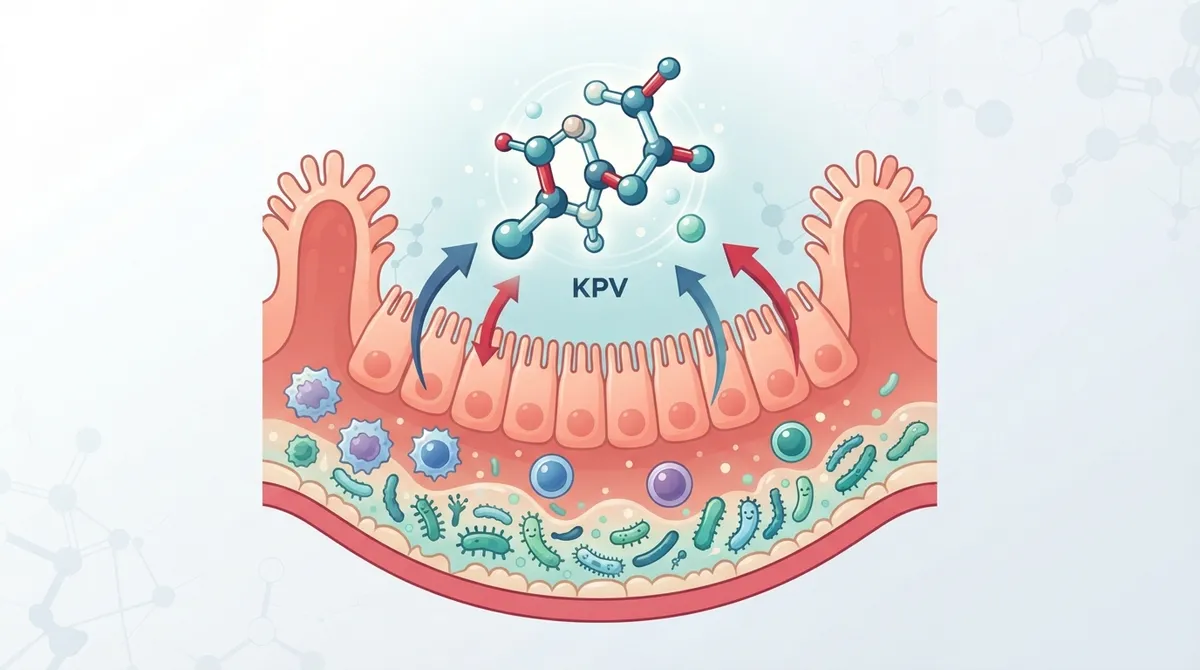
Scientists believe KPV can enter intestinal cells through a transporter called PepT1. This transporter normally helps the body absorb small peptides from digested food.
Once inside the cell, KPV appears to block a signaling pathway called NF-κB. This pathway plays a major role in triggering inflammation throughout the body, including in the gut lining.
This mechanism is interesting to researchers. It has encouraged some scientists to explore oral, gut-targeted versions of KPV. But a promising biological pathway is not the same as a proven treatment.
Does KPV Have Human Clinical Evidence?
This is the most important question, and the honest answer is no. There is no dedicated, published, randomized clinical trial in humans showing that KPV improves digestive symptoms.
No solid human evidence supports using KPV for:
- Bloating or general digestive discomfort
- Constipation or diarrhea
- Acid reflux
- Irritable bowel syndrome
- Dyspepsia or chronic indigestion
- Inflammatory bowel disease, including Crohn's disease or ulcerative colitis
Animal studies suggesting reduced inflammation do not prove that KPV treats, prevents, or cures any of these conditions in people. Claims about routine digestive support should be viewed as investigational, not proven.
Regulatory Status: Is KPV FDA Approved?
KPV is not an FDA-approved treatment for digestive issues or any other medical condition. There is no finished drug product on the market that has gone through the FDA's approval process for this use.
Some peptide sellers market KPV as a "research peptide" or offer it through compounding pharmacies. This creates several concerns:
|
Concern |
Why It Matters |
|---|---|
|
Purity |
Research-grade products may not meet pharmaceutical safety standards |
|
Sterility |
Improperly manufactured peptides can carry contamination risks |
|
Dose Accuracy |
Labels may not reflect the true amount of active peptide |
|
Storage |
Peptides often require strict temperature control to remain stable |
|
Legal Status |
Regulatory rules around compounded peptides continue to shift |
Because of these unknowns, patients should never substitute KPV for a proper medical evaluation. If you are experiencing digestive symptoms, a licensed clinician can help identify the actual cause and recommend treatments with a track record of safety and effectiveness.
Common Questions Patients Ask About KPV
Is KPV the Same as a Probiotic or Digestive Enzyme?
No. Probiotics contain live bacteria that support gut flora. Digestive enzymes help break down food. KPV is a peptide fragment being studied for its potential to calm inflammatory signaling, not to aid digestion directly.
Can KPV Replace Treatment for IBS or IBD?
No. There is no human evidence that KPV treats IBS, Crohn's disease, or ulcerative colitis. These conditions require proper diagnosis and evidence-based treatment plans from a qualified provider.
What Are the Risks of Trying KPV on My Own?
Because KPV is not FDA approved and often sold as a research chemical, risks include impurities, incorrect dosing, unknown interactions with other medications, and a lack of long-term safety data. Self-treating without medical guidance can delay proper diagnosis of your actual digestive issue.
Evidence-Based Alternatives Worth Discussing With Your Doctor
Instead of relying on unproven peptides, consider approaches with stronger research support. A visit to a primary care provider is the best first step for any ongoing digestive concern.
Depending on your symptoms, your provider may recommend:
- Lab testing to check for infections, food sensitivities, or nutrient deficiencies
- Dietary changes tailored to your specific symptoms
- Prescription medications with proven safety records for conditions like IBS or acid reflux
- Referral to a gastroenterologist for more complex or persistent issues
- Stress management strategies, since gut health and stress are closely linked
InCare also offers services like DNA gene testing and body composition analysis, which can give a fuller picture of your overall health. These tools help our providers build a plan based on your actual biology, not internet trends.
Why Working With a Primary Care Provider Matters
Digestive symptoms can have many causes. Some are minor. Others point to more serious conditions that need prompt attention. A trained provider can tell the difference.
At InCare, our providers in Tampa and Riverview take a whole-body approach to wellness. We combine standard medical evaluation with modern technology to figure out what is really going on, rather than guessing based on unverified supplement claims.
If digestive discomfort is affecting your daily life, do not wait. Our team can help you understand your options, order the right testing, and build a treatment plan grounded in real evidence. Many patients also explore our weight loss programs or IV hydration therapy as part of a broader wellness strategy alongside primary care.
You can also learn more about our providers, including Dr. Naveen Paddu and Dr. Pramjeet Ahluwalia, who bring years of medical expertise to every patient visit.
Staying Informed on Social Media and Beyond
Wellness trends move fast online, and peptides like KPV are a good example. Before trying any new supplement, it helps to check trusted, science-based sources. The National Center for Biotechnology Information hosts peer-reviewed studies you can review yourself. The U.S. Food and Drug Administration also publishes updates on which compounds are approved for medical use.
You can follow InCare for wellness tips and updates on Facebook, Instagram, and Tik Tok. We share practical, medically grounded information to help you separate real science from social media hype.
Final Thoughts on KPV Digestive Support
KPV is an interesting subject for researchers, but it is not a proven treatment for digestive symptoms in humans. The strongest evidence so far comes from mouse studies and lab research, not real-world clinical trials. It is not FDA approved, and product quality varies widely.
If you are struggling with bloating, irregular digestion, or symptoms of IBS or IBD, the safest path forward is a proper medical evaluation. Our patients often share their experiences after visiting our clinics, and you can Visit us on Google — InCare to see what real patients in Tampa and Riverview have to say about their care.
Ready to get real answers about your digestive health? Reach out to our team today or schedule your appointment now to start building a wellness plan backed by real medical expertise.
FAQs
Q: What is KPV peptide, and how is it different from probiotics or digestive enzymes?
A: KPV is a tripeptide made of lysine, proline, and valine, derived from a hormone called alpha-MSH. Unlike probiotics or digestive enzymes, it is not designed to aid digestion directly. It is being studied for potential anti-inflammatory effects in the gut, but it remains experimental.
Q: Does KPV help with IBS, ulcerative colitis, Crohn's disease, or leaky gut?
A: There is no established human clinical evidence showing KPV treats these conditions. Research so far comes from animal and cell studies, which do not confirm the same results in people. Anyone with these conditions should work with a licensed provider for proven treatment options.
Q: Is there human research showing that KPV improves digestive symptoms?
A: No dedicated, published human clinical trial has demonstrated that KPV improves digestive symptoms like bloating, reflux, or irregular bowel movements. The most notable studies were conducted in mouse models of colitis, not in people.
Q: Is KPV FDA approved, and can a pharmacy legally compound it?
A: KPV is not FDA approved as a treatment for digestive issues or any other condition. Compounding eligibility is a separate regulatory question, and the legal status of KPV products can vary, so patients should discuss any interest in KPV with their doctor first.
Q: What evidence-based alternatives should patients consider for digestive support?
A: A visit to a primary care provider is the best starting point. Options with stronger evidence include diagnostic testing, tailored dietary changes, proven medications for specific conditions, and referral to a specialist when needed.