

Key Takeaways
- KPV lacks human clinical evidence: no FDA approval or peer-reviewed randomized controlled trials exist for treating psoriasis with KPV, despite lab studies showing potential anti-inflammatory effects.
- Online KPV products are unregulated research chemicals with unknown purity, inconsistent dosing, and contamination risks—purchasing them means you cannot verify what you're actually using on your skin.
- Established psoriasis treatments (topical steroids, phototherapy, systemic medications) have proven effectiveness; skipping them for unproven KPV risks worsening your condition and delaying specialist care.
- Psoriasis requires comprehensive health screening beyond skin symptoms, including assessment for psoriatic arthritis, cardiovascular risk, and metabolic issues—coordinate care with a trusted primary provider or dermatologist.
Psoriasis can be stubborn, uncomfortable, and hard to manage on your own. If you have searched online for new options, you may have come across KPV, a small peptide that some wellness sites claim can calm inflamed skin. Before you spend money on an unproven product, it helps to understand what KPV actually is, what the research really shows, and what steps actually work for managing psoriasis long term. This guide breaks down the facts in plain language so you can make a smart, safe choice about your skin health.
At InCare, our providers in Tampa and Riverview focus on evidence-based primary care and wellness services, including skin health, chronic disease management, and screening for conditions linked to psoriasis. Here are seven key facts about KPV psoriasis management you should know before trying any new treatment.
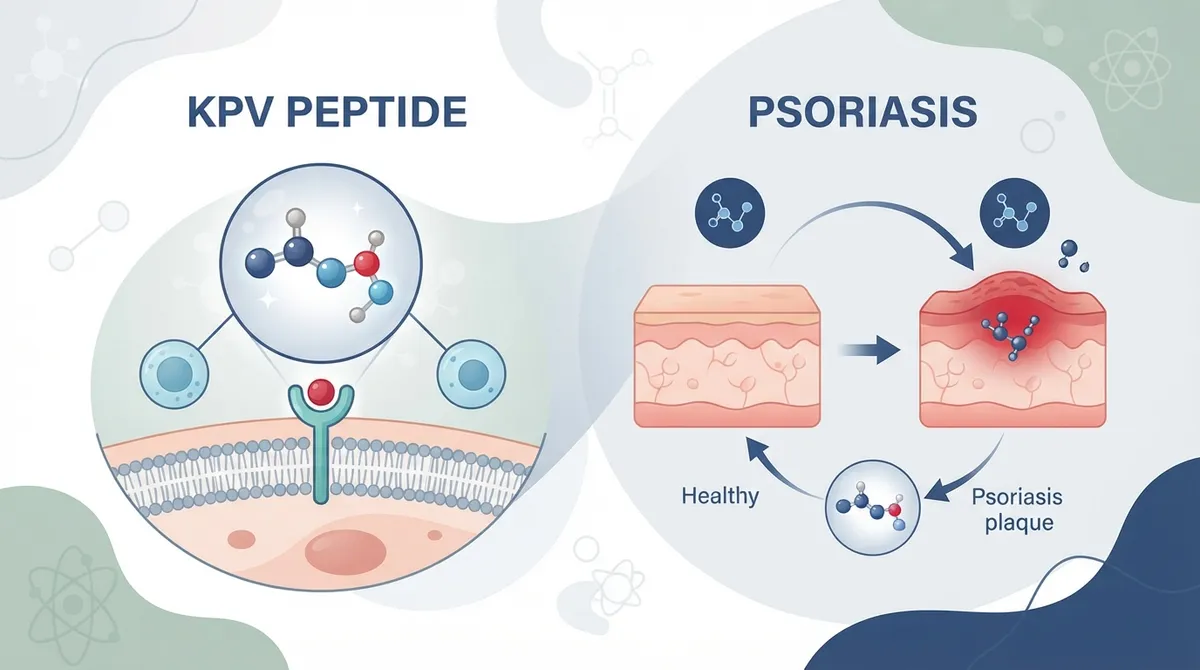
1. What Is KPV and Why Is It Linked to Psoriasis?
KPV stands for lysine-proline-valine, a tiny chain of three amino acids called a tripeptide. It comes from a larger hormone in your body called alpha-melanocyte-stimulating hormone, or α-MSH. Scientists first became interested in KPV because it may calm certain inflammatory signals in the body.
Lab studies suggest KPV might block a pathway called NF-κB, which plays a role in inflammation. It may also reduce inflammatory messengers like IL-1β, TNF-α, and IL-6. Since psoriasis is driven by inflammation and overactive skin cells, some wellness marketers have suggested KPV could help. This idea sounds promising, but it is important to separate lab findings from real, proven results in humans.

2. The Evidence Behind KPV Is Mostly Preclinical
Here is the key fact many online sellers do not tell you: the evidence for KPV and psoriasis comes almost entirely from lab and animal research, not human clinical trials. Preclinical studies look at cells in a dish or in animals. They are useful for early research, but they cannot prove a treatment works safely in people.
A review of the current literature found no strong, peer-reviewed randomized controlled trials showing that oral, topical, or injectable KPV improves psoriasis symptoms in humans. This means that claims about response rates or improvement percentages found on peptide-marketing websites are not backed by real clinical data.
3. One Patent, One Person, Not Proof
You may have seen references to a patent describing KPV used on the skin of a person with psoriasis. This patent reports that the person applied KPV twice daily for eleven days and saw some improvement. While this sounds encouraging, it is important to understand what this actually means.
- This is a single case, not a controlled study.
- There was no comparison group to rule out natural improvement or other factors.
- Dosing, safety, and long-term effects were not studied.
- Results in one person do not predict results in others.
Anecdotes like this can spark interest, but they cannot replace real clinical trials. Responsible primary care providers look for solid evidence before recommending any treatment, especially one applied to sensitive, already-irritated skin.
4. KPV Is Not FDA-Approved for Psoriasis or Any Condition
This is one of the most important facts to understand. KPV has not been approved by the FDA for treating psoriasis or any other medical condition. Products sold online labeled as KPV are often marketed as research chemicals, meaning they are not meant for human use at all.
Because these products are not regulated the same way as approved medications, there are real risks involved:
- Uncertain purity and actual ingredient content
- Inconsistent concentration between batches
- Contamination risk during manufacturing
- Poor sterility, which matters if injected
- Improper storage that can degrade the product
Buying an unregulated peptide online means you cannot be sure what you are actually putting on or in your body. If you want to learn more about safe, doctor-guided peptide therapy in Tampa, it is best to speak with a licensed provider first.
5. Why Primary Care Should Not Replace Proven Psoriasis Treatments With KPV
Skipping proven psoriasis care in favor of an unproven peptide can allow your condition to get worse. Established, guideline-supported psoriasis management usually includes a mix of these options, depending on severity:
|
Disease Severity |
Common First-Line Approach |
When to Escalate Care |
|---|---|---|
|
Mild, limited patches |
Moisturizers, topical steroids, vitamin D creams |
If patches spread or do not improve in weeks |
|
Moderate, more coverage |
Stronger topicals, phototherapy |
If symptoms persist despite treatment |
|
Severe or widespread |
Systemic medications, biologics |
Refer to dermatology for specialist management |
|
Joint pain present |
Screen for psoriatic arthritis |
Refer promptly to rheumatology or dermatology |
The National Institute for Health and Care Excellence, known as NICE, reviewed its psoriasis guidance in March 2025. This guidance remains a trusted framework for assessing psoriasis, choosing topical treatment, and knowing when to refer patients to a specialist. A trusted primary care provider can walk you through these steps and adjust your plan as your skin changes.
6. A Full Health Check Matters More Than a Trendy Peptide
Psoriasis is not just a skin problem. It is linked to other health conditions that deserve attention. A thorough evaluation should look at more than just the visible patches on your skin.
- Check for joint pain or stiffness, which may signal psoriatic arthritis.
- Review cardiovascular risk factors, since psoriasis is linked to heart disease.
- Screen for metabolic issues like diabetes and high cholesterol.
- Assess the emotional and social impact of visible skin symptoms.
- Track disease severity over time to see if treatment is working.
This kind of complete approach is part of what makes comprehensive primary care so valuable. Instead of chasing an unproven peptide, patients get a full picture of their health and a plan built around real evidence. If you are also managing weight or metabolic concerns alongside psoriasis, our weight loss programs may support your overall wellness goals too.
7. When to See a Specialist for Psoriasis
Not every case of psoriasis needs a dermatologist right away, but some situations call for a referral. Watch for these signs that it is time to get specialist input:
- Your skin patches keep spreading despite treatment
- You develop joint pain, swelling, or stiffness
- Your diagnosis is unclear or you have unusual symptoms
- Standard topical treatments are not working after several weeks
- Your psoriasis is affecting your mental health or daily life
A knowledgeable primary care team can catch these warning signs early and coordinate your care. This kind of teamwork often leads to better results than trying an unregulated product on your own. To see how patients feel about their care, you can visit us on Google — InCare and read real reviews from our Tampa and Riverview community.
How InCare Approaches Skin Health and Chronic Conditions
InCare combines modern technology with real medical expertise to help patients manage chronic skin conditions like psoriasis. Our team looks at your whole health picture, not just the visible symptoms. This includes screening for related conditions, discussing lifestyle changes, and creating a treatment plan based on solid evidence.
We understand that patients want fast answers and modern options. That is why we stay current on emerging research, including peptide science, while making sure any treatment we recommend is grounded in safety and proven results. You can also follow our latest health tips and clinic updates on Facebook, Instagram, and TikTok for more wellness insights.
Take the Next Step Toward Clearer, Healthier Skin
Managing psoriasis takes patience, the right information, and a care team you can trust. Instead of relying on unproven peptides sold online, work with a provider who can build a plan based on your specific needs and current medical evidence. Our team at InCare is ready to help you sort fact from hype and find a path that actually works for your skin and your overall health.
Ready to talk to a provider about your psoriasis symptoms and treatment options? Book your appointment today or reach out to our team with any questions about your care.
FAQs
Q: What is KPV peptide and how might it affect psoriasis inflammation?
A: KPV is a tripeptide derived from alpha-melanocyte-stimulating hormone. Lab studies suggest it may reduce inflammatory signals like NF-κB, IL-1β, and TNF-α, which are involved in psoriasis, but this is based on preclinical research, not proven human results.
Q: Is KPV FDA-approved or clinically proven for psoriasis?
A: No. KPV is not FDA-approved for psoriasis or any other medical condition. Products sold online are often unregulated research compounds with uncertain purity and safety.
Q: Are there human clinical trials of KPV for psoriasis?
A: Current reviews have not found controlled human dermatology trials proving KPV works for psoriasis. The only human data comes from a single patient case described in a patent, which is anecdotal and not scientific proof.
Q: What evidence-based treatments should primary care use for psoriasis?
A: Standard care includes moisturizers and topical treatments for mild cases, phototherapy or systemic medications for more severe disease, and specialist referral when treatment resistance or joint symptoms appear. These options follow established guidelines like those from NICE.
Q: When should a person with psoriasis be referred to a dermatologist?
A: Referral is recommended when psoriasis is widespread, treatment-resistant, diagnostically uncertain, or linked to joint pain suggesting psoriatic arthritis. A primary care provider can help coordinate this next step.